DbcultAccessing Vault...
7.1/10
Senior Film Conservator
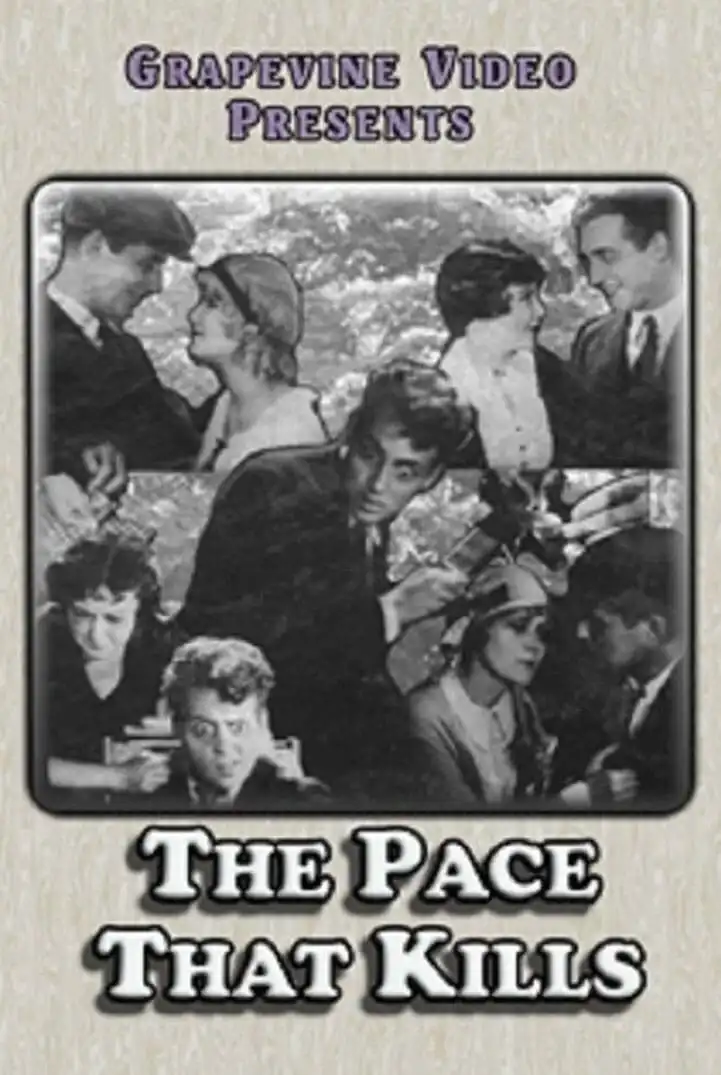
A definitive 7.1/10 rating for a film that redefined the boundaries of cult cinema. The Pace That Kills remains a cornerstone of transgressive art.
If you like weird old silents that try to scare you into being a good person, yeah, give it a go. It’s for people who enjoy accidental comedy and seeing how people in the 1920s viewed 'the big bad city.'
You will probably hate it if you need a plot that makes actual sense or if you can't stand over-the-top acting where everyone looks like they’ve had ten cups of coffee before every take. It's definitely not as polished as something like The Race, but it has its own strange energy.
The movie starts on a farm, because of course it does. Dan is our main guy, and he is so wholesome it’s almost annoying. He looks like he’s never even seen a cigarette, let alone the 'demon powder' he eventually finds.
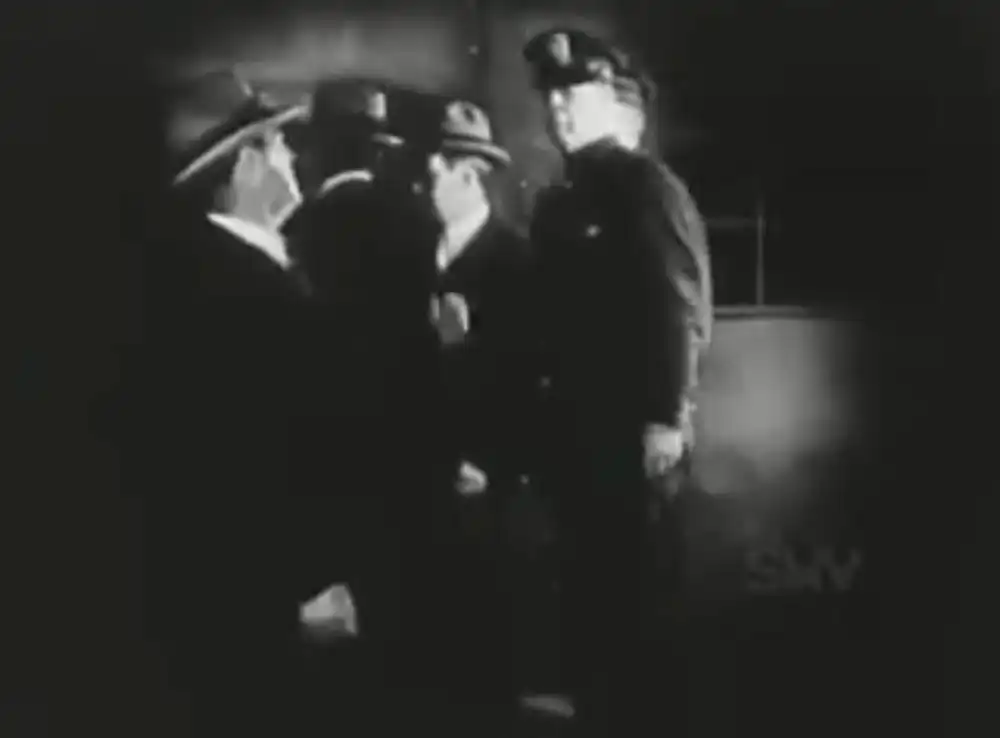
He goes to the city to find his sister, Fanny, who apparently disappeared into the void of urban life. The way the movie shows the city is just a bunch of quick cuts of neon signs and people walking fast. It’s meant to look scary, I guess? To me, it just looks like a busy Tuesday.
Anyway, Dan gets a job at a department store and immediately meets the wrong crowd. There’s this one guy, a dealer, who has the most suspicious mustache I’ve ever seen in a movie. You can just tell he’s up to no good because he slinks around the corners of the frame like a cat.
Before you know it, Dan is trying 'the snow.' That’s what they call cocaine here. It’s funny because he tries it once and basically his entire life falls apart in about three minutes of screen time. One minute he’s a clerk, the next he’s shivering in a dark room with messy hair.
The movie doesn't really understand how addiction works, but it sure loves the drama of it. Dan’s facial expressions during his 'high' moments are wild. His eyes get really wide and he starts grabbing his own face like he’s trying to remember if it’s still there.
I kept thinking about Lightning Bryce while watching this, mostly because of how much the actors rely on waving their arms around to show emotion. There is no subtlety here. None at all. If someone is sad, they collapse onto a table. If they are happy, they jump.
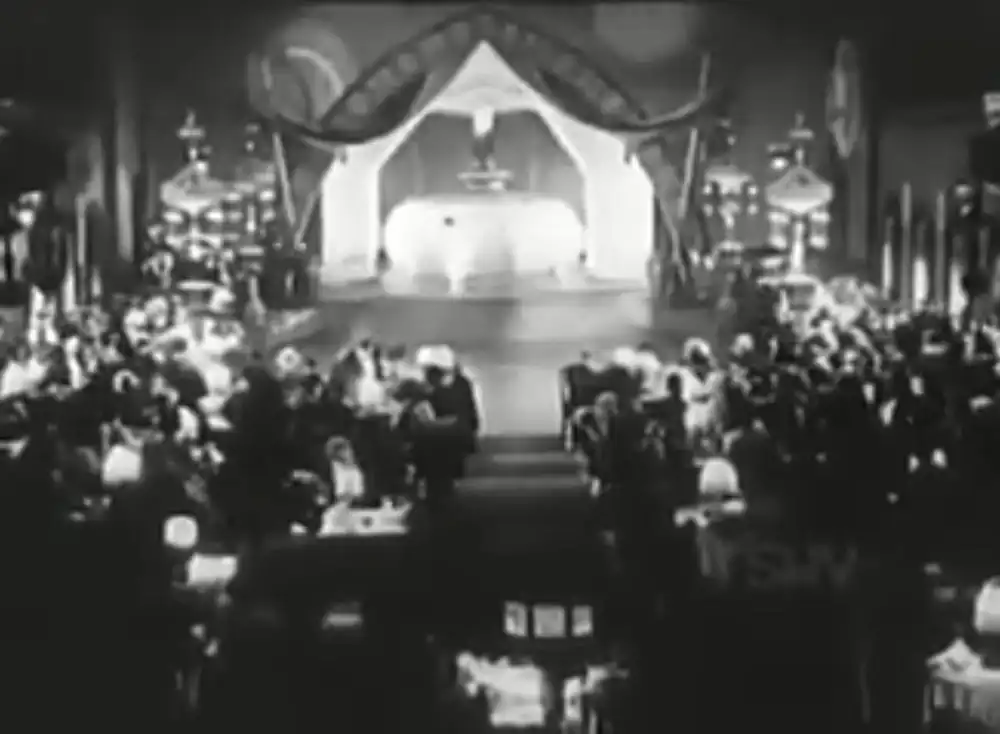
There is a scene in an opium den that is actually kind of atmospheric, even if it feels like it was filmed in someone's basement with one singular lightbulb. It’s all smoky and people are just draped over furniture looking miserable. It’s meant to be a cautionary tale, but it mostly just feels like a very quiet party where everyone forgot to bring music.
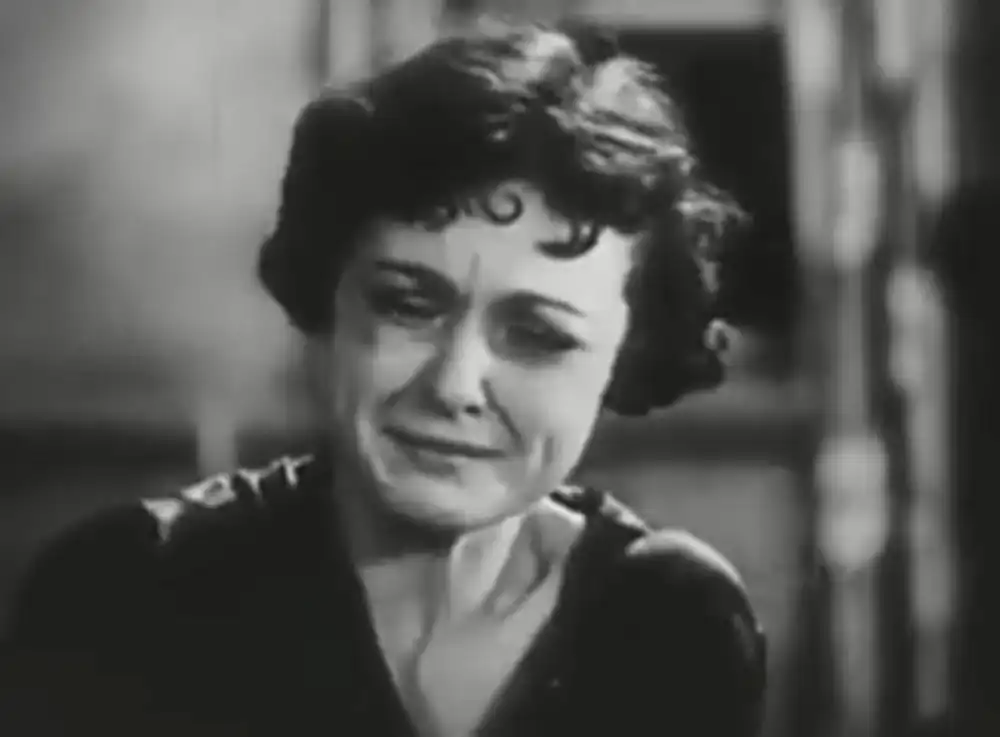
Dan eventually finds his sister, Fanny. It turns out she’s also hooked on the stuff. The reunion is not exactly heartwarming. It’s more like two people being very sweaty and shaky at each other in a dark room.
I noticed this one specific detail—whenever Dan is really desperate for a fix, he pulls this little tin out of his pocket and shakes it. The sound isn't there, obviously, because it’s a silent film, but you can feel the rattling. It’s one of the few moments that actually felt real to me.
The middle part of the movie drags a bit. There’s a lot of walking back and forth. Dan walks to the store. Dan walks to the den. Dan walks back to the store to steal money. It’s a lot of walking.
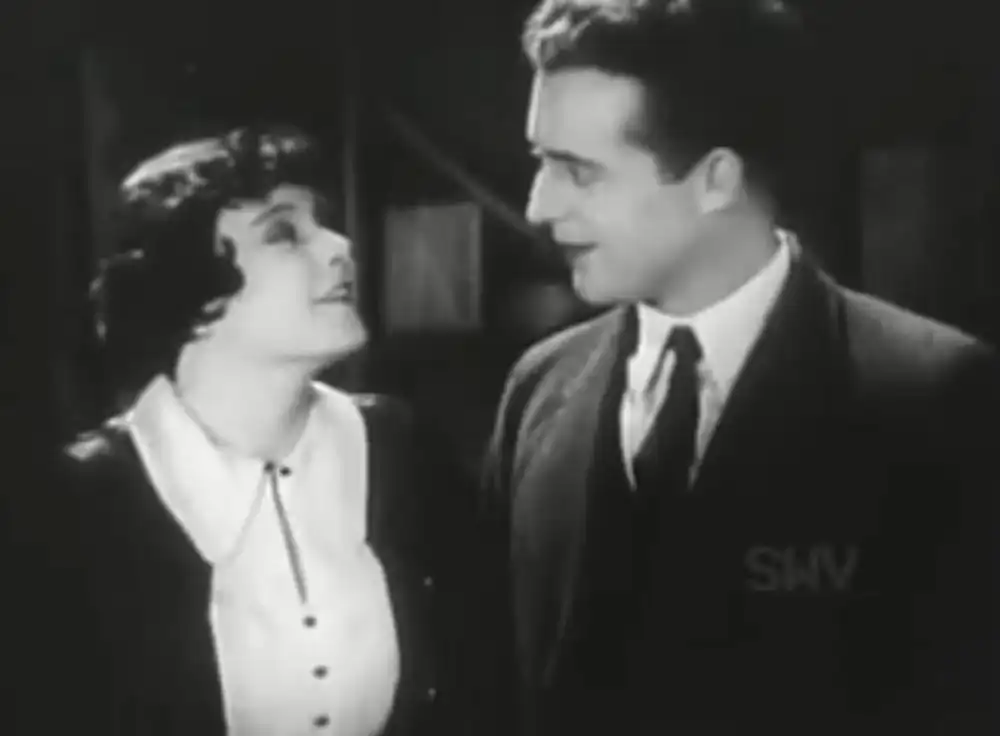
It reminded me a little of the pacing in Fire Fighters, where things just happen because the script says they have to, not because it makes sense for the characters. Dan goes from a good boy to a thief so fast it’ll give you whiplash.
The lady playing the 'vamp' character—the one who gets him into the drugs—is actually the best part of the movie. She has this look like she’s bored with everything, which is a nice break from Dan’s constant panicking. She’s just there for the chaos.
I did find myself wondering how they filmed the 'drug' scenes without the actors actually inhaling whatever powder they were using. It looks like flour. At one point, a bit of it gets on Dan’s nose and just stays there for an entire scene. Nobody wiped it off. It’s distracting but also kind of human.
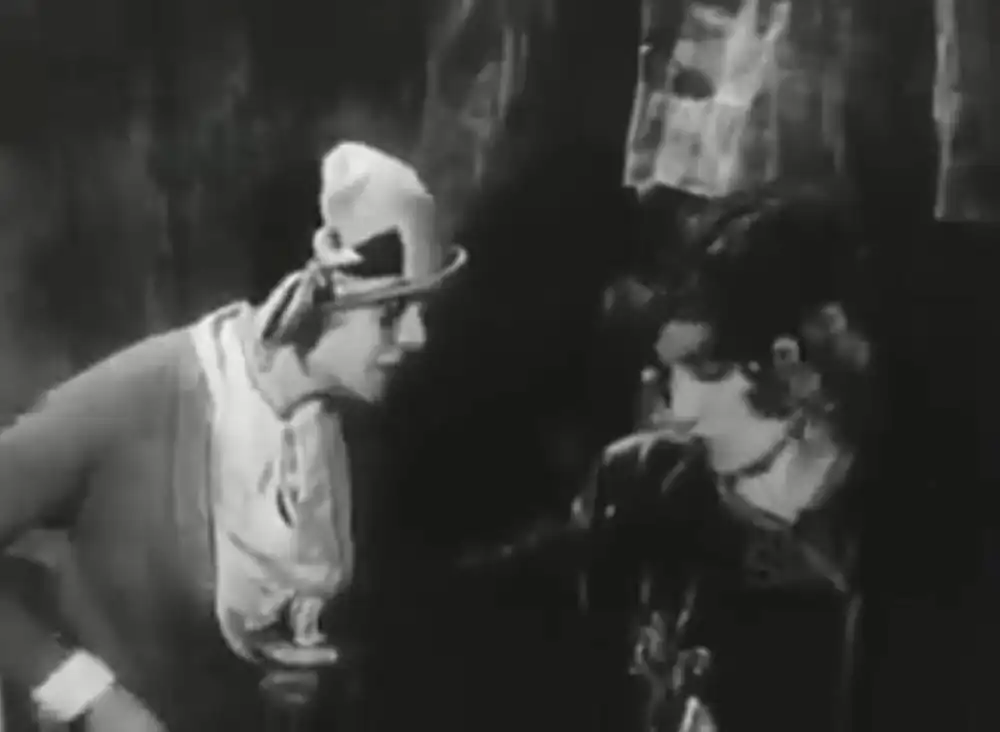
The ending is... well, it’s a downer. It’s an exploitation movie, so it has to end with a 'moral.' It basically tells you that if you go to the city, you will die. Or at least wish you did.
It’s not as well-made as The Law of Compensation, which handled its melodrama a bit better. This one is more like a punch to the face. It’s loud (for a silent movie) and it’s messy.
One thing that really stuck with me was the intertitles. They use these really aggressive fonts sometimes to emphasize how BAD the drugs are. 'THE PACE THAT KILLS!' is splashed across the screen like a newspaper headline.
Is it a good movie? Not really. Is it an interesting one? Absolutely. It’s a window into what people were afraid of in 1928. They weren't afraid of global warming or the economy; they were afraid of their kids going to the city and smelling some white powder.
The acting by Owen Gorin is just... it’s a lot. He’s trying so hard to be a tragic figure. Sometimes he looks like he’s about to sneeze, but he’s actually supposed to be crying. I felt bad for him, but mostly because he looked like he was going to hurt his back with all that slouching.
If you have an hour to kill and want to see some vintage 1920s hysteria, this is the one. Just don’t expect it to be a masterpiece. It’s more like a weird artifact you find at a garage sale. You’re glad you saw it, but you don’t really need to see it again.
Also, the makeup on the sister in the final scenes is genuinely ghastly. They made her look like a ghost with dark circles under her eyes that go down to her chin. It’s effective, I guess, but it’s also very 'theatre-kid' energy.
Anyway, that’s The Pace That Kills. It’s fast, it’s weird, and it really hates the city. 🏙️💨
IMDb —
1933
Community
Log in to comment.