Summary
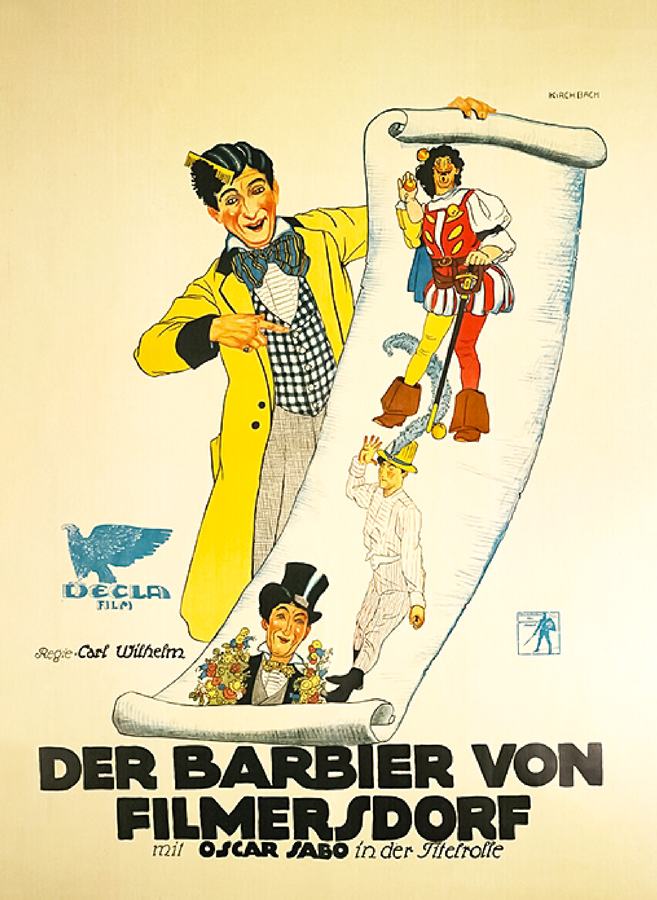
In the fog-lathered hamlet of Flimersdorf, where the river coughs up rusted combs and the church bell tolls like a dull razor, itinerant tonsor Wilhelm Kuckuck—equal parts poet and pox-scarred pragmatist—arrives with a leather satchel of blades that sing of 1848 revolutions and the perfume of vanished empire. He leases the sagging attic above the bakery, befriends the baker’s consumptive daughter Lenchen—Anna Müller-Lincke’s moon-pale wraith who hoards marzipan pigs like relics—and shaves the village men until their secrets foam white against the strop. Each scrape of his knife peels another layer of communal hypocrisy: the burgomaster’s syphilitic ledger, the pastor’s taste for flagellation, the schoolmaster who sells maps to buried insurgents. Oscar Sabo, who also penned the sardonic script, plays Wilhelm with a stooped elegance, eyes flickering between compassion and scalpel-sharp contempt; Wolfgang Zilzer’s crippled postman, Herr Stumpf, becomes both Sancho Panza and Greek chorus, limping through scenes with letters that will never reach the dead. When the barber uncovers a Prussian seal imprinted on the baker’s forearm—an old desertion mark—he must decide whether to brandish truth like a straight-edge or continue the village’s barberic ballet of half-truths. The climax erupts during the annual Schützenfest: Wilhelm, robed in the blood-red banner of the failed 1849 uprising, offers free shaves atop the carnival’s ferris wheel, turning the machinery into a revolving confessional where secrets are clipped and throats are nicked. As the wheel spins, Lenchen coughs crimson onto his waistcoat, a macabre sacrament that baptizes the new republic of Flimersdorf—a republic that ends, like all utopias, at the stroke of government bayonets. The final shot freezes on Wilhelm’s abandoned razor sinking through river water, catching starlight like a reluctant comet while the bakery’s brick oven exhales its last marzipan-scented breath.
Review Excerpt
"
Oscar Sabo’s Der Barbier von Flimersdorf is not merely a film; it is a straight-edge incision across the carotid of Weimar-era denial, a lacework of nitrates and bile that glints even when the projector bulb gutters.
Imagine, if you dare, the slow rasp of a razor against gristle—each frame of this 1923 curiosity sounds precisely so. Set in a Rhine backwater that never saw a railway, the picture drapes its satire over the shoulders of Wilhelm Kuckuck, a barber whose surname translates to “cucko..."