DbcultAccessing Vault...
6.6/10
Senior Film Conservator
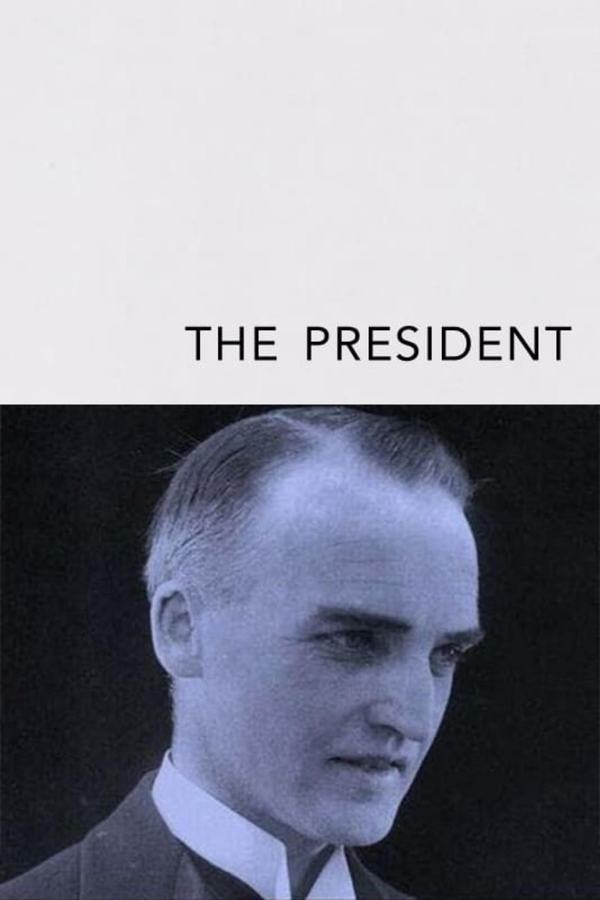
A definitive 6.6/10 rating for a film that redefined the boundaries of cult cinema. The President remains a cornerstone of transgressive art.
The creak of leather-bound law books seems almost audible in Carl Theodor Dreyer’s The President (1919), a silent film that screams volumes about societal hypocrisy. From its opening frames—where the camera lingers on the stern, whiskered countenance of President of the Court Victor Frandsen (Halvard Hoff)—Dreyer constructs a claustrophobic moral prison. The judge’s world is one of rigid mahogany, starched collars, and suffocating convention. Yet Dreyer, with surgical precision, dissects the rotten core beneath this veneer when Frandsen recognizes the accused infanticide, Karla Victor (Betty Kirkeby), as his own abandoned illegitimate daughter. The gut-wrenching horror manifests not through theatrical gesture but through the subtle collapse of Hoff’s left eyelid—a tectonic shift in the impassive judicial facade.
Dreyer frames the courtroom as both theater and battleground. Watch how cinematographer Hans Vaagbo positions the camera slightly below eye level during Karla’s testimony, making witness benches loom like impassable cliffs. When the prosecution details how she concealed her pregnancy—binding her abdomen with coarse linen—the film cuts to Frandsen’s hand unconsciously clutching his own stomach. This visual parallelism between the father’s hidden paternity and the daughter’s hidden pregnancy becomes Dreyer’s masterstroke. The director’s emerging obsession with physiognomic truth—later perfected in The Passion of Joan of Arc—finds early expression here. Jacoba Jessen as Karla’s landlady delivers damning testimony with lips pursed in puritanical satisfaction, while Carl Lauritzen’s defense attorney radiates impotent frustration through the nervous polishing of his spectacles.
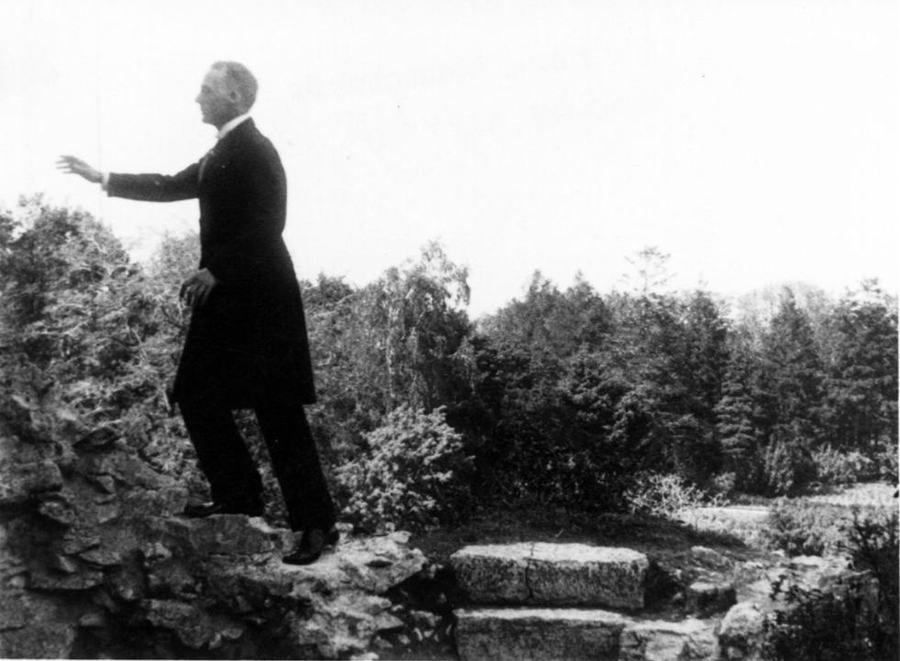
The film’s central tragedy unfolds through intersecting silences. Karla never explicitly names Frandsen as her father—the weight of shame proves thicker than blood. In a devastating sequence at the women’s prison, Dreyer contrasts Karla’s hollow stare with the boisterous camaraderie of other inmates. Fanny Petersen, as a cellmate offering stolen bread, becomes a poignant counterpoint to bourgeois morality—her petty theft radiating more humanity than Frandsen’s rigid legalism. When the verdict is passed, Dreyer refuses courtroom histrionics. Instead, he fixates on a single tear tracking through grime on Karla’s cheek as the camera retreats behind prison bars, transforming her into an abstract study of entombed despair.
Dreyer weaponizes domestic spaces to expose societal fractures. Consider the excruciating dinner scene where Frandsen’s legitimate daughter (Olga Raphael-Linden) prattles about wedding china while he pushes away his roast pheasant—the meat’s blood-red jus pooling like an accusation on fine porcelain. His wife (Elith Pio) chirps about charitable causes, unaware her coin purse supports the prison holding her husband’s secret child. Production designer Axel Madsen reinforces this through oppressive interiors: velvet drapes swallow sound, ornate clocks tick toward execution, and a stuffed owl glowers from its perch—an avian memento mori observing the family’s decay.
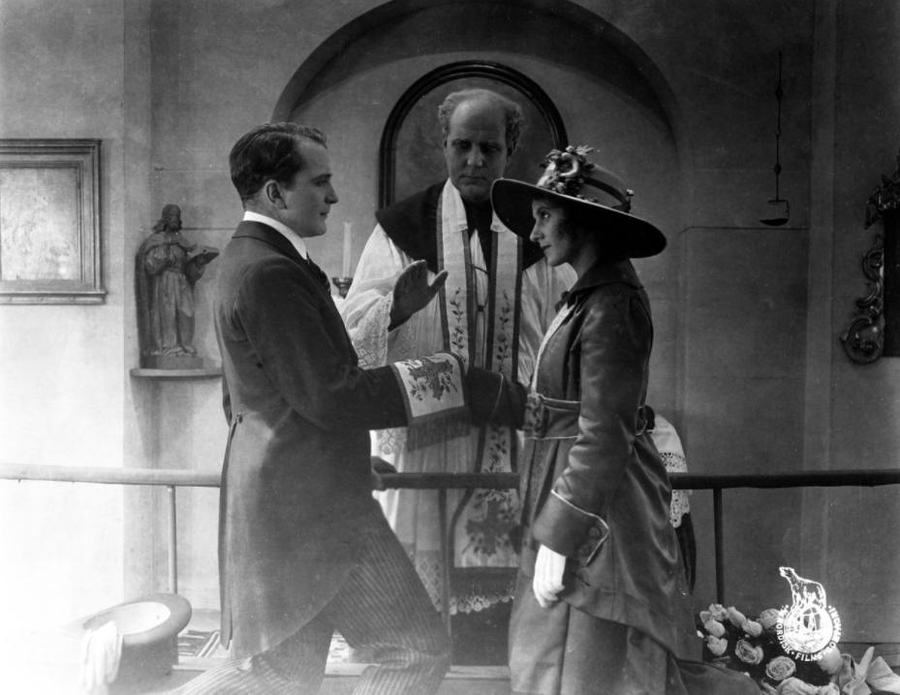
The film’s exploration of gendered punishment remains distressingly relevant. While Frandsen’s youthful indiscretion earned him societal advancement—"a gentleman’s dalliance"—Karla’s identical "sin" condemns her to death. Dreyer underscores this through the leering jury members, their eyes lingering on Karla’s body during testimony as if measuring her erotic culpability. In contrast to American melodramas like Her Husband's Wife (1916) which often redeemed fallen women through marriage plots, The President offers no such salvation. Karla’s fate mirrors Hungarian cinema’s Ártatlan vagyok! (1916), where unwed mothers face similar condemnation.
Halvard Hoff’s performance remains a benchmark of restrained torment. Watch how he rehearses the death sentence alone in his study—mouthing the words "hanged by the neck" while his fingers compulsively stroke his own collar. Later, when signing the execution order, his fountain pen leaves inkblots resembling teardrops on the parchment. This isn’t acting; it’s soul autopsy. Betty Kirkeby matches him in stillness; her Karla moves with the eerie calm of someone already inhabiting a coffin. In the execution preparation scene—where matrons forcibly measure her for burial clothes—her body goes limp as a surrendered puppet. Dreyer holds the shot until the violation becomes almost unwatchable.
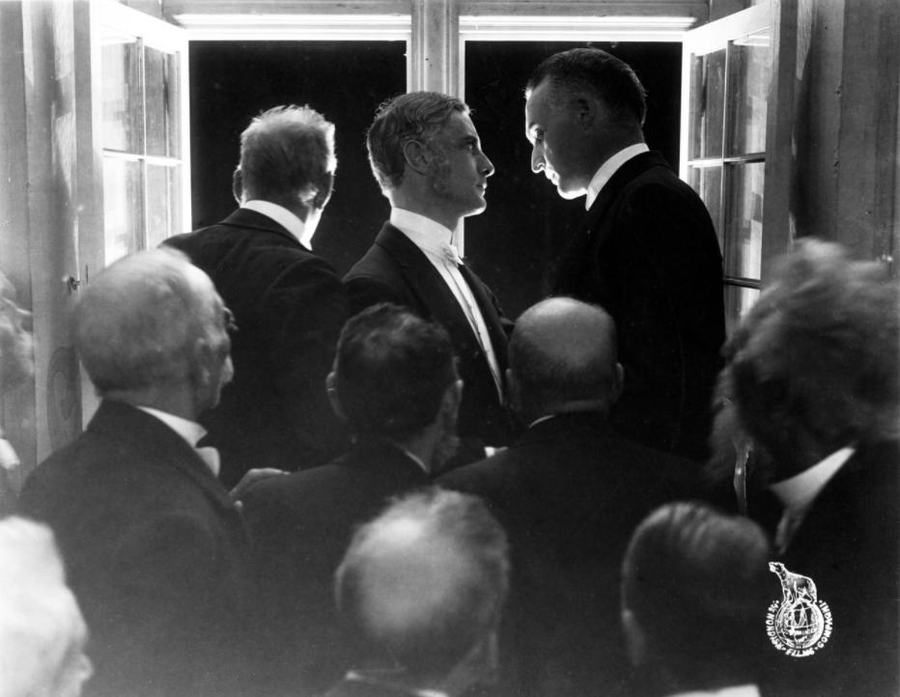
Dreyer’s visual metaphors acquire brutal weight. The judge’s carriage ride to the prison becomes a phantasmagoric journey: streetlights warp into gallows-shaped shadows across his face. When he finally confronts Karla in her cell, their composition echoes Da Vinci’s The Last Supper—Karra as sacrificial Christ, Frandsen as a Judas paralyzed by cowardice. The director’s use of chiaroscuro lighting during this encounter transforms prison bars into moral cage lines across their bodies. This aesthetic audacity surpasses contemporaneous films like The Cup of Life (1915), showcasing Dreyer’s nascent genius.
The film’s soundlessness amplifies its thematic resonance. Without dialogue, we hear the deafening clang of Frandsen’s gavel through the violent jerk of jurors’ heads. The absence of screams during Karla’s nightmare sequences makes her open-mouthed terror more harrowing—a vacuum of sound swallowing hope. Dreyer understood that true horror lives in implication; he shows no execution, only the reaction shots of guards flinching at the trapdoor’s thud. This restraint makes the final shots of Frandsen’s empty judicial chair—pools of shadow gathering like moral residue—more devastating than any graphic depiction.
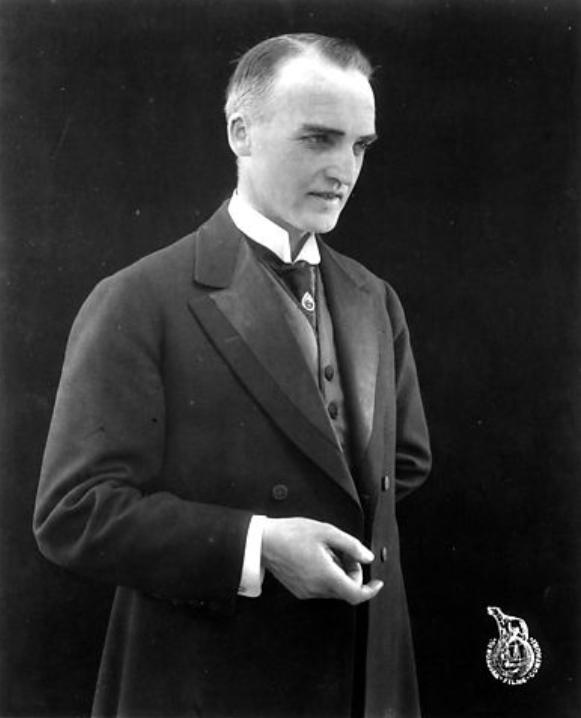
Among Danish silent cinema, The President shares thematic DNA with Syndig Kærlighed (1919), yet Dreyer transcends melodrama through psychological excavation. Where Dimples (1916) offered sentimental paternal redemption, Dreyer denies easy catharsis. Frandsen’s eleventh-hour confession isn’t heroism—it’s the spasmodic twitch of a crushed conscience arriving too late. His courtroom admission—"I am her father"—shatters his career but cannot resurrect his daughter. The subsequent shots of him wandering rain-lashed streets, his judicial robes sodden with rain and disgrace, evoke a post-fall Lucifer exiled from his own paradise of respectability.
Dreyer’s indictment extends beyond individuals to the architecture of power. Scenes juxtapose the courthouse’s neoclassical columns—symbols of rational order—with the prison’s dehumanizing brickwork. When Frandsen signs Karla’s death warrant, his hand is framed against a window showing church spires piercing the sky—a brutal reminder of collusion between judicial and religious authority. This institutional critique predates similar explorations in The Road Through the Dark (1918), establishing Dreyer as cinema’s premier anatomist of societal corruption.
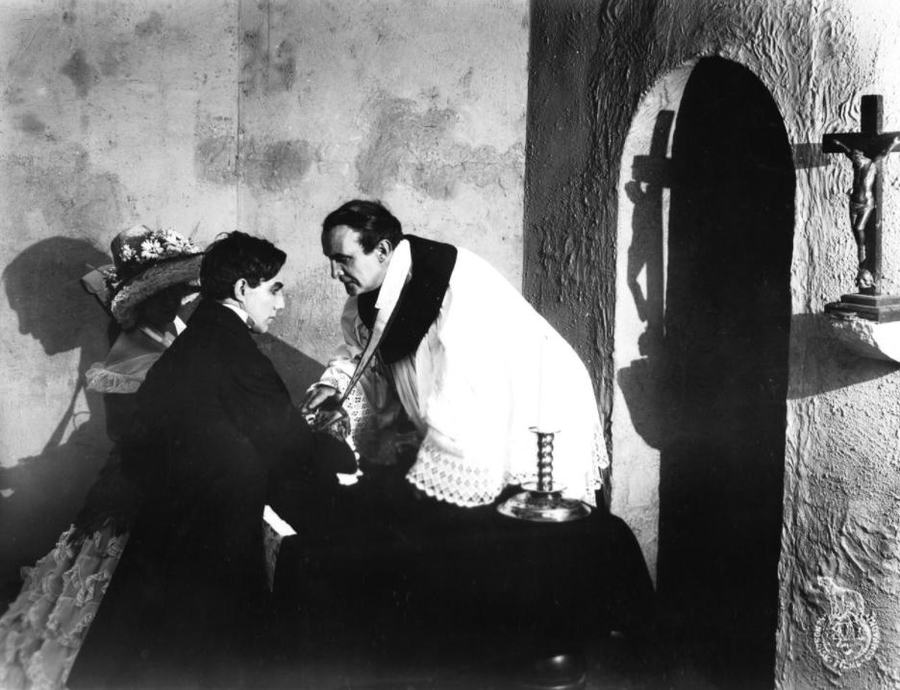
The film’s legacy lies in its moral ambivalence. Is Karla truly guilty? Dreyer plants seeds of doubt: a midwife’s fleeting hesitation during testimony; the ambiguous placement of the infant’s body suggesting accidental suffocation. Unlike The Ring and the Ringer (1915) with its clear villains, The President implicates everyone—from the sanctimonious jurors to the gossip-hungry public devouring trial reports. Even Karla’s landlady, whose testimony seals her fate, is shown later weeping before a Virgin Mary icon—complicit yet human.
Dreyer’s framing of the illegitimate child as society’s ultimate sin predates Fruits of Desire (1919) by decades. The newborn’s corpse becomes less a plot device than a theological argument—an innocent sacrificed to maintain societal illusion. In the film’s most transgressive moment, Karla kisses her dead baby’s forehead not with maternal sorrow, but with something resembling gratitude for its escape from this world. This blasphemous beatitude lingers like a stain.
Modern viewers may note Dreyer’s sparse female agency—Karla is ultimately defined by paternal relationships—yet within 1919’s constraints, her passive resistance carries power. Her refusal to name Frandsen becomes a silent rebellion, forcing him to choose between conscience and convention. When she finally addresses him as "father" in their cell encounter, the word hangs between them like a cobweb—fragile, ancient, and poisonous.
Technically, the film anticipates Dreyer’s later triumphs. The dolly shot tracking Karla’s walk to the defendant’s chair—her back rigid, the courtroom blurring into a smear of judgmental faces—foreshadows similar movements in Ordet. The climactic confrontation’s extended takes—unusual in an era of rapid cuts—demand actors inhabit emotional truth. Unlike the whimsy of The Patchwork Girl of Oz (1914), every frame here vibrates with consequence.
The President’s final images—abandoned judicial robes gathering dust as seasons change outside the courthouse—offer no redemption, only the indifferent march of time. Dreyer suggests that true justice remains perpetually out of frame, elusive as a silent film’s unheard melodies. Over a century later, this masterpiece still pulses with forensic urgency, dissecting how society weaponizes morality against the vulnerable. Its shadows stretch long into films exploring paternal failure, from Tokyo Story to There Will Be Blood—but none match the harrowing intimacy of Hoff’s fingers brushing his daughter’s prison cot, feeling the residual warmth of a life his world condemned.
IMDb 5.3
1929
Community
Log in to comment.