DbcultAccessing Vault...
4.6/10
Senior Film Conservator
A definitive 4.6/10 rating for a film that redefined the boundaries of cult cinema. The Warrior Strain remains a cornerstone of transgressive art.
When the title The Warrior Strain first flickered across the silver screen in 1925, audiences were presented with a tableau that fused the aristocratic sensibilities of post‑Victorian England with the nascent dread of wireless warfare. Director F. Martin Thornton, whose oeuvre includes the atmospheric Princess Romanoff, crafts a visual symphony that oscillates between the genteel promenades of Brighton and the stark, metallic interiors of clandestine laboratories. The film’s central conceit—an Earl’s cadet son confronting a German baron intent on planting wireless‑controlled signals—operates as both a literal and metaphorical battleground, where tradition collides with the inexorable march of technology.
J. Edwards Barker inhabits Lieutenant Edward Ravenscroft with a stoic gravitas that recalls the measured poise of his earlier work in The White Pearl. Barker’s eyes convey a quiet turmoil, a subtle rebellion against the expectations of his lineage. Opposite him, William Parry—playing the seasoned Captain—delivers a performance steeped in world‑worn cynicism, his clipped diction echoing the hardened cadence of a man who has witnessed the futility of war. H. Agar Lyons, as the scheming Baron von Richter, employs a restrained menace; his slender frame and cold stare render him a specter of the new, invisible enemy—technology itself.
Sydney Wood, cast as the resourceful local constable, injects moments of levity without compromising the film’s overarching tension. Evelyn Boucher, portraying the intrepid journalist, provides a rare early example of a female character wielding agency, her quicksilver intellect serving as a narrative fulcrum that pivots the plot toward its climactic revelation.
Thornton structures the story with a deliberate pacing that mirrors the ticking of an unseen clock. The first act establishes the bucolic veneer of Brighton—a seaside resort rendered in soft focus, its pastel façades belying an undercurrent of unease. The second act introduces the technological threat: a series of clandestine experiments in a concealed workshop, where von Richter’s engineers calibrate miniature transmitters capable of destabilising naval communications. The third act erupts into a kinetic chase across the pier, the camera tracking the protagonists with a kinetic fluidity rarely seen in silent cinema.
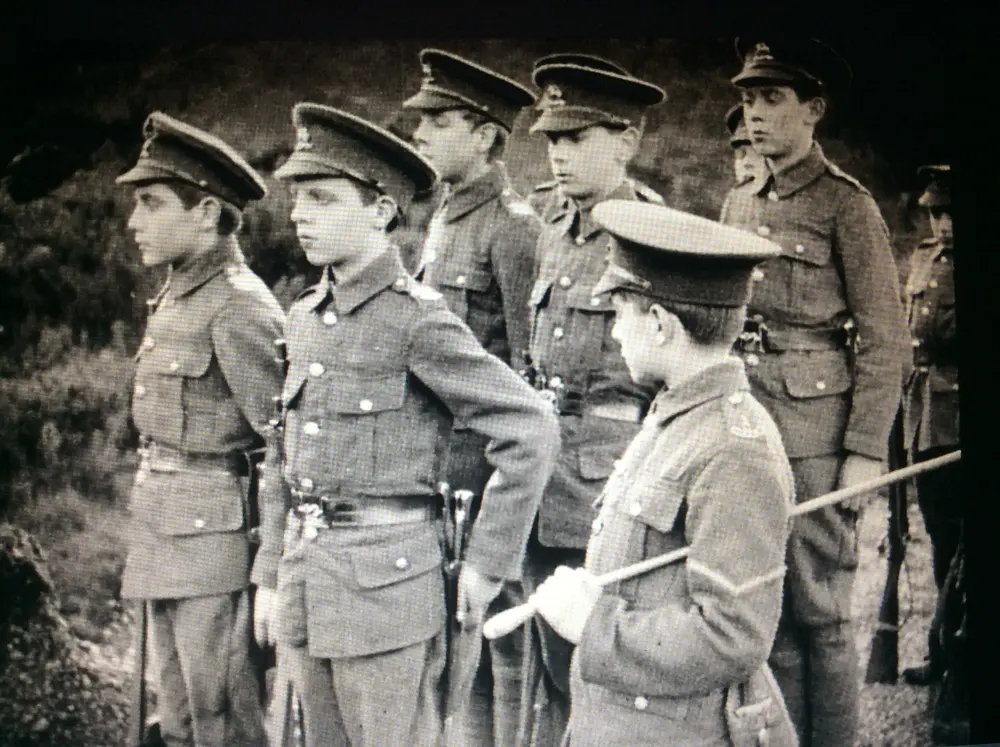
Themes of honor and duty are interrogated through the lens of modernity. Ravenscroft’s internal conflict—between the expectations of his aristocratic heritage and his emerging conscience—mirrors society’s broader struggle to reconcile the romanticized past with the cold realities of mechanised warfare. The film subtly critiques the complacency of the upper class, suggesting that true valor lies not in lineage but in the willingness to confront invisible threats.
The visual composition, overseen by cinematographer H. Agar Lyons, employs chiaroscuro to great effect. Night scenes along Brighton’s promenade are bathed in a muted amber glow—an homage to the dark orange #C2410C palette—while the interior of von Richter’s lab is suffused with a cold sea‑blue #0E7490, underscoring the alien nature of his experiments. The use of stark, high‑contrast frames during the climactic pier confrontation heightens the sense of impending disaster, each cut punctuated by the rhythmic flicker of the wireless devices.
In moments of introspection, the director opts for static, lingering shots that allow the audience to absorb the emotional weight of the characters. This technique is reminiscent of the contemplative pacing found in The Eternal Sin, yet Thornton injects a kinetic urgency that propels the narrative forward.
Though silent, the film’s accompaniment—originally performed by a live orchestra—leverages a leitmotif that oscillates between a martial brass fanfare and a delicate, melancholy piano. Modern restorations have paired the visual with a curated soundtrack that accentuates the film’s tension, employing low‑frequency drones to emulate the invisible wireless signals that drive the plot.
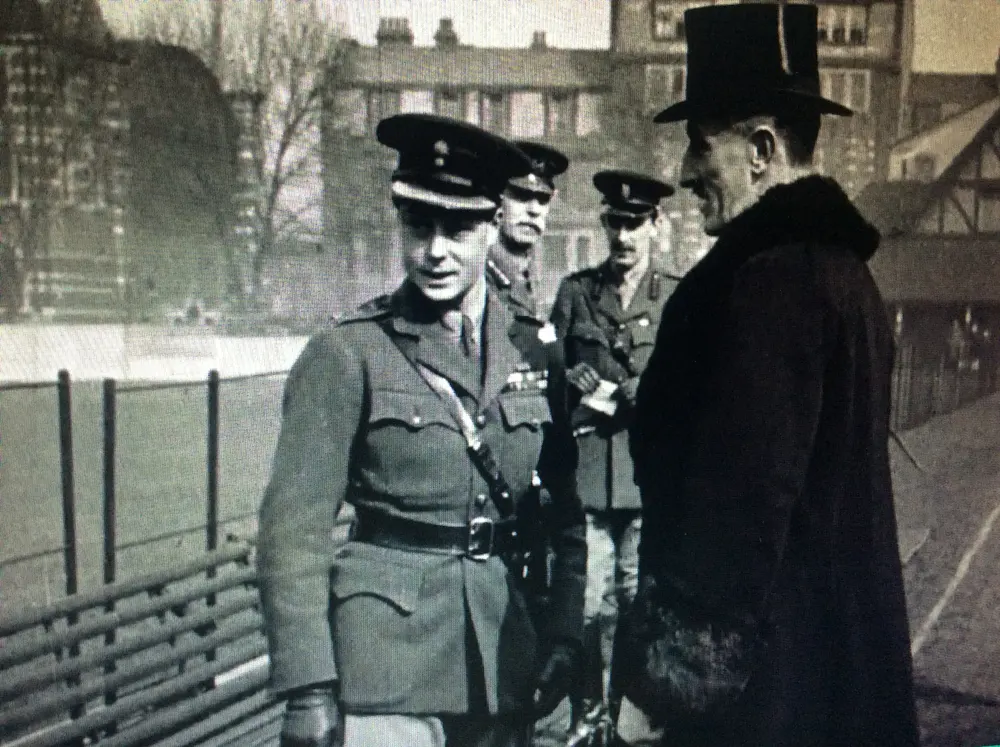
When placed alongside contemporaneous works such as The Green‑Eyed Monster and Borrowed Clothes, The Warrior Strain distinguishes itself through its prescient engagement with technological anxiety—a theme that would later dominate Cold War cinema. Its narrative complexity anticipates the layered storytelling of later epics like Il Campo Maledetto.
Moreover, the film’s portrayal of a female journalist wielding investigative power predates similar characters in Waifs and A Man and the Woman, positioning Evelyn Boucher as a proto‑feminist figure within a male‑dominated genre.
The film’s set pieces—particularly the reconstruction of Brighton’s pier—exhibit meticulous attention to period detail. Props such as brass compasses, leather‑bound field notebooks, and early wireless transmitters are rendered with a fidelity that immerses the viewer in the 1918 milieu. The costuming, overseen by the adept wardrobe department, juxtaposes the crisp, tailored uniforms of the British cadets against the austere, utilitarian garb of von Richter’s technicians, visually reinforcing the cultural clash at the heart of the narrative.
The film’s three‑act structure adheres to classical dramaturgy while allowing for organic development. The inciting incident—Ravenscroft’s discovery of a cryptic telegram—propels the plot into a spiralling series of investigations. Mid‑film, the tension escalates as von Richter’s devices are revealed to possess the capacity to interfere with naval signaling, raising stakes from personal to national. The denouement, set against the backdrop of a storm‑lashed pier, resolves the central conflict with a blend of physical confrontation and intellectual triumph.
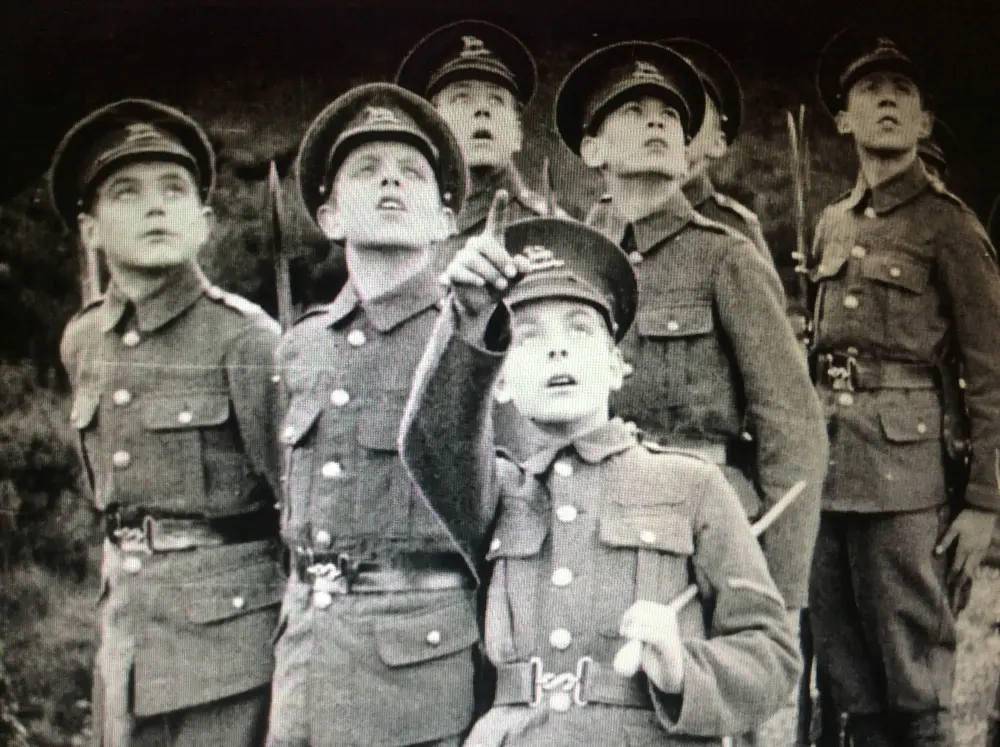
Contemporary reviews lauded the film’s daring thematic ambition, noting its “bold foray into the invisible battlefield of radio warfare.” Modern critics, revisiting the work via restored prints, commend its prescient commentary on surveillance and the ethical quandaries of technological advancement. The film’s inclusion in retrospectives alongside titles such as The Last Days of Pompeii (1913) underscores its enduring relevance.
Viewers are drawn into the emotional core of the story through the nuanced performances of Barker and Boucher. Their chemistry—rooted in a shared sense of purpose—provides a human anchor amid the film’s technical intrigue. The climactic scene, wherein Ravenscroft disables the final transmitter while the sea roars beneath him, is a masterclass in visual storytelling, evoking both exhilaration and dread without a single spoken line.
The Warrior Strain has quietly informed subsequent cinematic explorations of espionage and wireless sabotage, from the radio‑centric thrillers of the 1930s to the digital paranoia of contemporary blockbusters. Its thematic preoccupation with the invisible threat foreshadows later works such as The Oval Diamond, where the specter of unseen forces drives narrative tension.
In sum, the film stands as a testament to silent‑era ingenuity, marrying period drama with speculative technology. Its layered characters, striking visual palette, and daring narrative ambition render it a compelling study for scholars and cinephiles alike.

IMDb —
1925
Community
Log in to comment.