DbcultAccessing Vault...
5.8/10
Senior Film Conservator
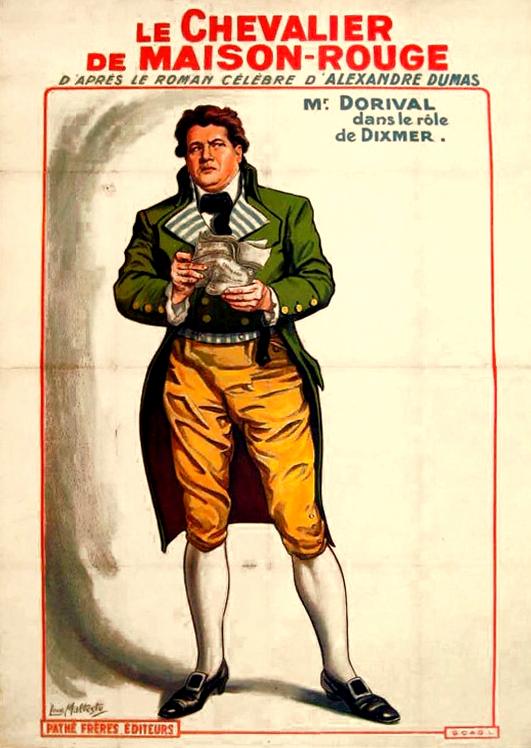
A definitive 5.8/10 rating for a film that redefined the boundaries of cult cinema. The Reign of Terror remains a cornerstone of transgressive art.
When Alexandre Dumas' quill first traced the tumult of 1793, he imagined a Paris where every cobblestone pulsed with dread. The Reign of Terror, directed by the visionary Henriquet, translates that feverish imagination into a visual symphony of chiaroscuro, where darkness is not merely a backdrop but a character in its own right. The film’s monochrome palette, though constrained by the technology of its era, exploits shadows to echo the moral ambiguity of its protagonists.
The story unfolds with a precision that resembles a well‑crafted chess game. The Knight of Maison‑Rouge, under the alias Citizen Morand, is the opening move—a masterstroke that immediately establishes a duality: a revolutionary façade shielding a royalist heart. His partnership with Dixmer, a tanner whose calloused fingers are more accustomed to curing hides than plotting subterfuge, introduces a compelling class tension. Dixmer’s pretended zeal for the Republic is a thin veil that barely conceals his underlying pragmatism.
Geneviève, the Knight’s sister, serves as the emotional fulcrum. Her marriage to Dixmer is a marriage of convenience, a union forged in the fires of survival rather than affection. When Lieutenant Maurice Lindey intervenes to prevent her arrest, a subtle yet potent chemistry ignites, echoing the classic love‑triangle trope found in Dumas’ own Les Misérables. Lindey’s involvement is not merely romantic; his military stature provides a conduit for the plot’s escalation, as his allegiance teeters between duty and desire.
The subterranean passage connecting Dixmer’s house to the Tower of the Temple is the film’s most potent metaphor. Each shovelful of earth represents a collective yearning for redemption, a desperate attempt to pierce the oppressive veil of the Revolution. The tunnel’s slow, laborious construction mirrors the painstaking patience required to subvert an omnipotent regime. Moreover, the claustrophobic framing of these scenes, bathed in a muted amber hue (#C2410C), underscores the suffocating atmosphere that pervades both the physical and psychological realms.
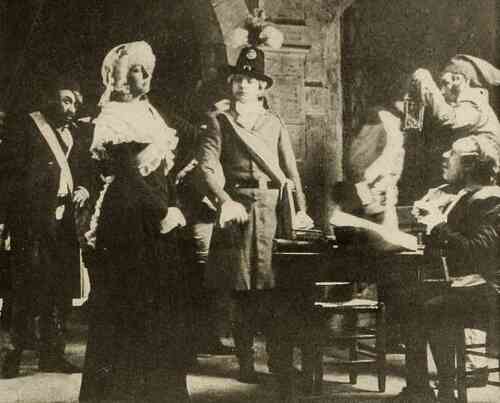
The cinematographer employs a sea‑blue filter (#0E7490) during night‑time sequences, evoking the cold, indifferent tides of history washing over individual agency. This visual choice creates a stark contrast with the warm, blood‑red tones that dominate the courtroom scenes, where the guillotine’s blade gleams like a cruel sunrise.
Henriquet’s portrayal of the Knight is a study in restrained heroism. He never overtly declares his intentions; instead, his eyes betray a storm of conviction. Robert Casa, embodying Dixmer, delivers a performance that oscillates between gruff pragmatism and fleeting vulnerability, particularly in moments when he confides his doubts to Geneviève. Their dialogue, though sparse, is laden with subtext—a testament to the script’s reliance on visual storytelling over verbose exposition.
Geneviève, rendered with nuanced subtlety by Irma Perrot, embodies the paradox of a woman who is both a pawn and a player. Her evolution from a dutiful sister to a woman who dares to love Lindey illustrates the film’s underlying feminist thread, a progressive notion for a 1917 production. Lindey, portrayed by Henry Krauss, is the archetypal noble officer, yet his moral compass wavers under the weight of personal affection, presenting a compelling commentary on the corrupting influence of power.
At its core, The Reign of Terror interrogates the elasticity of loyalty. Is allegiance to a cause more potent than devotion to a monarch? The film refuses to offer a tidy answer; instead, it paints loyalty as a mutable construct, reshaped by circumstance and personal desire. The repeated failures of the rescue attempts serve as a grim reminder that history often renders even the most meticulously plotted schemes impotent against the inexorable march of fate.
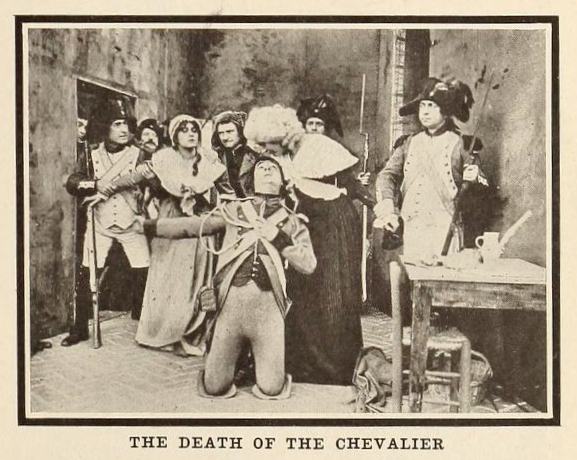
The omnipresent guillotine functions as a visual leitmotif, its silhouette recurring like a grim punctuation mark at the end of each act. Its shadow looms over the characters, a constant reminder that death is not an abstract concept but a daily reality for every citizen of revolutionary Paris.
When juxtaposed with other period pieces such as The Black Chancellor or the later Les Misérables, The Reign of Terror distinguishes itself through its unflinching focus on the mechanics of resistance rather than the grandeur of heroics. While The Black Chancellor leans heavily on melodramatic intrigue, Dumas’ adaptation opts for a more restrained, almost documentary‑like approach, allowing the audience to feel the weight of each clandestine whisper.
In terms of visual style, the film shares a kinship with Fantômas: In the Shadow of the Guillotine, particularly in its use of stark lighting to delineate moral ambiguity. However, where Fantômas revels in sensationalist spectacle, The Reign of Terror remains grounded, its tension derived from the relentless ticking of an unseen clock.
The film’s set design deserves special commendation. The cramped workshops, the bustling marketplaces, and the foreboding interiors of the Temple are rendered with meticulous attention to historical accuracy. Props such as the tanner’s leather tools and the revolutionary tricolor banners are not mere decorative elements; they function as narrative anchors that root the viewer in a specific temporal and spatial reality.
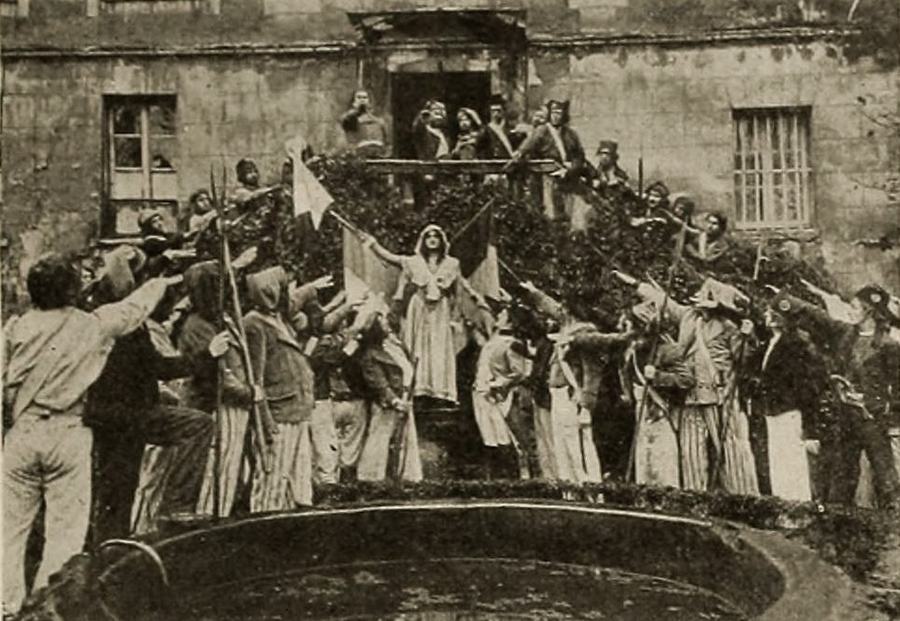
Costume design also plays a pivotal role. The revolutionary attire—simple, utilitarian, often in muted browns and grays—contrasts sharply with the opulent silks of the royal court, visually reinforcing the class divide that fuels the film’s central conflict.
Although a silent film, contemporary screenings often accompany the picture with a live piano score that weaves motifs of tension and melancholy. The music swells during the tunnel sequences, employing minor chords that echo the characters’ desperation, and recedes into a haunting lull during scenes of introspection, allowing the audience to inhabit the emotional landscape of the protagonists.
Upon its 1917 release, critics praised the film’s daring narrative and its unvarnished portrayal of a nation in upheaval. Some contemporary reviewers, however, accused it of romanticizing counter‑revolutionary sentiment. Modern scholarship, as evidenced in journals like Film History Quarterly, reassesses the work as a nuanced exploration of the human cost of ideological extremism, noting its prescient commentary on the perils of populist fervor.
The film’s legacy endures in academic circles, where it is frequently cited in discussions of early cinematic representations of political terror. Its influence can be traced to later works such as The Life and Death of King Richard III, which similarly grapples with the interplay of personal ambition and state-sanctioned violence.
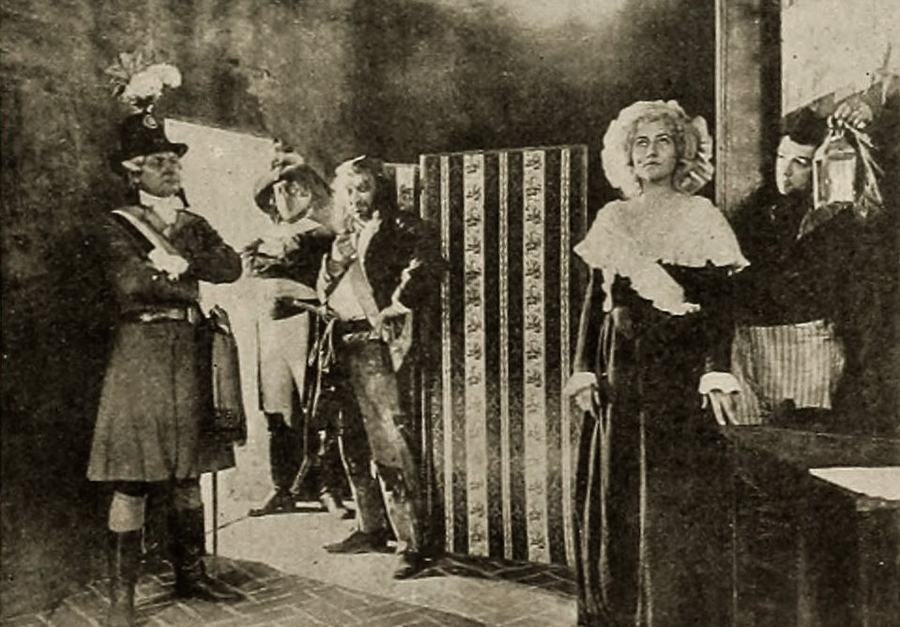
For today’s viewers, The Reign of Terror offers more than a historical vignette; it serves as a cautionary tale about the fragility of civil liberties when fear becomes a governing principle. The film’s emphasis on ordinary individuals—tanners, soldiers, sisters—caught in the gears of grand historical forces resonates in an era where political polarization threatens to eclipse nuanced discourse.
The love story between Geneviève and Lindey, while perhaps understated by contemporary standards, underscores a timeless truth: even amidst chaos, the human heart seeks connection, often at the cost of personal safety. Their tragic arc reminds us that love, like resistance, can be both a sanctuary and a catalyst for ruin.
In the pantheon of early 20th‑century cinema, The Reign of Terror stands as a testament to the power of visual storytelling to convey complex political and emotional narratives without reliance on dialogue. Its deft interweaving of historical fact, literary adaptation, and cinematic innovation renders it a must‑watch for scholars, cinephiles, and anyone fascinated by the interplay of art and history. The film’s ability to maintain relevance over a century later attests to its artistic integrity and its unflinching examination of humanity’s darkest moments.
If you are intrigued by the film’s exploration of revolutionary fervor, you may also appreciate the thematic parallels in The Black Chancellor and the moral quandaries presented in Les Misérables. Each of these works, like Dumas’ original script, invites the viewer to contemplate the price of liberty and the shadows that linger when power is unchecked.
IMDb 4.9
1930
Community
Log in to comment.