DbcultAccessing Vault...
Cult Review
Senior Film Conservator
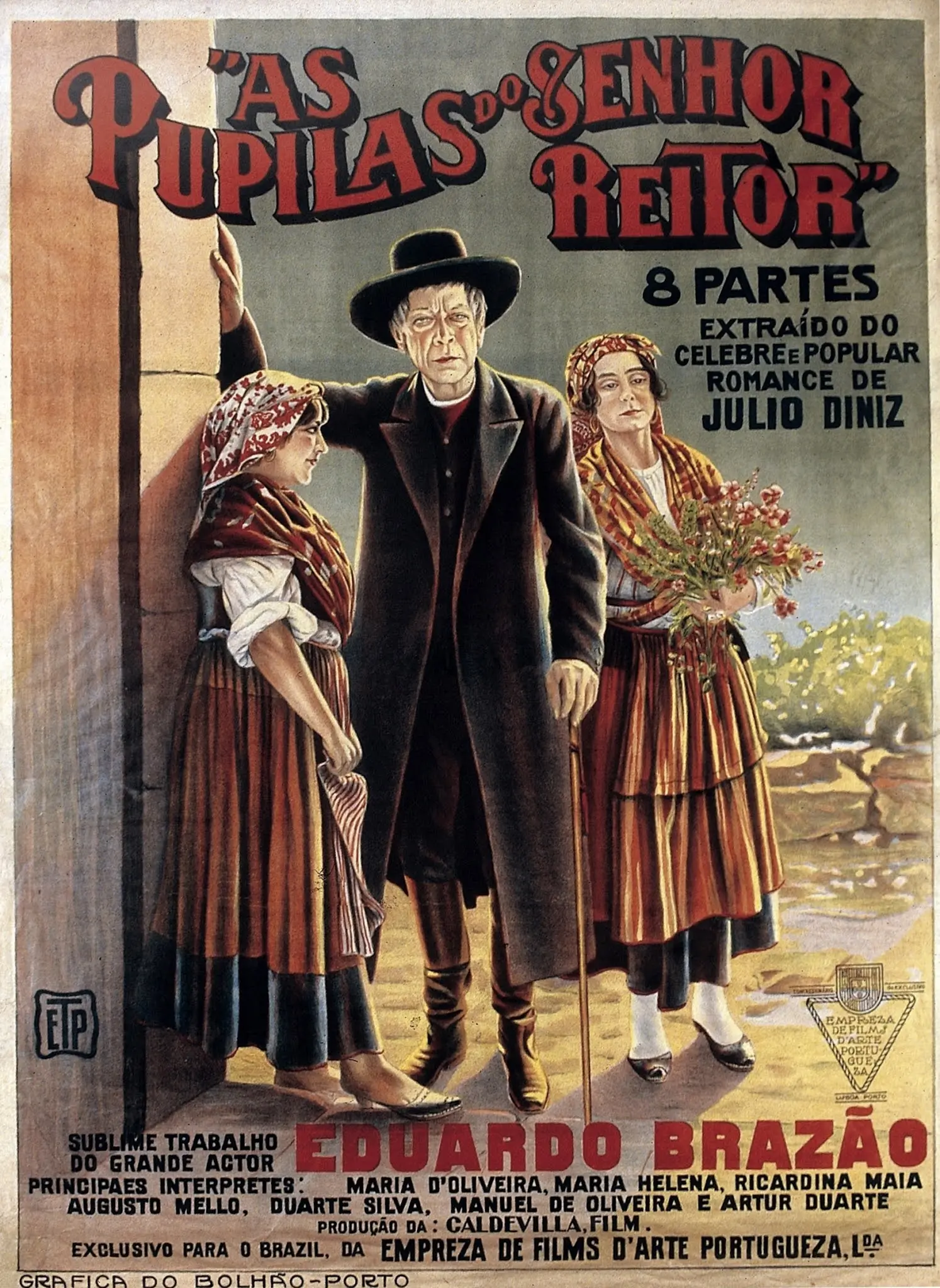
To gaze upon Maurice Mariaud’s 1924 silent opus, As Pupilas do Senhor Reitor, is to witness the birth of a national cinematic identity emerging from the shadow of literary giants. This is not merely an adaptation; it is a visual exegesis of Júlio Dinis’s nineteenth-century pastoralism, rendered with a sensitivity that rivals the contemporaneous works of D.W. Griffith.
In the pantheon of silent cinema, few films capture the essence of the 'genius loci' as effectively as this production. The cinematography transcends simple documentation, utilizing the natural chiaroscuro of the Portuguese landscape to mirror the internal tempests of its protagonists. Unlike the grandiose historical posturing found in Marc'Antonio e Cleopatra, Mariaud opts for an intimate realism that prioritizes the texture of the soil and the rustle of the vine leaves. The camera lingers on the faces of the peasantry, capturing a rugged authenticity that anchors the melodrama in a tangible, breathing world.
The film’s pacing reflects the seasonal rhythms of the Minho region. There is a deliberate, almost meditative quality to the exposition, allowing the viewer to inhabit the Rector’s parish before the central conflicts ignite. This structural patience is a hallmark of early 20th-century European art cinema, a stark contrast to the more frantic comedic energy seen in American shorts like Beaches and Peaches. Here, every frame is saturated with a sense of inevitability, as if the characters are bound by the very topography they inhabit.
The central feminine archetypes, Margarida and Clara, are portrayed with a nuance that defies the often-reductive tropes of silent-era heroines. Margarida, played with a luminous restraint, represents the Dinisian ideal of the 'anjo do lar' (angel of the home), yet she possesses a steeliness that suggests a profound inner life. Her counterpart, Clara, serves as the catalyst for much of the narrative’s tension. Her vivacity is not framed as a vice, but rather as a vulnerability in a social structure that demands absolute conformity.
Their relationship with the Rector is the emotional spine of the film. The Rector himself is a fascinating study in benign authority—a man whose paternalistic instincts are constantly tested by the encroaching modernity represented by the brothers Daniel and Pedro. While other films of the era, such as Johanna Enlists, explore the intersection of femininity and duty through a lens of patriotic fervor, As Pupilas do Senhor Reitor keeps its gaze fixed on the domestic and the spiritual, arguing that the true battlegrounds of the soul are found within the village walls.
The fraternal conflict between Pedro and Daniel provides the film with its most potent dramatic friction. Pedro is the quintessential agrarian hero—sturdy, taciturn, and deeply connected to the land. His morality is as immovable as the granite hills of the north. In contrast, Daniel arrives as a disruption, his sensibilities warped by the artifice of the city. This thematic clash between the rural and the urban is a recurring motif in Portuguese literature, reaching its cinematic zenith here. It invites comparison to Os Fidalgos da Casa Mourisca, where the decay of the old aristocracy provides a similar backdrop for moral exploration.
Daniel’s flirtations and his disregard for the established social order create a ripple effect that threatens to dismantle the Rector’s carefully curated harmony. The film does not shy away from the darker implications of his behavior, yet it maintains a degree of empathy for the 'prodigal son' trope. The resolution of their conflict is not achieved through violence, but through a reckoning with the consequences of their actions—a testament to the sophisticated screenwriting of Campos Monteiro.
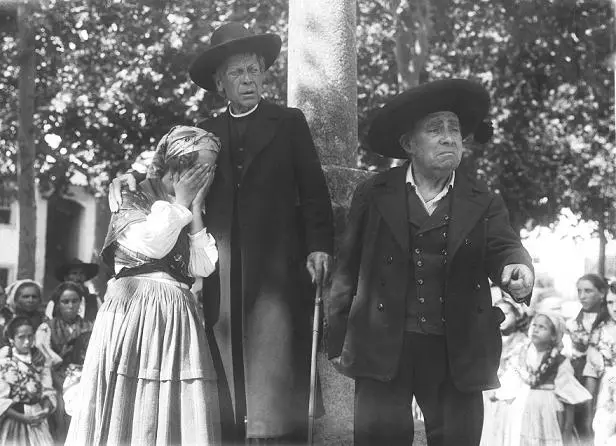
Perhaps the most beloved figure in the Dinisian universe is Dr. João Semana. In this 1924 iteration, the character is elevated to a near-mythic status. He is the bridge between the sacred (the Rector) and the profane (the village’s petty squabbles). His presence provides a much-needed levity, yet his role is fundamentally serious. He represents the emergence of scientific humanism within a traditionalist framework. His tireless devotion to his patients, often at the expense of his own comfort, serves as a secular counterpoint to the Rector’s spiritual guidance.
When compared to the heroic archetypes in films like The Fourth Musketeer, João Semana stands out because his heroism is found in the mundane. He does not wield a sword; he wields a stethoscope and a deep well of compassion. This focus on the 'common man' as a moral exemplar is what gives the film its enduring resonance and its specifically Portuguese flavor.
Technically, As Pupilas do Senhor Reitor is a triumph of its era. The use of location shooting—a rarity for many European productions of the early 20s which preferred the controlled environments of the studio—gives the film a proto-neorealist quality. The lighting, particularly in the interior scenes of the Rector’s house, creates an atmosphere of cloistered sanctity that is suddenly pierced by the bright, harsh light of the outside world whenever the door opens.
The film’s legacy within the context of Portuguese cinema cannot be overstated. It arrived at a time when the nation was seeking to define its cultural output on the world stage. While films like The Greatest Question were exploring similar themes of rural struggle in America, Mariaud’s work remained fiercely idiosyncratic, rooted in the specific linguistic and social cadences of the Iberian Peninsula. It paved the way for future generations of filmmakers to look toward their own heritage for inspiration rather than merely imitating foreign models.
As we analyze this film nearly a century later, its power remains undiminished. The performances, while adhering to the expressive grammar of the silent era, avoid the pitfalls of over-the-top gesticulation. There is a quietude in the eyes of the actors that speaks volumes more than any title card ever could. The film’s exploration of honor, sacrifice, and the redemptive power of love is universal, yet its execution is profoundly local.
In the broader landscape of global cinema, As Pupilas do Senhor Reitor stands as a beacon of what is possible when literature and film engage in a truly symbiotic relationship. It does not merely illustrate the book; it breathes life into its characters, giving them a physical presence that lingers in the mind long after the final fade-to-black. Whether compared to the silent dramas of the East like Ashoka or the Western genre experiments like Smiling Jim, Mariaud’s masterpiece holds its own as a work of immense dignity and artistic integrity. It is a vital document of a bygone era, preserved in the silver halides of the past, waiting to be rediscovered by every new generation of cinephiles.
Final Rating: A monumental achievement in silent narrative construction. A must-watch for scholars of European cinema and lovers of pastoral drama alike.

IMDb —
1927
Community
Log in to comment.