DbcultAccessing Vault...
1.8/10
Senior Film Conservator
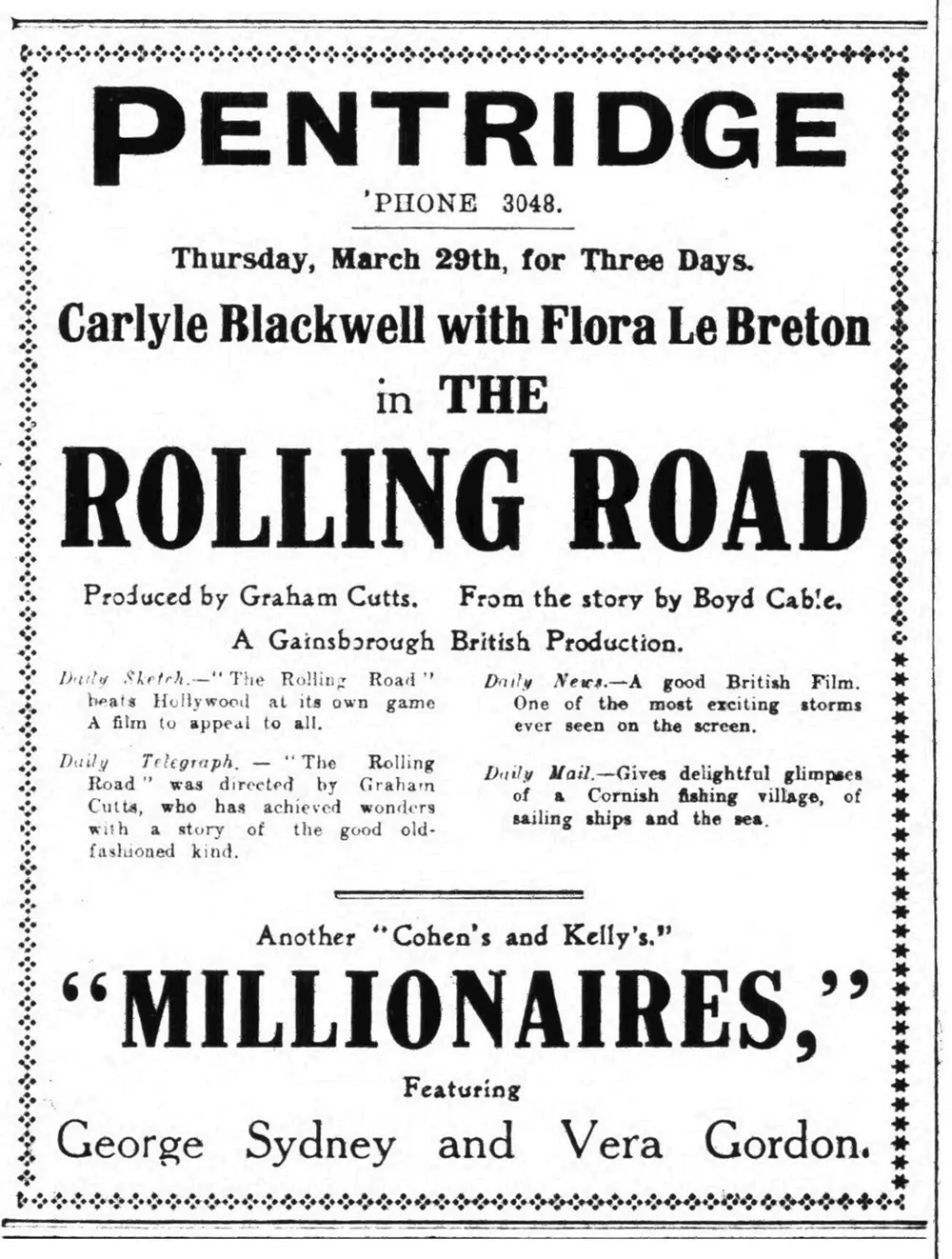
A definitive 1.8/10 rating for a film that redefined the boundaries of cult cinema. The Rolling Road remains a cornerstone of transgressive art.
Should you invest your time in tracking down this rare 1928 British maritime relic? Short answer: only if you are a dedicated historian of the silent era who appreciates slow-burn tension over spectacle.
This film is specifically for those who enjoy the transitionary period of 1920s cinema where melodrama began to flirt with realism. It is absolutely not for viewers seeking the high-octane pacing of modern thrillers or the polished visual effects of the sound era.
1) This film works because of the genuine sense of isolation established in its first act, utilizing the natural horizon to dwarf the characters' petty grievances.
2) This film fails because the script by Violet E. Powell and Boyd Cable loses its momentum once the rescue occurs, devolving into predictable domestic squabbling.
3) You should watch it if you are interested in the early career of Flora le Breton or the specific aesthetic of 1920s British seafaring films.
The Rolling Road attempts to weave a complex web of loyalty and betrayal within the narrow confines of a ship. The marooned sailor is a figure of rugged stoicism, played with a heavy-handed grit by Clifford Heatherley. His performance is typical of the era—broad and expressive—but it carries a weight that feels earned by the setting.
When Flora le Breton’s character appears as the stowaway sister-in-law, the film shifts from a survivalist tale into a drawing-room drama that just happens to be floating. The chemistry between Heatherley and le Breton is intentionally awkward, bordering on the claustrophobic. It works. But it’s flawed.
The arrival of the husband, played by Carlyle Blackwell, should be the climax of the film’s tension. Instead, it feels like a structural necessity that the film doesn't quite know how to handle. Unlike the more fluid narrative found in The Ghosts of Yesterday, the transitions here feel jerky and forced.
The direction by Graham Cutts (uncredited but widely recognized) shows a clear understanding of space. He uses the verticality of the ship—masts, ladders, and cramped cabins—to emphasize the lack of escape for the protagonists. This isn't the grand, sweeping scale of Christus; it is an intimate, almost dirty look at life on the waves.
The cinematography relies heavily on natural light for the exterior scenes. The way the water reflects against the hull of the boat provides a shimmering, almost ethereal backdrop to the very grounded, ugly human conflict occurring on deck. It’s a sharp contrast that keeps the eye engaged even when the plot begins to sag.
One specific scene stands out: the moment the husband first spots the marooned pair through a telescope. The iris shot, a staple of the time, focuses not on their relief, but on their shared guilt. It is a punchy bit of visual storytelling that says more than any title card could.
No, it is a standard melodrama that suffers from the technical and narrative limitations of its era. While it features strong performances from its lead cast, it lacks the innovative spirit that defined the more experimental films of 1928. It serves primarily as a historical curiosity for those interested in British film history.
Flora le Breton is the heart of the film, and her performance is a fascinating study in 1920s gender roles. She plays the stowaway with a mixture of desperation and defiance. While she occasionally falls into the trap of over-emoting—common in silents like Arrah-Na-Pogue—she has moments of quiet stillness that are genuinely moving.
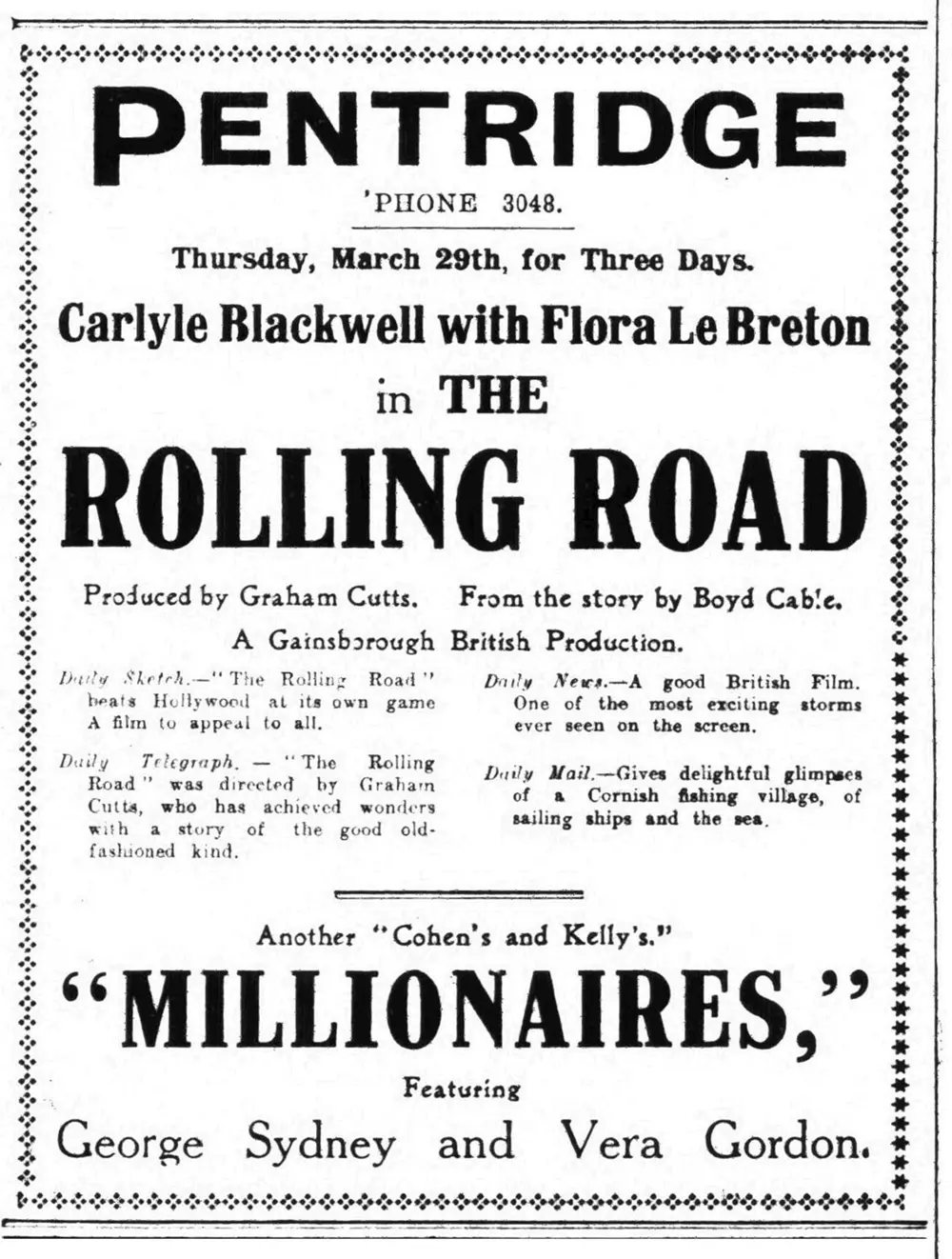
Carlyle Blackwell, as the husband, provides a necessary foil. He represents the 'civilized' world coming to reclaim its property. His presence turns the ship into a courtroom. The way he carries himself—stiff, upright, and judgmental—creates an immediate barrier between him and the more feral, sea-worn sailor.
The supporting cast, including Mickey Brantford and Marie Ault, are mostly there to fill out the world. Ault, in particular, brings a touch of the grounded realism she would later become famous for, though her screen time is unfortunately limited.
The pacing is the film's greatest enemy. The first thirty minutes are excellent, establishing a sense of dread and mystery. However, the middle hour feels like it is treading water. The script by Powell and Cable seems unsure if it wants to be an adventure film or a moral play.
Compare this to the tight editing of The Tiger Band, and The Rolling Road feels positively sluggish. There are several sequences involving ship maintenance and mundane tasks that, while realistic, do nothing to advance the character arcs. It’s a bold choice, but it doesn't always pay off.
The tone is consistently somber. There is very little levity to be found here. Even the rescue is filmed with a sense of impending doom rather than triumph. This commitment to a dark, heavy atmosphere is the film’s strongest asset, even if it makes for a challenging viewing experience.
Pros:
The location shooting provides a grit that studio-bound films of the era lacked. The central trio of actors delivers strong, contrasting performances. The film avoids a traditional 'happy ending' in favor of something more ambiguous and haunting.
Cons:
The title cards are often redundant, explaining emotions that are already clear on the actors' faces. The subplot involving the rest of the crew is underdeveloped and serves as a distraction from the main conflict. It lacks the visual flair of contemporaries like L'île enchantée.
In 1928, the film industry was on the cusp of the 'talkie' revolution. The Rolling Road feels like a film aware of its own ending. There is a sense of finality to its silent storytelling techniques. It doesn't try to innovate like Hypocrites did years earlier; instead, it refines the existing tropes of the maritime melodrama.
When placed alongside Madame Doesn't Want Children, which dealt with modern social issues with a lighter touch, The Rolling Road feels ancient. It is a throwback to a more Victorian sense of morality and drama, even as it uses the modern setting of a working ship.
The film also shares some DNA with Breaking Through in its depiction of man against the elements, but it lacks the former's sense of optimism. Here, the elements are just a backdrop for the inescapable nature of human failure.
The Rolling Road is a difficult film to love, but an easy one to respect. It doesn't offer the escapism many look for in early cinema. Instead, it offers a cold, hard look at characters trapped by their own choices and the society that judged them. The water looks cold, and the acting is colder. It works. But it’s flawed. If you can handle the glacial pacing, you will find a rewarding, if somber, experience that captures a very specific moment in British film history.
IMDb —
1924
Community
Log in to comment.