DbcultAccessing Vault...
Cult Review
Senior Film Conservator

Is this 1919 silent comedy worth your time today? Short answer: Yes, but strictly as a frantic historical artifact of mechanical chaos. This is not a film for those seeking nuanced character arcs or emotional depth; it is a film for those who find the sight of a disassembled Model T inherently hilarious.
This film is for silent cinema completists and fans of early Hal Roach slapstick. It is NOT for viewers who are easily frustrated by the repetitive tropes of the 'mythical kingdom' subgenre or those who require a happy ending to their comedy.
1) This film works because it treats the automobile not just as a prop, but as an unpredictable, malevolent force of nature that exposes the fragility of royal dignity.
2) This film fails because the 'Spats' characters lack the distinct, lovable personalities of Roach's later creations, making their eventual demise feel more like a punchline than a tragedy.
3) You should watch it if you want to see how early 20th-century filmmakers used the 'Detroit machine' as a metaphor for the disruptive power of American progress.
If you are looking for a quick burst of high-energy slapstick that predates the more polished work of Buster Keaton, this is a fascinating specimen. It captures a very specific moment in American history where the car was still a strange, frightening novelty to many. Unlike the more grounded domestic humor found in Pardon Me, this short leans into the surrealism of an exotic locale to heighten the absurdity of the mechanical failure.
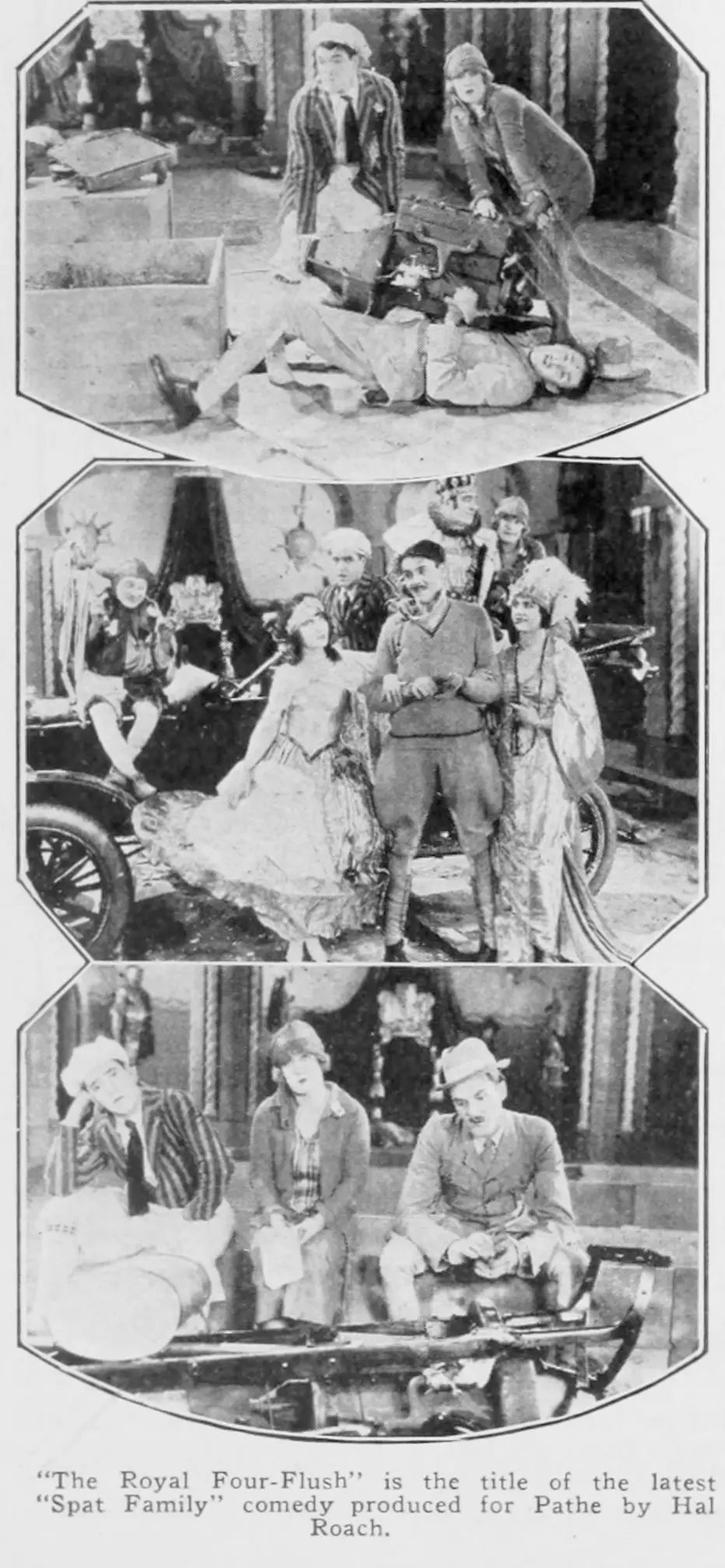
However, for a modern audience, the pacing can feel exhausting. There is no breathing room. The moment the car parts arrive, the film enters a state of perpetual motion that doesn't stop until the characters are literally underwater. It works. But it’s flawed. The humor is found in the wreckage, not the wit.
The true star of the film isn't Sammy Brooks or Frank Butler; it's the 'Ford' itself. In 1919, the Model T was the vanguard of the industrial revolution. By placing this icon of efficiency in a 'mythical kingdom,' Hal Roach creates a clash of civilizations that is played entirely for laughs. The King’s fear of the 'case received from Detroit' is a brilliant touch. It reflects a very real anxiety of the era: that the machine would eventually replace the man, or in this case, the monarch.
Consider the scene where the car is being assembled. It isn't a clean, instructional process. It is a violent, clumsy birth. Parts are forced together, wheels are misaligned, and the engine seems to cough with a life of its own. This isn't the romanticized view of technology we see in The Master Key; this is technology as a source of pure, unadulterated havoc. When Tewksbury finally gets behind the wheel, the car becomes an extension of his own incompetence, turning the king’s court into a literal crash course in modern engineering.
The 'Spats'—Brooks and Butler—occupy a strange space in the Roach filmography. They are 'four-flushers,' a poker term for people who pretend to have a better hand than they actually do. They are social climbers of the worst kind, trying to buy their way into a king's good graces with a product they barely understand. This theme of social posturing is a recurring one in early silent shorts, often handled with more grace in films like Morals for Men.
In this film, their posturing is their undoing. There is a brutal simplicity to their failure. They aren't victims of bad luck; they are victims of their own arrogance. The way they carry themselves—the tilted hats, the exaggerated gestures of 'refined' gentlemen—contrasts sharply with the grease and grime of the car parts. It is a visual gag that never gets old: the dandy forced to do the work of a mechanic.
The ending of The Royal Four-Flush is surprisingly grim, even for a slapstick short. Most comedies of this era end with a chase and a narrow escape, or perhaps a wedding. Here, the protagonists are rejected by their own country’s military—a U.S. warship—and choose to sink to the bottom of the ocean. It is a jarring, cynical conclusion that feels more in line with the dark irony of Devyatoe yanvarya than a standard American comedy.
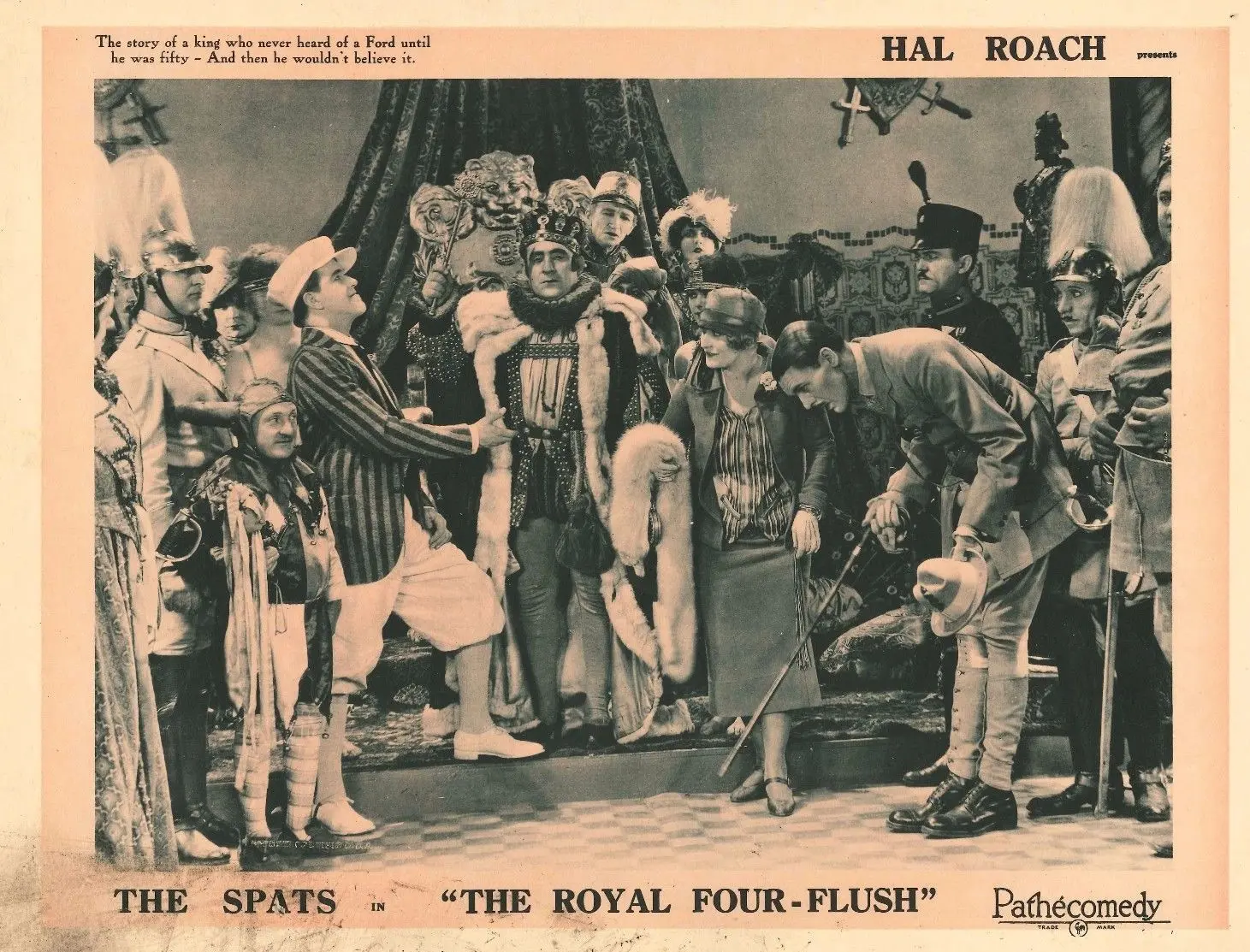
Watching the Spats follow their anchor to the depths is a moment of pure absurdist theater. It suggests that their failure was so total, and their social embarrassment so complete, that the only logical conclusion was to exit the world entirely. This isn't 'funny' in the traditional sense; it’s a punchline that leaves a bitter aftertaste, which is exactly why it stands out in the Roach catalog.
Hal Roach’s direction here is functional but frantic. He understands that the joy of this film lies in the escalation of the mess. The camera stays wide enough to capture the full scale of the car’s destruction, but zooms in just enough to see the terror on the King’s face. It lacks the visual sophistication of Kohlhiesel's Daughters, but it makes up for it with sheer velocity.
The pacing is the film's greatest asset and its greatest weakness. From the moment the 'Detroit case' arrives, the film feels like it's on a conveyor belt moving toward a cliff. While this keeps the viewer engaged, it also prevents any individual gag from really landing before the next one starts. It’s a barrage of stimuli that mirrors the chaotic assembly of the car itself.
Pros: Relentless energy; fascinating historical context regarding the Ford Model T; a truly unique and dark ending.
Cons: Repetitive gag structures; shallow character development; the 'mythical kingdom' setting feels generic and dated.
The Royal Four-Flush is a jagged, unapologetic piece of early cinema. It doesn't care about your feelings, and it certainly doesn't care about the safety of its characters. While it lacks the heart of later silent masterpieces, it offers a raw, unfiltered look at the comedy of the machine age. It is a film about the failure of the American dream in a foreign land, told through the medium of a broken car and a heavy anchor. It’s a mess. But it’s a fascinating mess. If you want to see where the DNA of modern slapstick comes from, you could do a lot worse than following the Spats to the bottom of the sea.
IMDb —
1917
Community
Log in to comment.