DbcultAccessing Vault...
6/10
Senior Film Conservator
A definitive 6/10 rating for a film that redefined the boundaries of cult cinema. The Sea Lion remains a cornerstone of transgressive art.
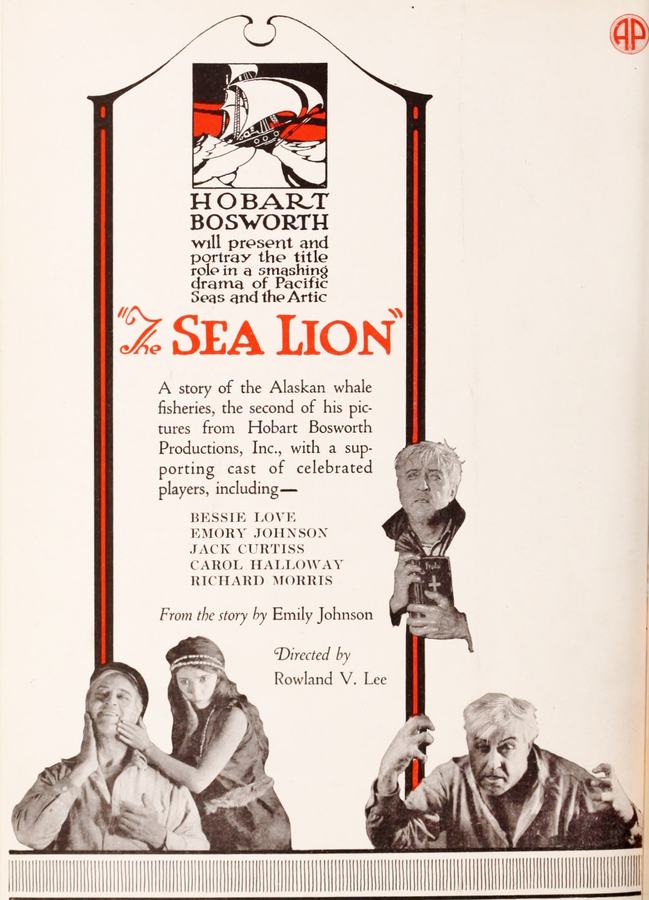
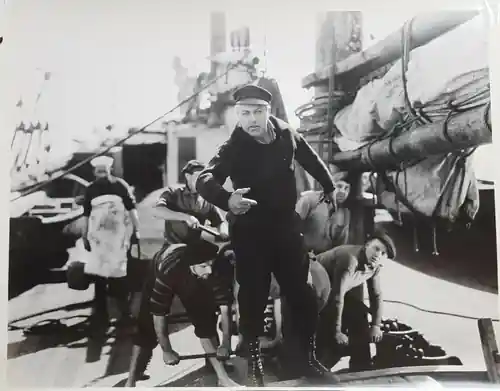
The year 1921 stood as a pivotal epoch for the nascent cinematic medium, a time when the visual vocabulary of storytelling was transitioning from primitive theatricality to a sophisticated, evocative language of its own. Amidst this burgeoning landscape, The Sea Lion emerged not merely as a nautical melodrama but as a profound character study of masculine disintegration. Directed by Rowland V. Lee and anchored by the titan of the silent era, Hobart Bosworth, the film serves as a harrowing conduit into the psyche of Captain Nels Nelson. It is a work that captures the intersection of industrial brutality and domestic failure, set against the backdrop of an unforgiving Pacific.
Hobart Bosworth, often hailed as the "Dean of Hollywood," brings an almost tectonic weight to the role of Nelson. His performance is a masterclass in controlled ferocity. Unlike the romanticized heroes found in contemporary works like Under Two Flags, Nelson is a man stripped of his veneer of civility. The catalyst for his transformation is the departure of his wife, an event that acts as a psychological lobotomy, removing his capacity for empathy. The film posits that his hard-driving nature was once perhaps a virtue of industry, but when severed from the grounding influence of home, it metastasizes into a malignant tyranny.
The cinematography captures Bosworth’s face like a weather-beaten cliffside. Every wrinkle and furrow tells a story of salt, wind, and an internal storm that refuses to subside. The brilliance of the screenplay by Emilie Johnson and Joseph F. Poland lies in its refusal to offer easy redemptions. Nelson doesn't just become a 'mean' captain; he becomes a philosophical nihilist. He views his crew not as men, but as instruments of his will, tools to be broken against the wheel of his own existential despair. This dynamic creates a tension that is palpable even through the silent medium, a feat that many talkies struggle to replicate with full soundscapes.
Contrasting the darkness of Nelson’s cabin is the ethereal presence of Bessie Love. Her role provides the necessary emotional counterweight to the captain’s suffocating bitterness. While some might dismiss her character as a trope of the era—the virginal beacon of hope—Love imbues the performance with a resilient vitality. In the grand tradition of silent cinema, where eyes do the heavy lifting of dialogue, Love’s gaze serves as a mirror reflecting the audience's growing horror at Nelson’s descent. Her presence on the ship introduces a variable that the Captain cannot control with a lash or a roar, creating a psychological friction that accelerates the ship's internal collapse.

One cannot help but compare the emotional stakes here to other 1920s explorations of isolation and social friction, such as The Love Hermit. However, where that film deals with the voluntary withdrawal from society, The Sea Lion explores the forced isolation of a man at the helm of a microcosm. The whaling ship is a sovereign state, and Nelson is its absolute, albeit mad, monarch.
The film’s production value is remarkably high for its time, particularly in its depiction of the whaling industry. These aren't sanitized studio sets; there is a tangible sense of grime, oil, and danger. The sequences involving the hunt and the processing of the leviathans serve as a metaphor for Nelson’s own soul: a process of stripping away the majestic to leave only the raw, utilitarian essence. The brutality of the trade mirrors the brutality of the man. It is a symphony of labor and pain that grounds the melodrama in a gritty realism often absent from more stylized productions like The Eternal Temptress.
The supporting cast, featuring Emory Johnson and Charles Clary, provides a robust framework for the central conflict. Emory Johnson, who would later find fame as a director of blue-collar epics, portrays the burgeoning defiance of the crew with a grounded sincerity. The crew is not a monolith of rebellion; they are a collection of desperate men pushed to the edge of their humanity. Their eventual turn toward mutiny is framed not as a villainous act of betrayal, but as a biological imperative—a collective survival reflex against a captain who has become a predator to his own kind.
The third act of The Sea Lion is an exercise in escalating dread. The spatial confinement of the ship is utilized to maximize the sense of claustrophobia. We see the whispered conversations in the shadows of the forecastle, the lingering glances of resentment during the arduous deck work, and the final, explosive rupture of authority. Unlike the political upheavals seen in The Independence of Romania, the mutiny here is deeply personal. It is a rebellion against the domestic failure of one man that has spilled over into the professional lives of dozens.
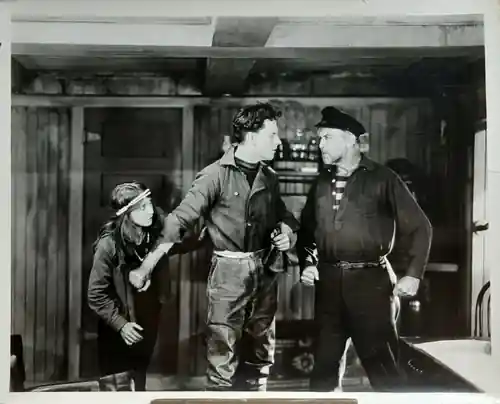
When the mutiny finally erupts, the direction by Rowland V. Lee takes on a kinetic, almost chaotic quality that was ahead of its time. The editing quickens, the framing becomes tighter, and the physical struggle is depicted with a raw intensity that eschews the choreographed grace of typical 1920s action. It is a messy, desperate affair that accurately reflects the psychological state of the participants. Nelson, in his moment of greatest peril, seems almost relieved. The external conflict finally matches the internal war he has been waging since his wife’s departure.
To truly appreciate the nuances of The Sea Lion, one must look at it within the broader context of the era's output. While films like Love focused on the romantic entanglements of the elite, and Johannes Goth delved into European expressionist angst, The Sea Lion remains uniquely American in its obsession with the rugged individualist and the catastrophic failure thereof. It shares a certain DNA with The Conspiracy in its utilization of suspense, but it trades urban intrigue for the oceanic sublime.
Furthermore, the film’s treatment of gender and domesticity is surprisingly complex. Nelson’s wife is never truly the villain; her departure is framed as a consequence of his existing hardness. The film suggests that his bitterness is a self-fulfilling prophecy. He was hard, so she left; because she left, he became harder. This recursive loop of emotional trauma is a sophisticated narrative beat for 1921, moving beyond the simplistic moralizing found in contemporary works like The Triumph of the Weak.
The lighting in The Sea Lion deserves particular mention. The use of chiaroscuro in the cabin scenes—where Nelson sits enveloped in shadows, illuminated only by a flickering lamp—creates a visual shorthand for his fractured state of mind. It prefigures the noir aesthetics that would dominate Hollywood decades later. The contrast between these dark, interior moments and the blinding, overexposed brightness of the sea creates a rhythmic visual tension that mirrors the Captain's oscillating moods.
The writing by Emilie Johnson is remarkably tight. Every scene serves a purpose in building the pressure cooker environment of the ship. There is very little of the "fluff" found in films like Darling Mine or the episodic nature of Harem Scarem. Instead, we are treated to a relentless progression toward a tragic inevitability. Even the moments of levity, often provided by the crew's interactions, are tinged with the looming threat of the Captain's wrath.
As we analyze the film from a modern perspective, we can see its influence on the maritime genre. The "mad captain" trope, perfected here by Bosworth, would echo through the years in various adaptations of Moby Dick and original works alike. It is a foundational text in the cinematic exploration of the sea as a place where the social contract is tested and often found wanting. The film avoids the melodramatic pitfalls of something like Wild Primrose, opting instead for a gritty, uncompromising look at the human condition under duress.
The resolution of The Sea Lion is not a tidy one. It leaves the viewer with a sense of the immense cost of Nelson’s bitterness. While order may be restored in a literal sense, the emotional wreckage is permanent. The film stands as a testament to the power of silent cinema to convey complex psychological states without the crutch of dialogue. It is a raw, bleeding slice of maritime life that demands respect for its craft and its courage to depict the uglier side of the human spirit.
In the pantheon of 1921 releases, it may not have the avant-garde flair of Das rote Plakat or the historical sweep of L'assassino del corriere di Lione, but The Sea Lion possesses a visceral, lasting power. It is a film about the weight of the past and the way it can drown the present. Hobart Bosworth’s Nelson remains one of the most compelling figures of the silent era—a man who sought to conquer the ocean but was ultimately capsized by his own heart.
Ultimately, the film functions as a cautionary tale about the corrosive nature of resentment. It suggests that while the sea can be conquered with wood and iron, the internal tempests of the soul require a much more delicate navigation—one that Captain Nelson, for all his maritime skill, was never able to master. This thematic depth, combined with stellar performances and evocative cinematography, ensures that The Sea Lion remains a vital, if dark, jewel in the crown of early American cinema.
"A harrowing maritime odyssey that strips away the romanticism of the high seas to reveal the jagged rocks of a broken man's ego. Bosworth is a force of nature, and the film is a masterclass in atmospheric dread."
This review explores the 1921 version of The Sea Lion, focusing on its historical significance and psychological depth. For more explorations of silent era classics, visit our extensive archive of film analyses.

IMDb 5.8
1935
Community
Log in to comment.