DbcultAccessing Vault...
Cult Review
Senior Film Conservator
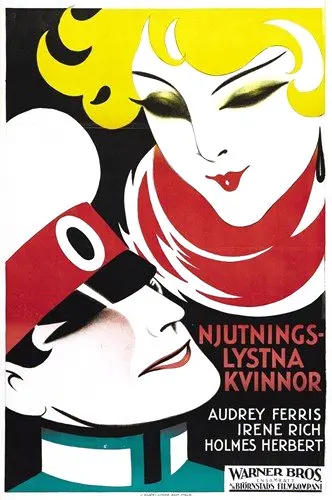
Short answer: yes, but only if you have an appetite for the heightened emotional stakes of late silent-era social dramas. The Silver Slave is a fascinating artifact that explores the intersection of maternal duty and economic desperation, making it a must-watch for fans of Irene Rich or those interested in the 'woman's picture' genre before it was fully codified in the talkie era.
This film is specifically for viewers who appreciate nuanced facial acting and the slow-burn tension of domestic tragedy. It is NOT for those who find the deliberate pacing and pantomime of the 1920s to be archaic or for those seeking a fast-paced thriller. It works. But it’s flawed.
1) This film works because it avoids the trap of making its protagonist a simple villain. Bernice’s obsession with money is framed as a trauma response to the fear of instability, which gives her character a modern psychological depth rarely seen in 1927.
2) This film fails because the character of Philip Caldwell is so transparently oily that it makes the daughter, Janet, look incredibly naive, which occasionally undermines the dramatic tension of the central conflict.
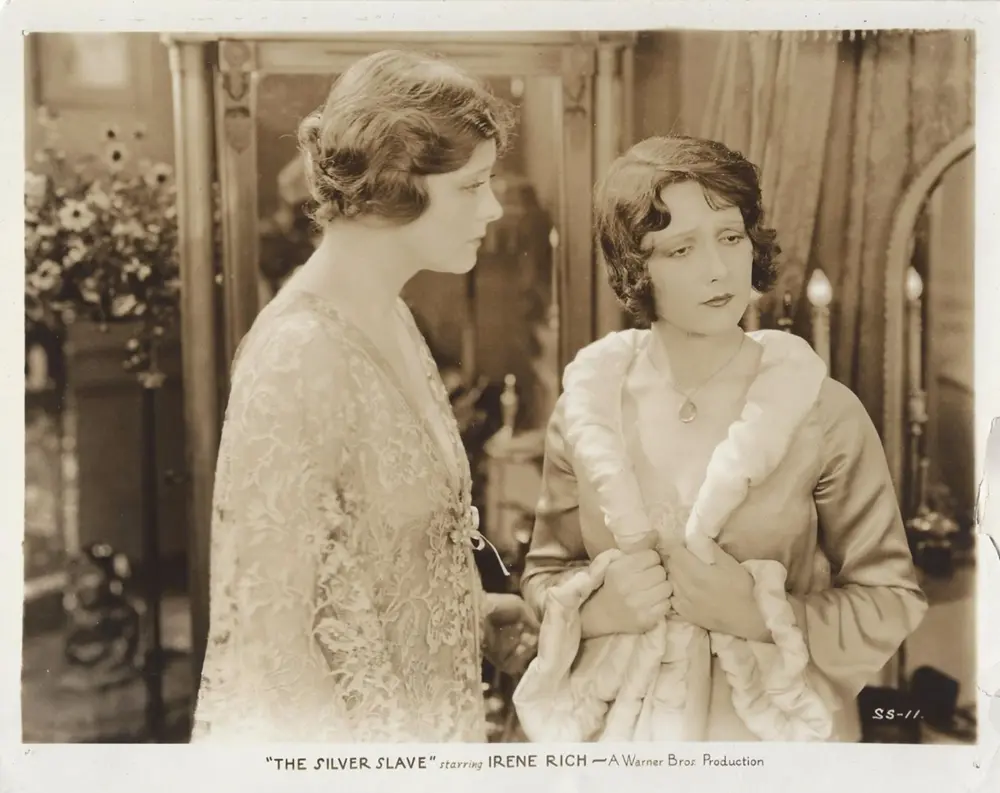
3) You should watch it if you want to see a masterclass in silent-era maternal martyrdom or if you are tracking the evolution of social mobility themes in American cinema.
The Silver Slave is a film obsessed with the weight of objects and the cost of status. From the opening frames, director Howard Bretherton establishes a world where every luxury carries a hidden tax. Bernice Randall, played with a brittle grace by Irene Rich, is not your typical silent film heroine. She is a woman who has already made her 'mistake' before the movie even begins. By marrying for money and rejecting Tom Richards, she has already killed the romantic version of herself. The film is essentially a long, agonizing wake for her soul.
Consider the scene where Tom Richards, now a millionaire himself, returns to confront her. The irony is thick enough to choke on. He has the very thing she sold her happiness to acquire, yet he uses his wealth as a weapon to remind her of her 'slavery.' It is a brutal moment of gendered power dynamics. Richards isn't just hurt; he is triumphant. He wants her to know that her sacrifice was unnecessary, which is the ultimate cruelty. This isn't just melodrama; it’s a psychological horror story about timing and the permanence of choice.
In many ways, this film feels like a spiritual sibling to The Woman Under Cover, where the female lead must navigate a world that judges her for the very survival tactics it forced her to adopt. The 'Silver Slave' title isn't just a slur; it’s a sociological diagnosis of the 1920s American dream.
Irene Rich was often called the 'Queen of the Screen' for her ability to portray sophisticated, long-suffering women, and The Silver Slave is perhaps the definitive example of why that title stuck. In a decade where many actors were still leaning into the wild-eyed histrionics of the early 1910s, Rich provides a performance of remarkable restraint. Watch her eyes during the sequence where she realizes her daughter is falling for Caldwell. There is no frantic hand-wringing. Instead, there is a visible hardening of her posture—a woman preparing for a war she knows she might lose.
Her chemistry with John Miljan, who plays the wealthy sophisticate Caldwell, is layered with a fascinating repulsion. When Bernice decides to 'win' Caldwell from her daughter, the film enters a dark, almost transgressive territory. She is essentially using her own sexuality as a shield for her daughter’s innocence. It is a messy, uncomfortable plot point that Rich handles with a dignity that prevents the film from sliding into cheap camp. It’s a far cry from the lighthearted antics found in The Luck o' the Foolish; this is a film that wants you to feel the grit under the fingernails of the upper class.
While the script by Peter Milne and Anthony Coldeway hits the expected beats of a late-20s drama, the visual language of the film is surprisingly sophisticated. The lighting in the Randall estate is intentionally cold. The silver services and silk hangings don't look inviting; they look like bars of a cage. The cinematography emphasizes the distance between characters, often placing physical barriers—desks, chairs, or ornate doorways—between Bernice and the people she loves.
The pacing, however, is where the film shows its age. Like many features from this transition period, it occasionally lingers too long on title cards that explain what we can already see in the actors' faces. Compared to the brisk movement of a film like 30 Below Zero, The Silver Slave can feel like it’s treading water in its middle act. Yet, this slowness serves a purpose: it mirrors the stagnation of Bernice’s life. She is stuck in a loop of her own making, and the film forces the audience to sit in that discomfort with her.
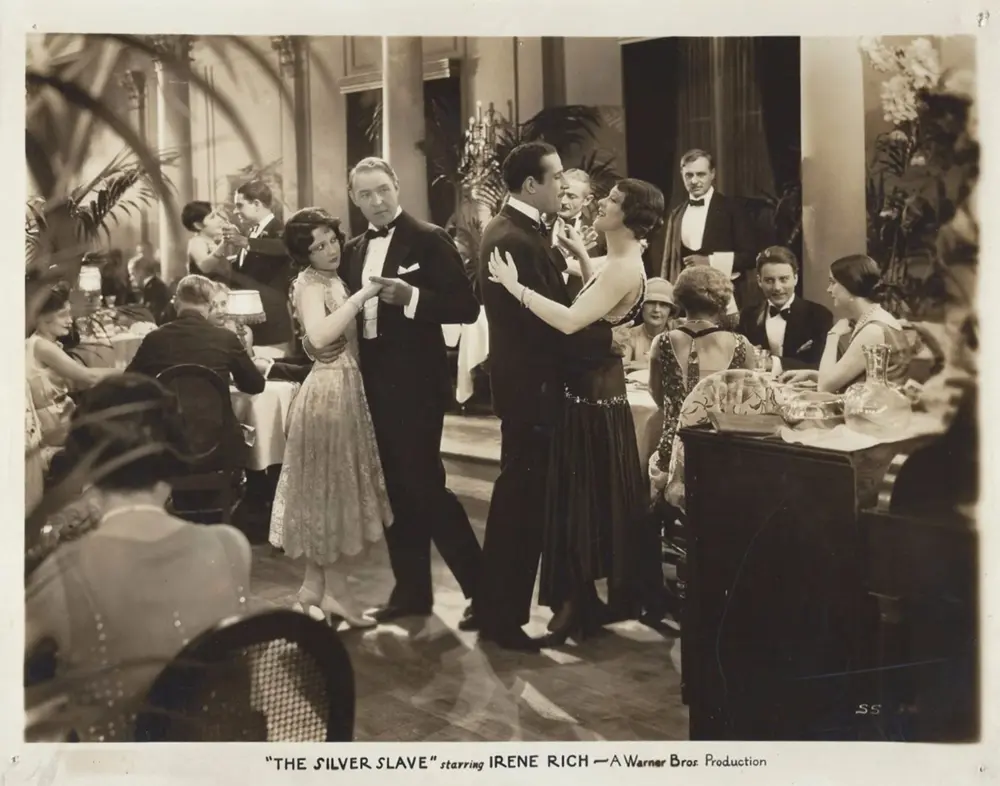
One of the most debatable aspects of the film is its ending. The resolution, where Janet finds happiness with the 'safe' choice of Larry Martin, feels like a concession to the moral censors of the time. However, an unconventional observation one might make is that the film doesn't actually reward Bernice for her sacrifice. While Janet gets her happy ending, Bernice is left in the same gilded cage, perhaps even more isolated than before. The film suggests that while the next generation can be saved, the 'Silver Slave' herself is beyond total liberation.
This cynical undertone elevates the movie above standard fare like Happy Daze. It acknowledges that some scars don't heal. When Bernice is denounced by Richards, the film doesn't shy away from the fact that he is right—but it also shows that he is a hypocrite. The film takes a firm stance: wealth is a corrupting force, but for a woman in 1927, it was often the only armor available. It’s a nuanced take that challenges the viewer to judge Bernice while simultaneously understanding her fear.
Pros:
Cons:
The title refers to the protagonist's decision to prioritize financial security over romantic love. By choosing a wealthy husband she did not love, she became 'enslaved' to the lifestyle and social standing that silver provides. The film explores how this choice haunts her and how she attempts to break that cycle for her daughter.
The Silver Slave is a relic, but a shimmering one. It captures a moment in cinematic history where the melodrama was reaching its artistic peak before the arrival of sound changed the language of film forever. It is a heavy, sometimes plodding experience, but it is anchored by a performance from Irene Rich that remains hauntingly relevant. It’s a story about the high cost of safety. It works. But it’s flawed. If you can look past the 1920s theatricality, you’ll find a surprisingly sharp critique of the American obsession with status. While it might not have the cult appeal of Midnight Molly, it stands as a superior example of the era's social conscience. It is a film that reminds us that while money can buy a house, it often leaves the inhabitants shivering in the cold. It is a solid 7/10 for silent film enthusiasts and a fascinating 6/10 for the casual classic cinema fan.
IMDb 5.8
1921
Community
Log in to comment.