DbcultAccessing Vault...
2.9/10
Senior Film Conservator
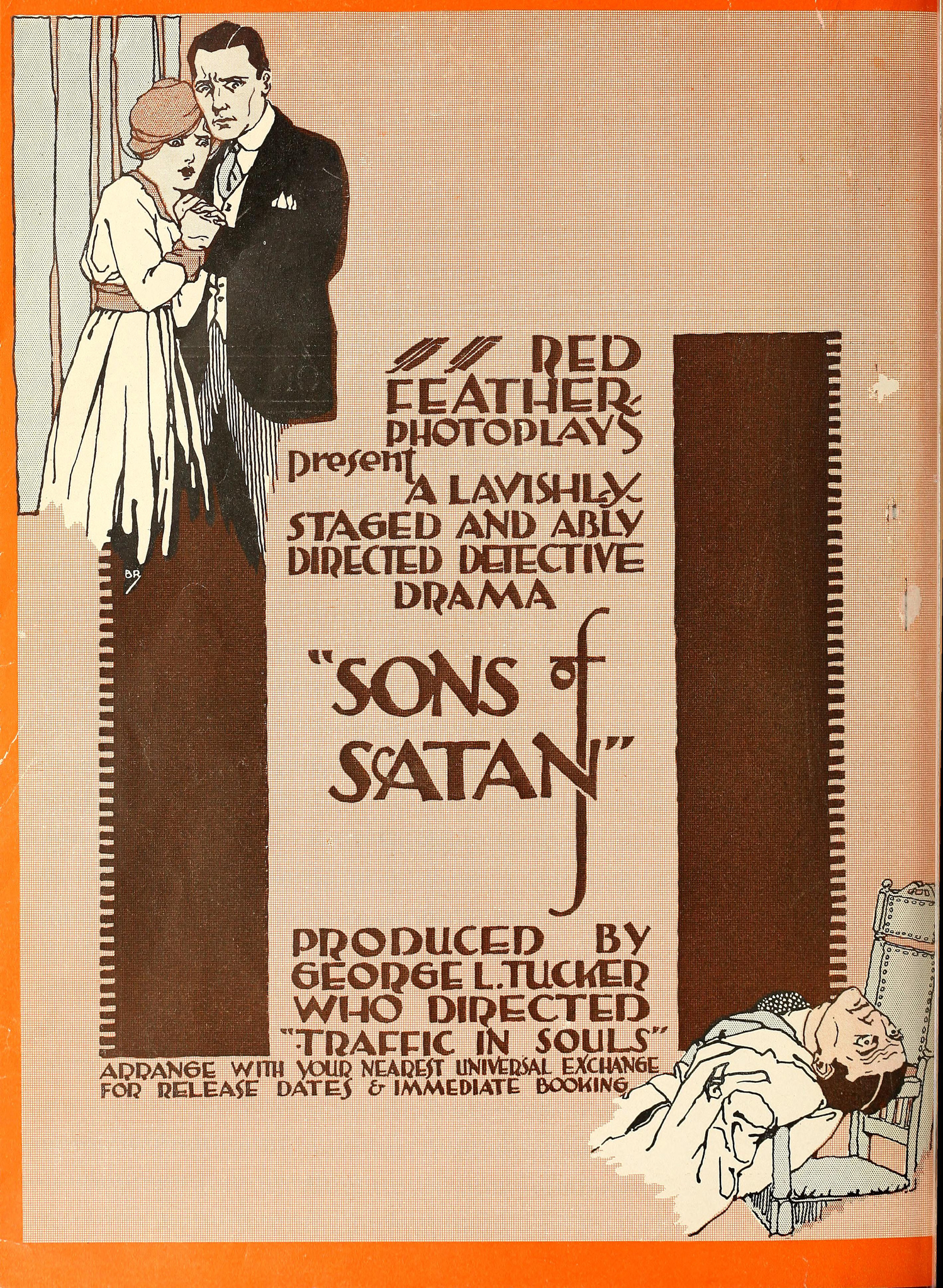
A definitive 2.9/10 rating for a film that redefined the boundaries of cult cinema. The Sons of Satan remains a cornerstone of transgressive art.
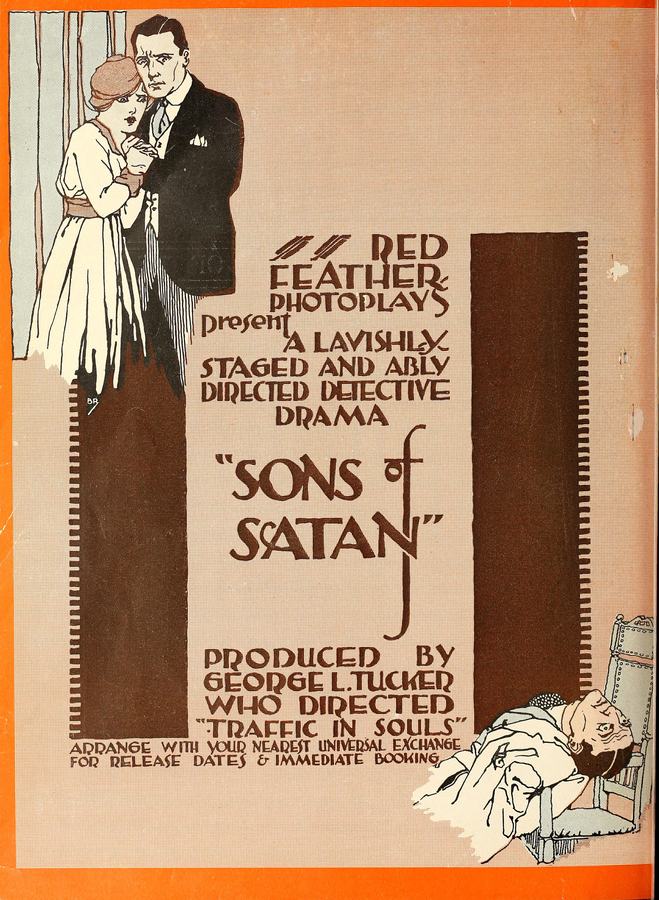
Imagine, if you will, a London where every lamplight drips suspicion, every bobby’s whistle could be the overture to your ruin, and every tiara trembling on a Duchess’s coiffure is already catalogued by a thief who signs his crime-scene sketches with Scotland Yard’s own letterhead. The Sons of Satan—a title that reeks of penny-dreadful brimstone—offers exactly that pungent cocktail of respectability and rot, shaken by director Will Barker and librettist William Le Queux, the latter a spy novelist who once bamboozled an entire empire into building phantom coastal defenses.
Shot in 1915 while Europe re-purposed its wheatfields into graveyards, the film smuggles wartime anxieties into a domestic whodunit. Instead of trenches we get drawing-room trenches: Persian rugs undercut by trapdoors, marble fireplaces pivoting into strongrooms, and a detective—Sir John Dacre, played with serpentine magnetism by Wyndham Guise—whose morality pivots faster than a cinematograph crank. Guise, primarily a Shakespearean matinee idol, here lets his jawline soften, his gaze float, suggesting a man forever rehearsing lines he never intends to deliver truthfully.
Opposite him stands Minna Grey as Iris Wrotham, the actress whose laughter onstage is so luminous one swallows the suspicion that electric bulbs might blush beside her. Offstage she carries the weariness of a woman who has read every script and recognised the same third-act betrayals. Grey’s performance—pitched somewhere between Within Our Gates’ tragic stoicism and Gambler’s Gold’s poker-faced bravado—cements Iris as more than collateral; she is the film’s ethical gyroscope, spinning wildly yet somehow upright.
The plot, a Möbius strip of larceny and longing, unspools thus: a sapphire the size of a child’s fist disappears from the Imperial Institute. Dacre, appointed to recover it, orchestrates the theft’s next phase, funnelling the loot through a network of pickpockets, mudlarks, and theatre ushers who speak entirely in stage-whispers. Each set piece is staged with spatial bravura that anticipates German Expressionism: staircases elongate into impossible hypotenuses, Thames embankments tilt like seesaws under moral weight. One thinks of I tre moschettieri’s swashbuckling arches, but here the swordplay is conversational, every compliment a feint.
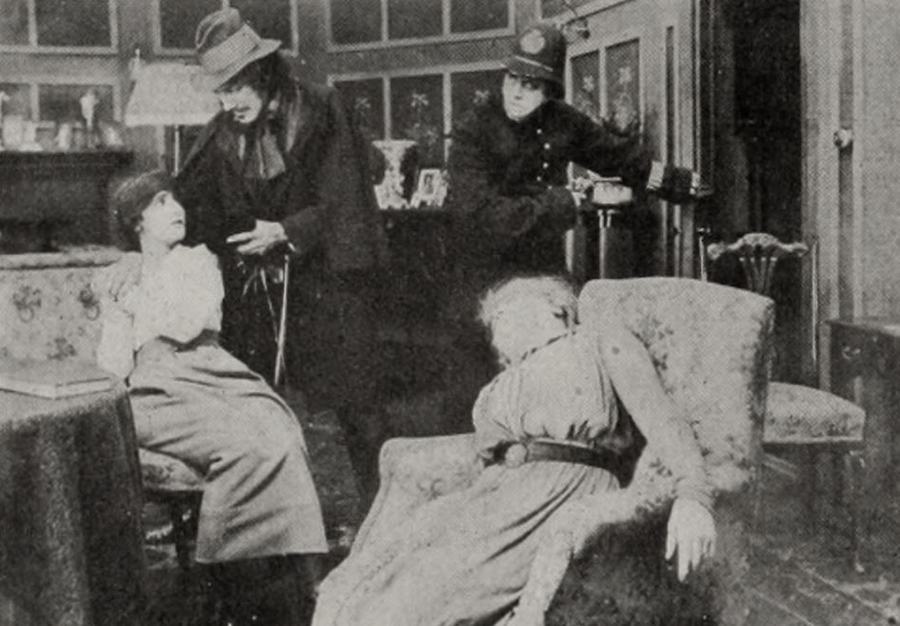
Cinematographer Emile Lauste (yes, the man who once filmed earthquakes in Mexico) relishes chiaroscuro. Notice the interrogation scene: suspect’s face half-eclipsed, the other half gilded by a candle that seems to perspire. Shadows are not merely absence but accusation. The camera lingers an extra three beats after dialogue ends, allowing guilt to ferment in the viewer’s mind. Silent-era novices might call it “slow”; cinephiles will recognise the same durational bravery that makes The Silence of Dean Maitland so ravishing.
Sound, though absent on the celluloid, bellows through intertitles penned by Le Queux with tabloid terseness: “Honor is the mask scoundrels wear in daylight.” Each card arrives unadorned by florian curlicues; the austerity feels almost modernist. Compare that to the floral opulence of The Patchwork Girl of Oz, whose intertitles resemble nursery wallpaper.
The supporting ensemble glitters. George Bellamy’s Inspector Bracken exudes the lumbering rectitude of a man who polishes his handcuffs nightly; watch how he caresses the metal as if it were a rosary. Gerald Ames plays Lord Eltham Jr. with chin-trembling privilege—think of a porcelain figurine forced into trousers. Meanwhile Lewis Gilbert (not the future director) essays a pint-sized pickpocket whose moral epiphany arrives when he spots his own mother in the pawnshop queue—a moment that fleetingly recalls Das Recht aufs Dasein’s social outrage.
Gender politics bristle beneath corsets. Iris’s profession grants her a mobility rare for 1915 London: she flits from stage door to Scotland Yard to Limehouse den, never required to produce a chaperone. Yet her agency is conditional; she can decline Dacre’s marriage proposal only because the narrative conveniently excises pregnancy, rent, or hunger. Still, compared with the suffrage pageant of Your Girl and Mine, Iris feels fleshed rather than symbolically paraded—a woman whose choices wound her, not simply the patriarchy.
The film’s moral crescendo arrives not via courtroom gavel but rooftop vertigo. Dacre, finally unmasked, offers Iris the jewel and his hand—simultaneously bribe and confession. Iris’s refusal is wordless; Grey merely steps backward until heel kisses parapet edge, her eyes a mute referendum on trust. The camera cranes up, revealing a cityscape miniature, a diorama of electric specks—each one a soul potentially as duplicitous as Dacre. Cut to black. No plummeting body, no splash. The absence is more chilling than any gore Hollywood would later fetishize.
Restoration status? Alas, only fragments survive in the BFI’s “Missing Believed Lost” vault: Reel 3, 5, and the final 45 feet of Reel 7. What circulates online is a 8-minute collage accompanied by a folk-plunk piano score clearly recorded in someone’s parlour. Even so, the shards are enough to ignite scholarly debate. Some label the work a proto-noir, others a social-Gothic hybrid. I side with the camp that sees it as a missing link between Feuillade’s Les Vampires spirit and the post-war cynicism of The Sins of the Mothers.
Comparative curiosity: why does The Sons of Satan languish in obscurity while The Perils of Pauline enjoys perennial rebirth? Partly marketing mythology—Pauline’s cliff-hanging episodes were sold as communal events, whereas Barker’s feature played regional halls without cliffhangers. Also, Satan lacks a signature stunt (no balloon escapes, no runaway locomotive). Its thrills are psychological, demanding the viewer complete the circuit of guilt inside their skull. Modern streamer audiences, nursed on jump-cuts, may fidget. Yet for the patient, the payoff is a lingering moral rash you’ll gladly scratch.
Should you seek it? If you’re the sort who combs Sorvanets for obscure Soviet montage, or revisits In Mizzoura to savour regional dialects, then absolutely. Track down the 2016 Pordenone Silent Festival programme notes; a 4K scan of the nitrate tinting survives there, revealing amber lamplight and cobalt Thames twilight that YouTube’s grey blotches obliterate. Pair your viewing with Claude Debussy’s “La Cathédrale Engloutie”—the oscillating chords sync uncannily with Dacre’s oscillating conscience.
In the end, The Sons of Satan is less a relic than a prophecy: it foresees our era of Instagram investigators who moonlight as inside-traders, of philanthropists whose foundations launder reputations. The jewel at its centre is never the sapphire; it is the human heart, facet-cut by secrecy, and just as easily dropped into the gutter. The film dares you to listen—even in silence—for the clink of that drop. You’ll strain your ears forever; the echo never comes, yet you’ll swear you still hear it clattering through the century.

IMDb —
1921
Community
Log in to comment.