DbcultAccessing Vault...
Cult Review
Senior Film Conservator
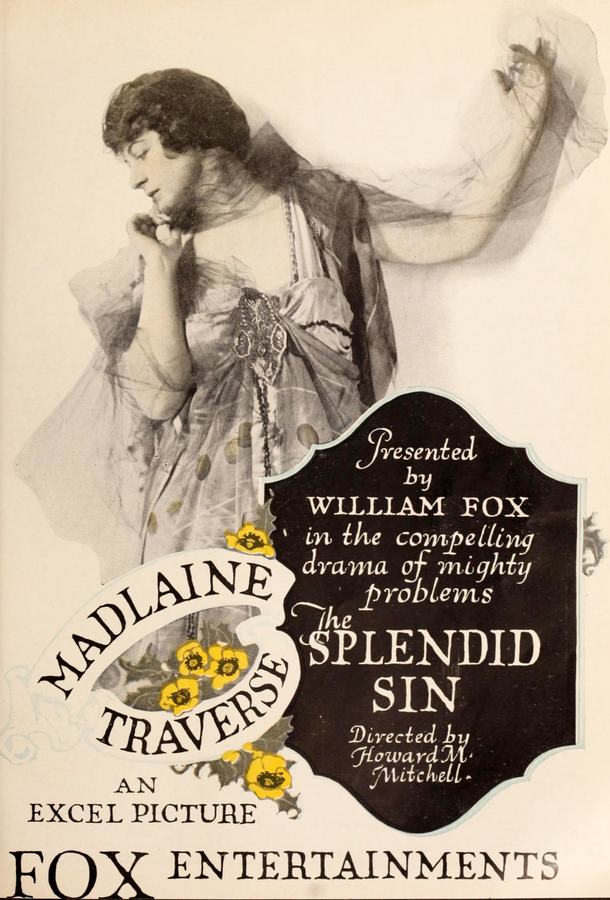
Step into the hallowed, flickering halls of early 20th-century cinema, and you'll occasionally stumble upon a gem whose thematic resonance transcends its temporal constraints. Such is the case with Emil Forst and Denison Clift's 1919 silent masterpiece, The Splendid Sin. More than just a melodrama of its time, this film unfurls a deeply intricate narrative tapestry, weaving together threads of sacrifice, societal expectation, and the profound, often perilous, nature of unconditional love. It’s a compelling exploration of the lengths to which individuals will go to protect those they cherish, even if it means navigating a labyrinth of deception, the consequences of which ripple through every character's existence.
At its core, The Splendid Sin is a domestic drama, yet one elevated by extraordinary circumstances and the very human frailty that underpins its central conflict. We are introduced to Sir Charles Chatham, an intrepid explorer, and his American wife, Lady Marion. Their union is characterized by an palpable warmth and mutual devotion, a seemingly idyllic existence marred only by the poignant absence of children. This longing for progeny, a silent ache within their otherwise contented lives, forms the fertile ground upon which the subsequent drama blossoms. When Charles departs for an expedition to the ancient sands of Egypt, a world away from the genteel confines of their home, the narrative pivots, introducing the catalyst for the titular 'sin.'
Charles’s sister, Gertrude, a character imbued with a delicate sensibility, finds herself in an unforeseen predicament. During a tempestuous storm, she seeks refuge in a deserted tower, an architectural symbol of isolation and vulnerability. There, she encounters Stephen Hartley, an American consulate attaché, with whom she shares a moment of profound, albeit unplanned, intimacy. This encounter, born of fear and perhaps a burgeoning, ill-fated attraction, sets in motion a chain of events that will irrevocably alter the lives of everyone involved. Hartley, a man of honor despite the circumstances, immediately intends to marry Gertrude, a testament to his character and the era’s strict moral codes. However, fate, or perhaps the cruel hand of circumstance, intervenes with brutal efficiency. Hartley is abruptly called away to Russia, a land then in the throes of Bolshevik upheaval, tasked with a humanitarian mission to deliver vital supplies to starving women and children. His departure leaves Gertrude alone, pregnant, and facing the crushing weight of societal judgment.
It is at this juncture that Lady Marion emerges as the true emotional anchor of the film. Exhibiting a remarkable degree of selflessness and strategic thinking, she takes Gertrude under her wing, whisking her away to a secluded location to ensure the child’s birth in secrecy. Marion, ever the pragmatist, notifies Stephen of Gertrude's condition and whereabouts, but the tumultuous political landscape of Russia proves a formidable barrier. Stephen is shot during the rioting, his return delayed beyond all hope. Tragically, Gertrude succumbs shortly after childbirth, her final breath a dying request that her child be given to Charles, thus fulfilling his deepest desire for fatherhood and shielding the infant from the stigma of illegitimacy. It is a moment of raw, unvarnished pathos, and Marion, burdened by grief and a profound sense of duty, makes the momentous decision to honor Gertrude’s last wish. She telegraphs Charles, still in Egypt, with the life-altering news: the baby is theirs. This act, born of love and desperate necessity, is the 'splendid sin' – a magnificent lie designed to bring joy and protect innocence, yet one fraught with immense personal risk.
The narrative escalates upon Charles’s eagerly anticipated return. The idyllic façade Marion has painstakingly constructed begins to crack under the malevolent influence of Charles’s mother, a character driven by avarice and a desire to see her other son, George, inherit the estate. She exposes Hartley as the presumed father, igniting Charles’s fury and a desperate confrontation. The climax is a masterclass in silent film tension, culminating in Marion’s agonizing confession of the truth. This moment, where the weight of her secret is finally lifted, is both devastating and liberating. Charles, initially reeling from the deception, ultimately embraces the child, adopting him and thus validating Marion’s extraordinary sacrifice. It’s a resolution that defies conventional morality, choosing compassion and familial love over rigid adherence to truth, a profound statement on the nature of family itself.
The success of any silent film hinges almost entirely on the expressive capabilities of its cast, and The Splendid Sin boasts a lineup capable of conveying complex emotions without uttering a single word. Elinor Hancock, as Lady Marion, delivers a performance of breathtaking vulnerability and unwavering strength. Her eyes, often pools of unspoken anguish, communicate the immense burden of her secret, while her gestures convey a fierce, protective love. She embodies the film’s central paradox: a woman committing a 'sin' out of the purest intentions. Her portrayal is a testament to the power of nuanced silent acting, far removed from the caricature often associated with the era. She doesn't merely emote; she suffers and loves with every fiber of her being.
Charles Clary, as Sir Charles, masterfully navigates the emotional arc from contented husband to confused, then enraged, and finally, understanding father. His initial joy at the prospect of fatherhood, his subsequent betrayal, and his ultimate acceptance are all rendered with a convincing earnestness that grounds the more melodramatic elements of the plot. Madlaine Traverse, as Gertrude, despite her relatively brief screen time, leaves an indelible impression. Her portrayal of vulnerability, fear, and ultimately, tragic resignation, is deeply moving. The brief, intense moments she shares with Wheeler Oakman’s Stephen Hartley are charged with a nascent chemistry that makes their separation all the more heartbreaking. Oakman, as Hartley, conveys both a youthful impulsiveness and a genuine sense of honor, his character caught between personal desire and the demands of a world spiraling into conflict.
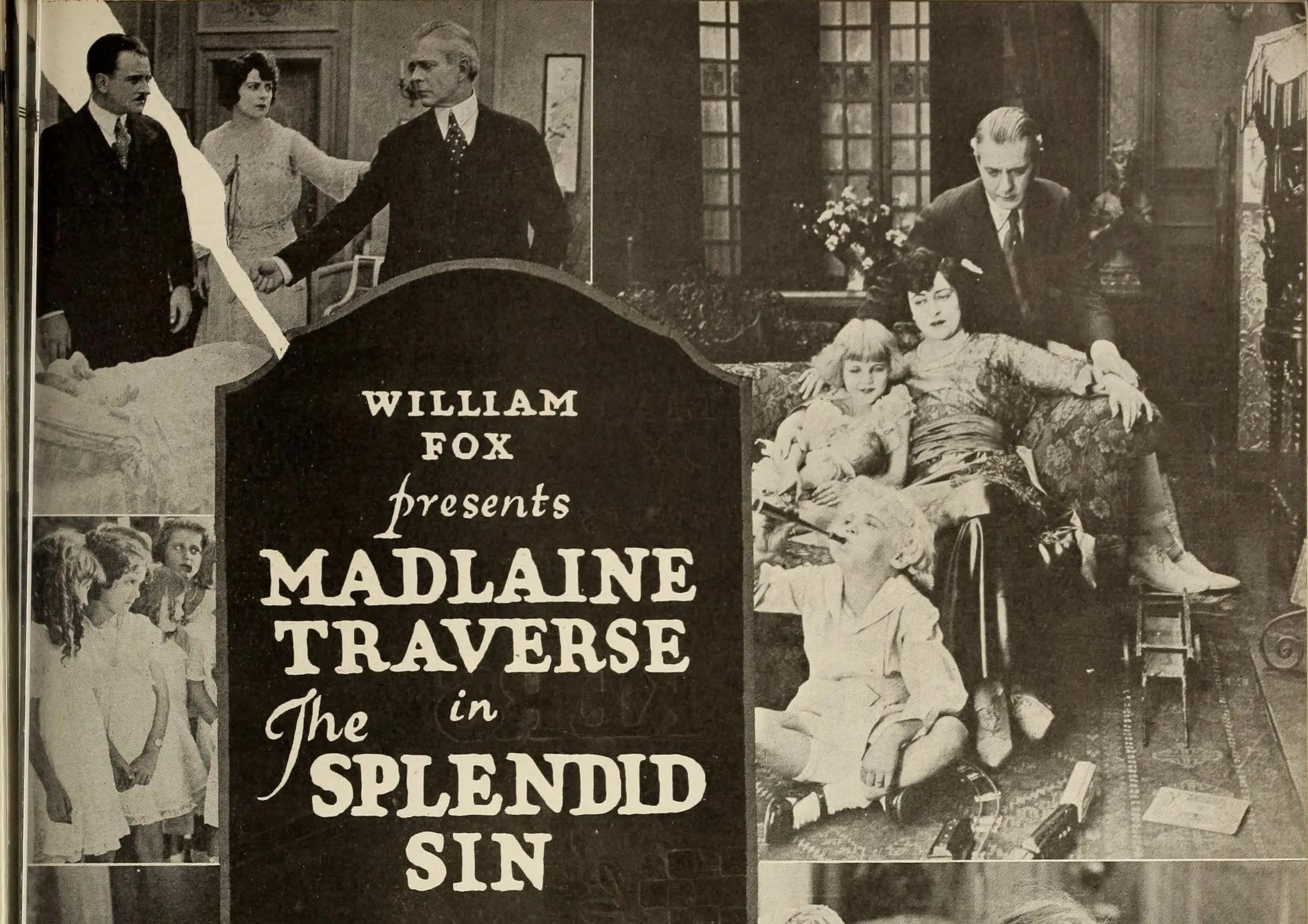
The central theme, undoubtedly, revolves around the notion of the 'splendid sin.' This isn't a sin born of malice or selfishness, but rather one forged in the crucible of love and desperation. Marion's deception, while morally ambiguous, is undeniably an act of profound altruism. She sacrifices her own peace of mind, her honesty, and potentially her marriage, all to secure happiness for her husband and a future for an innocent child. This complex moral dilemma elevates the film beyond simple melodrama, inviting audiences to ponder the ethics of white lies, especially when the stakes are so incredibly high. It forces a contemplation of whether the ends can, at times, justify the means, particularly when driven by such pure intentions. Much like the nuanced portrayal of duty versus personal desire in films like The Price of Pride, The Splendid Sin delves into the internal and external conflicts arising from such profound choices.
Another powerful theme is the redefinition of motherhood and family. Marion, unable to bear children herself, embraces the role of mother to Gertrude’s child with an intensity that transcends biological ties. Her actions challenge the conventional understanding of family, asserting that love, sacrifice, and unwavering commitment are the true architects of kinship. The film subtly argues that a mother is not merely she who gives birth, but she who nurtures, protects, and loves unconditionally. This theme resonates even today, in an era where diverse family structures are increasingly recognized and celebrated. It echoes the profound emotional depth found in narratives such as The Heart of Midlothian, where maternal love drives extraordinary acts of devotion and sacrifice in the face of societal condemnation.
The narrative is deeply entrenched in the societal mores of the early 20th century. The shame associated with an illegitimate child, the importance of lineage, and the pressure on women to produce heirs are palpable forces driving the plot. Gertrude’s vulnerability and Marion’s desperate measures are direct consequences of these rigid social constructs. The film implicitly critiques these pressures by showcasing the immense suffering they inflict, while simultaneously celebrating the individual agency of characters like Marion, who defy convention for a greater good. It’s a fascinating contrast to films like Every Girl's Dream, which might have presented a more straightforward adherence to societal expectations, whereas The Splendid Sin dares to explore the boundaries of those expectations.
The directorial choices in The Splendid Sin are exemplary for their era. The pacing, while deliberate by modern standards, allows for the full emotional impact of each scene to unfurl. The use of intertitles is judicious, never overwhelming the visual storytelling but providing crucial insights into character thoughts and narrative progression. The cinematography, though lacking the sophisticated camera movements of later decades, effectively utilizes framing and lighting to enhance the mood. Close-ups on the actors’ faces, particularly Marion’s, are employed strategically to amplify emotional intensity, drawing the audience into her internal struggle. The storm sequence, while rudimentary by today’s special effects standards, effectively conveys chaos and vulnerability, setting the stage for Gertrude’s fateful encounter. The visual language, a cornerstone of silent cinema, is employed with considerable skill, allowing the actors' performances to truly shine.
While not as widely remembered as some of its contemporaries, The Splendid Sin deserves a place in the pantheon of significant silent dramas. Its exploration of complex moral quandaries, the power of altruistic love, and the fluid nature of family remains remarkably relevant. In an age where discussions around adoption, surrogate parenting, and non-traditional family structures are increasingly common, the film’s pioneering thematic depth feels refreshingly modern. It reminds us that fundamental human emotions – love, loss, sacrifice, and the search for belonging – are timeless, transcending technological advancements in filmmaking.
Comparing it to other films of the period, one might draw parallels with the intense emotional stakes found in Life's Blind Alley, where characters also face difficult, life-altering decisions with profound consequences. However, The Splendid Sin distinguishes itself through its unique blend of a grand, almost epic, deception with an intimately personal and emotionally charged core. It avoids the overt villainy often seen in melodramas, instead presenting characters who are flawed but driven by understandable, often noble, motivations, even Charles’s mother, whose motivations, while selfish, are rooted in a desire for familial legacy, albeit a misguided one.
The film’s enduring power lies in its ability to provoke empathy for its characters, even as they navigate morally grey areas. It doesn't offer easy answers, nor does it preach. Instead, it presents a compelling human drama, allowing the audience to grapple with the difficult choices made under duress. The final scene, where Charles adopts the child, is not merely a happy ending but a profound act of reconciliation and acceptance, a testament to the transformative power of love and forgiveness. It’s a narrative that speaks to the heart of what it means to be human, to err, to sacrifice, and ultimately, to find solace in unconventional bonds.
Ultimately, The Splendid Sin is far more than a historical curiosity; it is a vibrant, emotionally resonant piece of cinematic artistry. It stands as a powerful reminder of the silent era's capacity for profound storytelling and its ability to explore complex human dilemmas with an eloquence that defies the absence of spoken dialogue. For cinephiles and students of film history, it offers a rich viewing experience, a window into a bygone era, yet one that reflects universal truths about love, family, and the extraordinary choices we make when faced with life’s most daunting challenges.
IMDb —
1915
Community
Log in to comment.