Summary
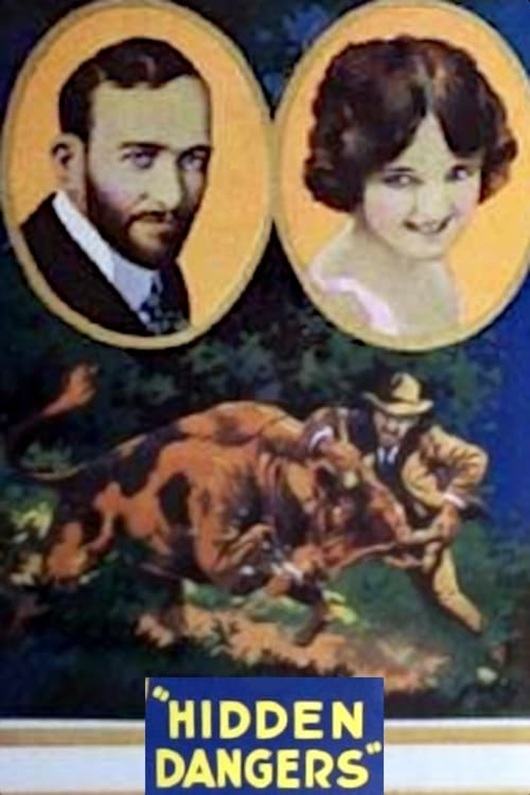
A tremor of unease ripples through a complacent American town when an epidemic of phantasmal maladies—phantom fevers, spectral rashes, a contagion of dread—seeps from the cracks of everyday respectability. Robert Ensminger’s physician, once the embodiment of rational calm, finds his diagnoses collapsing into whispered hypotheses while his wife, played by Camille Sheeley, drifts through gas-lit parlors clutching lace handkerchiefs like talismans against invisible spores. Jean Paige’s newspaper illustrator—sketchbook perpetually half-open, charcoal smudges like bruises on her fingertips—records the metamorphosis of neighbors into harbingers: a grocer who counts canning jars as skulls, a banker who hears coins screaming. Sam Polo’s railway detective, haunted by a childhood memory of yellowed quarantine posters, stalks the depot’s undercarriages, convinced the vector travels by boxcar. William McCall’s mayor oscillates between boosterist bluster and midnight séances with a spiritualist whose eyes reflect back the town’s own terror. Charles Dudley’s consumptive telegrapher taps out Morse that translates into lullabies of entropy; Joe Ryan’s iceman delivers blocks that sweat blood under noon glare; George Stanley’s cemetery caretaker plants oleanders whose petals bruise into maps of future burials. The screenplay, stitched from Albert E. Smith’s proto-surreal vignettes, Cleveland Moffett’s bacteriological paranoia, and William B. Courtney’s pulp fatalism, eschews linear plague-narrative for a fractal structure: each chapter folds inward, revealing another diary page scrawled with the same escalating hallucination. Cinematographer C. Graham Baker’s chiaroscuro turns modest storefronts into Piranesi prisons, shadows climbing walls like ivy strangling a beaux-arts façade. By the time the town’s brass band marches down Main Street in a macabre parade of quarantined revelers, tubas exhaling not music but visible miasma, the film has already diagnosed civilization itself as the true carrier: progress, consumerism, municipal vanity—all symptoms of a deeper rot that no quarantine can cordon. The final shot, a slow iris-out on a child’s porcelain doll abandoned in the gutter, its glass eyes reflecting the empty windows of a once-bustling hotel, suggests the epidemic was never viral but ontological: the moment a society notices the abyss gazing back, the only prescription is mutual unmaking.
Review Excerpt
"
Imagine a town that coughs in its sleep, a Main Street whose awnings billow like lungs in distress, and you have the mise-en-scène of Hidden Dangers, a 1925 Vitagraph release that slipped through the cracks of film history like loose change through floorboards—until a nitrate print surfaced in a Slovenian monastery vault two years ago.
Restorers found reel four fused to a hymnal, the emulsion wrinkled into Braille-like bumps; yet the damage only heightens the film’s thesis that modernity itse..."