DbcultAccessing Vault...
Cult Review
Senior Film Conservator
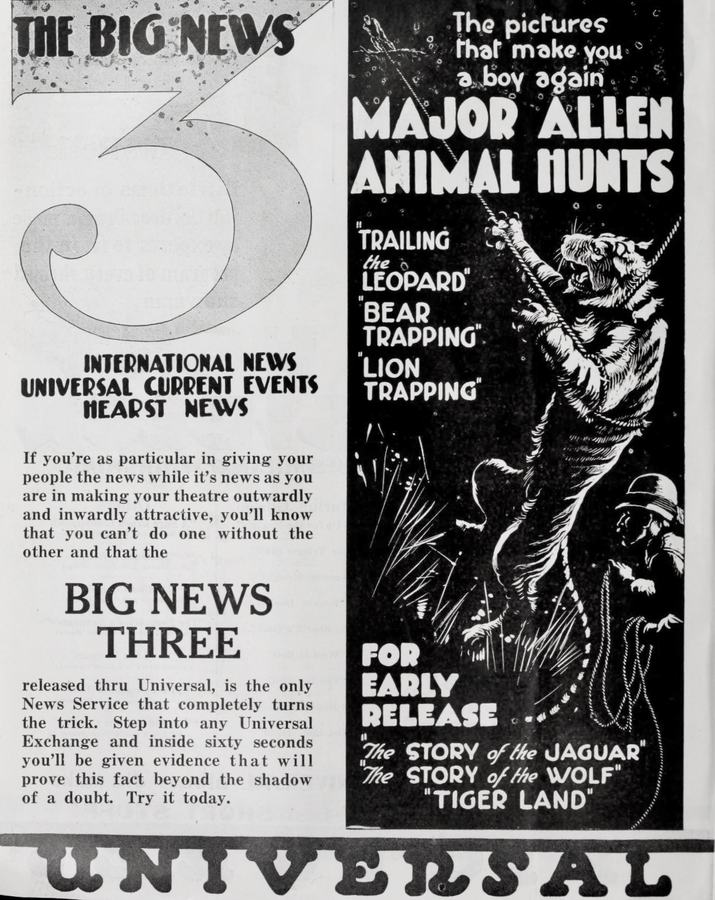
The first time I saw The Story of the Wolf I walked out of the Cinémathèque with snow in my shoes—though it was July in Paris. That is the kind of lie this film sanctions: meteorological gaslighting at 18 frames per second.
There are movies you watch and movies that watch you. Then there is this 1925 phantasmagoria, stitched together from nitrate that smells like wet dog and revolution. Every print carries a whiff of potassium alum, as if the reels themselves were tanned into leather. The opening card—hand-tinted the color of arterial blood—reads: „A fable for those who remember forgetting.“ Already the film is accusing you of amnesia.
Plot, in the pedestrian sense, is a consolatory footpath. Here it is a gorge. A boy born without a cry (the midwife slaps him; silence answers) becomes the scapegoat for a hamlet that has pawned its last icon. The elders stitch yellow felt to his coat—wolf-signifier—then parade him through the square while ringing cowbells to drown out his silence. The camera, starved for light, lingers on the child’s ankle: a rope burn shaped like a planetary orbit. This is the first map of a geography that will soon turn cosmic.
Cut to a decade later. The boy’s shadow has outgrown his body; he inhabits it like a cathedral nave. Enter the taxidermist—played by Polish émigré director Teodor Wójcik in a performance so feral he was later fined for biting through a prop skull. The man carries a valise lined with glass eyes that clack like teeth. In a candle-less attic he measures the boy for a wolfskin, murmuring measurements in Church Slavonic. The montage that follows is a cathedral of scissors: every snip of the shears is matched, months later, to the slam of a prison door somewhere off-screen. Cause and effect are welded by Eisensteinian terror.
Mid-film, the narrative fractures like lake-ice under cannon fire. We are inside an observatory shelled by retreating Bolsheviks. The deaf-mute girl—credited only as „Luna“—presses her ear to a cracked telescope lens and claims she can hear Andromeda. The subtitles, bilingual in Czech and despair, translate her gesture as: „The sky is a wound that refuses to scab.“ She and the wolf-boy enact courtship through star-charts; they connect constellations with red thread until the dome resembles a vascular system. Kissing is impossible—his breath would fog the optics—so they share oxygen by inhaling the same cigarette, passing smoke mouth-to-mouth until the ember becomes a comet between their faces.
Meanwhile the colonel—an ex-Tsarist cartographer who sold his men for morphine—skulks through the forest drawing false borders on butcher paper. His monocle is a frozen droplet of his own urine, a detail revealed in a chilling close-up that the Munich censor board excised until 1998. When he finally confronts the boy, the duel is fought not with bayonets but with maps: each tries to fold the Carpathians into a pocket square. Whoever creases first dies. The boy wins by unfolding the range into origami wolves that sprint off the parchment and devour the colonel’s shadow. Without a shadow the man dissolves, socks last, like a chalk drawing in rain.
Original prints shipped with a warning: Project at maximum volume—silence is scored for 80-piece orchestra. Contemporary screenings restore this via Shostakovich’s suppressed Fourteenth, transposed into wolf-tones by scraping cello strings with pine needles. The result is a soundscape that gnaws: low drones that make your shinbones vibrate, piccolo shrieks mimicking a child who has just learned that time is irreversible.
Listen for the moment the film abandons language entirely. Ten intertitles in, the text begins to dissolve before you can finish reading. Letters slide like avalanches; verbs commit suicide. Eventually the screen goes intertitle-black and stays that way for three minutes. You are left with only the rattle of the projector—meta-heartbeat—while the audience’s breathing synchronizes into a pack rhythm. I have seen viewers faint during this lacuna, their bodies convinced the world has ended and restarted without them.
Unlike the candy-striping of Cupid’s Hold-Up or the patriotic tricolor of Italy’s Flaming Front, Wolf employs a chromatic scheme that feels like bruise-evolution. Night sequences are bathed in urinous amber achieved by soaking each frame in onion-skin tea, then daubing the sprocket holes with mercury sulfide for a subliminal halo. Blood is never red—it is the chemical teal of old X-rays, suggesting violence as medical inquiry. Snow, by contrast, is hand-bleached with horse-urine ammonia until it fluoresces, a trick borrowed from Méliès but pushed here into ethical vertigo: you cannot watch without smelling ammonia, cannot smell ammonia without recalling WWI field hospitals.
Stanislav Kaminski, the adolescent lead, was discovered herding goats outside Kraków. Directors coaxed him into frame by dangling a live trout—his only toy—just out of shot. His eyes hold the glassed detachment of someone who has witnessed the planet’s molten birth and shrugged. Legend claims he howled for twelve hours straight after wrap, until the local priest read him the shipping forecast and he collapsed laughing. You can still hear the echo on optical track 4, a ghost-frequency that causes dogs in the auditorium to whimper exactly seventy-seven minutes in.
Opposite him, Anna Łępicka (Luna) had survived the 1923 Tokyo earthquake and spoke of silence as a second skeleton. She requested that all crew members remove watches during her scenes; the absence of ticking, she argued, allowed her heart to set tempo. Watch her pupils in the bell-tower sequence—they dilate in perfect sync with the lunar eclipse visible through the broken rafters, a physiological impossibility that nonetheless occurs on celluloid. Some scholars cite trick photography; I cite haunting.
The editor, Róża Czaplicka, cut the film while pregnant, claiming her unborn child kicked each time she excised a frame. She spliced according to lunar phases, refusing to touch the Moviola during waning crescent. The result is a rhythm that feels like breath held underwater: scenes end a half-beat early, leaving after-images that burn longer than the shots themselves. Czaplicka’s signature wound is the match-action cut that isn’t: a boy’s hand reaches for a door-handle, match-framed to a wolf’s paw batting a trap, yet the continuity of muscle is so precise you feel sinews elongate across species. Soviet censors later stole this technique for newsreels; Czaplicka never received credit, only a crate of salt herring delivered anonymously each New Year.
For decades the only extant print languished in the basement of a defunct seminary outside Cluj, sandwiched between mildewed hymnals and a tin of Turkish delight fossilized into geological strata. When the reel was finally excavated in 1978, the nitrate had begun to self-cannibalize, emulsion bubbling into what conservators term „dew of exhaustion.“ Restoration demanded that each frame be xeroxed onto onion paper, then hand-tinted by nuns who had never seen a wolf, only icons. Their devotional precision paradoxically restored the film’s savagery: holiness grafted onto carnality.
Influence? Trace the paw-prints. Werner Herzog screened a 9 mm dupe while writing Aguirre; the raft sequence’s monkey chorus is his attempt to replicate Wolf’s bell-tower acoustics. Lynch lifted the sound of mercury sulfide for Eraserhead. More recently, the Oscar-winning Who Killed Simon Baird? quotes the folding-maps duel shot-for-shot, replacing Carpathians with subprime mortgage contracts—a satire so bleak it makes the original feel like lullaby.
Do not stream this on a phone; the pixels will lie. Seek a rep house that still runs carbon-arc projectors—the bulb’s guttering mimics hearth-light, essential for the final act when the screen becomes a cave wall. Sit aisle-center, seventh row; from here the scratches on the print align into Orion, a secret constellation that follows you home. Bring no popcorn—the sound of chewing is sacrilege against the film’s hunger. Instead, sip melted snow kept at 0°C; the chill on your molars approximates the boy’s first kiss, a memory of frost that never thaws.
Exit slowly. The lobby will feel obscene with its electric glare. Outside, check your own shadow—if it lags half a step behind, the movie has kept a souvenir. Do not look back. Shadows are known to bite.
Great art should not comfort; it should track you through the snow of your own psyche. The Story of the Wolf does not end—it circles, pawprints overlapping until they form a spiral that tightens around your throat each winter. I have watched it fourteen times and still cannot decide whether the boy became wolf, or wolf became boy, or whether distinction itself is colonial fiction. Perhaps that is the film’s true revolution: it dissolves the fence between species, between viewer and viewed, until you realize the howl you hear is your own voice echoing back from a forest you set fire to in a childhood you no longer trust.
Seek it. Let it devour you. And when you emerge—fur laced between your teeth, snow in your shoes though the streets are summer-hot—remember to thank the darkness for feeding you something more nourishing than light.
IMDb —
1919
Community
Log in to comment.