DbcultAccessing Vault...
Cult Review
Senior Film Conservator
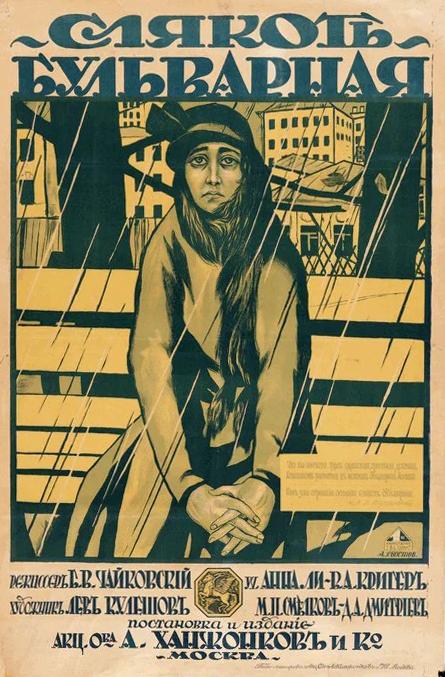
There are films that merely tell a story, and then there are those that seep into your very bones, leaving an indelible stain on your psyche long after the credits roll. 'Sliakot bulvarnaia' belongs unequivocally to the latter category, a cinematic experience less watched and more profoundly felt. It’s a work of art that doesn't just depict urban decay; it embodies it, breathes it, and forces you to confront the often-unseen grime beneath the veneer of modern existence. From its opening frames, drenched in a perpetual, almost sentient grey, the film establishes an atmosphere so thick with melancholia and quiet desperation that it becomes a character in its own right, a silent, oppressive force against which its human players struggle with varying degrees of futility. This isn't just a movie about a man uncovering a conspiracy; it's a meditation on the erosion of meaning, the burden of history, and the relentless march of time over human endeavors.
Arsenii Bibikov's portrayal of Viktor is nothing short of a revelation, a masterclass in understated despair. His Viktor is not a hero in the conventional sense, nor is he even particularly likable. He is, instead, painstakingly ordinary, a man whose spirit has been systematically pulverized by the relentless banality of his municipal job and the overarching despondency of his environment. Bibikov conveys volumes with a mere flicker of his eyes, a slight slump of his shoulders, the almost imperceptible tremor in his hands as he meticulously archives documents no one cares about. We witness his transformation, not through grand gestures, but through a gradual reawakening of curiosity, a flicker of defiance against the tide of his own resignation. It's a performance that eschews histrionics for profound internal resonance, drawing the viewer into Viktor's increasingly fraught inner world. His journey is a slow, agonizing crawl from apathy to a terrifying awareness, a shift so subtle yet so powerful that it anchors the entire film.
Anna Selivanova, as the enigmatic Elara, serves as Viktor's reluctant Virgil through the city's forgotten catacombs of history and memory. Her performance is imbued with a quiet intensity, a sense of ancient knowledge and profound sorrow that feels both alluring and dangerous. Elara is not merely a plot device; she is the embodiment of the city's collective memory, a keeper of secrets whose very presence suggests a deeper, more complicated narrative than Viktor initially comprehends. Her interactions with Bibikov are charged with an unspoken tension, a blend of intellectual kinship and a fragile, almost mournful connection that transcends typical romantic tropes. The chemistry between them is less about passion and more about shared understanding in the face of an overwhelming, indifferent world. Selivanova's ability to convey so much with so little dialogue is a testament to her profound artistry, making Elara a truly unforgettable figure.
Then there is Vladimir Kriger's Professor Volkov, a character who looms large even in his absences. Kriger infuses Volkov with a chilling blend of paternal authority and cynical manipulation. He is the intellectual titan who once inspired Viktor, now a figure whose motives are shrouded in ambiguity. Is he a guardian of the truth, or an architect of its suppression? Kriger's performance is a masterclass in controlled menace, his voice a low rumble, his gaze piercing, suggesting a man who has seen too much and perhaps done too much. The dynamic between Volkov and Viktor is a crucial thematic thread, exploring the corruption of ideals and the moral compromises inherent in wielding power, even intellectual power. It echoes the power struggles found in films like The Reckoning, where moral choices have far-reaching, devastating consequences, but here, the reckoning is as much internal as it is external.
The film's visual language is as compelling as its performances. The cinematography, by an unnamed genius who understands the power of urban desolation, renders the city in shades of slate, charcoal, and damp concrete. Every frame is meticulously composed, transforming mundane street corners and cavernous archives into landscapes of profound symbolic weight. The pervasive 'boulevard slush' of the title is not merely meteorological; it’s a metaphor for the moral and historical detritus that accumulates, obscuring truth and stifling vitality. The director masterfully uses long takes and slow pans to emphasize the oppressive weight of the environment, allowing the viewer to soak in the suffocating atmosphere. There's a deliberate lack of vibrant color, save for occasional, almost jarring, flashes of dark orange or pale yellow in a forgotten fresco or a flickering streetlamp, which serve to punctuate the otherwise monochromatic gloom, hinting at lost beauty or forgotten passions. This visual restraint is not merely stylistic; it's deeply thematic, mirroring Viktor's own muted existence.
The sound design deserves particular commendation. The incessant drip of water, the distant rumble of trams, the muffled conversations, and the pervasive, almost subliminal hum of urban machinery create an auditory landscape that is both realistic and deeply unsettling. It’s a symphony of urban decay, a constant reminder of the city's indifferent presence. The sparse, melancholic score, often driven by mournful strings and deep, resonant piano chords, never overwhelms the narrative but instead subtly enhances the emotional resonance of each scene. It’s an aural experience that contributes significantly to the film's pervasive sense of dread and existential ennui, reminiscent of the atmospheric tension in The Tide of Death, though here the doom is more psychological than supernatural.
The thematic core of 'Sliakot bulvarnaia' resonates deeply with contemporary anxieties. It explores the fragility of historical narratives, the ease with which collective memory can be manipulated or simply allowed to fade into oblivion. Viktor's discovery of the hidden documents is not just about unearthing a conspiracy; it's about confronting the uncomfortable truth that history is often written by the victors, or perhaps, simply neglected by the indifferent. This exploration of forgotten truths and suppressed pasts brings to mind the layered narratives of The Mirror, though 'Sliakot bulvarnaia' grounds its philosophical inquiries in a more tangible, urban reality. The film posits that the city itself holds secrets, that its very architecture can be a testament to both grandeur and deceit. The bureaucratic labyrinth Viktor navigates is a powerful metaphor for the systems that obscure truth, designed not necessarily to hide, but to overwhelm with sheer volume and complexity.
Pacing in 'Sliakot bulvarnaia' is deliberately measured, a slow burn that demands patience and rewards it with profound insights. This isn't a film for those accustomed to rapid-fire editing and constant plot twists. Instead, it invites the viewer to immerse themselves in its world, to ponder its mysteries alongside Viktor, to feel the weight of each revelation. This contemplative approach allows for deep character development and a thorough exploration of its complex themes. The narrative unfolds like a carefully excavated archaeological site, each layer revealing a deeper, more unsettling truth. This patient storytelling creates an almost hypnotic effect, pulling the audience further into the murky depths of the city's past, much like the slow, inexorable pull towards self-discovery in The Landloper, where the journey itself is the destination.
The film's commentary on the individual's struggle against overwhelming systemic forces is particularly poignant. Viktor, initially a cog in the bureaucratic machine, finds himself pitted against an amorphous, powerful entity that seeks to maintain the status quo. His quest for truth becomes an act of rebellion, a desperate attempt to reclaim agency in a world that seems determined to strip it away. This existential struggle for meaning and agency in a world devoid of inherent purpose echoes the themes found in The Unbeliever, where protagonists grapple with fundamental questions of faith and existence, albeit in a more secular, urban context here. The film suggests that true heroism lies not in grand gestures, but in the quiet, persistent pursuit of truth against formidable odds.
The ending of 'Sliakot bulvarnaia' is, predictably, not one of neat resolutions or triumphant victories. It's an ending that lingers, an open wound rather than a closed chapter. It forces the audience to confront the ambiguity of truth, the cost of knowledge, and the enduring power of the past to shape the present. The final scenes are haunting, leaving a profound sense of unease and a multitude of unanswered questions, not in a frustrating way, but in a manner that encourages continued contemplation. This refusal to provide easy answers is a hallmark of truly great cinema, elevating the film beyond mere entertainment into the realm of profound artistic expression. It’s a conclusion that resonates with the fatalistic undertones of A Game with Fate, but here, the 'fate' is less external and more intrinsically woven into the fabric of the city's history and the characters' choices.
In an era saturated with cinematic escapism, 'Sliakot bulvarnaia' offers a stark, unvarnished look at the human condition amidst urban decay. It's a challenging watch, certainly not for those seeking lighthearted fare, but for connoisseurs of profound, thought-provoking cinema, it is an absolute must-see. The film is a testament to the power of storytelling, of atmosphere, and of performances that etch themselves into the very soul. It's a reminder that sometimes, the most compelling narratives are found not in fantastical realms, but in the mundane, the forgotten, and the endlessly complex 'boulevard slush' of our own cities. The film is a triumph of mood and meticulously crafted narrative, a piece of art that will be discussed, analyzed, and felt for years to come. It’s a film that bravely asks difficult questions and offers no easy comfort, a true modern classic in the making. The enduring image of Viktor, standing amidst the perpetual drizzle, his face a canvas of newfound, agonizing awareness, is one that will haunt the viewer long after the screen fades to sea blue and then to black. This film doesn't just entertain; it interrogates, it provokes, and ultimately, it transforms. Highly recommended for those who appreciate cinema that dares to delve into the darker, more introspective corners of human experience.

IMDb —
1926
Community
Log in to comment.