DbcultAccessing Vault...
7/10
Senior Film Conservator
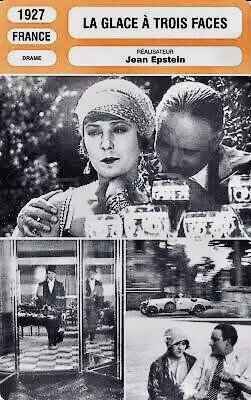
A definitive 7/10 rating for a film that redefined the boundaries of cult cinema. The Three-Sided Mirror remains a cornerstone of transgressive art.
Is Jean Epstein’s 1927 silent film, The Three-Sided Mirror, worth watching today? Short answer: yes, absolutely, but with significant caveats. This isn't a film for casual viewing; it's a profound, experimental journey into the subjective nature of memory and desire, challenging the very fabric of cinematic storytelling almost a century ago. It demands patience and an open mind, rewarding those willing to engage with its unique, fragmented vision.
This film is an essential watch for cinephiles, film students, and anyone with a deep appreciation for the history of avant-garde cinema and psychological narratives. It is decidedly not for viewers seeking straightforward plots, clear character arcs, or conventional emotional payoffs. If your cinematic diet consists primarily of modern blockbusters or easily digestible dramas, this mirror might prove too opaque.
Jean Epstein’s The Three-Sided Mirror (La Glace à trois faces) is more than just a film; it’s a philosophical statement rendered in celluloid. Released in 1927, it stands as a testament to the boundless creativity of the silent era, pushing boundaries that many contemporary filmmakers are still grappling with. Its reputation as a precursor to Alain Resnais’s L'Année dernière à Mariënbad is not hyperbole; the echoes of its temporal disorientations are undeniable.
The film’s central conceit—a wealthy businessman’s serial romantic entanglements with three distinct women, each affair narrated from her individual perspective—creates a fascinating, fractured portrait of love, cowardice, and perception. It's a bold move, eschewing linear progression for a mosaic of recollections that constantly shifts and blurs the lines between past, present, and even a sense of impending doom.
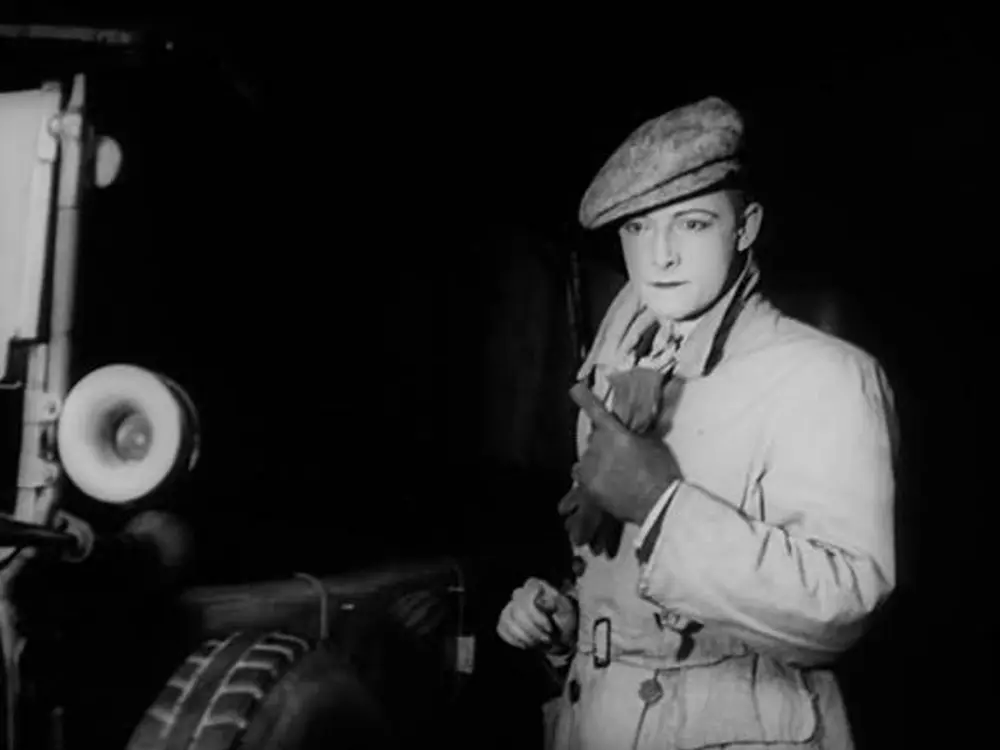
This film works because of its audacious narrative structure. Epstein doesn't just tell a story; he dissects the very act of storytelling, demonstrating how memory and perspective shape our understanding of events, making a singular truth elusive.
This film fails because its deliberate ambiguity and non-linear pacing can be exceptionally alienating for viewers accustomed to more traditional narrative forms. It demands active participation and interpretation, which can feel like work rather than entertainment.
You should watch it if you are fascinated by the experimental roots of cinema, appreciate films that challenge your perceptions of time and reality, and are eager to witness a truly groundbreaking work of psychological introspection.
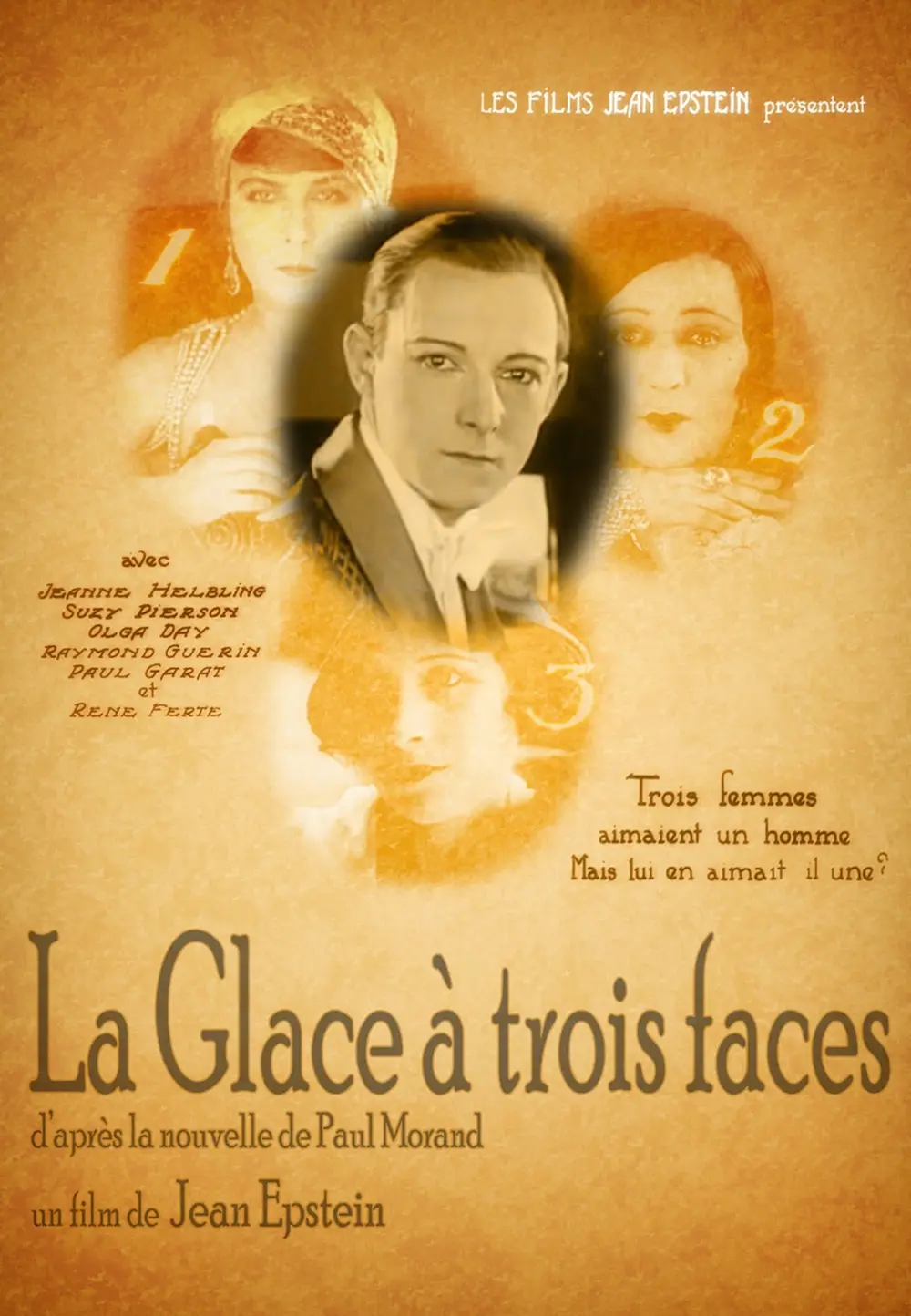
The most striking element of The Three-Sided Mirror is its revolutionary narrative architecture. Epstein divides the film into three distinct segments, each dedicated to one of the businessman’s lovers: Pearl, Athalia, and Lucie. Crucially, these segments are not presented as objective accounts but as subjective recollections, framed by scenes of each woman recounting her affair.
This technique creates a multi-layered temporal experience. We witness events not as they 'happened,' but as they are remembered, retold, and perhaps re-imagined by the women themselves. The lines between what is present narration, what is a past event, and what might be a projected future, become deliberately blurred. For instance, the recurring motif of the businessman speeding in his sports car, escaping his romantic obligations, takes on different nuances depending on whose memory is framing the scene.
Epstein masterfully employs editing to amplify this temporal fluidity. Dissolves, superimpositions, and non-chronological cuts are not mere stylistic flourishes; they are integral to the film's thematic exploration of memory’s fragmented nature. One might see a fleeting image of a past embrace superimposed over a current pensive look, effectively collapsing time into a single emotional moment. This approach was radical for its time, and its influence on later filmmakers, particularly those of the French New Wave, is undeniable.
The constant shifting of perspective forces the viewer to actively construct their own understanding of the central character and his actions. We never truly get an objective view of the businessman; instead, we receive three distinct, sometimes contradictory, interpretations filtered through the love, resentment, or naivety of the women he entangled. This makes him less a character and more a canvas onto which their emotions are projected, an unconventional but powerful storytelling choice.
Given the film's experimental structure and the silent film medium, the performances in The Three-Sided Mirror are necessarily stylized, yet they manage to convey distinct emotional landscapes for each of the three women. Jeanne Helbling, as the classy Englishwoman Pearl, embodies an aristocratic composure, her expressions often hinting at a hidden vulnerability beneath a polished exterior. Her portrayal suggests a woman accustomed to a certain standard of devotion, making the businessman’s evasions particularly cutting.
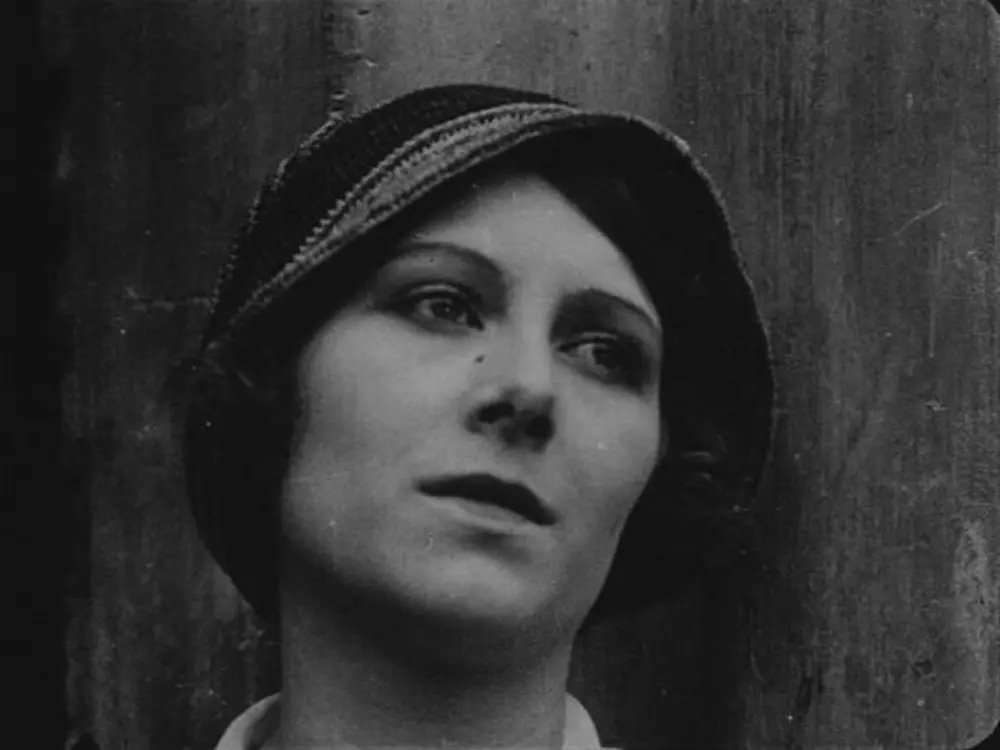
Olga Day, as the Russian sculptress Athalia, offers a stark contrast. Her performance is imbued with a raw, artistic intensity. There’s a passionate, almost tempestuous quality to her scenes, reflecting a character who experiences love with fierce devotion and perhaps a touch of bohemian idealism. Her gestures and facial expressions are often more dramatic, conveying a profound sense of artistic sensibility and emotional depth.
Suzy Pierson brings a touching naivety to Lucie, the working-class girl. Her innocence and genuine affection for the businessman are palpable, making his eventual abandonment all the more poignant. Pierson’s performance relies on subtle cues of hope and eventual heartbreak, portraying a character whose world is simpler, and thus more easily shattered. These three distinct portrayals are crucial; they are the 'mirrors' through which we understand the central, elusive figure.
René Ferté, as the wealthy businessman, is perhaps the most challenging role. He must portray a figure defined more by his absence and his weakness than by any strong, active presence. Ferté’s performance is often understated, relying on a certain aloof charm that slowly gives way to an almost pathological inability to commit. His character is less about grand gestures and more about the subtle shifts in his gaze, his hurried departures, and the palpable sense of emotional distance he maintains. It's a portrayal of a void, a man who fills his life with superficial pursuits to avoid genuine connection.
Epstein, a theorist of photogénie, uses every cinematic tool at his disposal to elevate the visual experience beyond mere documentation. The cinematography in The Three-Sided Mirror is nothing short of poetic. The camera is not merely an observer but an active participant, its movements and angles reflecting the psychological states of the characters and the fractured nature of the narrative.
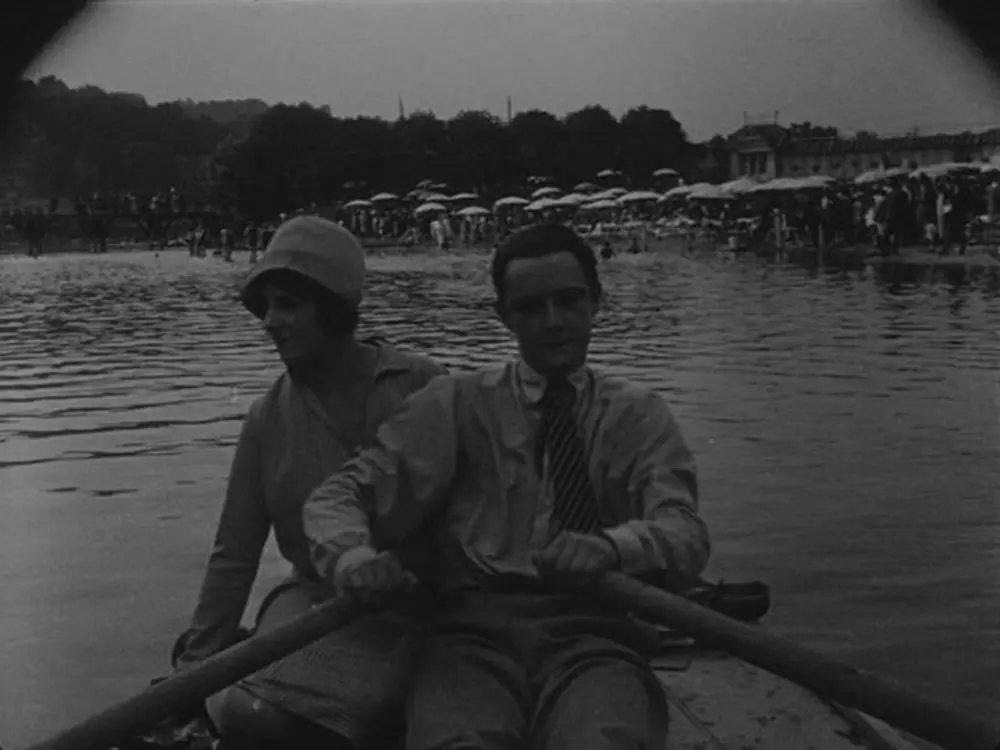
We see striking contrasts: the cold, sleek lines of the businessman’s ultra-modern garage juxtaposed with the natural beauty of the fashionable beaches of Deauville. These visual environments are not just backdrops; they are extensions of the characters' inner worlds. The sterile modernity of his garage suggests a man more comfortable with machines and material possessions than human connection, while the expansive, indifferent ocean at Deauville becomes a metaphor for his endless, ultimately fruitless, escapes.
Epstein’s use of close-ups is particularly effective, isolating faces and objects to imbue them with heightened emotional significance. A lingering shot on a woman's hand, a fleeting glance, or even a specific piece of jewelry can carry immense weight, speaking volumes without a single intertitle. This emphasis on detail, on the 'soul' of objects and faces, is a hallmark of his theoretical approach to cinema.
One unconventional observation is how the film treats the fatal 'descending swallow.' Rather than a dramatic, drawn-out sequence, it’s presented with an almost surreal abruptness, a sudden, almost whimsical act of fate that feels both random and inevitable. This understated depiction of death, almost a visual non-sequitur, further emphasizes the film’s disinterest in conventional dramatic beats, instead focusing on the lingering emotional aftermath.
The pacing of The Three-Sided Mirror is deliberately uneven, reflecting the ebb and flow of memory and emotion. There are moments of lyrical slowness, allowing the viewer to absorb the visual poetry and the subtle shifts in character expression. These are punctuated by bursts of speed, particularly in the scenes involving the businessman’s car, which serve as visual metaphors for his frantic, uncommitted nature.
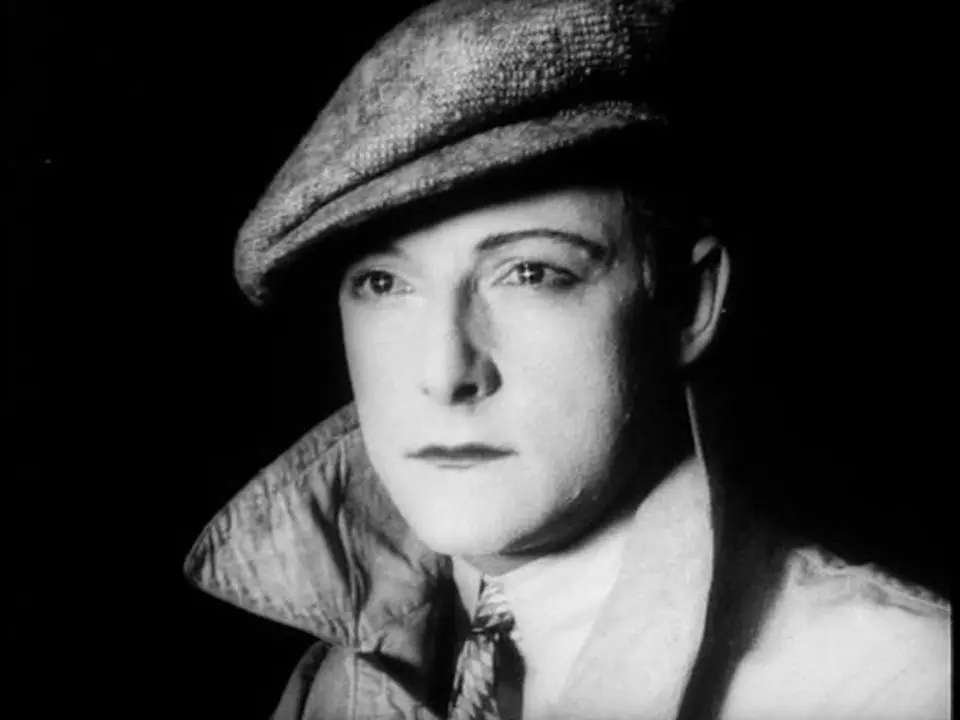
The tone is predominantly melancholic and introspective, tinged with a sense of fatalism. Despite the romantic entanglements, there’s an underlying detachment, a feeling that true connection is always just out of reach for the central figure. The film doesn't aim for overt melodrama; instead, it seeks a deeper, more psychological resonance, exploring the quiet tragedies of unfulfilled love and emotional cowardice.
Emotional resonance, while present, is not delivered through conventional means. It’s not about grand gestures or tearful goodbyes. Instead, it’s found in the subtle anguish in Pearl’s eyes, the passionate despair of Athalia, or the innocent heartbreak of Lucie. The film asks you to piece together these emotional fragments, creating a cumulative effect that is both profound and subtly devastating. The fragmented narrative, rather than distancing us, eventually builds a complex emotional tapestry that is unique to each viewer's interpretation.
Yes, The Three-Sided Mirror is absolutely worth watching, especially for specific audiences. It’s a vital piece of cinematic history. It showcases groundbreaking narrative techniques. It influenced future generations of filmmakers. This film is a must-see for anyone interested in the evolution of film language.
However, be prepared. This is not a passive viewing experience. It requires your full attention. It demands an appreciation for silent film aesthetics. It challenges your expectations of storytelling. If you find experimental cinema frustrating, this might be a difficult watch. But for those who embrace its challenges, it offers rich rewards.
The Three-Sided Mirror is a challenging, yet ultimately rewarding, cinematic experience. It works. But it’s flawed. Jean Epstein’s vision is audacious, a testament to the power of film to explore the deepest recesses of the human psyche without relying on dialogue. It’s a film that demands your engagement, offering in return a unique perspective on love, memory, and the elusive nature of truth. While it won't appeal to everyone, its historical significance and artistic merit are undeniable. For those willing to look into its fragmented reflections, it offers a profound and lingering impression that few films, even today, can achieve. Seek it out if you dare to see cinema through a truly different lens.
IMDb 7
1921
Community
Log in to comment.