DbcultAccessing Vault...
Cult Review
Senior Film Conservator
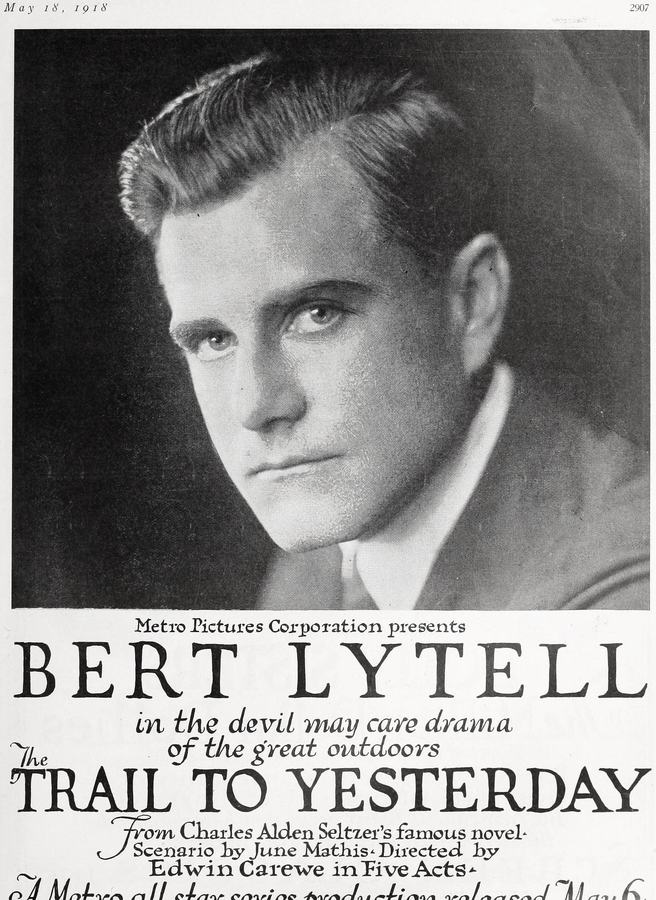
The 1918 cinematic landscape was a volatile crucible of narrative experimentation, and few films encapsulate the era's transition from Victorian melodrama to the visceral grit of the Western genre quite like The Trail to Yesterday. Directed with a surprisingly modern sensibility, this film serves as a vehicle for the burgeoning stardom of Bert Lytell and the sophisticated screenwriting of June Mathis. It is a work that transcends the simplistic archetypes of the frontier, delving instead into the psychological quagmire of inherited guilt and the paradoxical nature of justice.
The film opens not in the sun-drenched plains of the West, but in the claustrophobic, shadows-laden world of commerce. The murder of the elder Keegles by David Langford (Ernest Maupain) is staged with a starkness that rivals the darker passages of Dzieje grzechu. Here, the hardware store is not merely a setting; it is a symbol of the rigid, industrial East where men are broken by the weight of ledger books and suppressed rage. When Ned Keegles returns, his expulsion from college marks him as the 'prodigal son,' making his framing for the murder an almost effortless exercise in societal prejudice.
The subsequent migration to the West is less a journey of hope and more a descent into a purgatorial landscape. As Ned becomes 'Dakota,' the film utilizes the vastness of the horizon to mirror the character's internal isolation. The cinematography captures the desolation of the terrain with a clarity that foreshadows the atmospheric tension found in The Barrier. Dakota is a man living in the negative space of his own history, a ghost haunting the fringes of a society that has already pronounced him dead.
June Mathis, perhaps the most influential screenwriter of the silent era, imbues the character of Sheila (Anna Q. Nilsson) with a complexity often denied to leading ladies of the period. Sheila is not merely a damsel in distress; she is the fulcrum upon which the moral weight of the story pivots. When Dakota rescues her during a thunderstorm—a sequence that utilizes light and shadow to create a sense of cosmic inevitability—the film shifts from a standard revenge plot into a nuanced exploration of complicity.
The forced marriage, a trope that could easily descend into the meretricious, is handled with a psychological depth that recalls the domestic frictions of The Marriage Ring. Dakota’s decision to wed Sheila is a cold, surgical strike against her father, yet it is through this very proximity that the frost of his heart begins to thaw. The Double R ranch becomes a laboratory of human emotion, where the resentment of the past is slowly eroded by the shared survival of the present.
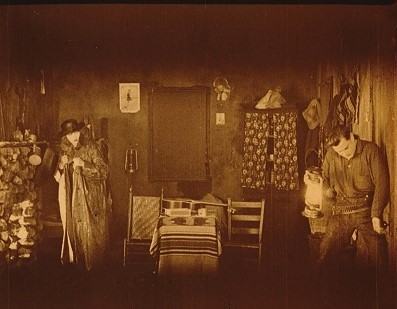
Bert Lytell delivers a performance of remarkable restraint. In an era where histrionics were the currency of the screen, Lytell opts for a subterranean intensity. His Dakota is a man of few gestures, but each movement is pregnant with the trauma of his exile. His chemistry with Anna Q. Nilsson is palpable; Nilsson brings a luminous dignity to Sheila, portraying a woman who must navigate the revelation of her father’s villainy while finding her own agency within a marriage born of coercion. Her performance stands in stark contrast to the more traditional portrayals seen in The Pride of the Clan, offering a more grounded, visceral connection to the audience.
Every great Western requires a shadow to its light, and in The Trail to Yesterday, that shadow is cast by the duo of 'Texas' Blanca and John Duncan. Their attempts to frame Dakota for cattle rustling serve as a microcosm of the lawlessness that defines the frontier. The film masterfully illustrates how easily a reputation can be dismantled in a land where words are often secondary to the speed of a draw. This thematic thread of the 'unjustly accused' provides a rhythmic heartbeat to the narrative, ensuring that the tension never dissipates.
The diabolical plots that Dakota must navigate are not merely obstacles; they are tests of his moral character. Unlike the protagonists in The Hidden Hand, who often rely on external intervention, Dakota’s triumphs are entirely self-generated. His emergence from these trials is not just a victory over his enemies, but a victory over the 'Dakota' persona itself, allowing Ned Keegles to finally reclaim his identity.
The visual language of the film is surprisingly sophisticated. The use of location shooting provides an authenticity that studio-bound productions of the time lacked. The wide shots of the Double R ranch emphasize the insignificance of human conflict against the backdrop of an indifferent nature. Furthermore, the lighting during the climatic sequences utilizes a high-contrast style that heightens the emotional stakes, creating a visual tension that is almost tactile.
The pacing, directed with a keen eye for suspense, avoids the episodic nature of many contemporary serials. Each scene flows with a logical necessity, building toward a climax that feels both earned and inevitable. The resolution of the conflict between Dakota and Langford is handled with a narrative economy that respects the audience's intelligence, avoiding the protracted sentimentality that often marred the endings of films like Madame Butterfly.
Viewing The Trail to Yesterday through a modern lens, one is struck by its prescience. It explores themes of toxic masculinity, the fallibility of the legal system, and the possibility of redemption in a way that feels startlingly relevant. It shares a certain DNA with the social critiques found in The Clarion, yet it couches its message in the accessible language of the Western adventure.
The film’s ultimate message—that love and truth can survive even the most harrowing of circumstances—is a testament to the enduring power of the genre. While it may lack the epic scale of later Westerns, its intimate focus on the psychological transformation of its characters makes it a far more compelling experience. It is a cinematic bridge between the old world and the new, a trail that leads not just to yesterday, but toward the future of film narrative.
In the final analysis, The Trail to Yesterday is a triumph of silent storytelling. It demonstrates that even within the constraints of the medium, complex emotional truths can be conveyed with power and precision. The collaboration between Mathis, Lytell, and Nilsson resulted in a work that stands as a high-water mark for 1918. It is a film that demands to be revisited, not just as a historical curiosity, but as a vibrant, breathing piece of art that continues to resonate with the human experience.
For those who appreciate the nuances of early cinema, this film offers a rich tapestry of performance and plot. It avoids the pitfalls of simplistic morality, opting instead for a world of grays where heroes are flawed and villains are driven by relatable, if destructive, impulses. It is a journey worth taking, a trail that reminds us that while the past may be a foreign country, its shadows are always with us, waiting to be brought into the light.
Note: For those interested in further explorations of silent era drama and the complexities of justice, consider viewing An American Gentleman or the mystery-laden A Melbourne Mystery for a comparative study in narrative structure.
IMDb 6.1
1928
Community
Log in to comment.