DbcultAccessing Vault...
Cult Review
Senior Film Conservator
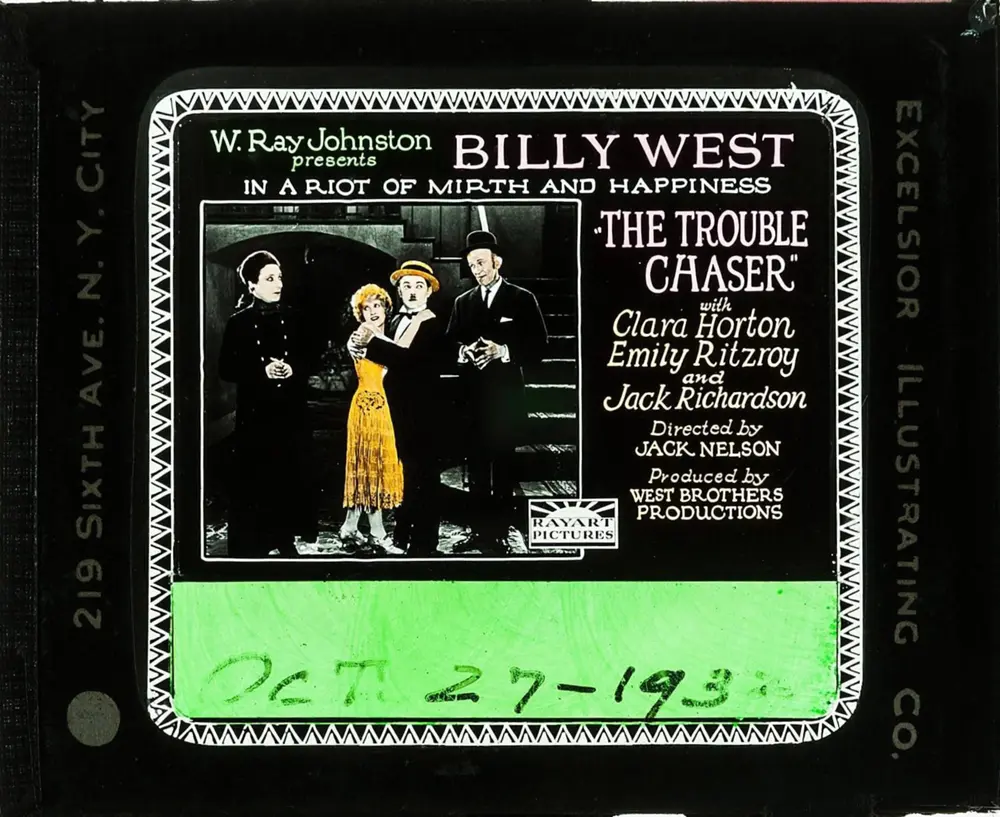
Is this silent era relic worth a modern revisit? Short answer: yes, but only if you are a student of early 20th-century social satire and slapstick evolution.
The Trouble Chaser is a film for those who appreciate the historical bridge between pure physical comedy and the more sophisticated social dramas of the 1920s; it is not for those who demand high-octane thrills or modern cinematic pacing.
This film provides a unique window into the moral panics of its time. It is a fascinating artifact for anyone interested in how the media was beginning to view itself as a moral arbiter. However, casual viewers might find the moralizing a bit thick. If you enjoy seeing the roots of the 'investigative reporter' trope, this is a essential stop on your cinematic journey.
1) This film works because the chemistry between Billy West and Clara Horton transcends the limitations of the silent medium, providing a genuine sense of partnership.
2) This film fails because the third act leans too heavily on the moralizing of the Purity League, which feels redundant after the investigative work is done.
3) You should watch it if you want to see how silent cinema handled the transition from domestic comedy to urban social commentary.
For years, Billy West was often dismissed as a mere Charlie Chaplin imitator. In The Trouble Chaser, we see him attempting to carve out a slightly different niche. While the physical agility is still there, his portrayal of Hector requires a level of vulnerability that his earlier, more derivative work lacked. In a scene early in the film where Hector tries to act 'tough' in the newspaper office, West uses his small stature to comedic effect, but there is a palpable sense of anxiety in his eyes that feels grounded in reality.
Compared to his work in His New Papa, West here is more restrained. He isn't just reacting to the world; he is trying to change it. This shift in character motivation helps the film feel more like a narrative and less like a series of disconnected gags. The way he interacts with the seasoned newsmen shows a character who is growing, a rarity in the static character archetypes of early short-form comedy.
It works. But it is flawed. West still relies on certain 'tramp' mannerisms that can be distracting, but his effort to ground Hector in a specific social context—the sheltered boy meeting the real world—is commendable. It is a performance that suggests a career that could have been even more significant had the silent era lasted longer.
The real standout of the film is Clara Horton as 'Firefly.' In an era where women were often relegated to being the 'girl in trouble,' Firefly is the one chasing the trouble. She is the professional, the one with the plan, and the one who understands the stakes. When she enlists Hector's help, it isn't because she needs a savior; she needs a tool. This dynamic is surprisingly modern.
Consider the scene where they first enter the café. Firefly doesn't wait for Hector to lead; she navigates the room with a calculated confidence, using her byline as a shield and a weapon. Her character reminds one of the grit seen in The Ragamuffin, where female agency is a central theme. Horton plays the role with a sharp, observant energy that makes the male characters around her seem almost ornamental.
I would argue that Firefly is the actual protagonist of the film. Hector is our surrogate—the naive observer—but Firefly is the engine of the plot. Her character is a precursor to the fast-talking 'Girl Friday' roles that would dominate the screwball comedies of the 1930s. Without her, the film would be a standard 'boy makes good' story; with her, it becomes a proto-feminist workplace drama.
The subplot involving Hector's aunt and the Purity League provides the film's moral backbone, but it also offers some of its most debatable moments. Is the film sincerely supporting the League, or is it mocking the middle-class obsession with 'cleansing' the city? Emily Fitzroy plays the aunt with a formidable, almost terrifying presence. Her speeches are 'stirring,' but the film often cuts from her grandstanding to the actual, gritty reality of the café.
This juxtaposition suggests a subtle critique. While the aunt talks about the café in abstract, moral terms, Hector and Firefly are dealing with the people there as individuals. This creates a tension between the 'ideal' morality of the League and the 'practical' morality of the reporters. It’s a sophisticated layer for a film of this period. It reminds me of the social friction found in The Firing Line, where class and morality often clash in uncomfortable ways.
One surprising observation is that the 'notorious café' isn't depicted as a hellhole. It looks... fun. The music is implied through the energetic editing, and the patrons seem to be having a better time than the members of the Purity League. This visual honesty undermines the aunt's rhetoric, making the audience question who the 'trouble' really is.
The lighting in The Trouble Chaser is surprisingly effective at distinguishing between the two worlds Hector inhabits. The scenes in the aunt's home are flooded with high-key, flat lighting—symbolizing a life with no shadows and no secrets. In contrast, the newspaper office and the café are filled with smoke, cluttered desks, and deeper shadows. This visual storytelling helps the audience feel Hector's transition from the 'light' of his sheltered life to the 'shadows' of the real world.
The pacing, however, is where the film stumbles. Like many films of the era, such as Monkeying Around, the middle act feels elongated. There are several sequences of Hector 'learning the ropes' that could have been trimmed to keep the momentum of the café investigation. The film is at its best when it focuses on the undercover operation, but it frequently retreats to the safety of the Purity League meetings, which kills the tension.
Despite these pacing issues, the final 'raid' on the café is handled with a great sense of geography. We always know where Hector is in relation to Firefly and the café owner. In an age before sophisticated camera moves, this clarity of action is a testament to the director's skill. It lacks the chaotic brilliance of The Barnyard, but it replaces chaos with narrative purpose.
The Trouble Chaser is a fascinating, if slightly uneven, piece of silent cinema. It attempts to do something difficult: balance the broad comedy of Billy West with a serious story about social reform and professional ambition. While it doesn't always succeed—the moralizing is often too loud and the comedy too quiet—the central partnership between Hector and Firefly makes it a journey worth taking. It is a film that captures a world in transition, caught between the rigid rules of the past and the messy freedom of the future. It is a minor work, but one that rewards the patient viewer with its sharp observations and surprisingly modern heart.
IMDb —
1915
Community
Log in to comment.