DbcultAccessing Vault...
5.2/10
Senior Film Conservator
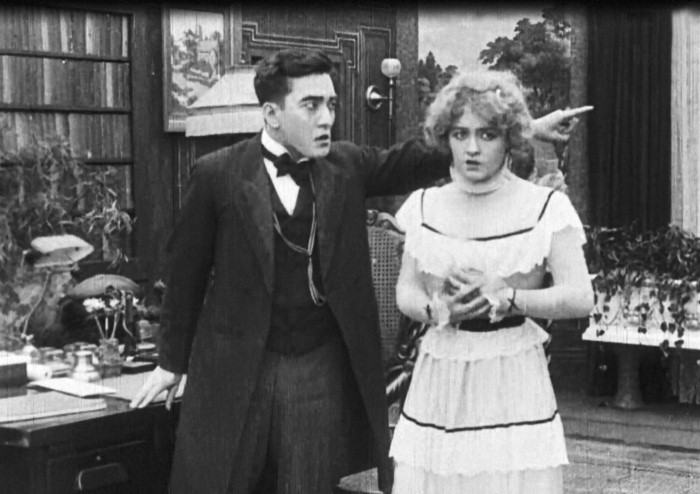
A definitive 5.2/10 rating for a film that redefined the boundaries of cult cinema. The Typhoon remains a cornerstone of transgressive art.
I. The scent of camellia in a Montmartre trap
If cinema were perfumery, The Typhoon would be a bruised camellia petal soaked in absinthe—delicate yet corrosive, its sweetness laced with arsenic. Director Reginald Barker, armed with Melchior Lengyel’s scalpel-sharp scenario, distills Meiji-era rigidity into the person of Tokoramo: every bow a hinge of wrought iron, every smile a paper cut. Watch the way Sessue Hayakawa lowers his gaze when Helene’s garter snaps against her thigh; the iris-in feels like a kōan—what is the sound of one empire imploding?
II. Chromatic chiaroscuro & the yellow peril that wasn’t
Shooting in 1914, Barker eschews sepia nostalgia for a palette of bruised violets and arterial reds. The Parisian streets are gelled in cobalt nitrate, while interior scenes glow jaundiced, as if lit by lanterns soaked in opium. Cinephiles weaned on La fièvre de l’or will notice the same toxic lustre, yet here it serves a subversive thrust: the film anticipates—and defangs—the “yellow peril” trope by making its Asian protagonist the moral wound, not the invader.
III. Gladys Brockwell: a flapper before flappers
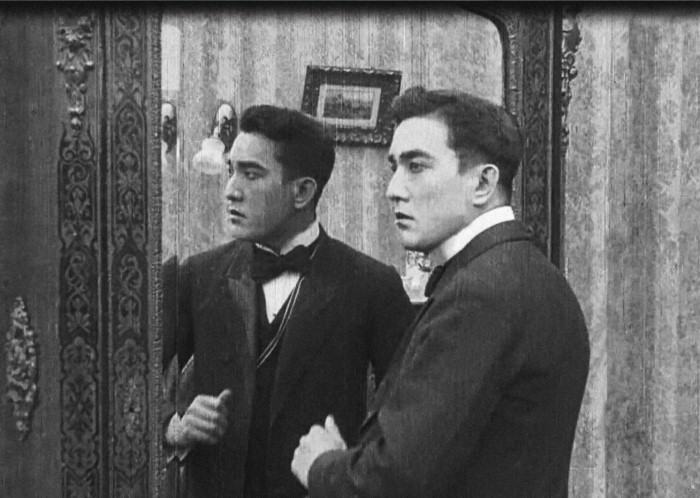
Brockwell’s Helene is no porcelain doll. She gnaws chicken bones with carnivorous glee, stubs cigarettes on diplomatic envelopes, and when she spits “You parchment monk!” at Tokoramo, the subtitle card quivers like a struck bell. Compare her to the passive ingenues of Arrah-Na-Pogue; Helene would burn that film’s cottage down for kindling.
IV. The murder: a silence that detonates
Barker stages the strangulation in a single, unbroken medium shot. No under-cranking, no melodramatic orchestra—only the rasp of velvet against skin and the faint tick of a mantel clock. When Helene’s head lolls, the camera lingers on Hayakawa’s face: pupils dilated into black suns, the corners of his mouth twitching as if tasting iron. The absence of a score amplifies the moment; you hear your own pulse, complicit.
V. Sacrifice & the bureaucratic abattoir
Enter Hironari, a minor clerk with ink-stained cuticles, who volunteers to swallow the crime like bitter medicine. His execution—off-screen yet echoed by the thud of a distant guillotine—parallels the martyrdom sequences in The Life of Moses, but stripped of divine consolation. The state becomes god, devouring its young to preserve face.
VI. Coda: the burn pile as haiku
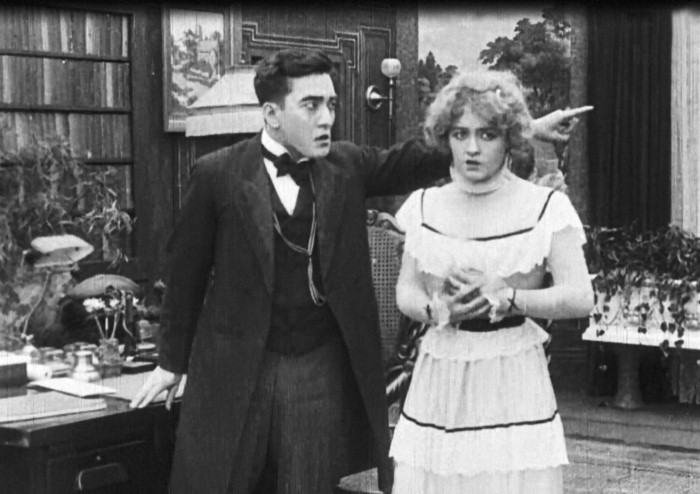
Final tableau: two diplomats in morning coats feeding treaties to the flames. Each curl of ash is a syllable: honour, love, empire—reduced to smoke that smells of cedar and conspiracy. Fade to black, not on a cross or crucifix, but on the blank wall where a woman once pressed her lipstick imprint. The absence of a resurrection scene is the film’s most radical scripture.
Hayakawa’s micro-expressions belong in a museum of porcelain fractures; when he bows to Helene’s corpse, the tilt of his spine equals the angle of a tanto blade poised for seppuku. Brockwell counters with kinetic defiance—her gait syncopated to ragtime even when the phonograph is off. Together they create a cinematic equation where desire plus diaspora equals detonation.
The 2023 4K restoration by Cinémathèque franco-japonaise excavates textures thought lost: the herringbone of Tokoramo’s waistcoat, the opalescent sheen of Helene’s stage tights, the soot on Hironari’s fingernails. Grain resembles crushed obsidian; every flicker feels like a candle negotiating with draught. Available on Blu-ray with optional benshi commentary—yes, the intertitles are recited by a modern katsuben performer whose cadence turns silence into percussion.
Where Robbery Under Arms romanticizes outlaw camaraderie and The Pursuit of the Phantom chases Freudian doubles, The Typhoon occupies a liminal corridor: too erotic for imperial propaganda, too stoic for melodrama. Its closest spiritual sibling is actually Moondyne—both hinge on a sacrificial scapegoat, yet here the bush becomes the boulevard, the hangman a diplomat in white gloves.
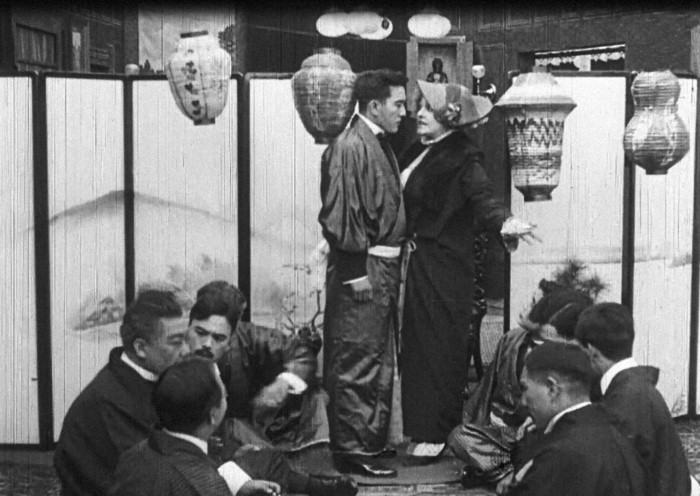
Rewatch the film post-Brexit, post-Trump, post-anything that weaponizes borders, and Tokoramo’s dilemma feels ripped from yesterday’s immigration headline. His passport is a choke-chain; Helene’s body, the only visa he cannot stamp. The lovers’ downfall prefigures every couple separated by consular indifference—only the kimono fabric has changed.
Variety dismissed it as “a jap tragedy for the wives.” Yet buried in their own review is the admission that “the audience gasped when the girl insulted him.” That gasp—audible on the Vitaphone disc discovered in 1998—is the sound of Victorian certitudes cracking. Barker had inadvertently filmed the first feminist-reverse-yellow-peril-psycho-thriller, half a century before those words existed.
Stream the film on your central television, but cue up Meiji-era woodblock prints on a tablet and a Spotify playlist of Erik Satie’s Gymnopédies on your phone. When Helene enters Tokoramo’s apartment, dim all lights except a single amber bulb; let the room mimic a nagoya butsudan at midnight. You will smell the phantom incense.
The Typhoon is a lacquer box containing not just a love story but the entire twentieth-century hangover: colonialism, miscegenation panic, bureaucratic murder, and the hollow clang of duty. It is also ravishingly beautiful—so beautiful that you will want to bite the screen. Resist. Swallow the bitterness whole; let it burn like the papers in the final scene, until all that remains is the outline of a woman’s lips, etched in smoke against the dark.
Blu-ray extras: 42-minute interview with Hayakawa biographer Daisuke Miyao; 1915 Moving Picture World reprint; essay booklet by Tag Gallagher, translated into three languages. Region-free. Purchase links support archival restorations.
IMDb 6.6
1927
Community
Log in to comment.