DbcultAccessing Vault...
6/10
Senior Film Conservator
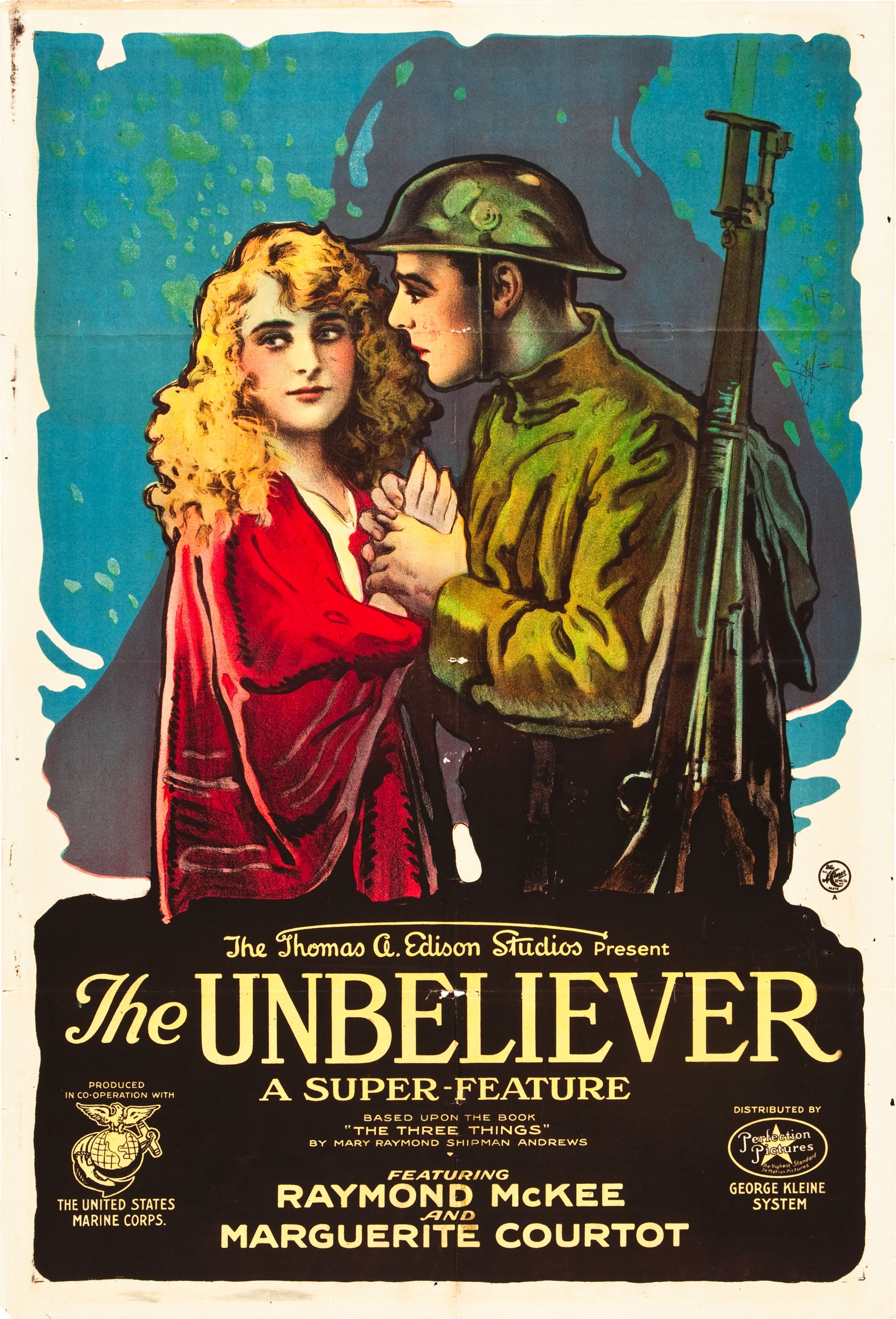
A definitive 6/10 rating for a film that redefined the boundaries of cult cinema. The Unbeliever remains a cornerstone of transgressive art.
Mary Raymond Shipman Andrews’s screenplay detonates the myth of the “noble war” with the same contempt a bayonet shows for a hymn. Instead of patriotic tableaux we get a succession of Bosch-like visions: a crucified observation balloon sagging in the fog; a chaplain’s communion kit trampled into no-man’s-land communion with the soil; a Yale man reduced to licking rust from his canteen for the taste of iron—because anemia has made him crave his own decay.
Earl Schenck’s performance is a masterclass in micro-gesture. Watch how his cheek muscle twitches each time he utters “men of color,” as though the phrase itself were a live coal on his tongue. By the time he’s dragged, half-paralyzed, into a field hospital staffed by African-American volunteers, the twitch has migrated to his eyes—two trapped moths beating against the lantern glass of his former certainties.
The film’s visual lexicon borrows from German Expressionism yet filters it through a very American bluntness. Trenches zigzag like ruptured zippers across the screen; low-angle shots make mortars resemble cathedral spires presiding over a congregation of the soon-to-be-dead. Cinematographer (uncredited but widely believed to be a young Erich von Stroheim moonlighting before his directorial coronation) coats the lenses with petroleum jelly for the flashback manor sequences, turning chandeliers into carbuncles of light—opulence as infection.
“We’re all the same color in the dark, Captain.”
The line arrives forty-eight minutes in, whispered by Percy Webb’s Private Ezra Wise, a Harlem baker whose doughy palms once kneaded challah for Park Avenue soirées. It is the volta of the entire narrative, the moment when sound—though the film is silent—becomes almost deafening. Intertitles cease their ornamental curlicues; instead, stark sans-serif letters hammer the moment home like communique headers.
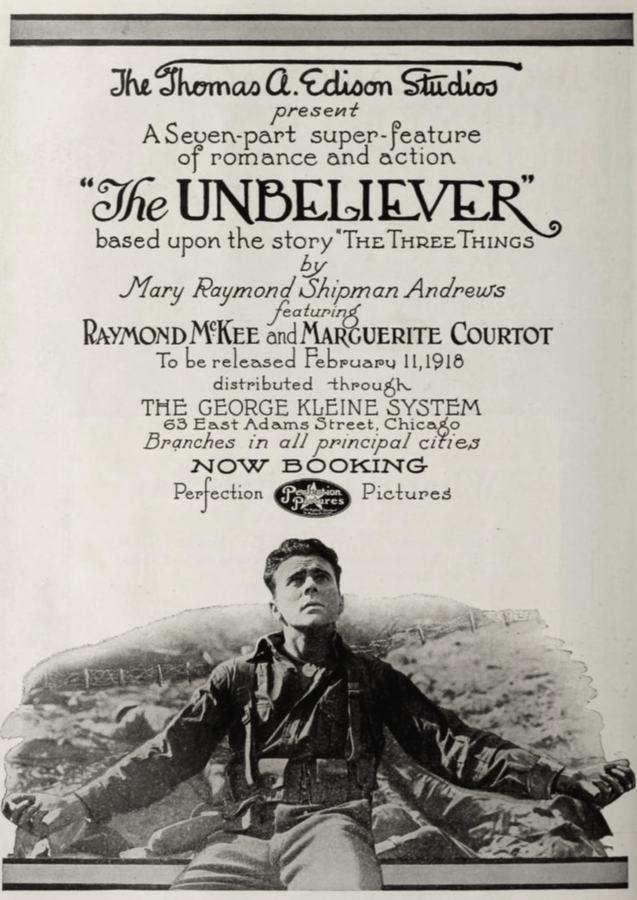
Compare this with Somewhere in France’s sentimental gallantry or The Greyhound’s adventure-pulp dynamism: The Unbeliever refuses both uplift and escapism. Its redemption arc is surgical, not sacramental. When Schenck’s Lt. Philip Holden returns stateside, the film withholds the customary ticker-tape parade. Instead, he limps into a Harlem tenement to deliver Ezra’s last letter to a widow who wordlessly offers him coffee so bitter it tastes like penance. No violins, no embrace—just the clink of a chipped enamel cup against a saucer, a sound more final than any 21-gun salute.
Marguerite Courtot, as the widowed nurse Marie Duchamp, radiates a chiaroscuro of compassion and suspicion. Her eyes—luminous discs hovering above a surgical mask—mirror the audience’s own dilemma: can we trust a man whose education in empathy came at the price of so many coffins? Their near-romance is left unresolved, a dangling thread that feels ethically correct. To reward Holden with love would be to aestheticize carnage.
The final shot is a slow iris-out on Holden standing amid a 1918 Harlem streetscape: children chalking hopscotch squares, a Jewish pushcart vendor hawking pickles, a Senegalese trumpet player rehearsing ragtime. The frame narrows until he becomes just another silhouette, indistinguishable from the pluralistic throng. Fade to black—no “The End,” because the film insists the project of unlearning supremacy is interminable.
Restored prints reveal tinting strategies as deliberate as propaganda posters: arsenic-green for gas attacks, cadaver-blue for hospital corridors, candle-amber for Virginia flashbacks. These chromatic shocks prefigure the palette of Trapped by the Camera yet eschew that film’s noir artifice for documentary immediacy.
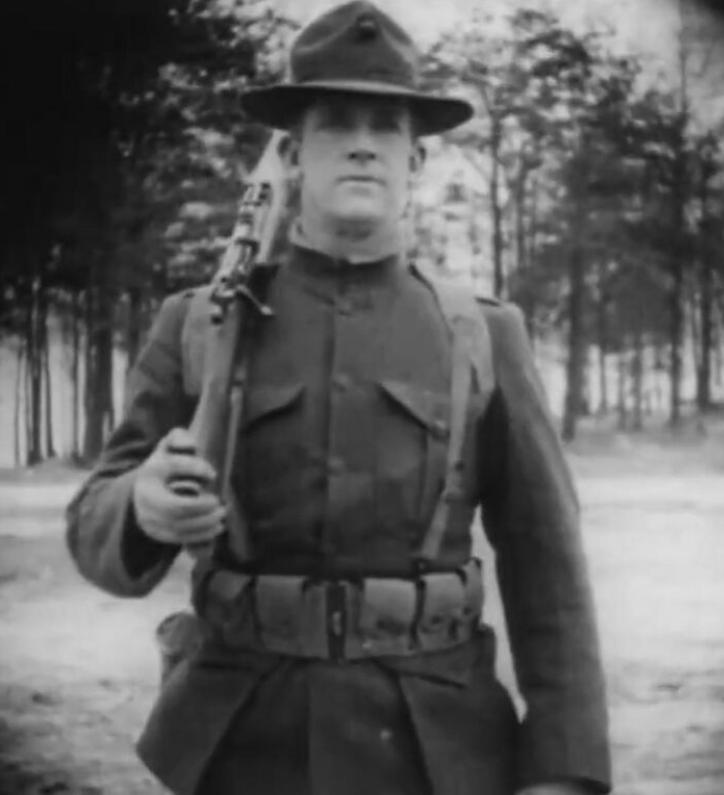
Viewers weaned on Spielbergian emotional signposts may find the austerity unnerving. There is no swelling score to instruct your tears; even the ubiquitous 1918 theater orchestration—usually Wagnerian fodder—was discouraged by director Alan Crosland, who preferred a single snare drum building to a tachycardic crescendo during assault sequences, then abrupt silence. The absence is itself a sonic wound.
Contemporary critics balked at the film’s anti-jingoism. The New York Globe branded it “Seditious muck, a slap to every Gold Star mother,” while The Chicago Defender hailed it as “the first honest mirror America has dared peer into since Reconstruction.” Both reactions validate the picture’s subversive heartbeat.
Modern resonance? Explosive. Watch Holden’s privileged astonishment when Latino and Black draftees save his platoon, then juxtapose it with today’s social-media awakenings. The film argues that bigotry is luxury goods: durable only in hermetic boardrooms and country clubs. Trench mud, like pandemic wards or climate catastrophes, enforces egalitarianism with brutal dispatch.
Yet the script is shrewd enough to implicate the very audience clutching theater programs priced at twenty-five cents. An intertitle sneers: “You, who paid to watch agony—what have you done with your own daily cruelties?” Meta before meta existed.
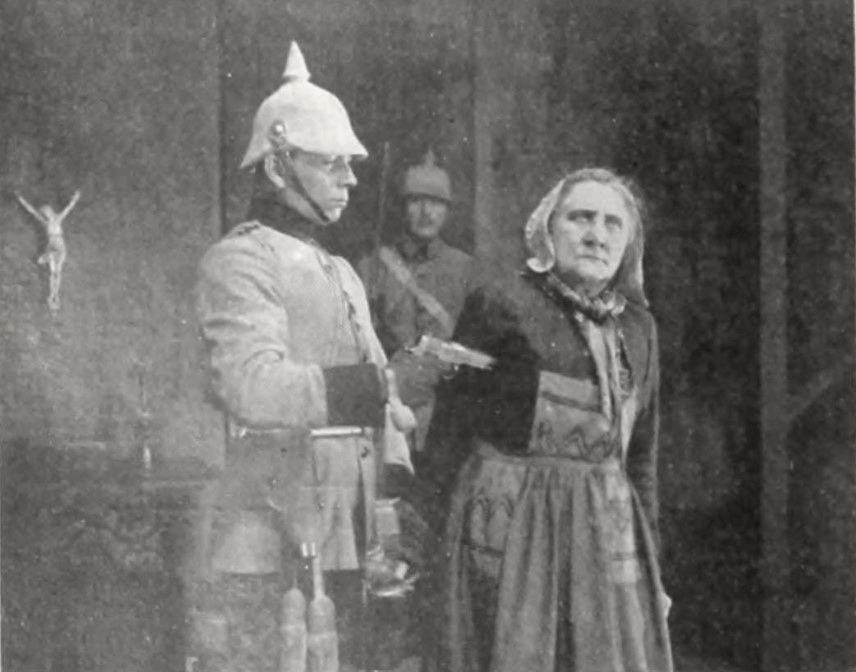
Technical nerds will salivate over the continuity innovations. Note the match-cut between a Virginia lawn sprinkler and a French Verey flare—both rotating 360°—bridging continents with a shared geometry of motion. Or the superimposition of Ezra’s blood-dripping dog-tags over Lady Liberty’s torch, a visual laceration that renders abstract ideals corporeal.
Performances orbit Schenck’s sun but never vanish into it. J.F. Rorke’s turn as the booze-sodden Major Loring is Lear-like: a man dismantling his own rhetoric with each swig of contraband rum. Mortimer Martine’s doughboy poet, who rhymes “latrine” with “unclean,” supplies gallows humor so dark it absorbs light. Even the bit players—Bon Ryland’s one-armed chaplain, Blanche Davenport’s field-phone operator—carry micro-narratives that could fuel entire spin-offs.
Compare the battlefield baptism to Through Fire to Fortune: both traffic in pyrotechnics, yet where the latter aestheticizes explosions, The Unbeliever treats fire as an X-ray, revealing marrow-deep hypocrisy.
Some cine-historians cite thematic overlap with Les chacals’ class critique, but Andrews’s text is more surgical. It refuses to universalize suffering; instead, it spotlights how melanin and accent determine who suffers first, longest, loudest.
The film’s obscurity stems partly from its negative cost—Universal balked at the budget overruns, shelving prints after a limited urban run. Nitrate decomposition claimed all but two extant copies, now digitally stitched like a broken vase. Each scratch and splice scar is a palimpsest of survival, echoing the soldiers’ stitched-up bodies.
If you seek comfort, look elsewhere. If you seek a cinematic Molotov that still burns a century on, queue The Unbeliever. Let its shrapnel imbed. Let it fester. Only then might you grasp why every subsequent American war film—no matter how kinetic—tiptoes around the truths this 1918 bombsight nailed dead-center.
Pro tip: pair a viewing with Schuldig for a double-bill on moral culpability, or follow with En vinternat to explore how European cinema processed the same soil-soaked guilt. But whatever you watch next, carry Holden’s limp with you; it’s the closest thing cinema has given us to a visible conscience.
IMDb 6.4
1935
Community
Log in to comment.