DbcultAccessing Vault...
Cult Review
Senior Film Conservator
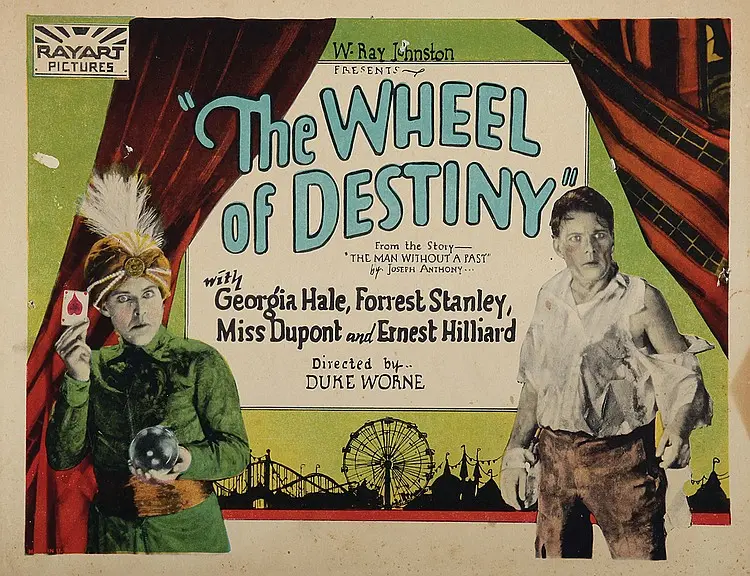
Is The Wheel of Destiny worth unearthing from the silent film archives today? Short answer: yes, but with significant caveats. This melodrama from the early 20th century serves as a fascinating historical artifact and a decent dramatic showcase for its lead performers, making it a compelling watch for dedicated cinephiles and those curious about the roots of cinematic storytelling. However, it will likely prove a challenging, if not frustrating, experience for casual viewers accustomed to modern pacing and narrative sophistication.
This film is unequivocally for students of film history, silent era enthusiasts, and anyone who appreciates the raw, unadorned emotionality of early cinema. It is emphatically NOT for viewers seeking fast-paced action, complex dialogue, or polished special effects, nor for those who lack patience for the deliberate rhythm and often exaggerated expressions typical of its period.
Stepping back into the world of The Wheel of Destiny is akin to opening a dusty, leather-bound novel. It immediately transports you to an era where storytelling was simpler, yet often grander in its theatricality. This film, with its straightforward narrative and reliance on visual pantomime, embodies many of the conventions that defined early Hollywood drama. It's a reminder of how much, and how little, has changed in the fundamental human desire for compelling stories of love, betrayal, and redemption.
At its core, The Wheel of Destiny centers on Eleanor Vance, portrayed with earnest vulnerability by Georgia Hale. Eleanor's life is one of quiet hardship, shared with her ailing, cryptically prophetic Aunt Clara. The film quickly establishes the central romantic dilemma: Eleanor is courted by Arthur Sterling (Forrest Stanley), a sincere but struggling architect, and Julian Thorne (Ernest Hilliard), a charismatic, wealthy industrialist whose charm masks a calculating nature. Aunt Clara’s cryptic pronouncements about a turning 'wheel of fortune' foreshadow a hidden family inheritance, a secret Julian is desperate to exploit. The narrative builds on Eleanor's internal conflict, her struggle between genuine affection and the seductive promise of security, all while a dark truth about her lineage and Julian's motives slowly comes to light. It culminates in a classic silent-era confrontation, where virtue and cunning clash over love and legacy.
George W. Pyper, as the credited writer, crafted a narrative that, while conventional for its time, possessed a certain elegance in its dramatic arc. The film’s direction (likely also handled by Pyper or an uncredited director) relies heavily on established silent film techniques: clear character blocking, dramatic close-ups to emphasize emotion, and a linear progression of events. There's a noticeable lack of the kinetic energy or groundbreaking visual experimentation seen in some of the more celebrated silent films of the era, such as Fritz Lang's Metropolis or F.W. Murnau's Nosferatu. Instead, Pyper focuses on clarity and emotional resonance, ensuring the audience always understands the characters' plight, even if the methods feel broad.
One could argue that the film’s strength lies in its unpretentiousness. It doesn't try to reinvent the wheel, but rather to operate it efficiently. The scene where Aunt Clara, on her deathbed, attempts to convey the secret to Eleanor is a prime example. The frantic gestures, the struggle to speak, the dramatic lighting – it’s all classic silent fare, executed with a straightforward effectiveness that lands the intended emotional punch, even if it feels a little heavy-handed now. This approach, while perhaps not visionary, ensures the story remains accessible and emotionally legible.
However, this adherence to convention also contributes to the film’s limitations. There are moments when the direction feels overly static, relying on long takes of characters reacting rather than driving the action forward. The visual language, while functional, rarely elevates the material into something truly memorable. Compare this to the dynamic camera work of a film like The Midnight Guest, where the camera itself becomes a character, and The Wheel of Destiny feels decidedly more stage-bound. It’s a competent directorial effort, but not one that pushes the boundaries of the medium.
In silent cinema, the burden of conveying character and emotion falls almost entirely on the actors' physicality and facial expressions. The cast of The Wheel of Destiny largely rises to this challenge, albeit with varying degrees of success and a healthy dose of period-appropriate melodrama.
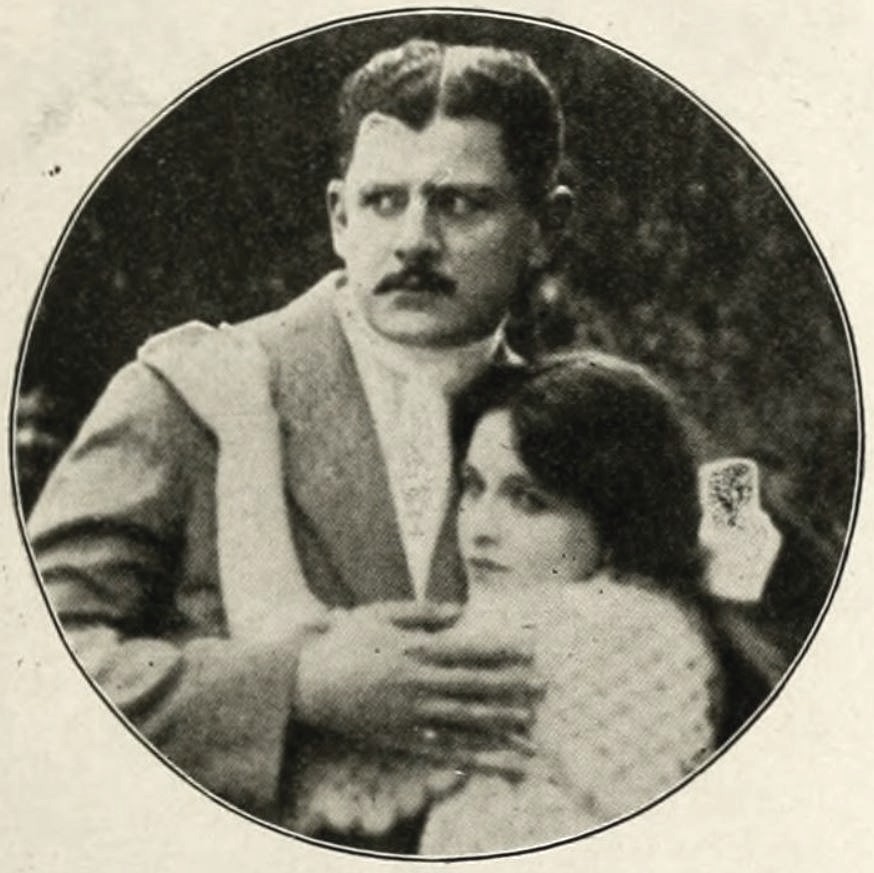
Georgia Hale, as Eleanor Vance, is undoubtedly the film’s anchor. Her performance is a masterclass in silent film acting – expressive yet nuanced enough to prevent her character from becoming a mere damsel in distress. She navigates Eleanor’s journey from wide-eyed innocence to heartbroken confusion and ultimately, to defiant resolve, with a compelling sincerity. Her scenes of quiet despair, particularly after Aunt Clara's death, are genuinely moving, conveying a depth of emotion without resorting to excessive histrionics. Hale was a talent, and it's clear why she found success in this era. Her portrayal here, while not as iconic as her work in The Gold Rush, is a testament to her skill.
Forrest Stanley, as the virtuous Arthur Sterling, embodies the classic silent film hero. He's noble, earnest, and somewhat stoic, relying on his gaze and a firm jawline to convey his unwavering moral compass. While his performance is solid, it occasionally lacks the dynamic range that Hale brings, making him feel a touch less engaging. He serves his purpose admirably, but the character of Arthur feels more archetypal than fully fleshed out. His earnest warnings to Eleanor, delivered with a mix of concern and frustration, are effective, but one wishes for a touch more internal conflict or vulnerability.
Ernest Hilliard, as the villainous Julian Thorne, clearly relishes his role. He's all suave menace, with a predatory charm that shifts seamlessly into overt villainy. Hilliard's performance is broad, as expected, but effective in establishing Julian as a credible threat. His sneering smiles and sudden bursts of anger are precisely what the role demands, making him a compelling antagonist. The scene where he subtly manipulates Eleanor, his eyes darting with calculation even as his mouth forms reassuring words, is a standout, demonstrating the power of unspoken intent in silent film.
The supporting cast, including Bynunsky Hyman as Aunt Clara and Percy Challenger as the helpful lawyer Mr. Finch, provide solid, if less memorable, contributions. Hyman’s portrayal of the eccentric, ailing aunt is appropriately mysterious and adds a touch of macabre charm to the early scenes. Challenger’s Mr. Finch is the classic deus ex machina figure, delivering exposition with a practiced gravitas. Overall, the ensemble works well together, creating a believable, if melodramatic, world for Eleanor's trials.
The cinematography of The Wheel of Destiny is competent, yet rarely inspired. The lighting is functional, clearly delineating good from evil, and creating mood where necessary, but it doesn't possess the artistic flair or innovative shadow play seen in films like Dark Secrets. Most shots are medium to wide, establishing the setting and allowing the actors to perform their full-body pantomime. Close-ups are reserved for moments of intense emotion, effectively drawing the audience into the characters' inner turmoil. The set design, while modest, adequately conveys the contrast between Eleanor's humble abode and Julian's lavish estate, using visual cues to reinforce class distinctions and character traits.
The pacing is perhaps the film’s most challenging aspect for a modern audience. It's undeniably slow. Actions unfold deliberately, and emotional beats are extended, allowing ample time for audience processing, which was common in the era. Intertitles, while well-written by George W. Pyper, are frequent and often lengthy, further slowing the narrative flow. This deliberate speed, while authentic to the period, can test the patience of viewers accustomed to rapid-fire editing and constant narrative propulsion. There are moments where a scene feels prolonged beyond its dramatic necessity, a common pitfall of early cinema that hadn't yet fully embraced the efficiency of montage.
The tone is quintessential melodrama – heightened emotions, clear-cut good versus evil, and a strong moralistic undertone. There's little room for ambiguity, and the film leans heavily into sentimentality, particularly in Eleanor's moments of distress. While this can feel dated, it's also part of the film's charm and historical value. The dramatic confrontations, the last-minute revelations, and the triumph of virtue all contribute to a tone that is earnest and deeply felt. It’s a film that asks its audience to fully invest in its emotional landscape, even if that landscape is painted with broad strokes. The implicit score, which would have been performed live, would have undoubtedly amplified these emotional cues, a crucial element missing from most modern viewings.
For the discerning viewer, yes, The Wheel of Destiny absolutely holds value. It’s not just a historical curiosity; it’s a living document of early cinematic storytelling. It reminds us of the power of visual performance before dialogue took center stage, and of the enduring appeal of classic dramatic tropes. You get a real sense of the craftsmanship involved in conveying complex emotions and narrative twists through expression, gesture, and well-placed intertitles. It’s a foundational piece for understanding the evolution of film as an art form.
However, for the casual viewer, the answer is more complex. You need to approach it with a specific mindset, one that embraces the conventions of the silent era rather than judging them against contemporary standards. If you can appreciate the deliberate pacing, the theatrical acting, and the earnest melodrama, then you'll find a rewarding experience. If you’re looking for a quick, engaging watch, you might find yourself checking your watch more often than the screen. It works. But it’s flawed.
The Wheel of Destiny is a sturdy, if not spectacular, example of silent-era melodrama. It’s a film that demands patience and an appreciation for its historical context, but it rewards those who invest in its earnest emotional landscape. While it won't redefine your cinematic palate, it serves as a valuable touchstone for understanding the foundations of dramatic storytelling on screen. It’s a journey back to cinema’s formative years, offering a compelling performance from Georgia Hale and a classic tale of virtue tested by fate. Approach it not as a blockbuster, but as a finely preserved artifact, and you'll find its quiet power. It’s a film that reminds us that even with rudimentary tools, the human story remains endlessly captivating.
IMDb 5.3
1935
Community
Log in to comment.