DbcultAccessing Vault...
6.6/10
Senior Film Conservator
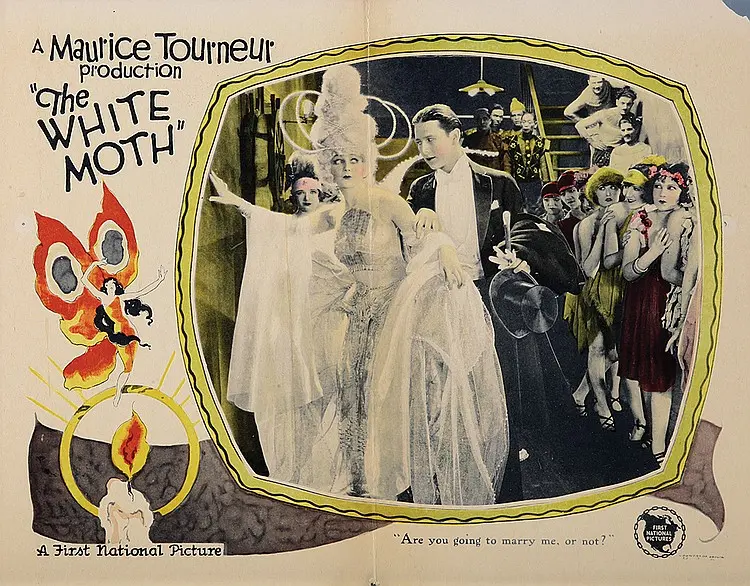
A definitive 6.6/10 rating for a film that redefined the boundaries of cult cinema. The White Moth remains a cornerstone of transgressive art.
The 1924 silent opus The White Moth stands as a testament to the ephemeral brilliance of Barbara La Marr, a woman whose off-screen life often mirrored the tragic extravagance of her cinematic avatars. In this film, we are invited into a world of high-contrast morality and aesthetic saturation, where the transition from the gutter to the footlights is depicted with a visceral, almost tactile intensity. Unlike the pastoral simplicity found in Lena Rivers, this narrative thrives on the sophisticated artifice of urban Europe, exploring the psychological toll of reinventing oneself for the public gaze.
The film opens with a sequence that captures the desolate beauty of a Paris that exists only in the collective memory of the 'Lost Generation.' Mona’s initial failure as an art student is not merely a financial collapse; it is a spiritual dissolution. The cinematography utilizes a heavy, almost oppressive chiaroscuro that highlights the isolation of the American expatriate. When she stands above the Seine, the water is not just a river but a symbol of the void. This moment of existential crisis is far more profound than the domestic tribulations seen in The Sin of Martha Queed, as it deals with the absolute rejection of the self.
The intervention of Conway Tearle’s Douglas is the pivot upon which the entire film turns. Tearle brings a certain mercurial gravity to the role, portraying an actor who recognizes in Mona a raw material that can be sculpted. This dynamic of the creator and the creation echoes the thematic underpinnings of The Man Who Played God, though here the motivation is tinged with a theatrical vanity. The subsequent time-jump—a favorite device of the era—propels us into a world of shimmering decadence. The transition from the art student’s smock to the 'White Moth' costume is a masterstroke of visual storytelling, symbolizing a loss of agency in exchange for an immortal public image.
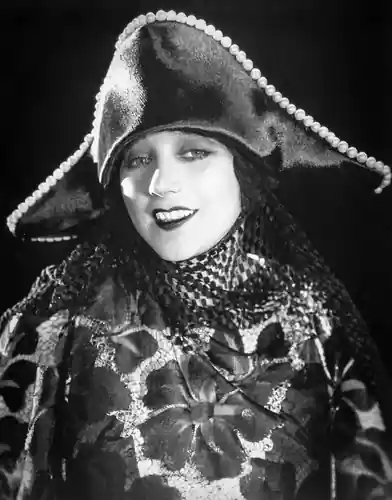
To discuss The White Moth without centering the discussion on Barbara La Marr would be an exercise in futility. Known as 'The Girl Who Is Too Beautiful,' La Marr’s performance transcends mere physical allure. She imbues Mona with a haunting vulnerability that persists even when she is draped in the opulent trappings of a stage sensation. Her performance is a precursor to the complex femme fatales of later decades, yet it retains a silent-era purity. While Lulù offers a more chaotic vision of the stage icon, La Marr’s Mona is a study in controlled elegance and internal conflict.
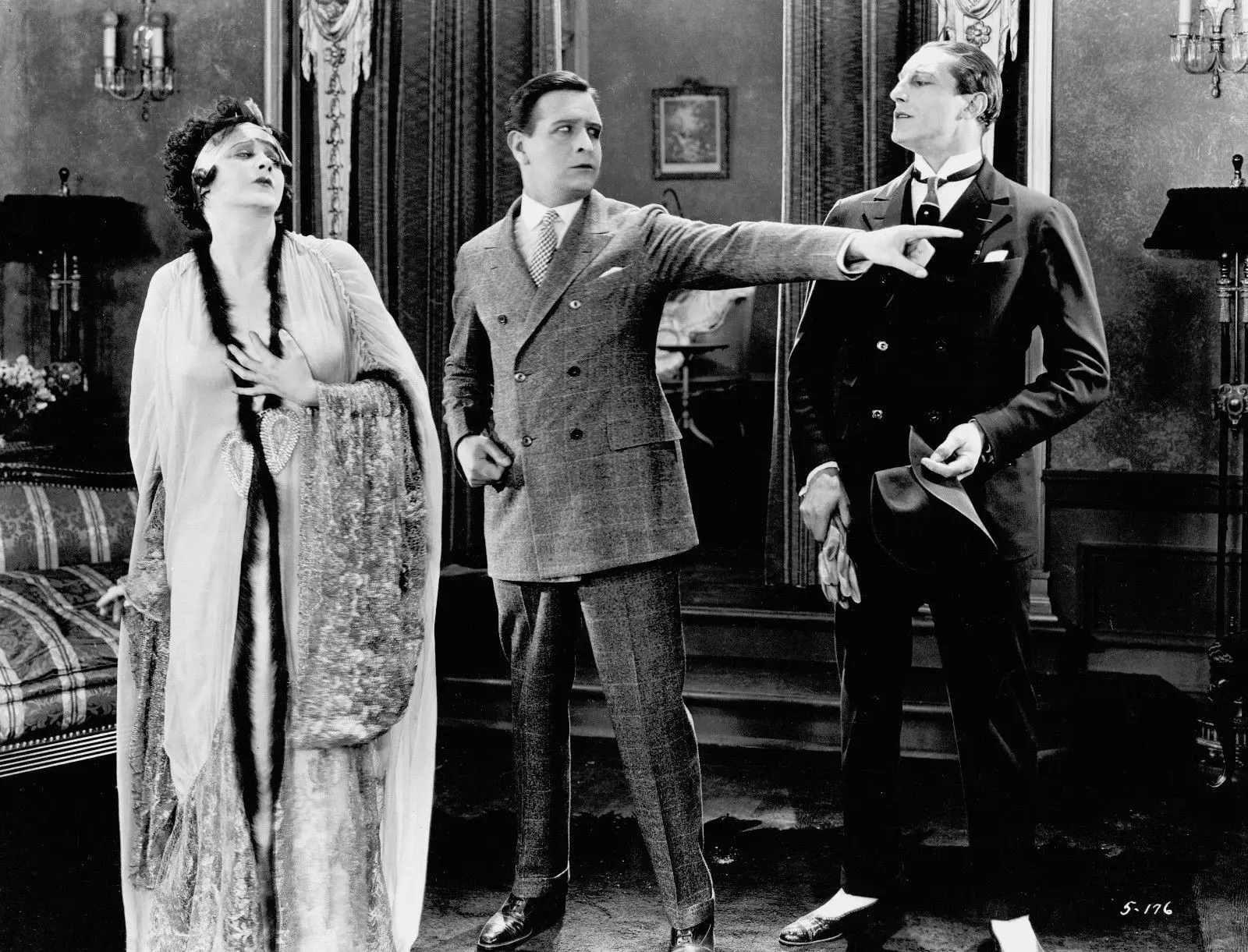
The screenplay, co-written by La Marr herself along with Albert S. Le Vino and Izola Forrester, reveals a surprising depth of insight into the performative nature of gender. As the White Moth, Mona is a creature of artifice, a spectacle designed to provoke desire. The film deftly portrays how this celebrity creates a rift between her private self and the public icon. Every woman wants to be her, not because she is happy, but because she is powerful. Every man wants her, not because of who she is, but because of what she represents. This thematic exploration of the 'idol' is handled with more nuance than the straightforward adventure of Lucille Love: The Girl of Mystery.
The supporting cast provides a rich tapestry of 1920s archetypes. Charles de Rochefort and Ben Lyon offer contrasting masculine energies—one representing the old-world sophistication of Paris and the other a more youthful, perhaps more reckless, ambition. Edna Murphy and Kathleen Kirkham navigate the treacherous waters of social jealousy with aplomb, providing the necessary friction to the White Moth’s ascent. The presence of Josie Sedgwick and Alberta Vaughn adds layers of texture to the theatrical world, making the stage environment feel lived-in and competitive.
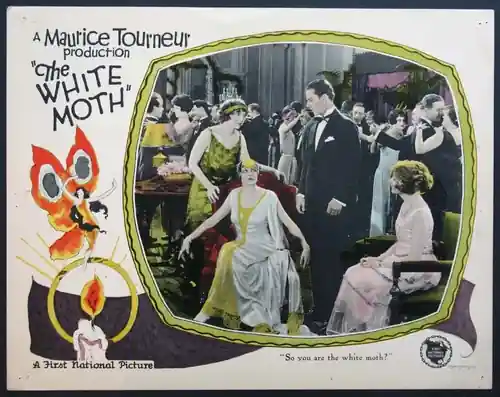
Technically, the film is a marvel of its time. The set designs for the theater sequences are expansive, capturing the grandiose scale of Parisian nightlife. The costume design, particularly for the moth-inspired performances, is nothing short of legendary, utilizing fabrics that catch the light in a way that feels almost supernatural. These visual flourishes are far removed from the gritty realism of Back from the Front or the whimsical chaos of Toonerville's Fire Brigade. Instead, the film leans into a heightened aestheticism that borders on the surreal, much like the atmospheric depth found in La montagne infidèle.
Despite its focus on the glitter of the stage, The White Moth is anchored by a traditional moral architecture. The rescue at the Seine is the film’s foundational myth, establishing a debt that Mona can never truly repay. This dynamic of the 'saved' woman was a common trope, yet here it is complicated by the fact that her savior is also her manager, blurring the lines between liberation and exploitation. This complexity is reminiscent of the social critiques found in Egyenlöség, where the disparity of power is a central concern.
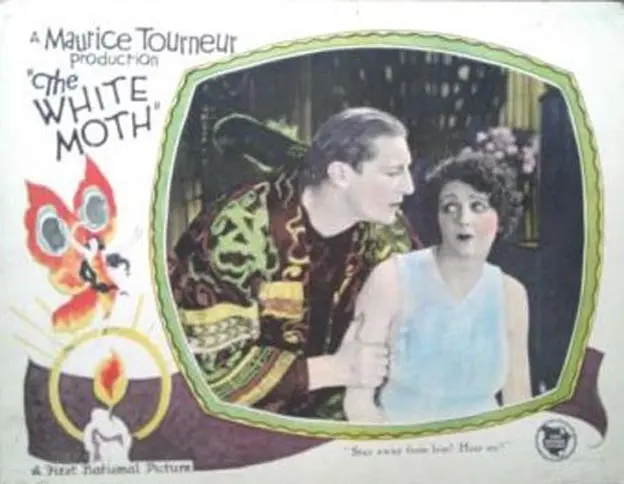
The film also navigates the perilous waters of the 'fallen woman' narrative. While Mona is not 'fallen' in the traditional sense, her proximity to the underworld of Paris and her subsequent rise through the 'sinful' world of the theater place her in a precarious moral position. The tension between her past as a struggling artist and her present as a commodity is palpable. This internal struggle is what elevates the film above standard melodrama like The Bashful Lover. It is a story about the cost of survival in a world that only values beauty when it is framed by a spotlight.
As we reflect on The White Moth, it is impossible to ignore the tragic irony of Barbara La Marr’s own life. Her death just two years after the film's release casts a long shadow over every frame. The image of the moth—drawn to the light only to be consumed by it—is a metaphor that has been used ad nauseam in film criticism, yet here it feels uniquely earned. The film does not offer the easy escapism of Play Ball with Babe Ruth or the exoticism of Sands of the Desert. Instead, it offers a somber meditation on the fragility of identity.
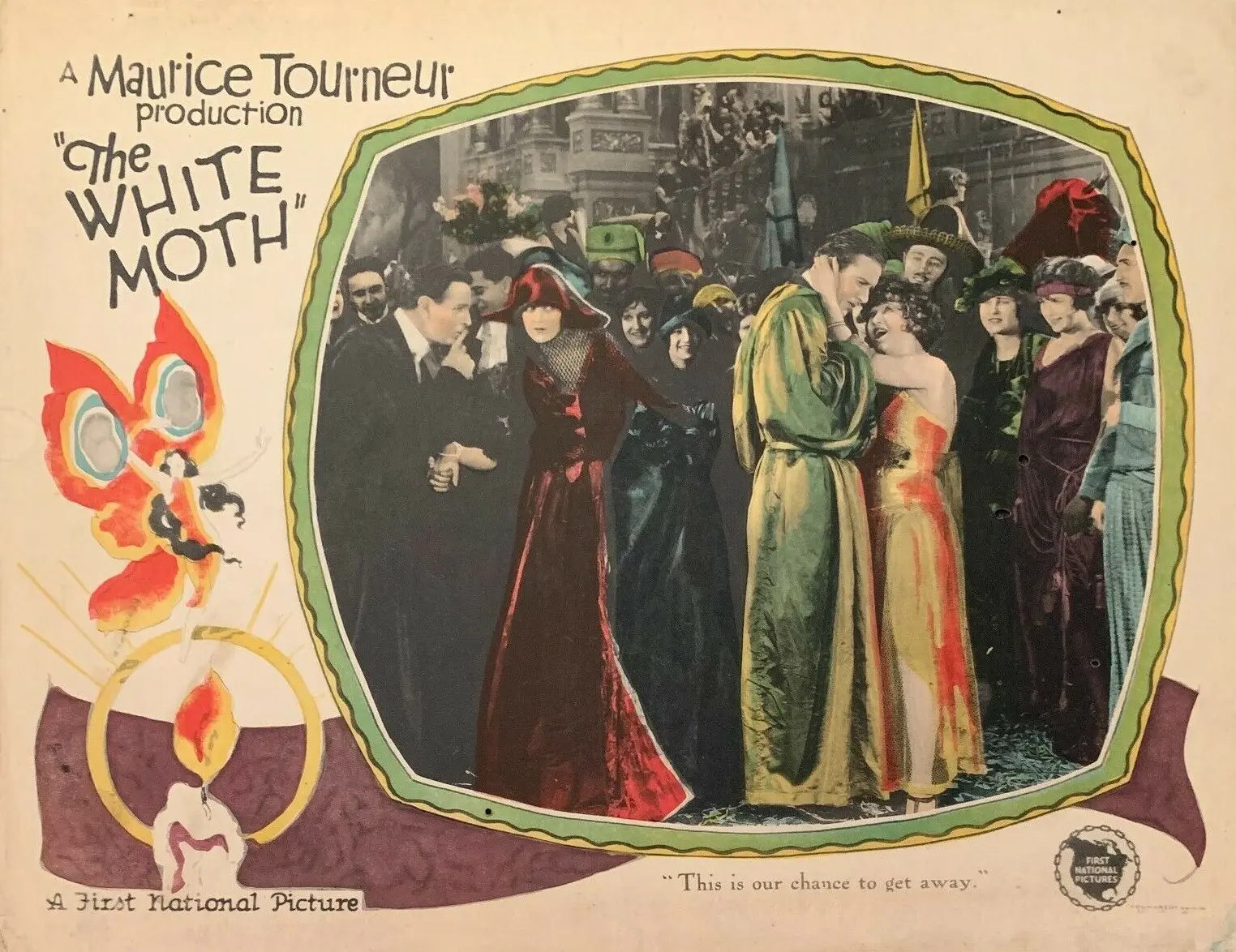
The direction by Maurice Tourneur (though often uncredited in various historical accounts, his influence on the First National aesthetic of the time is clear) ensures that the film maintains a brisk yet elegant pace. The writing by Le Vino, Forrester, and La Marr herself avoids the cloying sentimentality of The Twinkler, opting instead for a more sophisticated, albeit theatrical, realism. Even when the plot leans into the tropes of the era, the sheer conviction of the performances keeps it grounded.
Ultimately, The White Moth is a monumental achievement of the silent era. It captures a specific moment in time when cinema was discovering its power to create icons. It is a film that demands to be seen not just as a historical artifact, but as a living piece of art. Like the dark, brooding atmosphere of The Devil's Garden or the grand ambitions of Paradise Lost, it explores the heights and depths of the human experience with a boldness that remains startling a century later. To watch Mona glide across the stage is to witness the birth of the modern celebrity—shining, distant, and perpetually burning.
A haunting, visually arresting masterpiece that serves as the definitive showcase for the tragic genius of Barbara La Marr. It is a essential viewing for any serious student of silent cinema or the history of the screen siren.
IMDb —
1935
Community
Log in to comment.