DbcultAccessing Vault...
Cult Review
Senior Film Conservator
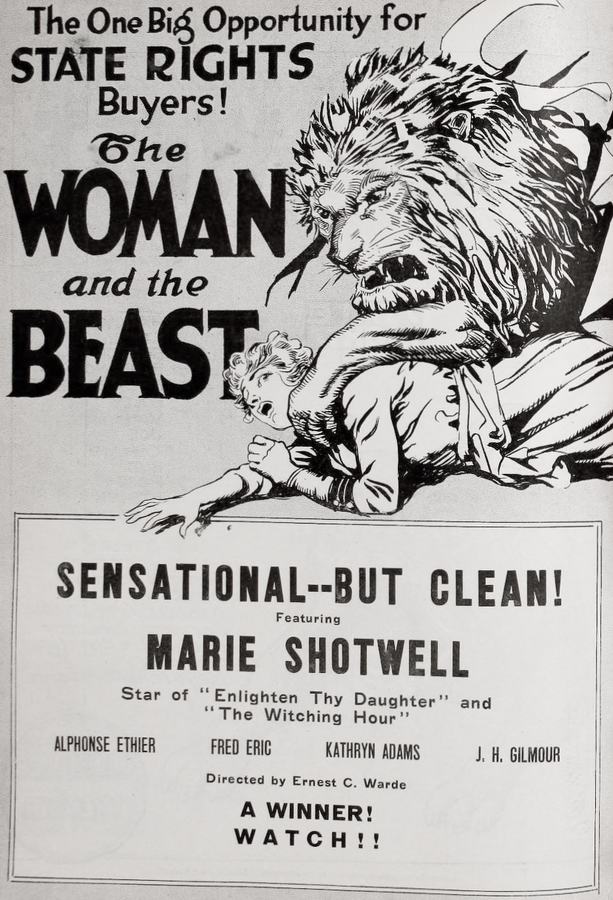
Stepping into the world of early cinema, particularly a gem like The Woman and the Beast (1917), offers a fascinating glimpse into storytelling at its nascent stage, yet with themes that resonate profoundly even today. This is not merely a film; it is a meticulously crafted dramatic fable, a psychological exploration thinly veiled beneath a thrilling premise. At its core lies the timeless struggle of perception versus reality, a domestic drama suddenly amplified by the untamed wild. It’s a narrative that probes the very essence of what it means to be a 'man' in the eyes of society, and more intimately, in the eyes of one’s spouse.
The film introduces us to a protagonist whose gentle disposition is, regrettably, misinterpreted by his wife as an inherent flaw, a sign of weakness in a world that often equated masculinity with overt strength and dominance. This subtle yet pervasive marital tension forms the bedrock of the narrative. Fred Eric, in his portrayal of this mild-mannered man, navigates the delicate balance of conveying a character who is outwardly unassuming but inwardly burdened by his wife's critical gaze. His performance, even in the silent era's often broad strokes, manages to imbue the character with a quiet dignity, a simmering potential that waits for its opportune moment to ignite. Marie Shotwell, as the wife, embodies a societal archetype of the era: a woman perhaps disillusioned by a husband who doesn't fit the heroic mold she envisions, or perhaps simply frustrated by what she perceives as his lack of assertiveness. Their dynamic is the film's initial, silent conflict, a prelude to the external chaos that will inevitably erupt.
It’s a scenario not entirely unfamiliar in cinema, where a character's true mettle is revealed only under duress. One might draw parallels to films like The Gentleman from Indiana, where a protagonist faces challenges that force him to prove his worth, often against preconceived notions. However, The Woman and the Beast grounds its exploration in the intimate sphere of a marriage, making the eventual triumph not just one of physical courage, but of emotional vindication.
The arrival of the circus serves as a brilliant narrative device, an infusion of the exotic and the dangerous into the mundane. Circuses, in early cinema, often symbolized both wonder and latent peril, a contained wildness that could, at any moment, break free. And break free it does. The escape of a lion isn't just a plot point; it's a symbolic rupture. The beast represents the untamed forces that lie beyond human control, the primal chaos that can shatter the veneer of civilized order. It’s a challenge not just to the town's safety, but specifically to our protagonist's perceived inadequacy. This is where the film truly begins to flex its dramatic muscles, transforming a domestic drama into a thrilling test of courage.
The screenplay by Emmett Mixx demonstrates a keen understanding of escalating tension. The initial setup of marital discord is subtly woven into the fabric of everyday life, only to be violently disrupted by the lion's escape. This shift from internal, psychological conflict to external, visceral threat is expertly handled, creating a palpable sense of dread and anticipation. The choices made by Mixx in structuring this narrative arc are commendable, ensuring that the audience is not merely watching a spectacle, but is invested in the personal stakes of the characters involved.
The lion's escape is the moment of truth. Suddenly, the quiet, unassuming man, whose gentle nature was once a source of marital friction, finds himself thrust into a situation demanding the very qualities his wife believed he lacked. This isn't about brute force; it's about inner fortitude, quick thinking, and a selfless willingness to confront danger. The film, through this dramatic turn, elevates its protagonist from a figure of domestic disappointment to a potential hero. It's a powerful statement about the nature of courage – that it doesn't always manifest in bluster and bravado, but can often be found in the most unexpected places, within the quietest souls.
The performances of the supporting cast, including Arthur Bauer, Alphonse Ethier, Tula Belle, J.H. Gilmour, Inda Palmer, Kathryn Adams, and Wayne Arey, contribute to the immersive atmosphere of panic and community response. While their roles might be less central, their collective reactions to the crisis provide a crucial backdrop against which the protagonist's actions shine. The collective fear and chaos amplify the individual's journey towards heroism, making his eventual stand all the more impactful. The film captures the zeitgeist of a community facing an existential threat, much like earlier adventure serials or even contemporary dramas such as The Tiger, which similarly grappled with the raw power of nature unleashed.
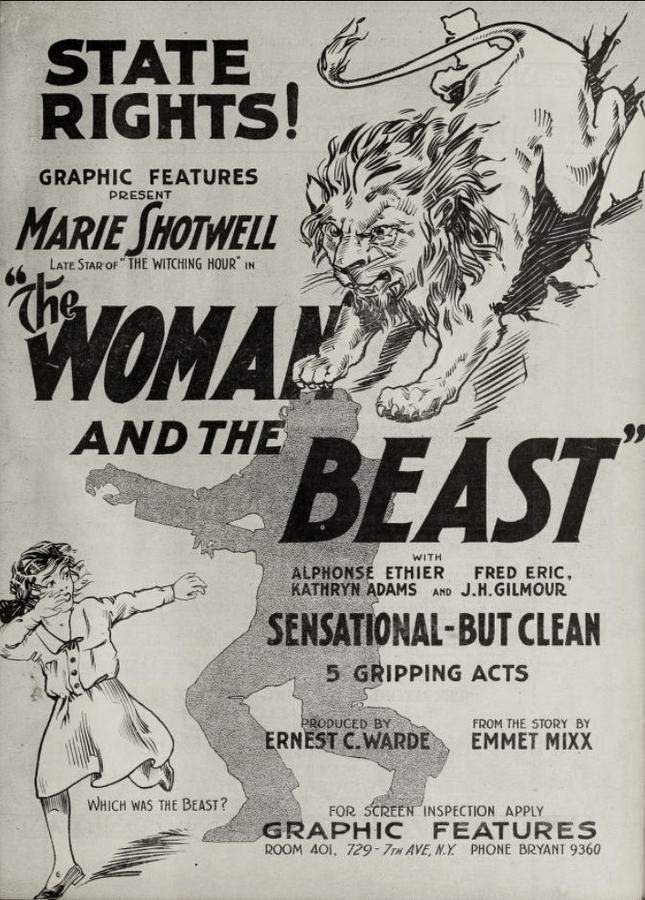
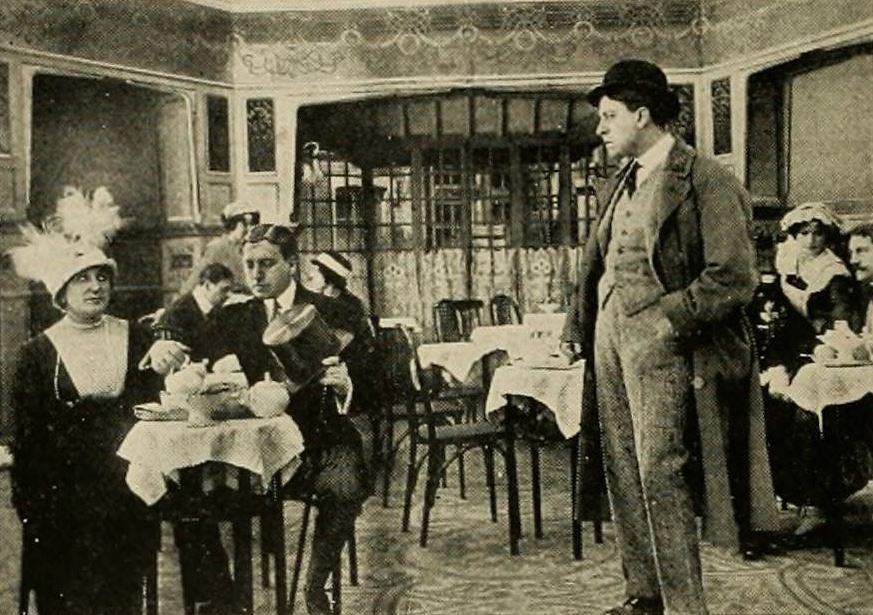
In an era defined by visual storytelling, The Woman and the Beast relies heavily on expressive acting, evocative cinematography, and well-placed intertitles to convey its intricate emotional landscape. The director, whose name is not readily available, nonetheless orchestrates a compelling narrative flow. One can imagine the use of dramatic close-ups to capture Fred Eric's internal struggle and eventual resolve, contrasting with wider shots depicting the chaos of the escaped lion and the frightened townspeople. The interplay of light and shadow, a hallmark of early cinema, would have been crucial in building suspense and highlighting moments of high drama. The very lack of spoken dialogue forces a heightened reliance on physical performance, and the cast, particularly Eric and Shotwell, would have honed this craft to communicate nuanced emotions and character development.
The film's thematic resonance extends beyond the immediate plot. It delves into the societal pressures placed on men to conform to certain ideals of strength and assertiveness. The wife's initial disdain for her husband's gentle nature speaks volumes about these expectations. Her eventual realization, brought about by his heroic act, represents a shift in her understanding, and perhaps, a broader commentary on the superficiality of judging character based on outward appearances alone. This exploration of personal growth and changed perceptions makes the film more than just a thrilling animal escape story; it's a profound character study.
When considering The Woman and the Beast within the broader landscape of 1917 cinema, several touchpoints emerge. Films like The Aryan or The Conquest of Canaan often featured protagonists grappling with their identities and proving their worth in challenging circumstances, albeit often on a grander, more overtly adventurous scale. What distinguishes our film is its intimate focus on the domestic sphere, transforming a marital misunderstanding into a catalyst for profound personal revelation. The 'beast' here is not just a literal animal but also a metaphor for the societal expectations and personal doubts that can cage a man's true potential.
The concept of a 'good-natured' individual being underestimated is a recurring trope, seen in films like Mr. Goode, Samaritan, where inherent goodness is challenged and ultimately validated. However, The Woman and the Beast elevates this by introducing a visceral, life-threatening element, forcing an immediate and undeniable demonstration of courage. It’s a powerful narrative choice that resonates deeply, tapping into universal anxieties about personal validation and the desire to be truly seen and appreciated by those closest to us.
Emmett Mixx's writing for The Woman and the Beast is a testament to the power of a simple, compelling premise. The plot, while straightforward, is rich with subtext. The lion's escape isn't just a random act; it's a meticulously crafted narrative trigger designed to force a confrontation with both external danger and internal insecurities. This economical storytelling, characteristic of the era, allowed for maximum dramatic impact without unnecessary embellishment. The film's ability to communicate complex themes of marital discord, societal expectations, and personal heroism through action and visual cues is a hallmark of strong silent film writing.
Even today, The Woman and the Beast holds a mirror to enduring human experiences. It reminds us that courage often wears many disguises, and true strength isn't always loud or ostentatious. It's a film that argues for looking beyond superficial judgments, for understanding the quiet depths of character that may lie hidden beneath a placid exterior. The journey of the mild-mannered man from perceived weakness to undeniable heroism is a universal narrative, one that continues to inspire and resonate.
The enduring appeal of such films lies in their ability to tap into fundamental human anxieties and aspirations. The fear of external threats, the desire for acceptance, the struggle for self-definition – these are threads woven into the fabric of human existence, regardless of the cinematic era. While the specific context of a circus lion escaping might seem quaint to modern audiences, the underlying emotional truth of a man proving his worth in a moment of crisis remains potent and relatable. It's a testament to the power of early filmmakers like Emmett Mixx and the uncredited director to craft stories that transcend their time.
In conclusion, The Woman and the Beast is far more than a simple adventure story. It’s a nuanced exploration of marital dynamics, societal pressures, and the unexpected blossoming of heroism. It’s a compelling piece of silent cinema that showcases the power of visual storytelling and the enduring relevance of human drama. For anyone interested in the evolution of film and the timeless themes that continue to captivate audiences, this film offers a rich and rewarding experience, a quiet roar that echoes through the annals of cinematic history.
IMDb —
1914
Community
Log in to comment.