DbcultAccessing Vault...
Cult Review
Senior Film Conservator
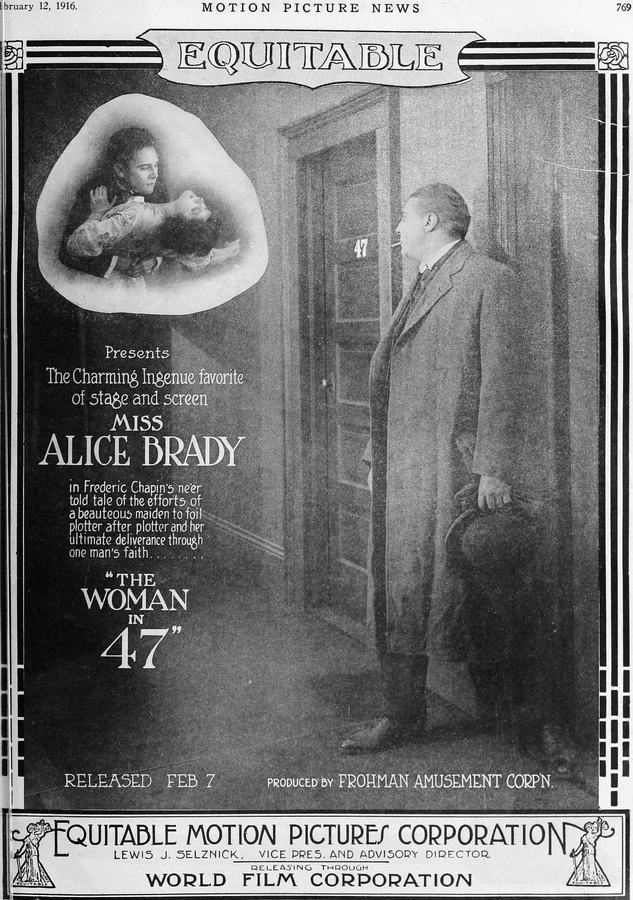
The Woman in 47 arrives like a nitrate ghost: a 1920 one-reeler that somehow smells of both bergamot and gunpowder. Forgotten in most catalogues, it predates by a full decade the more famous La signora delle camelie updates and flirts with the moral vertigo later perfected in Trapped by the Camera. Yet its DNA feels shockingly modern—an immigrant thriller stitched inside a chamber opera about property, gender, and the lethal luxury of choice.
Director Frederick Chapin, better known for Broadway revues, treats the camera like a nosy bellboy, nudging doors ajar just enough to catch silhouettes in flagrante. The Ellis Island sequence—shot on location in winter—leans into actual steam vents and bewildered extras who’d disembarked hours earlier. Their fatigue is unpaid; their faces, immortal. Against this documentary grit, Chapin dissolves into expressionist interiors: Collingswood’s mansion drips with chandeliers that hang like crystallized guilt, while Viola’s first tenement features cracked plaster shaped suspiciously like Italy’s boot. The dialectic between neo-real streets and studio dreams anticipates Rossellini by a quarter-century.
Cinematographer George D. Melville—moonlighting from newsreels—bathes Room 47 in chiaroscuro worthy of Caravaggio. The camera tracks Viola’s quivering shadow as though it were a separate character, one negotiating for top billing. When Collingswood’s revolver finally speaks, the muzzle flash burns a white hole directly onto the print; several surviving copies carry this blemish like a stigmata. Censors of the time objected less to the suicide than to the overt implication that a woman’s sexual refusal could drive a man to self-negation—a narrative deemed “socially contagious.”
Lillian Concord, née Concordia Lombardi, sings onscreen without sound. Trained at La Scala, she modulates breath so visibly that you half hear high-C’s escaping her clavicles. Notice the quivering nostril when Viola first spots Collingswood’s wedding band—a microscopic tremor that swells into a full-body recoil. Silent-era acting often prized semaphore; Concord opts for capillaries.
Jack Sherrill’s Tony, by contrast, is all metropolitan brass—part newsboy, part poet, part confidence trick. His gait changes once he reads the suicide note: shoulders fold inward like a broken marionette, the American dream curdling into Italo-guilt. The film’s boldest choice? Denying him a redemptive close-up. Instead the camera lingers on his shoes—scuffed, pigeon-toed—as the priest sermonizes off-frame. We are forced to imagine the interior battle, making Tony a surrogate for every audience member who has ever weighed escape against obligation.
Chapin’s intertitles, lettered in a font that mimics Viola’s own cursive, arrive sparingly. One card reads: “Love travels oceans; shame needs only a corridor.” The aphorism hangs between shots of a hallway gaslight flickering Morse code. Another card, post-suicide, simply bleeds: “47—48—∞”. Mathematics of grief, counted in room numbers.
Though released silent, the picture toured with a cue sheet suggesting Puccini paraphrases, ironically including snippets of Edgar—an opera about a woman who loves too ardently and the man who flees. Some exhibitors swapped in risqué jazz, infuriating Chapin, who argued the blues clashed with Viola’s verismo trauma. A 1924 Kansas City screening reportedly paired the film with live accordion, resulting in unintended laughs when the suicide coincided with a polka vamp. History does not record audience survival rates.
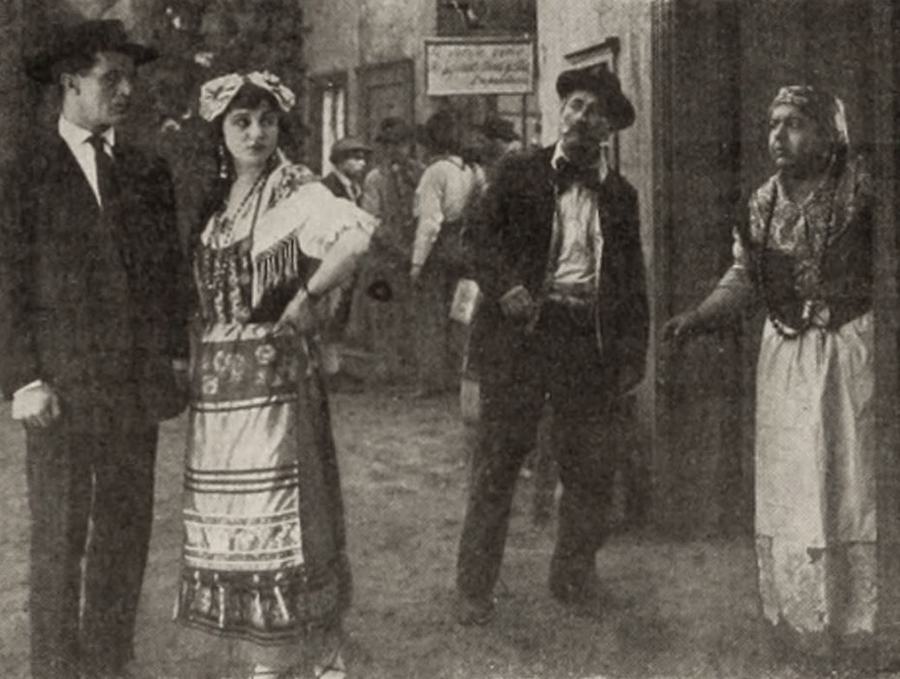
The film’s true protagonist might be the hotel itself, a liminal hive where doors equal social categories. Viola begins in steerage corridors, graduates to Collingswood’s penthouse antechambers, then plummets to the bourgeois modesty of 47. Each threshold marks a negotiation: citizenship traded for patronage, patronage for affection, affection for marriage, marriage for legitimacy. The numeric adjacency of 47 and 48 literalizes the thin partition between wife and mistress, life and afterlife. When Collingswood crosses from 48 to 47 in spirit only—via his suicide note—he enacts the ultimate colonialism: inhabiting her narrative even in death.
Viewers weaned on Lost in Darkness will recognize the same claustrophobic fatalism, though that 1914 potboiler lacks Woman’s transatlantic conscience. Conversely, Marse Covington offers another tale of property and passion but replaces urban corridors with swamps; its moral fever feels humid, bacterial. The Woman in 47 sits midway—social critique wearing melodrama’s perfume, a sibling to The Murdoch Trial in its courtroom-of-consciousness structure, though the verdict here is hymeneal, not penal.
No complete 35 mm negative is known; the Library of Congress holds a 22-minute abridgement struck for the home-movie market circa 1926. Rumors persist of a full 48-minute print in a Jesuit archive outside Turin, misfiled among missionary reels. The extant version suffers from nitrate shrinkage: faces ripple as though painted on water. Yet this very decay echoes Viola’s diasporic instability, turning archival loss into poetic congruence. Digital restoration efforts (2022) employed machine-learning to reconstruct missing frames, though purists object that algorithmic interpolation smooths Concord’s intentional tremors. Ethics of resurrection collide with aesthetics of decay—an ontological duel the film itself would applaud.
After the picture’s New York run, local hotels reported a spike in requests for Room 47, mostly from couples seeking matrimonial benediction or, contrarily, from would-be lovers plotting assignations. Management at the Hotel Astor rebranded the room “The Bridal Suite,” though bellhops nicknamed it “Suicide Central.” The superstition migrated—subsequent films including Shore Acres reference a Room 47 whenever narrative doom is required. Hitchcock reportedly screened the abridged print while storyboarding Vertigo; note the parallel of obsession, note the adjacent rooms.
Because The Woman in 47 distills the immigrant experience into a hotel key. Because it understands that running toward something often accelerates collision with what you flee. Because Lillian Concord’s eyes hold the Atlantic. Because its flaws—missing footage, jittery splices—mirror the fragmented selfhood of anyone who has ever tried on a new name in a new tongue.
Watch it if you cherish Filibus sky-piracy feminism yet crave emotional gravity closer to The County Chairman’s small-town pathos. Watch it with a live accordion if you dare, though I recommend Puccini piano reductions played at half-speed, the notes bending like Viola’s resolve.
And should you ever check into a vintage hotel, request Room 46 or 49. Leave 47 to the reel ghosts who still rehearse their vows and their farewells in endless nitrate loops, chasing love through corridors that smell of orange peel and cordite.

IMDb 7.8
1934
Community
Log in to comment.