DbcultAccessing Vault...
Cult Review
Senior Film Conservator
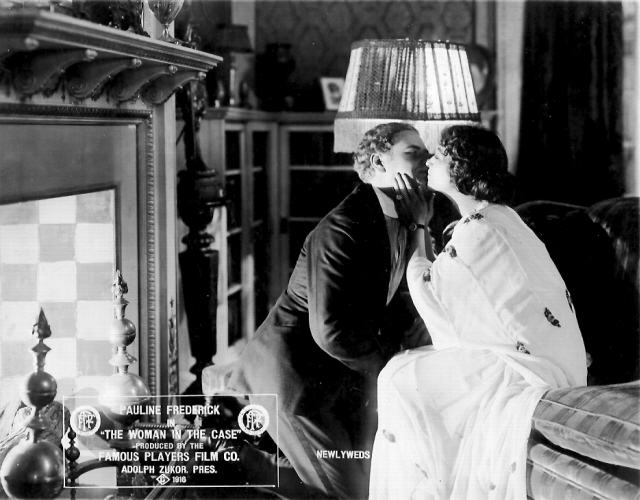
Stepping back into the nascent days of cinematic storytelling, one occasionally unearths a gem that, despite the constraints of its era, resonates with surprising modernity. Such is the case with 1916's The Woman in the Case, a film that, even a century later, offers a compelling study in female agency, sacrifice, and the intricate dance of deception. Directed by George Foster Platt and penned by Doty Hobart and Clyde Fitch, this silent drama stands as a testament to the evocative power of early cinema, largely propelled by the magnetic presence of its star, Pauline Frederick.
At its core, the narrative is a thrilling reversal of expectations, a testament to a woman's unwavering resolve. When her husband finds himself ensnared in a web of circumstantial evidence, accused of a murder he unequivocally did not commit, our protagonist, played with a searing intensity by Frederick, makes a radical decision. She doesn't merely lament or appeal; she transforms. Recognizing the limitations of conventional justice and perhaps the societal biases against a woman's testimony, she embraces a persona diametrically opposed to her true self: that of a 'vamp'. This isn't the campy, over-the-top caricature that later decades might conjure, but a calculated, alluring, and ultimately dangerous guise designed to penetrate the very circles where the real killer might be found. It’s a daring, almost reckless strategy, and its execution forms the pulsating heart of the film.
Pauline Frederick's performance is, without hyperbole, the linchpin of The Woman in the Case. In an era where acting often veered into the melodramatic, Frederick possessed a nuanced control over her expressions and gestures that allowed for genuine emotional depth. Her portrayal of a woman torn between her innate virtue and the seductive, dangerous facade she must maintain is nothing short of captivating. We witness her internal struggle through subtle shifts in her gaze, the tension in her posture, and the carefully modulated movements that convey both vulnerability and steely determination. Her 'vamp' is not merely a costume; it's a fully inhabited character, one she wears with a chilling conviction that makes her deception utterly believable to the other characters, and crucially, to the audience.
Unlike some of her contemporaries who might have relied on broad strokes, Frederick's power lay in her restraint, allowing the audience to project their understanding onto her complex emotional landscape. This subtle mastery is perhaps best appreciated when considering other portrayals of powerful or enigmatic women from the period. For instance, while The Vampires: Hypnotic Eyes (part of the longer 'Les Vampires' serial) presented a more overtly sinister and fantastical 'vamp' figure in Musidora's Irma Vep, Frederick's portrayal is grounded in a desperate human reality, making her transformation all the more poignant and perilous. She isn't inherently evil; she's a woman forced into an evil guise for a righteous cause.
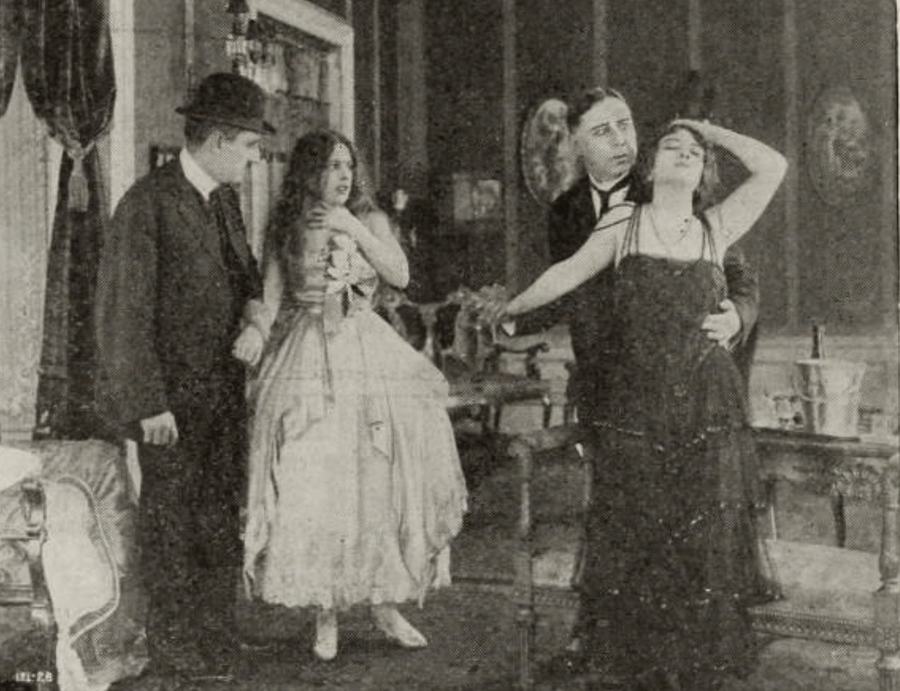
The screenplay by Doty Hobart and Clyde Fitch, adapted from Fitch's own stage play, is remarkably taut for its time. It meticulously builds suspense, allowing the audience to feel the escalating tension as Frederick's character delves deeper into the criminal underworld. The plot's cleverness lies not just in the 'vamp' disguise, but in the intricate chain of events it sets in motion, each revelation bringing her closer to the truth, yet simultaneously placing her in greater jeopardy. The supporting cast, including George Larkin and Alan Hale, provide solid performances that anchor Frederick's central tour-de-force, though it is undeniably her film.
Beyond the thrilling whodunit aspect, The Woman in the Case also offers a fascinating, albeit perhaps unintentional, commentary on gender roles and societal perception in the early 20th century. The fact that Frederick's character must resort to such an extreme and morally ambiguous masquerade speaks volumes about the limited avenues available to women seeking justice or agency outside of traditional, passive roles. Her 'vamp' persona is a deliberate manipulation of male desire and societal expectations of female allure, weaponizing what was often used to diminish or control women. This thematic richness elevates the film beyond a mere potboiler, giving it a subtle layer of social critique that remains relevant.
George Foster Platt's direction, while perhaps not as groundbreaking as some of his European contemporaries, is effective in conveying the story's emotional weight and dramatic tension. The camera work, though largely static by modern standards, is used thoughtfully to frame Frederick's expressions, ensuring that her nuanced performance is always central. The use of intertitles is judicious, providing necessary exposition without overwhelming the visual narrative, allowing the actors' physicality and facial cues to carry much of the storytelling burden. The set designs and costumes, particularly those donned by Frederick in her 'vamp' guise, are period-appropriate and contribute significantly to the film's atmosphere, hinting at both opulence and moral decay.
Comparing the visual language to other films of the era, one might draw parallels with the more formal staging seen in dramas like Diplomacy, which also relied on strong central performances and intricate plotting within confined, often opulent, spaces. However, The Woman in the Case distinguishes itself by its focus on the internal psychological journey of its protagonist, often allowing close-ups and focused staging to highlight her emotional turmoil and strategic thinking. The film's visual grammar, while conventional for its time, serves the narrative with admirable efficiency.
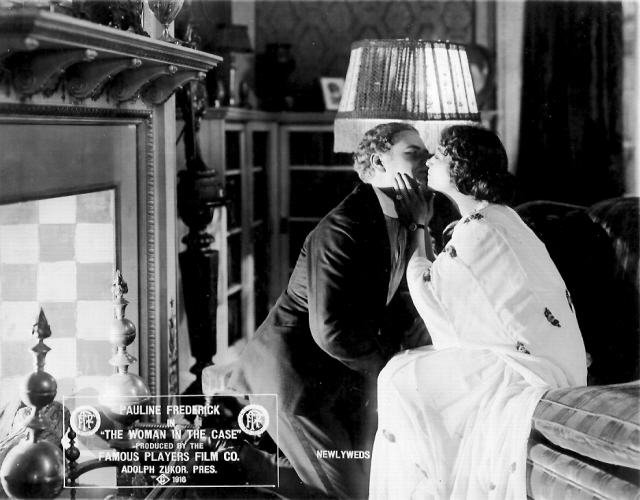
For modern audiences accustomed to dynamic camera movements and elaborate soundscapes, silent films can sometimes feel like artifacts requiring a certain degree of historical empathy. Yet, The Woman in the Case transcends mere historical curiosity, offering a robust narrative and a powerhouse performance that continue to engage. It's a reminder of the foundational principles of cinematic drama: compelling characters, gripping conflict, and a resolution that feels earned. The film's exploration of identity, justice, and the lengths to which one will go for love and truth remains universally resonant. It's not just a period piece; it's a timeless tale of audacious heroism.
The film's impact on subsequent portrayals of strong female characters, particularly those who operate outside conventional morality for a greater good, is undeniable. While not as widely discussed as some canonical silent films, its narrative courage and Frederick's commanding presence make it a valuable entry in early American cinema. It showcases how a seemingly straightforward plot can be infused with layers of psychological complexity through stellar acting and intelligent screenwriting. One could even draw parallels to the moral dilemmas faced by protagonists in films like The Christian, where characters grapple with profound ethical choices, though Frederick's character chooses a path of active, deceptive engagement rather than spiritual contemplation.
In an era when films were still finding their voice, The Woman in the Case demonstrated that powerful narratives didn't need spoken dialogue to convey intricate emotions or complex moral quandaries. It relied on the universal language of human experience, filtered through the extraordinary talent of Pauline Frederick. Her ability to project both innocence and cunning, vulnerability and strength, makes her performance a masterclass in silent film acting. The film also holds up as a fine example of how theatre, specifically Clyde Fitch’s original play, could be successfully translated and even elevated by the cinematic medium, leveraging its unique visual grammar to enhance the dramatic tension and character development.
The film, while a product of its time, speaks to enduring human themes: the fight against injustice, the power of love, and the courage to defy societal expectations. It's a testament to the enduring appeal of early cinema and the profound talents of its pioneers, particularly stars like Pauline Frederick, who could convey an entire universe of emotion with just a glance. The Woman in the Case deserves to be remembered not just as a historical curiosity, but as a vibrant, engaging piece of storytelling that still holds its own today, proving that sometimes, the quietest performances speak the loudest truths.
IMDb —
1929
Community
Log in to comment.