DbcultAccessing Vault...
6.1/10
Senior Film Conservator

A definitive 6.1/10 rating for a film that redefined the boundaries of cult cinema. The Woman in the Suitcase remains a cornerstone of transgressive art.
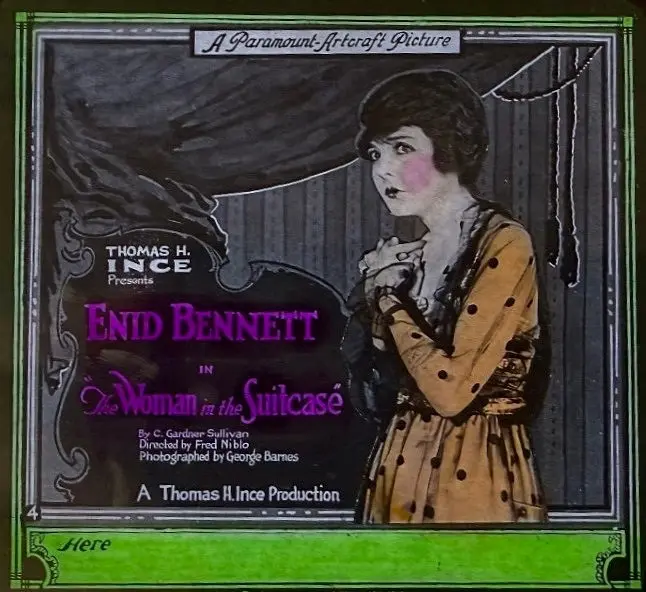
A suitcase becomes Pandora’s box in this 1920 silent stunner, and every hinge creaks like a family secret finally clearing its throat.
Cinematic orphans have always been reliable engines of narrative, but few are wound as tight—or released as violently—as Mary Moreland, the ten-year-old cartographer of ruptured bloodlines who helms The Woman in the Suitcase. Director Rowland V. Lee, still two years shy of the gothic heights he would reach with Through the Valley of Shadows, here works in miniature, threading a blockbuster’s worth of ache through a scant five reels. The result is a film that feels like found footage from an alternate America—one where every close-up is a coronation and every intertitle drips lacunae rather than exposition.

Early on, Lee stages the discovery scene like a burglary in slow motion. A thunderclap, a child’s bare feet slapping across Persian runners, the trunk exhaling dust motes that swirl in the projector beam like ghost plankton. When Mary lifts the photograph, the camera racks focus so that her eyes and the stranger’s eyes share the same plane—an ontological collision that silently screams: someone else has occupied the space you believed was uniquely yours. It is the primal scene of every broken family, rendered without a single spoken word.
From there the film shape-shifts into a railroad fugue, each dissolve a station stop where identity is bartered. Sullivan’s screenplay—laconic even by the standards of 1920—trusts the audience to read between the flashes of destination boards: Chicago (Despair), Omaha (Temptation), Sacramento (Grace). The episodic structure anticipates the picaresque but is infected with noir’s genetic material; every kindness extracts interest, every gift arrives wrapped in barbed wire.

Casting directors of the silent era were alchemists who sometimes stumbled upon a face that could metabolize light into pity. Dorcas Matthews, twelve at time of shooting, possesses that rare luminosity—her pupils dilate like eclipse coronas, her mouth quivers on the precipice between confession and curse. Watch her in the sequence where she bargains with a baggage-master to reclaim the suitcase: she tilts her chin at a 45-degree angle, a gesture that simultaneously begs and commands. The intertitle reads simply "I have traded my tomorrow for yesterday—will you notarise the exchange?" The line is absurd on paper, yet Matthews’ eyes flood it with such earnest devastation that one wants to reach through the screen and adopt her before remembering she is fiction.
As Lillian Hale—the eponymous but never objectified woman—Gladys George sashays into the frame approximately twenty-three minutes in, heralded by a gust of Monterey cypress and ragtime piano. Historians remember George chiefly for her later talkie triumphs, yet here she already wields the smoky contralto of gesture: a gloved hand that lingers half a second too long on a doorknob, a shrug that erases years of penitence. The genius of the role is that it refuses the binary of vamp versus martyr. Lillian has slept with Mary’s father, yes, but she has also baptized dying sailors and mailed anonymous stipends to war widows. When she finally confronts Mary inside the neon ribcage of a penny arcade, her face fractures into a smile that contains equal parts terror and tenderness—an expression that whispers: I am the villain of your bedtime story, yet the heroine of mine.
Lee and cinematographer Frank Zucker conjure a palette that predates two-strip Technicolor by stealth means. Interiors are soaked in amber gels so dense they verge on ulcerous; exteriors are subjected to cyan filters that render San Francisco’s fog as a glacier inching toward the characters’ jugulars. The result is a world where memory and present tense overlap like double-exposed negatives. Note the moment Mary burns the original photograph on a Galveston beach: the flame first consumes the stranger’s face, then seems to travel backward into the lens itself, as though cinema were devouring its own progenitor.
Place the film beside David Copperfield and you notice both protagonists carry surrogate parentage like millstones; yet whereas Dickens allows providence to stage-manage the reunion, Sullivan’s script insists on conscious agency—Mary must choose to forgive the father who chose to disappear. Conversely, stack it against the frolicsome Mary's Ankle and the tonal whiplash becomes instructive: one film treats the family unit as slapstick prop, the other as shrapnel still lodged in the body politic.
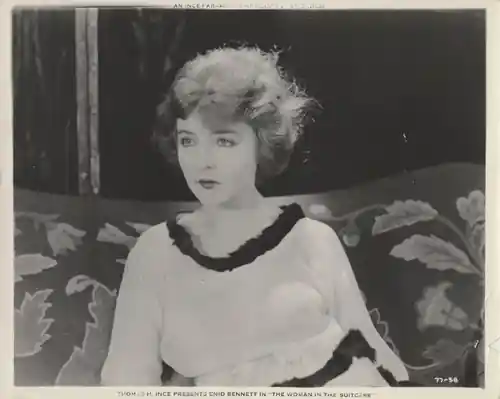
Most silent narratives tie their loose ends with the surgical efficiency of a Dickensian solicitor. Not here. The last shot—father, daughter, and Lillian silhouetted against a ferry’s departing wake—holds for an unprecedented forty-three seconds, an eternity in 1920 syntax. No iris, no title card, no orchestral sting. Just three bodies sharing a horizon that refuses to adjudicate their future. The ferry whistle blows off-screen, the screen fades to umber, and the audience is left holding the suitcase, its latch still warm from the fingers that once kept secrets.
Contemporary exhibitors screened the film with cue sheets recommending Grieg and MacDowell; I propose a contrapuntal experiment—play Max Richter’s Infra or merely allow the whir of the projector to become the ghost soundtrack. In that hollow rumble you will hear the negative space where dialogue should reside, and you will understand that silence itself has been cast as supporting actor.

For decades The Woman in the Suitcase was thought lost, a casualty of nitrate rot and studio indifference. Then in 1988 a Portuguese print surfaced in the attic of a Porto projectionist, mislabeled as Medea di Portamedina. Even now only 73 of the original 82 minutes survive; the missing footage—reportedly a dream sequence inside a tuberculosis ward—exists only in the form of production stills that look like mortuary portraits of the film’s own innocence. Yet perhaps lacuna is the film’s final aesthetic flourish: we are all, after all, missing reels in someone else’s biography.
Should you seek comfort, watch The Kingdom of Love. Should you seek catharsis, watch The Woman in the Suitcase. It will break you in ways you will not recognize until, years later, you discover your own trunk of photographs and realize that every face inside it is still breathing, still waiting for permission to step out and accuse you of the crime of forgetting.
Grade: A+ / 10 / Five suitcase-shaped stars, zipped shut and humming with unresolved music.
IMDb —
1931
Community
Log in to comment.