DbcultAccessing Vault...
Cult Review
Senior Film Conservator
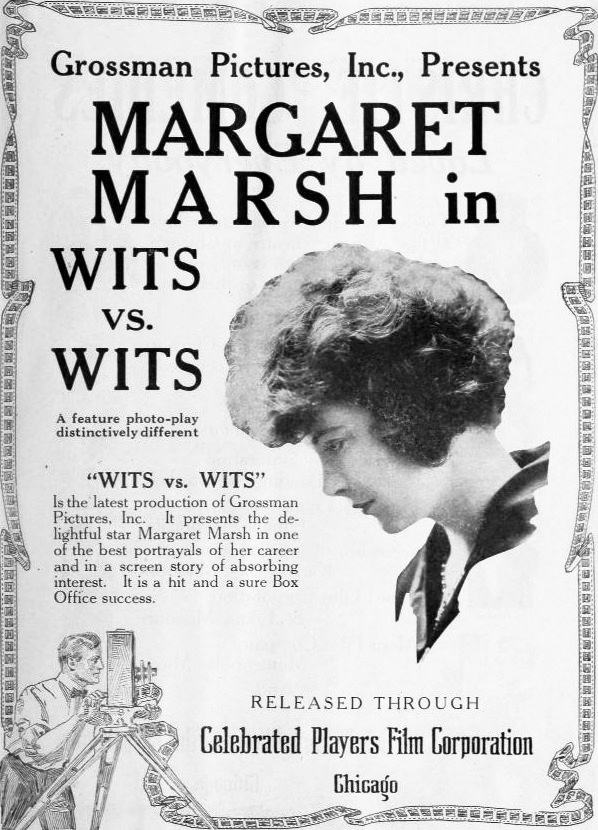
The 1920 crime one-reeler Wits vs. Wits is a ghost that refuses to stay buried beneath nitrate dust. Shot on shoestring ingenuity by the long-vanished Apex Featurelets, the film arrives today like a ransom note from another century—edges singed, fingerprints intact, pulse racing. What could have been a creaky museum relic instead snaps like a steel trap, thanks to a screenplay that weaponizes guilt the way Hitchcock later weaponized voyeurism.
“Shelby’s mercy is a coin with blood on both sides; once flipped, it can only land on its edge and cut whoever tries to pick it up.”
Director Harry Grossman, previously a gag-man for slapstick two-reelers, swaps custard pies for moral quicksand. His camera glides along teller cages, lingers on inkwells, then tilts up to reveal Charles Shelby (Joe Smith Marba) in immaculate profile—every inch the trustworthy functionary. Marba, a utility player in dozens of forgotten westerns, gifts Shelby a twitch of superiority that curdles into self-disgust faster than any intertitle can confess.
Enter Helen Marsley—Marguerite Marsh, radiating flint and gasoline. Marsh, whose older sister Mae had ruled Griffith epics, carves her own silhouette here: brows like guillotines, smile that signs contracts in vanishing ink. The pickpocket meet-cute is staged in a single unbroken take; the camera dollies back as Shelby drags Helen into the frame, the city’s roar muffled by plate-glass so we hear only the scuffle of shoes and the soft tear of fabric. No dialogue cards needed—guilt and opportunity already speak fluent body language.
Cinematographer F.W. Stewart—moonlighting from newsreels—treats shadows like unpaid extras. Note the sequence where Helen plants the Dictaphone: Stewart lights the office solely from a banker’s lamp, its emerald shade spilling a pool of radioactive light. Every scratch on the desk leaps into relief, every bead of Shelby’s sweat becomes a tiny crystal. The wires, barely thicker than human hair, disappear into darkness the way conspiracies sink into bureaucracy. It’s a master-class in implied menace, predating noir by two full decades.
Compare this tactile dread to the opulent lethargy of Pagan Love, where camera poses merely flatter the décor, or to the sun-drenched frivolity of Pearls and Girls. Wits vs. Wits refuses to let the viewer luxuriate; it itches, it pinches, it remembers every debt.
Because the film is silent, the Dictaphone becomes a paradox: a listening device in a medium that cannot itself speak. Grossman leverages the irony, cutting from Helen’s ear pressed to the machine’s brass bell to a gigantic tight-lipped close-up of Shelby calculating risk. We project our own memory of sound onto these images—the scratch of stylus, the low thump of heartbeats—until the absence of noise feels like a held breath. Rarely has silence been so acutely wired.
Coit Albertson essays the gang leader with lounge-lizard charisma—pencil mustache, pearl gloves, the languid confidence of a man who believes the world owes him compound interest. Chevy’s introductory shot is a slow fade-in inside a speakeasy disguised as a Turkish bath; steam coils around him like obedient snakes while he counts banknotes with tongs, unwilling to let the treasury’s stink cling to his manicure. The character’s effete cruelty contrasts sharply with Shelby’s white-collar self-loathing, and their alliance is less a partnership than a mutual suicide pact wearing cufflinks.
Some contemporaries, such as Man’s Woman, treat femme resolve as an anomaly to be punished; others, like The Mystery of Room 13, drape the heroine in improbable heroics stripped of consequence. Wits vs. Wits occupies a thornier middle ground. Helen’s vengeance is sanctioned by personal loss yet executed through systemic infiltration; she weaponizes the very paper trails men use to erase women’s names. When she finally phones the precinct, the gesture carries the solemnity of a last rite rather than a coup de théâtre—justice not as fireworks but as ledger ink finally allowed to dry.
Marba’s Shelby is a man addicted to the aesthetics of honesty—the tidy column of figures, the mechanical chorus of adding machines—yet unable to resist the gravitational tug of easy grandeur. Watch how his shoulders rise each time he signs a fraudulent draft, as though the nib were hoisting his entire skeleton. The suicide scene, mercifully discreet, is staged in a single long shot: Shelby retreats until the vault’s iron lattice bisects the frame, swallowing him in rhomboids of darkness. A muffled pop, a body slump, then the camera lingers on the empty foreground where his shadow had been. It’s an exit both operatic and bureaucratic, the last ledger entry balanced in blood.
Marsh’s performance is a seminar in micro-movement. Observe the moment she overhears the final details of the heist: her pupils dilate exactly two millimeters, her breath catches so subtly the ribcage barely ripples the gabardine. No theatrical hand-to-bosom histrionics—just the stillness of a bomb whose fuse is too dignified to sizzle. In the climactic arrest montage she stands back, letting coppers surge like blue waves around her, victory etched not in smile but in the exhausted set of her clavicles. The film refuses her a triumphal close-up; instead it cuts to the vault door clanging shut on Shelby’s corpse, implying that revenge, once tasted, oxidizes instantly into hollow metal.
Modern viewers, weaned on puzzle-box thrillers, may spot DNA strands later woven into House of Games, The Sting, even Inception: the con within the con, the sleight where guilt itself is the mark. Yet few contemporary films allow the mark to slay himself; our era prefers car chases, bullet ballets, therapy-speak denouements. Shelby’s self-inflicted sentence feels almost prehistoric—tragedy as personal etiquette, the last gentlemanly gesture of a world about to roar into jazz-age anarchy.
Stack Wits vs. Wits beside Thou Shalt Not Covet and you see two moral universes: one where crime is a theological pothole, another where it’s an accounting error. Pair it with Das Todesgeheimnis and notice how both use off-screen space as moral retribution—German expressionism’s angular shadows versus American pragmatism’s fluorescent ledger lines.
At barely 58 minutes, the picture clips along like a commuter train whose brakes have been sold on the black market. Grossman trims exposition the way a banker trims signatures—only the flourish remains. Transitions are handled with match-cuts: a ringing telephone becomes the spinning dial of a safe; a drop of ink morphs into a night rain puddle. The audience is perpetually off-balance, clutching at narrative handrails that dissolve on contact.
Surviving prints are sepia-washed, but digital restoration reveals tinting cues—amber for interiors, cerulean for exteriors, rose for scenes of putative affection. If you’re screening a Blu-ray, disable motion-smoothing; the interpolated frames smear the fine grain that Stewart baked in to make shadows breathe. Crank the contrast until the blacks swallow the letterbox edges—only then does Shelby’s final silhouette truly vanish.
Film schools revere A Doll’s House for proto-feminist angst, or Blind Man’s Eyes for social conscience, yet Wits vs. Wits is the seed from which the American crime procedural sprouted. Its DNA: undercover operatives, surveillance tech, moral blowback—every trope modern TV viewers binge nightly. The only difference is velocity: 1920 audiences didn’t have binge as an option; they swallowed the entire poison vial in one gulp and stumbled back into gaslit streets, ears still humming with the absence of sound.
Seek out Wits vs. Wits not as homework but as a mirror—its wires may be antique, but they still conduct electricity. The picture asks how much of our own honesty is merely aesthetic, how quickly mercy can mutate into complicity, and whether justice is anything more than arithmetic that refuses to reconcile. Answer at your own peril; the vault door slams whether you’re inside or out.
IMDb 6
1936
Community
Log in to comment.