DbcultAccessing Vault...
Cult Review
Senior Film Conservator
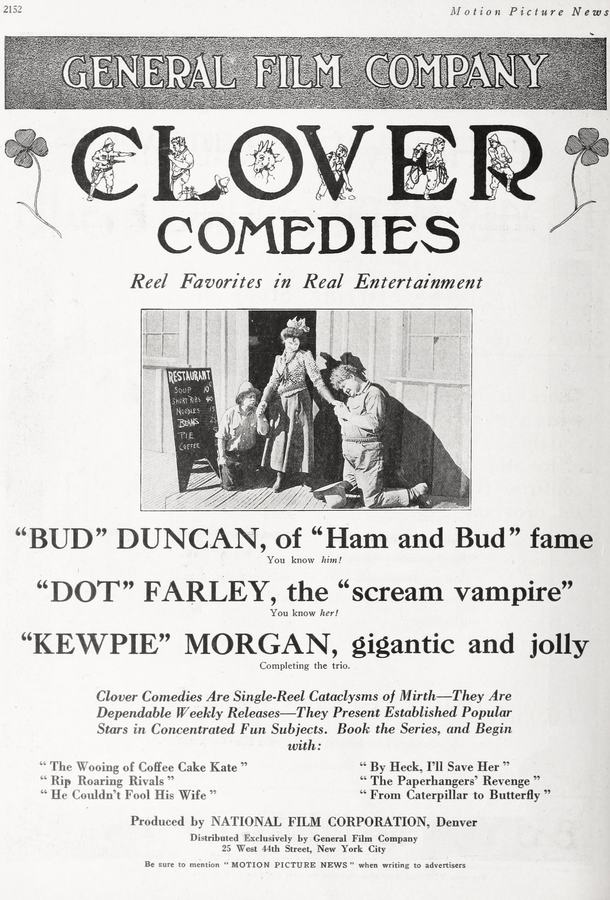
To witness The Wooing of Coffee Cake Kate is to step into a bygone era of cinematic experimentation where the boundaries between slapstick and the macabre were not merely blurred but frequently obliterated. Released in 1916, this short-form comedy serves as a fascinating specimen of the 'L-KO' (Lehrman Knock-Out) style, characterized by a relentless, almost punishing pace and a disregard for the delicate sensibilities of the Victorian hangover. Dot Farley, an actress of formidable expressive range, portrays Kate not as a damsel in distress, but as a pragmatic business owner navigating a world of predatory appetites.
The film’s opening sequence in the lunchroom is a masterclass in choreographed chaos. Unlike the more refined domesticity seen in Social Ambition, Kate’s domain is one of steam, grit, and the constant threat of physical upheaval. The arrival of Bud Duncan and Kewpie Morgan introduces a picaresque element that drives the plot toward its increasingly surreal conclusion. These are not heroes in any traditional sense; they are opportunists whose 'wooing' is a desperate gambit for stability, a theme that resonates with the gritty realism of The Waif.
The narrative pivot—Kate’s demand for a ring—sets in motion a fascinating dualism. We see the two paths of desperation: Bud’s descent into the gambling den and Kewpie’s leap into highway robbery. The gambling sequence is particularly noteworthy for its depiction of the early 20th-century underworld. There is a palpable tension in the air, a stark contrast to the whimsical title. Bud’s ascent from a single nickel to a small fortune is portrayed with a frantic energy that mirrors the high-stakes survivalism found in Dodging a Million.
Conversely, Kewpie’s stagecoach robbery is filmed with a surprising degree of topographical scale. The wide shots of the stagecoach being overtaken provide a brief respite from the claustrophobic interiors of the lunchroom, hinting at the burgeoning Western genre that would soon dominate the American screen in works like Land o' Lizards. The juxtaposition of these two 'quests' highlights the film's cynical view of romantic pursuit; the ring is not a symbol of devotion, but a trophy of successful deviance.
The most discussed aspect of The Wooing of Coffee Cake Kate is undoubtedly the hanging scene. To a modern viewer, the sight of a protagonist being led to the gallows for comedic effect is jarring, perhaps even repellent. Yet, within the context of 1916, this was an extension of the 'grand guignol' tradition that occasionally seeped into American slapstick. While audiences of the time might have found it 'unpleasant,' as contemporary trade journals suggested, it represents a daring tonal shift that separates this film from the more saccharine offerings of the era, such as The Wooing of Princess Pat.
Bud Duncan’s performance during this sequence is a marvel of physical histrionics. He manages to convey a sense of genuine peril while maintaining the rhythmic elasticity required of a silent comedian. The visual language here is far more sophisticated than one might expect from a 'low' comedy. The use of shadows and the grim silhouette of the noose invoke a sense of dread that would be more at home in a thriller like L'assassino del corriere di Lione, yet the film insists on its farcical identity.
The resolution of the film—the discovery that the stolen money is Confederate—is a stroke of genius that elevates the entire production. It serves as a scathing commentary on the worthlessness of the protagonists' struggles. In a world where men are willing to rob and die for a scrap of paper, the revelation that the paper is an obsolete relic of a dead rebellion is profoundly ironic. This subversion of value is a theme often explored in more dramatic works like Borrowed Clothes, where outward appearance and perceived wealth are revealed to be hollow constructs.
This ending also grounds the film in a specific American historical consciousness. Even fifty years after the Civil War, the 'worthless' Confederate dollar remained a potent symbol of failure and deception. By injecting this into a slapstick comedy, the writers managed to touch upon a collective cultural memory, providing a layer of depth that is often absent in the purely physical humor of films like Skinner's Baby. It suggests that the 'wooing' of Kate was always a fool's errand, built on the shifting sands of economic insignificance.
Dot Farley’s Kate is the anchor of the film. Her ability to transition from domestic frustration to romantic skepticism provides the necessary emotional weight to keep the farce from spinning off into total incoherence. Her performance style is more grounded than the hyper-theatricality found in Balgaran e galant, allowing the audience to empathize with her plight even as the world around her descends into madness. The chemistry between Duncan and Morgan is equally vital; they operate like a well-oiled machine of mutual sabotage, their rivalry predating the more famous comedic duos of the 1920s.
The cinematography, while primitive by today's standards, shows a clear understanding of spatial dynamics. The lunchroom set is utilized to its full potential, with actors moving in and out of the frame in a way that suggests a much larger world beyond the camera's eye. This is a far cry from the static, stage-bound feel of many early silents like Az utolsó éjszaka. Instead, there is a fluidity here that points toward the future of cinematic storytelling.
In the pantheon of 1916 cinema, The Wooing of Coffee Cake Kate remains an outlier. It lacks the maritime adventure of Betty and the Buccaneers or the moral weight of As a Woman Sows, yet it possesses a raw, unvarnished energy that is undeniably compelling. It is a film that refuses to play by the rules, blending romance, crime, and the threat of execution into a single, cohesive unit of entertainment.
For the modern cinephile, it offers a window into the evolution of comedy. We see the seeds of the 'dark comedy' genre being planted, even if they were watered with the sweat of slapstick. The film’s willingness to find humor in the shadow of the gallows is a testament to the fearlessness of early filmmakers. Like the surrealist leanings of The Ringtailed Rhinoceros, Kate’s story reminds us that cinema has always been a medium of the unexpected. It is a raucous, slightly dangerous, and ultimately rewarding journey through the lunchrooms and gambling dens of the early American imagination. While it may not have the stoic dignity of The Aryan or the urban sophistication of From Gutter to Footlights, it holds its own as a piece of vibrant, living history—a reminder that sometimes, the best way to deal with the absurdities of life is to laugh at them, even when the rope is tightening.
IMDb —
1922
Community
Log in to comment.