DbcultAccessing Vault...
Cult Review
Senior Film Conservator
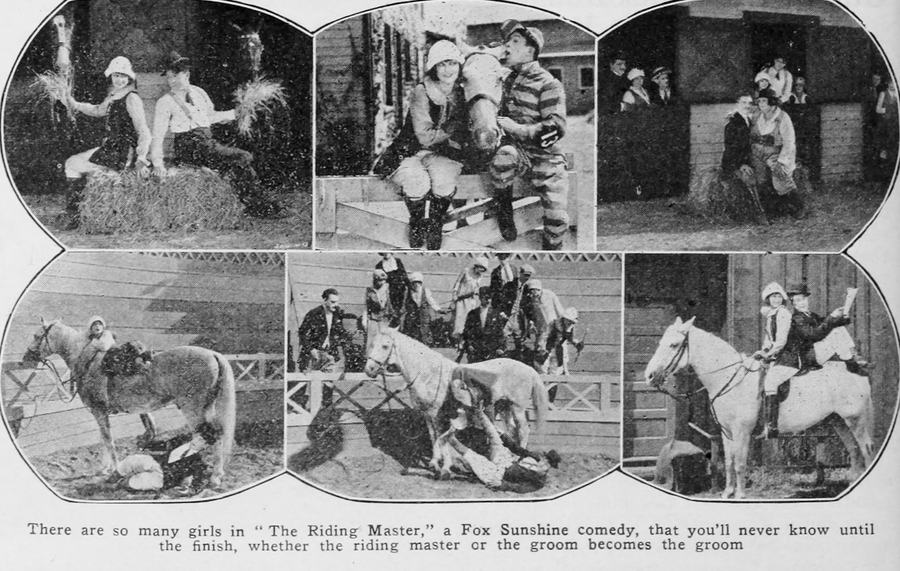
There’s a peculiar magic to silent cinema, a language spoken not through dialogue, but through the eloquent contortions of the human face, the dramatic sweep of a gesture, and the kinetic poetry of movement. Among the myriad forgotten treasures of that nascent art form, 'The Riding Master' emerges as a compelling exemplar, a film that, despite its age and the inherent challenges of its medium, manages to convey a narrative of remarkable emotional depth and social commentary. It’s a testament to the power of pure visual storytelling, a masterclass in evoking sentiment without a single uttered word, relying instead on the nuanced performances and the evocative power of the camera's gaze.
At its core, the film is a fascinating exploration of class disparity and the often-insurmountable barriers erected by societal expectations. Our protagonist, Captain Julian Thorne, portrayed with understated brilliance by the inimitable Poodles Hanneford, is a figure of quiet dignity and immense skill. Hanneford, renowned for his equestrian prowess, brings an authenticity to the role that transcends mere acting; he embodies the very spirit of the riding master. His portrayal is not one of bombast or exaggerated melodrama, but rather a subtle unfolding of character, a man whose inner strength and moral compass are etched onto his every movement. This is a stark contrast to many of his contemporaries, who often leaned into broader, more theatrical expressions. Hanneford’s performance here feels remarkably modern, hinting at the more restrained acting styles that would become prevalent decades later.
The narrative, while seemingly straightforward, is laced with intricate psychological undercurrents. Thorne, a man of humble origins, finds himself in the employ of the formidable industrialist, Mr. Alistair Sterling. Sterling, a character painted with broad strokes of capitalist ambition and social snobbery, represents the entrenched power structures of the era. His daughter, Clara, initially embodies the dismissive arrogance of her class, viewing Thorne as little more than a highly skilled appendage to her father’s estate. Yet, the film masterfully charts the slow, almost imperceptible erosion of her prejudice. It’s a delicate dance of glances, unspoken tensions, and shared moments of vulnerability in the stables that gradually forge a bond between them. This burgeoning affection, however, is a direct challenge to the established order, a silent rebellion against the dictates of wealth and lineage.
The introduction of Baron Victor Von Kessel, Clara’s pre-ordained suitor, injects a palpable sense of menace and intrigue. Von Kessel is the archetypal silent film villain – suave, aristocratic, and utterly devoid of genuine affection. His character serves as a stark foil to Thorne’s quiet integrity, a living embodiment of the superficiality and moral decay that can fester beneath a veneer of respectability. The film cleverly uses Von Kessel’s insidious machinations not just to advance the plot, but to highlight the moral bankruptcy of a system that prioritizes status over substance. His plots to discredit Thorne are not merely acts of jealousy, but desperate attempts to preserve a social hierarchy that benefits him, a hierarchy that Thorne, through his sheer merit, inadvertently threatens.
One cannot discuss 'The Riding Master' without extolling its breathtaking equestrian sequences. Poodles Hanneford’s real-life expertise shines through every frame, lending an unparalleled authenticity to the riding scenes. These are not merely decorative flourishes; they are integral to the narrative, serving as metaphors for control, freedom, and the wild, untamed spirit that defies societal constraints. The climactic exhibition, in particular, is a masterclass in silent film suspense. The camera work, though constrained by the technology of the era, is remarkably dynamic, capturing the thundering hooves, the strained muscles of both horse and rider, and the palpable tension in the air. The deliberate pacing builds to a crescendo, culminating in Thorne’s heroic rescue of Clara, an act that is both a physical triumph and a profound moral victory. This scene, more than any other, crystallizes the film's central themes: the triumph of integrity over deceit, and the power of genuine courage to transcend social boundaries.
The cinematography, while perhaps lacking the sophisticated camera movements of later eras, is remarkably effective in establishing mood and character. Close-ups are used judiciously to convey emotional states, while wider shots emphasize the grandeur of the estate and the vulnerability of the human figures within it. The use of natural light, where possible, adds a layer of realism, grounding the melodrama in a tangible world. The film understands the power of visual metaphor, using the magnificent horses not just as plot devices, but as symbols of raw power, elegance, and unbridled spirit, often mirroring the inner turmoil and aspirations of the human characters.
Comparing 'The Riding Master' to other films of its time provides valuable context. While it lacks the overt social commentary of a film like The Road of Ambition, which often tackled themes of upward mobility and industrial struggle with a more direct gaze, 'The Riding Master' opts for a more romanticized, almost fable-like approach to its critique of class. Where Dollars and Sense might have dissected the cold mechanics of finance and societal climbing, 'The Riding Master' focuses on the human heart caught in the crosscurrents of such systems. It possesses a certain earnest charm that distinguishes it from the more overtly sensationalist narratives of films like The Midnight Burglar, which prioritized thrilling escapades over nuanced character development.
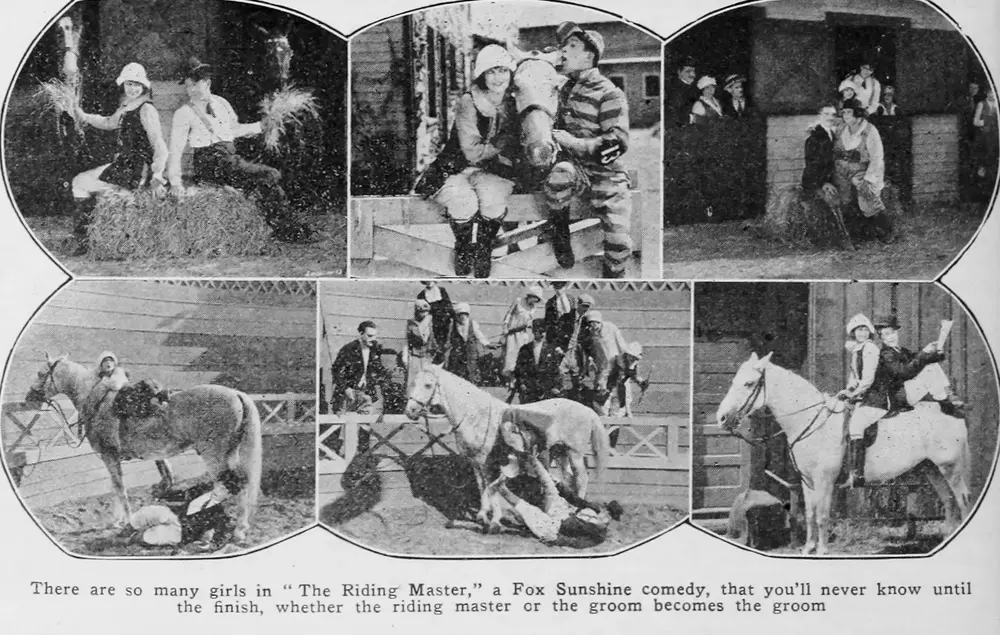
The portrayal of female agency, while still bound by the conventions of the era, sees Clara Sterling exhibiting a spirited independence that sets her apart from more passive heroines. She is not merely an object of affection or a damsel in distress; her initial resistance to Thorne, and her eventual recognition of his worth, demonstrates a degree of personal growth and discernment. This nuanced depiction of a woman navigating societal pressures while asserting her own desires gives the film a quiet strength, contrasting with the more overtly melodramatic portrayals found in films such as The Primrose Ring, where romantic idealization often overshadowed character complexity. Even in comparison to the more whimsical elements seen in By Golly!, 'The Riding Master' maintains a grounded emotional core, even amidst its dramatic flourishes.
One of the most remarkable aspects of 'The Riding Master' is its ability to convey profound emotional states without the aid of spoken dialogue. The actors rely entirely on their physicality, their facial expressions, and the subtle interplay of their gazes to communicate complex feelings. Poodles Hanneford, in particular, masters this silent art, his eyes often speaking volumes where words would be inadequate. His portrayal of Thorne’s quiet suffering, his unwavering resolve, and his burgeoning affection for Clara is a masterclass in non-verbal communication. It requires an active engagement from the audience, an interpretive effort that, when rewarded, creates a far more immersive and personal experience than many modern films.
The pacing of the film, characteristic of the silent era, allows for moments of lingering contemplation, where the audience is invited to absorb the emotions unfolding on screen. There’s a deliberate slowness that can feel alien to contemporary viewers accustomed to rapid-fire editing, but it’s precisely this measured rhythm that allows the emotional beats to resonate deeply. It gives weight to every glance, every gesture, every dramatic pause. This contemplative style is a departure from the more action-oriented narratives of films like The Ranger and the Law or The Law of the Border, which prioritized plot progression above all else. 'The Riding Master' understands that sometimes, the most powerful stories are told in the spaces between events, in the unspoken desires and fears that animate its characters.
For those interested in the evolution of cinematic narrative, 'The Riding Master' offers invaluable insights. It showcases a period where filmmakers were still experimenting with the grammar of film, discovering how to convey complex ideas and emotions through purely visual means. The film’s strengths lie in its clear character motivations, its well-structured plot, and its ability to build tension and emotional stakes without relying on dialogue. It stands as a testament to the enduring power of classic storytelling, proving that universal themes of love, betrayal, and redemption transcend technological limitations.
While it may not possess the avant-garde experimentalism of a Number 13 or the biting satire of Betty, the Vamp, 'The Riding Master' carves its own niche through its earnestness and its unwavering focus on human connection. It reminds us that even within the seemingly rigid conventions of early cinema, there was ample room for nuanced performances and emotionally resonant narratives. Its gentle critique of class distinctions, wrapped in a compelling romantic drama, ensures its continued relevance. The film’s ability to evoke genuine empathy for its characters, particularly Thorne, is a significant achievement, cementing its place as more than just a historical curiosity, but a genuinely affecting piece of art.
The film also provides a fascinating glimpse into the social mores and expectations of the early 20th century. The portrayal of Mr. Sterling's almost transactional approach to his daughter's marriage, driven by status and wealth rather than affection, speaks volumes about the societal pressures of the time. This echoes similar themes, albeit with different narrative trajectories, found in other contemporary works like Dockan eller Glödande kärlek, which also explored the constraints placed upon women. The eventual triumph of genuine love over these societal strictures, while perhaps idealistic, offers a satisfying resolution that speaks to timeless human aspirations. It’s a narrative arc that, despite its predictability to modern eyes, was a powerful affirmation for audiences yearning for romantic justice.
'The Riding Master', with its compelling performances, particularly from Poodles Hanneford, and its elegantly crafted narrative, stands as a testament to the enduring power of silent film. It is a work that manages to be both a product of its time and remarkably timeless, addressing themes of class, integrity, and love that continue to resonate. Its visual storytelling is rich and evocative, drawing the viewer into a world where emotions are writ large on the screen, communicated through the subtle interplay of light and shadow, gesture and gaze. It’s a film that rewards patient viewing, offering a deeply satisfying emotional journey that transcends the limitations of its medium. For cinephiles and casual viewers alike, it offers a rare opportunity to connect with a foundational period of cinematic history, to appreciate the artistry that blossomed even before the advent of synchronized sound. It’s a ride well worth taking, a journey into the heart of silent storytelling that leaves an indelible mark. This film, unlike the more overtly dramatic Das Spiel vom Tode or the intriguing mystery of Tricked, relies on a universal emotional language that speaks directly to the soul, much like the compelling human interest stories sometimes found in films such as That Sort or the grand romances reminiscent of The Incomparable Mistress Bellairs. It even offers a nuanced perspective on social dynamics that might be contrasted with the more direct class struggle depicted in Der Streik der Diebe. Ultimately, 'The Riding Master' is a beautiful, poignant piece of cinematic history, deserving of its place in the pantheon of early film. Its legacy lies not just in its technical achievements, but in its ability to tell a profoundly human story with grace and conviction, proving that the most powerful narratives require no spoken words at all.
IMDb —
1927
Community
Log in to comment.