DbcultAccessing Vault...
Cult Review
Senior Film Conservator
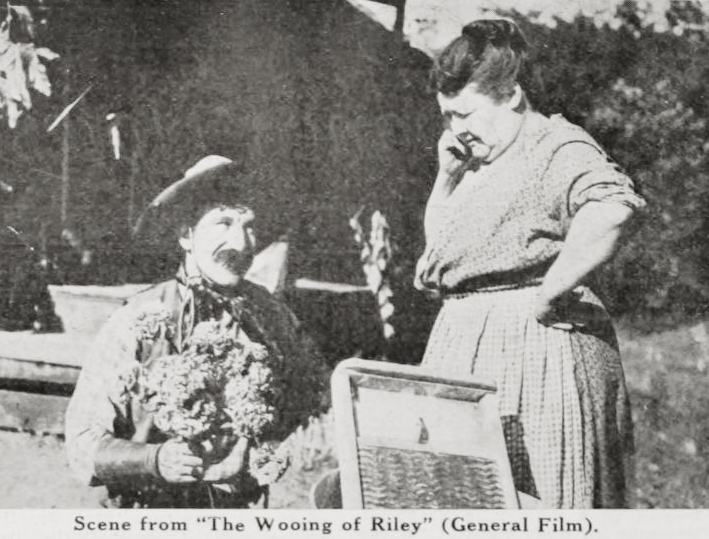
Stepping back into the early annals of cinematic history often reveals treasures, not always for their profound depth or groundbreaking technique, but for their sheer charm, their unvarnished portrayal of human foibles, and their delightful simplicity. Such is the case with 'The Wooing of Riley,' a film that, despite its brevity, encapsulates a particular brand of comedic chaos that was the hallmark of its era. Penned by the prolific Alfred Henry Lewis, whose narrative fingerprints are evident in the film's brisk pacing and character-driven hijinks, this picture offers a fascinating glimpse into the nascent storytelling conventions of silent cinema. It's a testament to the enduring appeal of the underdog, the bumbling protagonist, and the unexpected twists of fate that often dictate the course of one's romantic destiny.
The premise itself is a masterclass in comedic setup: a protagonist, Riley, finding himself inadvertently engaged to the formidable Sal, affectionately dubbed 'the lady of the suds,' following a night of overindulgence. This predicament, born of a drunken spree, immediately establishes a central conflict ripe for farcical exploration. Riley, portrayed with a delightful blend of exasperation and fecklessness, is a character easily relatable to anyone who has ever woken up to the consequences of a poor decision. His immediate instinct, of course, isn't to confront his newfound commitment with honesty or courage, but to devise an elaborate, almost childish, escape plan. This avoidance strategy, involving a staged chase to flee town with his partner Bob, is where the narrative truly begins to sparkle, demonstrating Lewis's knack for escalating absurdity.
The cast, though operating within the often exaggerated performance styles of the silent era, brings a palpable energy to their roles. Patricia Palmer, likely in the role of Sal, would have embodied the 'lady of the suds' with a robust presence, perhaps a stern demeanor that belies a good heart, or a boisterous charm that makes her an unlikely object of Riley's apprehension. Otto Lederer, a veteran character actor of the period, likely imbued Riley with the necessary blend of comedic anguish and physical comedy. His expressions, crucial in a medium devoid of spoken dialogue, would have conveyed the full spectrum of Riley’s panic and eventual relief. Kate Price, another familiar face from early cinema, would have rounded out the ensemble, perhaps as a member of the gang or another ancillary character, contributing to the overall chaotic tapestry of the film.
The genius of the plot, however, lies in its pivot from a manufactured crisis to a genuine one. The moment Bob, in an act of staggering ineptitude or perhaps sheer opportunism, makes off with the town's cashbox, the comedic chase transforms into a desperate flight from the law. This sudden shift in stakes is a brilliant narrative device, elevating the humor from mere slapstick to a more tension-filled, albeit still amusing, predicament. It’s a trope that resonates throughout cinematic history, where plans go awry in the most spectacularly inconvenient ways. One might draw parallels to the escalating chaos seen in films like Chase Me Charlie, where the very act of pursuit becomes a central, defining element of the narrative, often leading to unforeseen consequences for the protagonists.
What truly distinguishes 'The Wooing of Riley' is its resolution. Just as Riley finds himself at the precipice of utter ruin, caught between his self-inflicted marital quandary and a genuine criminal charge, Sal emerges as his unexpected savior. This reversal of roles is profoundly satisfying. The woman he sought so desperately to escape becomes his unlikely rescuer, a testament to her inherent strength and perhaps, a hidden affection for the hapless Riley. This act of heroism transforms Sal from a mere obstacle in Riley's life into a figure of unexpected grace and power. It's a narrative turn that suggests a deeper characterization than one might initially expect from a short comedy of this period, hinting at the complexities of human relationships even within the confines of a lighthearted plot.
The final image of Riley, relieved and grateful, finding solace in Sal's 'ample arms' is the perfect comedic payoff. It subverts the initial premise entirely, transforming his apprehension into genuine contentment. This resolution, where the protagonist embraces the very situation he tried to flee, is a delightful irony, and a hallmark of well-crafted comedic narratives. It speaks to the idea that sometimes, what we perceive as a burden can ultimately become our salvation, or at least, our comfortable reality. This thematic thread, of protagonists learning to accept their fate, can be seen in a myriad of films, from the more dramatic acceptance of circumstances in The Last Chapter to the often-humorous resignations found in domestic comedies of the era.
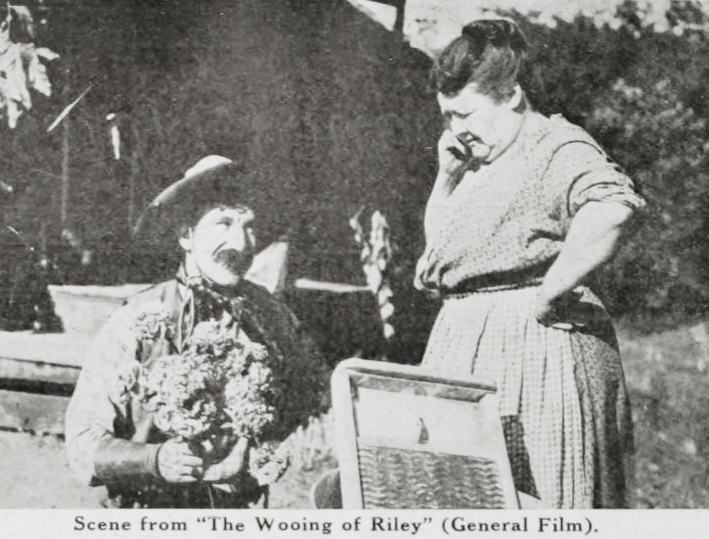
The contribution of Alfred Henry Lewis to 'The Wooing of Riley' cannot be overstated. As a writer, Lewis was known for his vivid characterizations and his ability to craft engaging narratives, often with a touch of the sensational or the humorous. His work in literature, particularly his 'Wolfville' stories, showcased a keen understanding of human nature and the dynamics of small-town life, themes that undoubtedly found their way into his screenplays. In 'The Wooing of Riley,' his writing likely provided the structural backbone for the escalating comedic situations, ensuring that each twist and turn felt earned, even in its absurdity. The swift transition from a contrived problem to a real one, and then to a surprisingly heartwarming resolution, speaks volumes about his narrative dexterity.
Lewis's influence helped shape the nascent art of screenwriting, where the challenge was to convey complex emotions and plot developments without the aid of spoken dialogue. This required a reliance on visual storytelling, clear character motivations (however simple), and well-timed physical comedy. His ability to distill a compelling story into a concise format, suitable for the short films prevalent at the time, was a significant factor in the success of features like 'The Wooing of Riley.' It's a stark contrast to more intricate dramatic narratives like The Squaw Man, which, while also from the silent era, aimed for a grander, more epic scope, demanding different narrative muscles from its writers.
The performances in 'The Wooing of Riley' would have been a masterclass in silent film acting, a craft that demanded a unique set of skills. Actors like Patricia Palmer, Otto Lederer, and Kate Price had to convey every nuance of emotion, every comedic beat, and every plot point through exaggerated facial expressions, precise body language, and carefully choreographed movements. There was no dialogue to fall back on, no subtle vocal inflections to hint at inner turmoil or joy. Instead, the performance became a physical ballet, a pantomime designed to be understood by audiences from diverse linguistic backgrounds.
Otto Lederer, for instance, would have likely employed a range of comedic expressions, from wide-eyed panic to sheepish resignation, to bring Riley to life. His physicality in the chase scenes, whether feigned or real, would have been key to the humor. Patricia Palmer, as Sal, would have needed to project both the initial formidable presence that scares Riley and the underlying kindness and strength that ultimately saves him. This dual portrayal, without a single spoken word, requires immense skill and control. Their interactions, the glances, the gestures, the physical comedy of their predicament, are what would have made the film resonate with contemporary audiences. It's a style of acting that differs significantly from the more restrained, nuanced performances that would become prevalent later, but it holds its own unique power and charm, much like the direct, often melodramatic storytelling in films such as The Moment Before or The Lily and the Rose, which relied heavily on visual pathos.
Films like 'The Wooing of Riley' are more than just historical curiosities; they are foundational texts in the development of cinematic comedy. They established many of the tropes and techniques that would be refined and expanded upon by later generations of filmmakers. The idea of an accidental engagement, a botched escape, and an ironic resolution has been replayed in countless variations across decades of cinema. The film's ability to elicit laughter from human folly, from the sheer absurdity of life's unpredictable turns, is a timeless quality.
While it may not possess the grandiosity of a epic like The Man Who Was Afraid or the dramatic tension of The Silent Man, 'The Wooing of Riley' offers a different kind of cinematic pleasure. It's a reminder that sometimes, the simplest stories, told with earnest performances and a clever script, can be the most enduring. It highlights the ingenuity required to craft compelling narratives when the medium was still in its infancy, relying solely on visual cues and the expressive power of its actors. The film stands as a charming example of how early cinema found its voice, not just through spectacle, but through the universal language of laughter and human predicament. It's a delightful piece of cinematic history that reminds us of the roots of modern comedy, showcasing how even the most farcical situations can lead to genuinely satisfying, if unexpected, conclusions.
In conclusion, 'The Wooing of Riley' is a compact yet impactful comedic gem. Its narrative, crafted by Alfred Henry Lewis, is a testament to the power of a well-conceived plot, even when executed with the broad strokes characteristic of early silent films. The performances by Patricia Palmer, Otto Lederer, and Kate Price, though seen through the lens of a century, undoubtedly contributed to its original appeal, bringing to life characters whose predicaments resonate with a timeless humor. It’s a film that, despite its age, continues to charm with its blend of slapstick, situational irony, and ultimately, a heartwarming resolution. For anyone interested in the evolution of film comedy or simply seeking a delightful diversion into the past, 'The Wooing of Riley' remains a worthy watch, a small but significant piece in the vast mosaic of cinematic heritage. It's a testament to the fact that sometimes, escaping your problems only leads you right back into the arms of your destiny, often with a good laugh along the way.
IMDb 7.2
1930
Community
Log in to comment.