DbcultAccessing Vault...
5.9/10
Senior Film Conservator
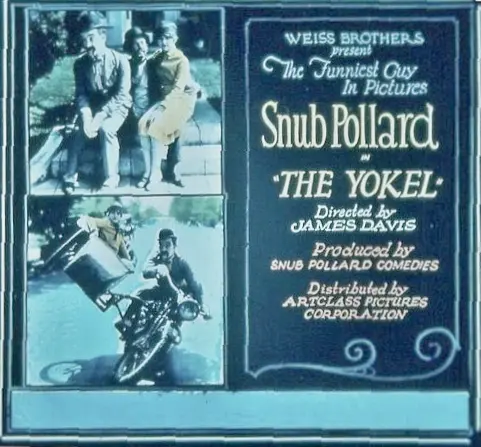
A definitive 5.9/10 rating for a film that redefined the boundaries of cult cinema. The Yokel remains a cornerstone of transgressive art.
Is 'The Yokel' worth watching today? Short answer: yes, but only if you have a genuine appetite for the raw, unpolished mechanics of 1920s slapstick. This film is for the silent cinema historian and the fan of physical comedy who values timing over narrative logic. It is absolutely not for someone seeking a modern, character-driven story or high-definition spectacle.
This film works because Snub Pollard possesses a unique, frantic energy that distinguishes him from the more calculated movements of Buster Keaton or the sentimentalism of Charlie Chaplin. This film fails because it lacks a cohesive emotional core, making it feel more like a collection of disjointed vignettes than a complete cinematic experience. You should watch it if you want to see a master of the 'Hal Roach' style at work during the peak of the silent short era.
In the landscape of 1926 comedy, 'The Yokel' stands as a fascinating artifact of transition. To answer the question of its relevance, one must look at what it offers to a modern eye. If you are looking for a quick, 15-minute masterclass in physical prop comedy, it is essential viewing. However, if you find the repetitive nature of early silent gags tedious, this will not change your mind. It is a film that demands you meet it on its own terms—those of a loud, boisterous, and entirely silent past.
The film doesn't care about your feelings. It cares about gravity. It cares about how a man with a ridiculous mustache can fall down a flight of stairs in three different ways without losing his hat. It is a relic, but a shiny one. Compared to other shorts of the era like The Duck Hunter, 'The Yokel' feels more grounded in social satire, even if that satire is delivered with a sledgehammer rather than a scalpel.
Snub Pollard is often unfairly relegated to the shadows of the silent 'Big Three,' but 'The Yokel' demonstrates why he was a staple of the era. His movement is mechanical, almost puppet-like. In the scene where he first enters the urban domestic space, his interaction with a simple coat rack becomes an elaborate dance of frustration. He doesn't just hang a hat; he battles the architecture of the room itself.
Thelma Daniels provides a necessary anchor as the female lead, though the script gives her little to do beyond reacting to Snub's chaos. Unlike the more developed female roles in She Couldn't Help It, Daniels is here to be the 'straight man.' Her performance is subtle, which highlights the absurdity of Pollard’s performance. When they share the screen, the contrast between her poise and his frantic vibration creates a comedic tension that still resonates.
Visually, 'The Yokel' is a product of its time, utilizing the flat, high-key lighting typical of Hal Roach productions. The camera is largely static, acting as a proscenium arch for the performers. However, there is a specific intentionality in the framing. Every gag is framed to show the full body; the comedy is in the physics, not the editing. This is a stark contrast to the experimental framing seen in European films like Gengældelsens ret from the same general period.
The use of intertitles in 'The Yokel' is surprisingly sparse. The director trusts the audience to follow the visual narrative without excessive exposition. This creates a flow that feels more modern than some of its contemporaries. The pacing is relentless. Once the 'yokel' arrives in the city, the film never slows down to breathe. It is a sprint toward a chaotic conclusion, a style also seen in A Milk Fed Hero.
Eva Thatcher and Bob O'Connor fill out the cast with reliable archetypal performances. Thatcher, in particular, excels as the domineering figure of authority who is inevitably humiliated by Snub’s incompetence. There is a brutal simplicity to these interactions. One specific moment involves a spilled drink that escalates into a full-room catastrophe—it’s predictable, yet the execution is flawless. It works. But it’s flawed by its own predictability.
Zalla Zarana adds a layer of exoticism that was common in 1920s shorts, though her role is largely decorative. When comparing the ensemble to a film like The Marionettes, 'The Yokel' feels much more focused on the singular star power of its lead. The supporting cast isn't there to have arcs; they are there to be obstacles for Snub to overcome or accidentally destroy.
Pros:
The film is a tight, efficient piece of entertainment that doesn't overstay its welcome. The physical stunts are performed with a bravery that is missing from modern CGI-heavy comedies. It provides a genuine window into the social anxieties of the 1920s, specifically the fear of the 'unrefined' individual entering 'refined' spaces.
Cons:
The humor can feel dated, particularly the reliance on 'clumsiness' as a primary character trait. There is a lack of visual variety in the locations, making the film feel somewhat claustrophobic. Compared to more ambitious silent features like Lily of the Dust, it lacks any real artistic weight or thematic depth.
The trope of the 'yokel' was a staple of early 20th-century American culture. It represented the collective anxiety of a nation moving from the farm to the factory. Snub Pollard’s character is a manifestation of this friction. He is the ghost of the rural past haunting the modern parlor. This theme is explored with more gravity in films like The Border Legion, but here it is played entirely for laughs.
It is interesting to note how Pollard’s 'yokel' differs from the country bumpkins of later cinema. He isn't stupid; he is simply operating on a different frequency. His solutions to problems—while destructive—are often logical in a vacuum. This 'destructive logic' is what makes the film more than just a series of falls. It is a critique of the complexity of modern life.
'The Yokel' is a loud whisper from a bygone era. It is a film that succeeds on the strength of its lead's mustache and the agility of his limbs. While it won't change your life, it offers a fascinating, high-energy glimpse into the mechanics of laughter in 1926. It is a minor work, but a significant one for those who care about the roots of comedy. If you enjoyed Golf or Too Much Married, this is an essential addition to your watchlist. It is fast. It is frantic. It is Snub Pollard at his most characteristic.
IMDb 5.4
1933
Community
Log in to comment.