DbcultAccessing Vault...
Cult Review
Senior Film Conservator
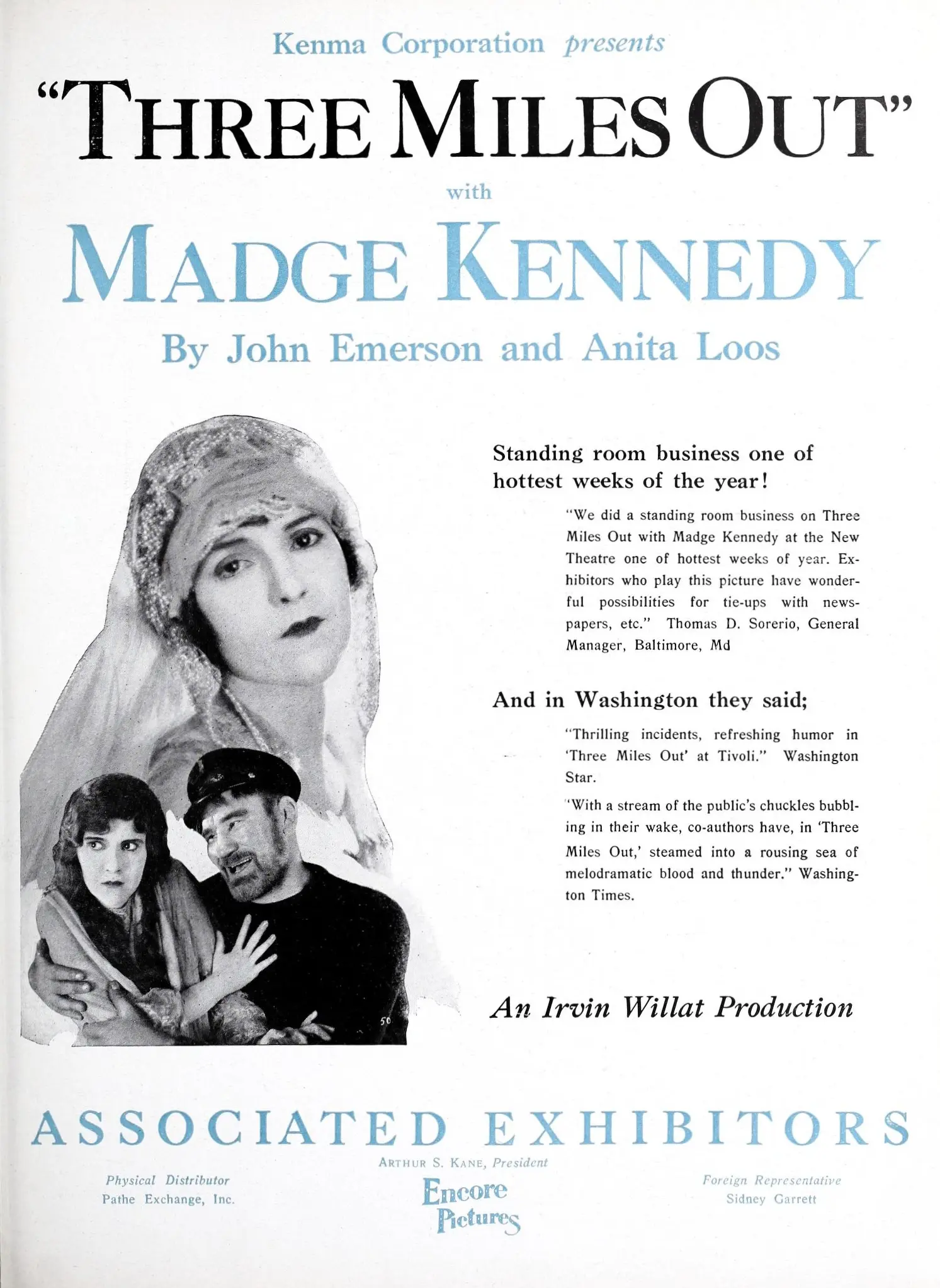
The year 1924 was a watershed moment for the cinematic medium, a time when the visual language of silent film reached a peak of expressive sophistication. Among the treasures of this era, Three Miles Out stands as a testament to the collaborative brilliance of the Emerson-Loos-McMein trifecta. This isn't merely a tale of a wedding interrupted; it is a sprawling, salt-sprayed exploration of betrayal, the fragility of social masks, and the primal struggle for survival beyond the reach of terrestrial law. While contemporary audiences might associate the name Harrison Ford with a different galaxy, the Ford of this era brings a grounded, rugged stoicism to the screen that anchors the film's more melodramatic flourishes.
To understand the structural integrity of this film, one must look toward the screenplay. Anita Loos, perhaps best known for her satirical wit, pivots here toward a more visceral narrative. Alongside John Emerson, she constructs a plot that functions like a ticking clock. The opening sequences, set within the Townsend estate, are thick with a sense of impending doom. The nuptial preparations are not celebratory but claustrophobic. When Captain John Locke arrives to shatter Molly’s illusions, the dialogue intertitles are sharp, devoid of the flowery excess that plagued lesser films of the period like The Discard. Instead, the writing mirrors the efficiency of a ship’s log, propelling the characters from the safety of the parlor to the lawless expanse of the ocean.
Madge Kennedy portrays Molly Townsend with a vulnerability that never descends into caricature. In many films of this vintage, such as Boots or A Flirt There Was, the female lead is often relegated to a passive observer of her own fate. Kennedy, however, utilizes her expressive range to convey a woman processing a profound existential shock. Her realization that her fiancé, Luis Riccardi, is a common thief is played with a haunting subtlety. As she is whisked away by Locke, her eyes reflect not just fear of the unknown sea, but the terrifying collapse of her social reality. It is a performance that rivals the emotional depth seen in Les frères corses, providing the necessary human stakes for the high-seas adventure that follows.
"The ocean, in Three Miles Out, serves as a grand equalizer—a place where the finery of the Townsend estate is stripped away to reveal the raw character beneath."
Harrison Ford’s Captain John Locke is a fascinating study in moral ambiguity. He is the hero, yet his methods are quintessentially rogue. By essentially kidnapping Molly to save her from a worse fate, he operates in a grey zone that makes the character far more compelling than the white-hatted protagonists found in A Yankee Go-Getter. Ford’s physicality is impressive; he commands the deck of his ship with an effortless authority. When the mutiny breaks out, his transition from a romantic rival to a desperate survivor is seamless. The chemistry between Kennedy and Ford is palpable, built on a foundation of mutual desperation rather than traditional courtship.
The film’s second act shifts gears into a gritty survival thriller. The introduction of the crew leader, Jordan (played with menacing intensity by Ivan Linow), raises the stakes exponentially. Unlike the comedic antics found in Jumping Beans or the lighthearted adventure of Beach Nuts, the threat here is visceral. The mutiny is staged with a chaotic energy that feels surprisingly modern. The cinematography captures the cramped, sweating interior of the boat, contrasting it with the indifferent vastness of the Atlantic. Jordan’s predatory pursuit of Molly provides the film’s most harrowing moments, showcasing a level of tension that was rarely achieved in early 1920s cinema.
The visual palette of Three Miles Out is exceptionally rich. The use of natural light during the daytime sea sequences creates a stark, bleached-out aesthetic that emphasizes the isolation of the characters. Conversely, the nighttime scenes utilize shadow to create a sense of impending violence. This mastery of lighting is far superior to the flatter compositions seen in Up in the Air. The director understands that the ship itself is a character—a creaking, wooden cage that both protects and imprisons the protagonists. The attention to detail in the nautical rigging and the texture of the sea spray adds a layer of verisimilitude that elevates the film from a simple melodrama to a cinematic experience.
When placing Three Miles Out alongside its contemporaries, its unique flavor becomes even more apparent. While Bucking Broadway explores the clash between rural and urban values, Three Miles Out explores the clash between civilization and the lawless frontier of the ocean. It lacks the historical weight of Iwami Jûtarô or the political fervor of Dzhymmi Hihhins, but it compensates with a relentless focus on character and pacing. It shares some DNA with The Blue Streak in its depiction of a high-speed pursuit, but the maritime setting adds a layer of peril that a land-based chase simply cannot match. Even compared to the ruggedness of The Brute Breaker, the psychological tension in the Locke-Jordan-Molly triangle feels more sophisticated and earned.
The inclusion of the stolen diamond necklace is a classic MacGuffin, but one that is integrated with surprising skill. It serves as the physical manifestation of Riccardi’s perfidy. The revelation that a man was murdered in the Townsend home to secure this trinket adds a dark, noir-ish undertone to the film. This isn't just a story about a bad marriage; it's a story about the violent underbelly of the upper class. The eventual recovery of the necklace and the jailing of Riccardi and Jordan provides a satisfying, if conventional, resolution. However, the film is wise enough to focus more on the emotional aftermath than the legal one. Unlike the domestic resolution of Why Smith Left Home, the ending here feels tempered by the trauma the characters have endured.
The direction (often attributed to Irving Cummings, though the prompt highlights the writers) is remarkably disciplined. The pacing never flags, a rare feat for a film that spends so much time in a single primary location. The choreography of the fight scenes, particularly when Locke rescues Molly from Jordan, is surprisingly brutal for 1924. There is a sense of weight to the blows and a genuine fear in the performances. This isn't the stylized, acrobatic combat of Join the Circus; it is a desperate, ugly struggle for life. The editing, too, deserves praise for its ability to cut between the frantic action on deck and the silent, terrified reactions of Molly in the cabin, creating a rhythmic tension that builds to a crescendo.
In the grand tapestry of silent cinema, Three Miles Out serves as a bridge between the simple morality plays of the early 1910s and the complex psychological dramas of the late 1920s. It utilizes the tropes of the sea adventure to explore deeper themes of trust and redemption. The collaboration between Anita Loos and the cast resulted in a film that feels remarkably cohesive. It avoids the episodic nature of many contemporary releases, opting instead for a tight, character-driven narrative that remains engaging nearly a century later. For those interested in the evolution of the thriller genre, this film is essential viewing. It demonstrates that even within the constraints of a silent medium, one can create a world that feels vast, dangerous, and profoundly human.
Ultimately, the film succeeds because it understands that the greatest storms are not those that occur on the horizon, but those that rage within the human heart. Molly’s journey from a naive bride-to-be to a woman who has looked into the abyss and survived is a powerful arc. Captain Locke’s transformation from a jealous rival to a selfless protector is equally compelling. Together, they navigate a world where the law is only as strong as the people who uphold it. Three Miles Out is a triumph of silent storytelling, a maritime odyssey that deserves its place in the pantheon of early cinematic masterpieces.
IMDb —
1917
Community
Log in to comment.