DbcultAccessing Vault...
5.6/10
Senior Film Conservator
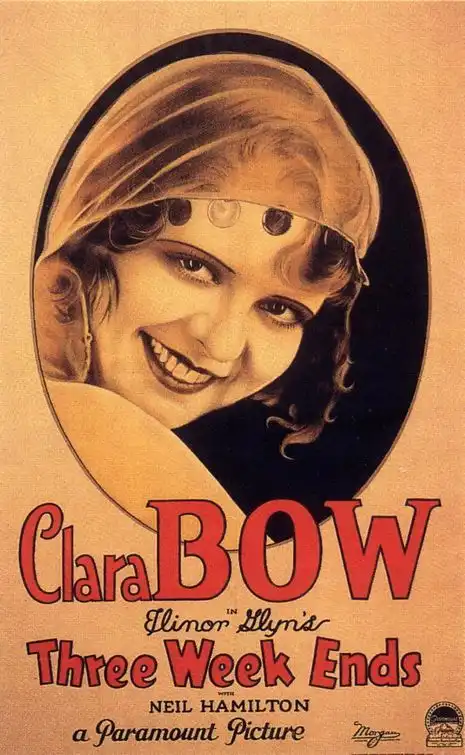
A definitive 5.6/10 rating for a film that redefined the boundaries of cult cinema. Three Week Ends remains a cornerstone of transgressive art.
If you are looking for a deep, philosophical exploration of the human condition, Three Week Ends is not the film for you. However, if you want to understand exactly why Clara Bow was the most magnetic screen presence of the 1920s, this is essential viewing. It is a breezy, fast-paced silent comedy that lives and breathes on the sheer kinetic energy of its lead actress. It is perfect for fans of Jazz Age aesthetics and those who enjoy lighthearted romantic mix-ups. It will likely frustrate viewers who demand logical character motivations or a plot that doesn't rely entirely on convenient misunderstandings.
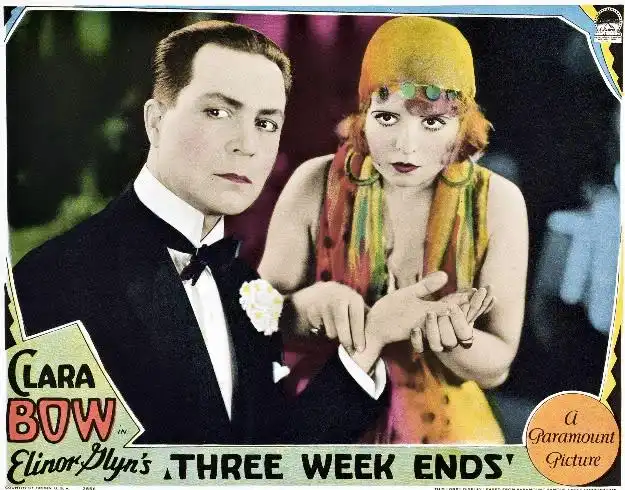
In Three Week Ends, Clara Bow plays Gladys O'Brien with a level of intensity that makes everyone else on screen look like they are standing still. While the film is often categorized as a standard 'flapper' movie, Bow brings a specific, grounded desperation to the role of the nightclub singer. You can see it in the way she scans the room during the opening cabaret scene; she isn't just looking for a man, she’s looking for an exit strategy from her working-class life. Unlike some of her contemporaries who played these roles with a sugary sweetness, Bow has a sharp, almost predatory edge that makes her eventual softening feel earned rather than scripted.
There is a specific moment early on where Gladys is adjusting her stockings behind a curtain, and the way Bow uses her eyes to communicate both mischief and a calculated awareness of her own power is a masterclass in silent acting. She doesn't need intertitles to tell us what she's thinking. Her face is a roadmap of the 1920s ambition.
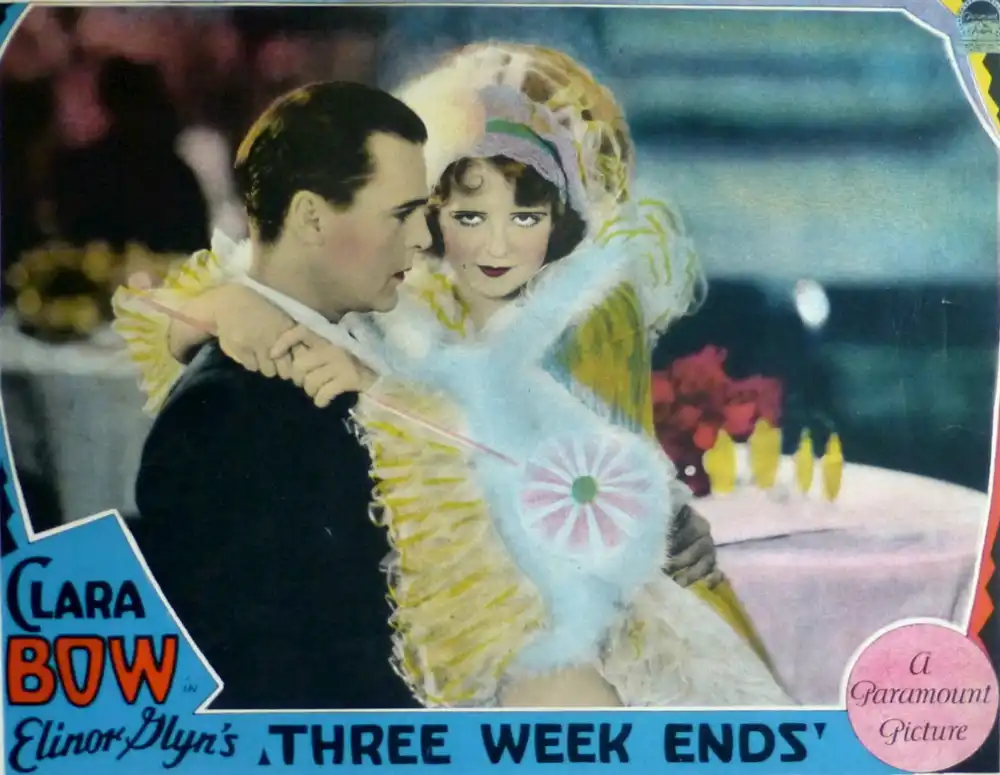
Neil Hamilton plays James Gordon, the insurance agent caught in Gladys’s crosshairs. Hamilton is serviceable, playing the 'straight man' to Bow’s whirlwind, but he often feels a bit stiff. There’s a visible lack of comfort in his physical comedy during the scenes where he’s trying to hide his modest apartment. He lacks the effortless charm that someone like William Haines might have brought to the role, but perhaps that works in the film's favor—it makes his character’s anxiety about his poverty feel more genuine.
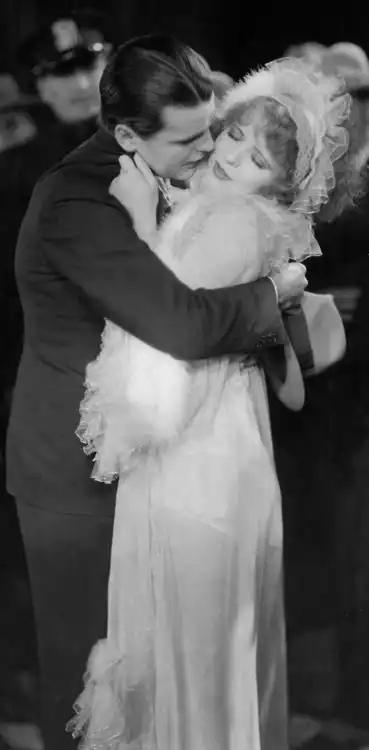
The supporting cast, including the silent-era Harrison Ford as the actual wealthy rival, provides the necessary friction. Ford plays the 'other man' with a smug, polished entitlement that makes you root for the insurance agent, despite the agent's own dishonesty. The chemistry between Bow and Hamilton is lopsided, but Bow carries the weight of the romance so effectively that you buy into the relationship anyway.

The film is structured, as the title suggests, over three distinct weekends. This gives the movie a rhythmic, episodic feel that prevents the thin plot from dragging too much. The first weekend is the chase, the second is the realization, and the third is the resolution. It’s a clean structure, though the middle section slows down significantly as the 'poor man pretending to be rich' tropes start to feel a bit repetitive. We’ve seen the 'hiding the laundry' and 'borrowing a fancy car' bits before, and Three Week Ends doesn't do much to reinvent them.
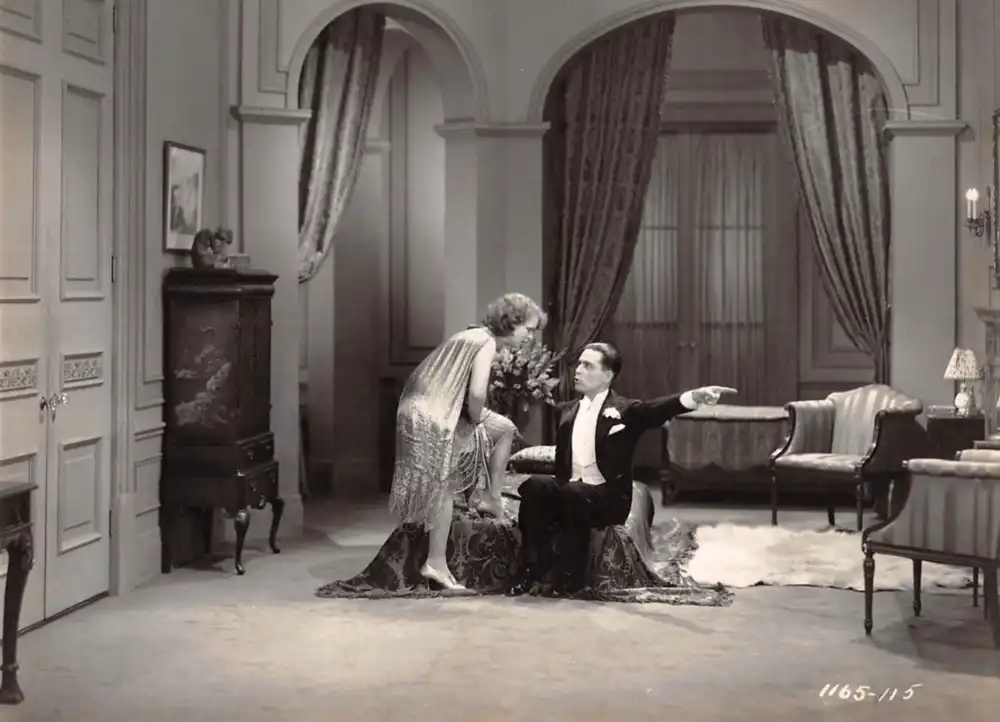
Visually, the film excels in its depiction of the high life versus the working life. The nightclub scenes are filmed with a chaotic, smoky atmosphere that feels authentic to the period. The lighting on Bow is consistently soft and glowing, emphasizing her status as the film’s sun, around which all other characters orbit. One particularly effective visual choice is the contrast between the cramped, cluttered insurance office where James works and the vast, empty spaces of the mansion where the climax takes place. It visually reinforces the class divide that the characters are so desperate to cross.
One detail that only someone who has watched the surviving footage would notice is the peculiar way Bow handles props. She has a habit of fidgeting with whatever is in her hands—a necklace, a glass, a hat—in a way that feels like a natural nervous tic rather than a directed action. It adds a layer of 'human' reality to a character that could have easily been a caricature.
The film isn't without its awkward moments. There is a sequence involving a large party where the editing feels a bit jagged, likely a result of the film's age and the state of the surviving prints, but it results in some strange jumps in continuity. Characters seem to teleport across the room between shots. Additionally, some of the intertitles written by Elinor Glyn and the team (including a young Herman J. Mankiewicz) feel a bit too 'on the nose,' trying to explain the 'It' factor that Bow is already demonstrating perfectly well through her performance.
When compared to other films of the era, such as The Prince and Betty, which also deals with themes of mistaken identity and social climbing, Three Week Ends feels much more modern because of its lead. While The Prince and Betty relies more on traditional farce, this film relies on personality. It shares some of the visual flair seen in more avant-garde European films like Le lion des Mogols, particularly in its use of light and shadow during the cabaret sequences, though it never fully commits to that level of stylistic experimentation.
Three Week Ends is a quintessential Clara Bow vehicle. It isn't a masterpiece of narrative structure, and the 'gold-digger with a heart of gold' story was already a cliché by 1928. However, the film works because it understands its primary asset. The camera loves Bow, and she gives it plenty to work with. The film's weaknesses—its predictable plot and sometimes-stiff male lead—are easily ignored when Gladys O'Brien is on screen, causing havoc and looking for love. It’s a vibrant snapshot of a specific moment in cinema history when personality was king, and Clara Bow was the undisputed queen. If you can find a reconstruction or the surviving fragments, it is well worth the hour of your time.
IMDb —
1923
Community
Log in to comment.