DbcultAccessing Vault...
3.6/10
Senior Film Conservator
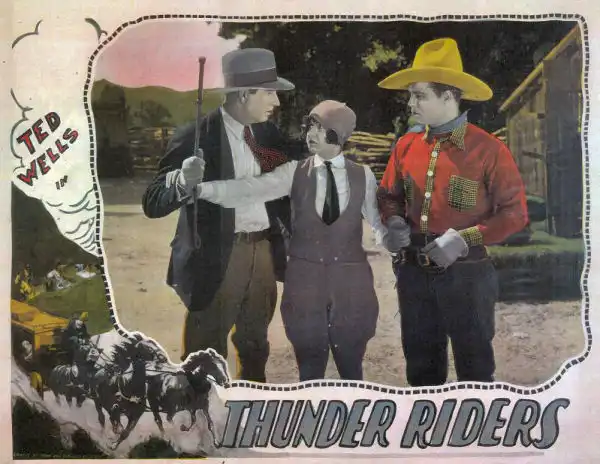
A definitive 3.6/10 rating for a film that redefined the boundaries of cult cinema. Thunder Riders remains a cornerstone of transgressive art.
If you have about fifty minutes to kill and a high tolerance for shaky film stock, Thunder Riders is fine. It’s not a lost masterpiece, and it’s certainly not something you’d show someone to convince them that silent cinema is a high art form. But if you like the smell of dust and the specific way 1920s actors over-emphasize every single emotion with their eyebrows, it has a certain charm.
It’s mostly for people who collect Western tropes like trading cards. If you’re looking for a deep narrative or something that moves with the grace of a John Ford film, you’re going to be disappointed. You’ll probably hate the way the plot just sort of stops so people can ride horses in circles for five minutes.
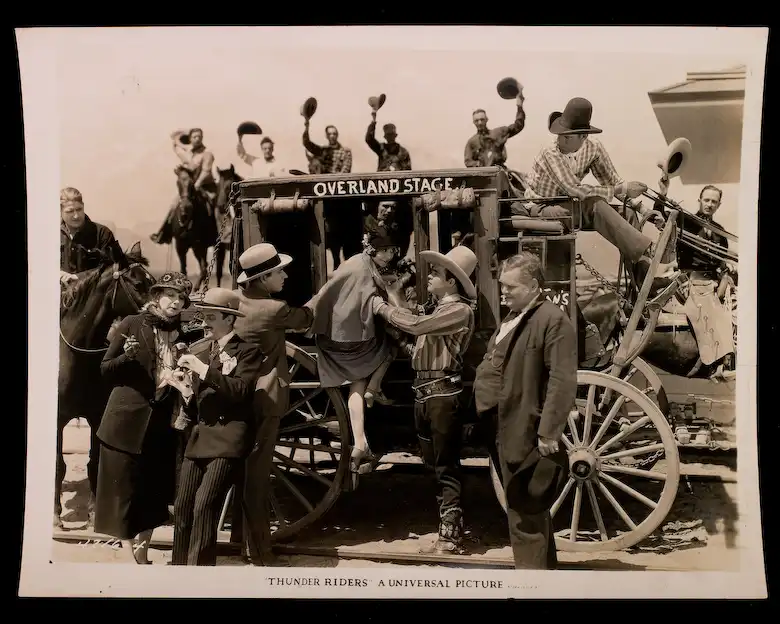
The whole thing kicks off with Betty (Charlotte Stevens) coming from the East Coast. She’s inheriting a ranch because her father passed away—a plot point so common in these movies it feels like a legal requirement. Stevens plays the part with this very specific 'city girl' energy that involves holding her skirts up a little too high and looking perpetually offended by the existence of dirt. There’s a shot early on where she’s getting off the stagecoach, and she looks genuinely terrified that the actor playing the driver is going to drop her. It’s one of those small, unscripted moments that makes the movie feel more real than the actual script does.
William Steele is the lead here. He’s got a very stiff, upright way of sitting on a horse. He doesn't have the natural charisma you see in some of the bigger stars from The Avenging Trail, but he fills out a vest well enough. There’s a scene where he’s supposed to be looking heroically into the distance, but the sun is clearly in his eyes, and he’s squinting so hard he looks like he’s trying to solve a difficult math problem in his head.
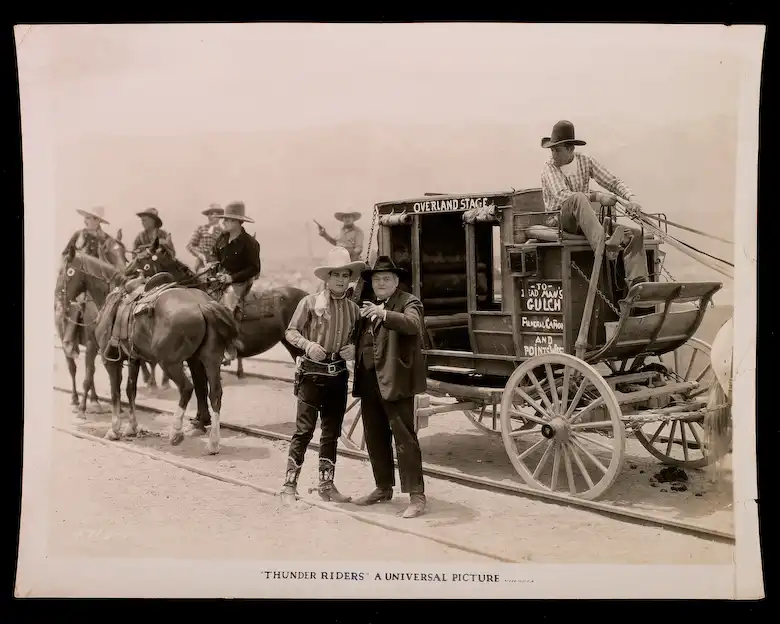
The 'Indian attack' is... well, it’s a 1928 B-movie. Let’s just say the historical accuracy is non-existent and the extras look like they’re having a very confusing day at work. There’s one guy in the background of the attack scene who keeps looking directly at the camera, then realizing he’s not supposed to, and then looking away really fast. I found myself watching him more than the actual action. It’s that kind of movie.
The pacing is weird. The first twenty minutes feel like they take an hour, and then the last ten minutes happen so fast you barely realize the conflict has been resolved. There’s an edit during the chase sequence where a horse goes from a full gallop to a standstill in a single frame. It’s jarring, but in a way that’s almost funny if you’re in the right mood. It reminds me of the clunky transitions in Rustling a Bride, where the geography of the scene doesn't quite make sense if you think about it for more than two seconds.
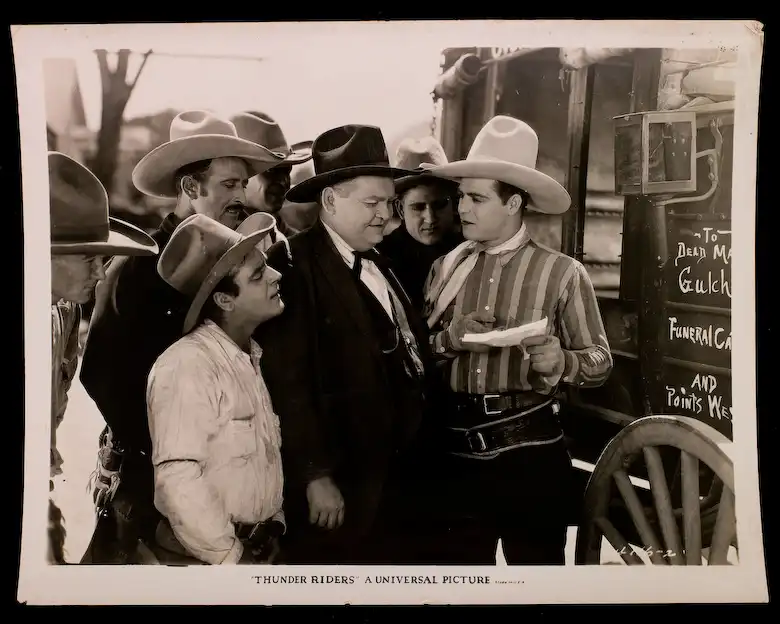
I did like the costumes, though. Not because they’re good, but because they’re so impractical. Betty’s travel outfit looks like it belongs in a ballroom, not on a dusty trail in the middle of nowhere. By the end of the film, despite being kidnapped and chased, her hat is still perfectly pinned. It’s impressive, in a ridiculous sort of way.
The dialogue cards are pretty standard, though some of the phrasing feels a bit clunky even for the time. There’s one card where a character explains a plan that is so convoluted I had to rewind it to make sure I hadn't missed a page. It turns out I hadn't; the plan just didn't make much sense. It’s a lot of 'Go to the pass' and 'Wait by the rock,' which is fine, I guess. It gets the job done.
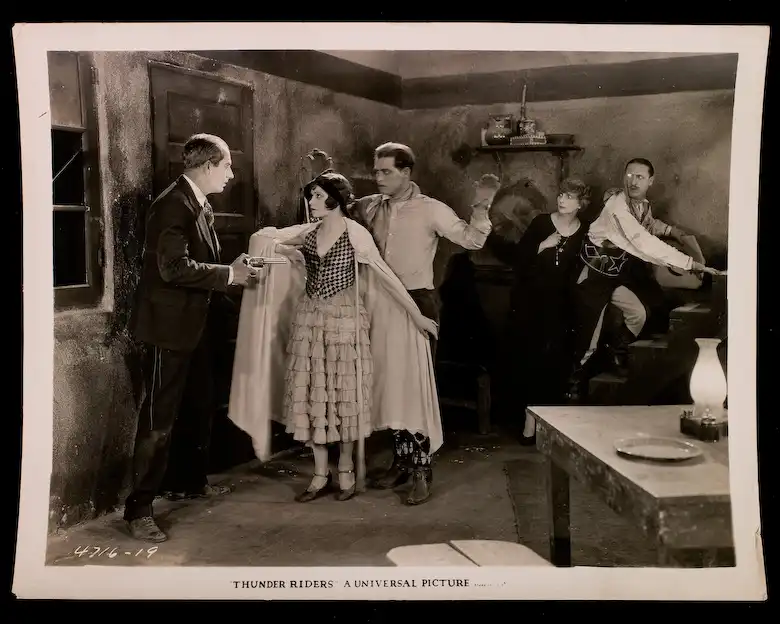
Is it better than something like High Power? Maybe. It feels a bit more energetic, even if that energy is misplaced. There’s a certain grit to the outdoor locations that you don't get in the studio-bound films of the era. You can see the wind whipping through the brush, and the dust is thick enough that you can almost feel it in your teeth while watching.
One thing that actually works is the chemistry between Steele and the horses. He’s clearly more comfortable with the animals than he is with his human co-stars. There’s a brief moment where he’s patting his horse’s neck while waiting for a cue, and it’s the most natural he looks in the entire film. It’s a quiet, throwaway second, but it stuck with me more than the staged shootouts.
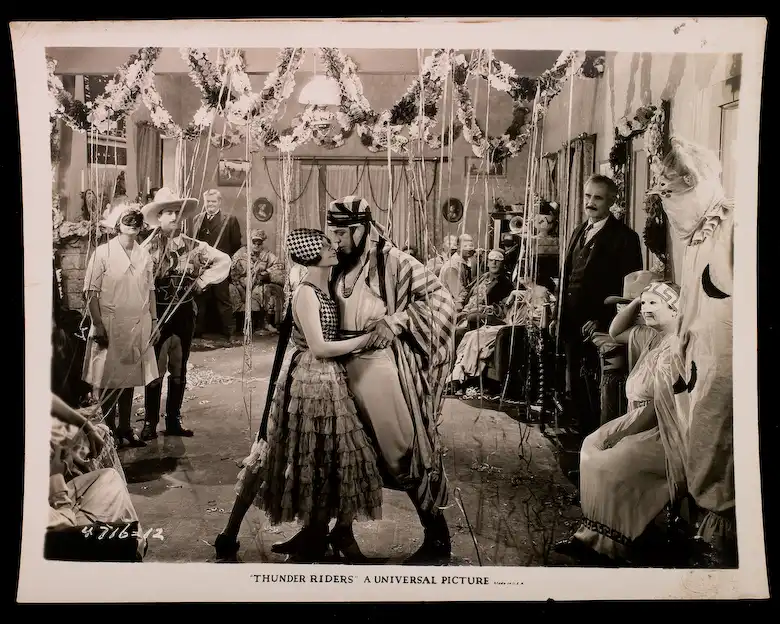
The ending is abrupt. It’s the classic 'and now everything is fine' conclusion that leaves you wondering how they’re actually going to manage a ranch when they clearly have no idea what they’re doing. But that’s the genre. It’s a short, dusty trip through a version of the West that only existed in Hollywood backlots and North Carolina filming locations.
It's not a 'must-see.' But if you're deep into a silent movie marathon and you need something that doesn't require a lot of brainpower, it's a decent enough distraction. Just don't expect it to stay with you once the lights come up-next reel starts playing starts.
IMDb —
1925
Community
Log in to comment.