DbcultAccessing Vault...
Cult Review
Senior Film Conservator
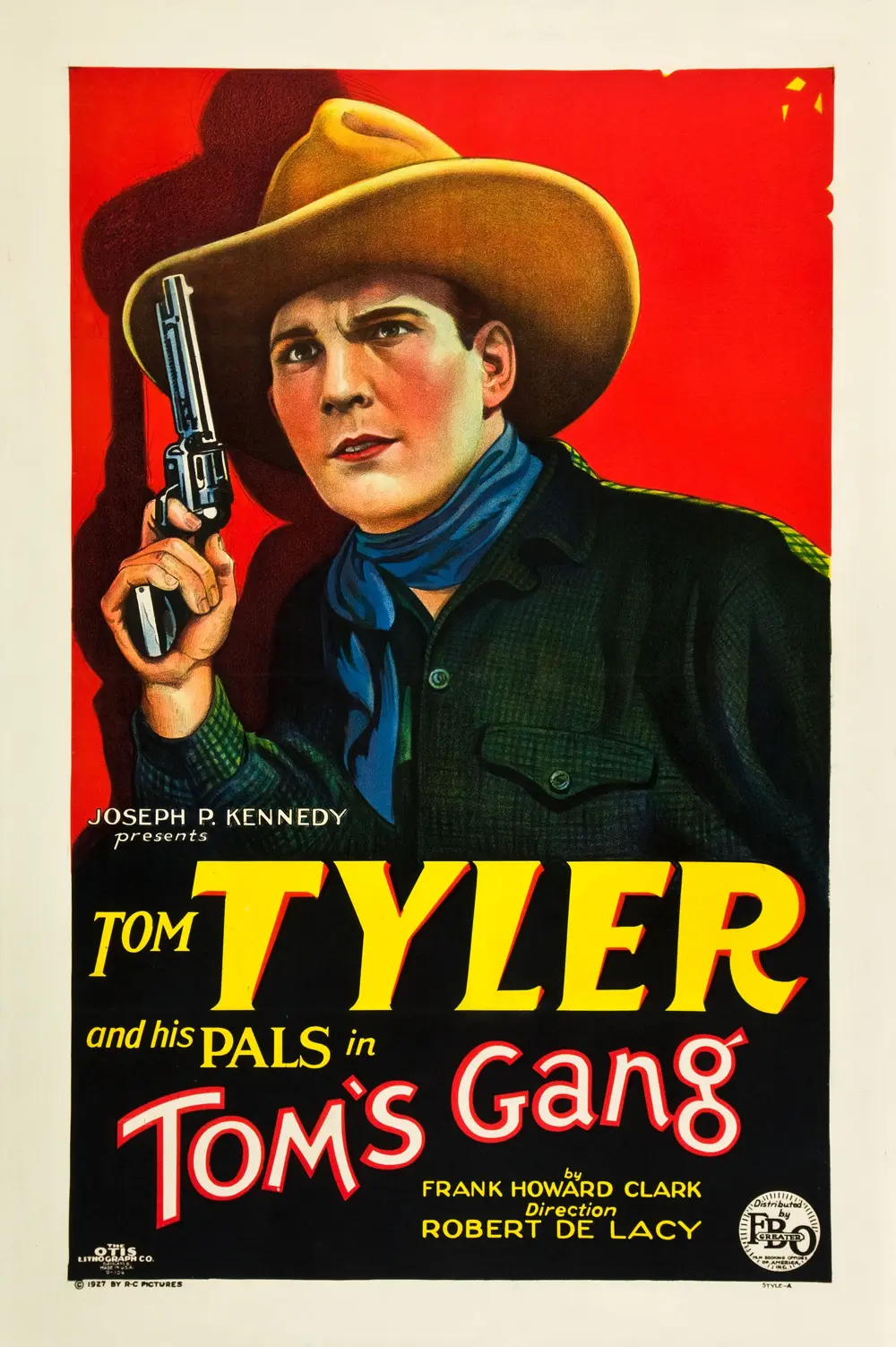
Is Tom's Gang worth tracking down in the modern era? Short answer: Only if you have a deep-seated affection for the unpolished mechanics of 1920s B-westerns or a scholarly interest in the evolution of child stars.
This film is specifically for those who find comfort in the rigid tropes of the silent era and collectors of the FBO (Film Booking Offices of America) catalog. It is decidedly not for anyone who requires moral complexity, high-fidelity production values, or a plot that deviates from the 'white hat versus black hat' binary. It is a simple film from a simpler time, and it makes no apologies for its lack of nuance.
1) This film works because it understands the kinetic appeal of physical movement, utilizing Frankie Darro’s athleticism and Beans the Dog’s screen presence to mask a thin script.
2) This film fails because Tom Tyler, while physically imposing, possesses the emotional range of a fence post in this particular outing, often being out-acted by the children and the livestock.
3) You should watch it if you want to see the DNA of the 'boy adventure' genre before it was codified by more polished productions in the 1930s.
Tom Tyler was a physical specimen before he was an actor. In Tom's Gang, his presence is a structural necessity rather than a dramatic one. He stands tall in the frame, he rides with authority, and he throws a punch that looks like it could fell an ox. However, when the camera lingers on his face for a reaction shot, the gears of the silent era grind to a halt. There is a stiffness here that contrasts sharply with his work in later serials.
The real heavy lifting is done by Frankie Darro. Even at a young age, Darro possessed a frantic, magnetic energy that pulls the viewer's eye away from the supposed lead. In the scene where the 'Gang' must navigate a rocky outcrop to outmaneuver the villains, Darro’s physical commitment is palpable. He doesn't just act like a kid on an adventure; he embodies the stakes of the moment. It is a stark contrast to the more theatrical performances found in films like The Gay Deceiver, where the artifice is much more apparent.
The 'Gang' itself serves as a precursor to the archetypes we would later see in the Our Gang shorts, though with a distinctly western grit. They aren't just there for comic relief; they are participants in the violence and the strategy of the frontier. This gives the film a slightly harder edge than one might expect from a 'family' western of 1927.
If Tyler is the immovable object, Harry Woods is the irresistible force of malice. Woods had a face built for the silent era—sharp features, piercing eyes, and a sneer that didn't need a title card to communicate 'I am going to steal your land.' His performance here is a masterclass in economy. He doesn't overact; he simply occupies the space with a sense of impending doom.
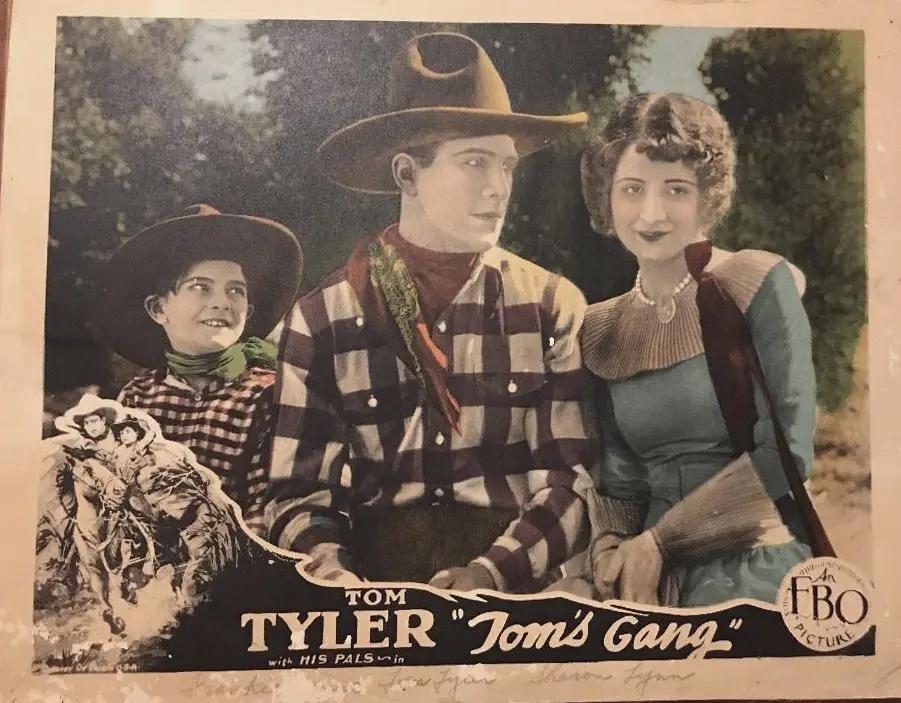
Compare his performance to the villains in In the Balance, and you see a different approach to antagonism. While other films of the period often leaned into mustache-twirling caricature, Woods plays it with a cold, business-like efficiency. He isn't evil because the script says so; he is evil because he is greedy, and in the world of Tom's Gang, greed is the only motive that matters. The final confrontation between Tyler and Woods is choreographed with a brutal simplicity. It’s not a dance; it’s a collision. It works. But it’s flawed by the predictable outcome.
The Film Booking Offices of America (FBO) was known for churning out westerns at a dizzying pace. This 'factory' approach is visible in every frame of Tom's Gang. The cinematography is functional, focusing on wide shots of the landscape to emphasize the scale of the chase, but it lacks the poetic visual language found in contemporary European cinema like L'île enchantée.
There is a specific moment during a cattle drive sequence where the dust nearly obscures the actors. Instead of cutting away, the director, Robert De Lacey, keeps the camera rolling. This creates a sense of raw, unwashed reality that feels accidental rather than stylistic. It’s a reminder that these films were often shot in harsh conditions with little time for retakes. This 'rough-edged' quality is actually one of the film's strengths today. It feels less like a stage play and more like a documentary of a vanished world.
"The film doesn't ask for your respect; it demands your attention through sheer, unadulterated movement."
To answer the question directly: Yes, but only if you value historical context over narrative complexity.
Tom's Gang is a fascinating artifact. It represents the bridge between the high-art silent films of the mid-20s and the populist 'B' movies that would dominate the 30s and 40s. While it lacks the spiritual depth of a film like Christus, it possesses a populist energy that is infectious. If you can get past the static acting of the lead, the interplay between the children and the dog provides a surprisingly modern sense of pacing.
Pros:
- High-energy pacing that prevents the 1927 runtime from dragging.
- Genuine locations that provide an authentic Western atmosphere.
- Frankie Darro’s early charisma is a joy to behold.
- The dog actually contributes to the plot rather than just being a mascot.
Cons:
- The plot is paper-thin and highly predictable from the first ten minutes.
- Title cards are sparse, sometimes leaving character motivations slightly murky.
- The female lead, Sharon Lynn, is given almost nothing to do but look concerned.
One of the most surprising aspects of Tom's Gang is how it treats its child characters. In many films of this era, like Nurse Marjorie, children are treated as ornamental or purely sentimental. Here, they are a tactical unit. They use slingshots, they set traps, and they operate with a level of autonomy that feels almost subversive for 1927. It’s a 'Home Alone' mentality sixty years before its time. This makes the film feel strangely more modern than its contemporaries.
Tom's Gang is a meat-and-potatoes western. It doesn't have the artistic aspirations of Hypocrites, nor the sweeping romanticism of The Ghosts of Yesterday. It is a product of a studio system that valued volume over virtuosity. Yet, there is a charm in its clunky execution. The film serves as a reminder that before the western became a vehicle for myth-making and deconstruction, it was simply a way to see people ride horses and overcome bad men.
If you go in expecting a masterpiece, you will be disappointed. If you go in expecting a rough, tumble, and occasionally charming adventure, you might find yourself smiling. It’s a minor work, but a significant one for those who want to see the building blocks of the Hollywood B-movie. It isn't great art, but it is great history.
IMDb 6.6
1931
Community
Log in to comment.