DbcultAccessing Vault...
5.6/10
Senior Film Conservator
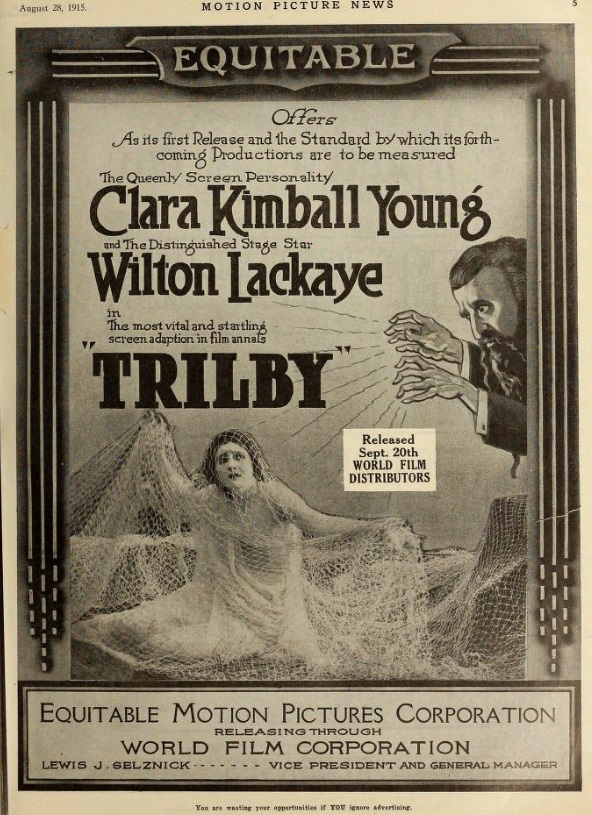
A definitive 5.6/10 rating for a film that redefined the boundaries of cult cinema. Trilby remains a cornerstone of transgressive art.
Paris, 1915. The city bleeds sepia through every perforation of this 35-mm artifact, and already the camera stalks its prey like a velvet-jacketed predator. Maurice Tourneur—still high on the ether of pictorialist photography—composes each tableau as if Caravaggio had suddenly been handed a crank camera. Shadows gouge the foreground; a single klieg lamp crowns Trilby’s curls with a halo that looks suspiciously like a noose. The effect is not merely atmospheric; it is epistemological. We are asked to believe that cinema itself can hypnotize, that a strip of nitrate can snake around the viewer’s throat as tightly as Svengali’s fingers around Trilby’s will.
Phyllis Neilson-Terry carries her character’s barefoot nonchalance like a suit of armor made of thistledown. Watch the moment she first enters the atelier: shoulders thrown back in careless contrapposto, a cigarette ember winking between knuckles paint-flecked like speckled eggs. She seems to inhale the very future, exhaling smoke rings that dissolve into the rafters where forgotten canvases rot. It is the most casual of gestures, yet it foreshadows the respiratory tyranny to come—soon her lungs will belong to another.
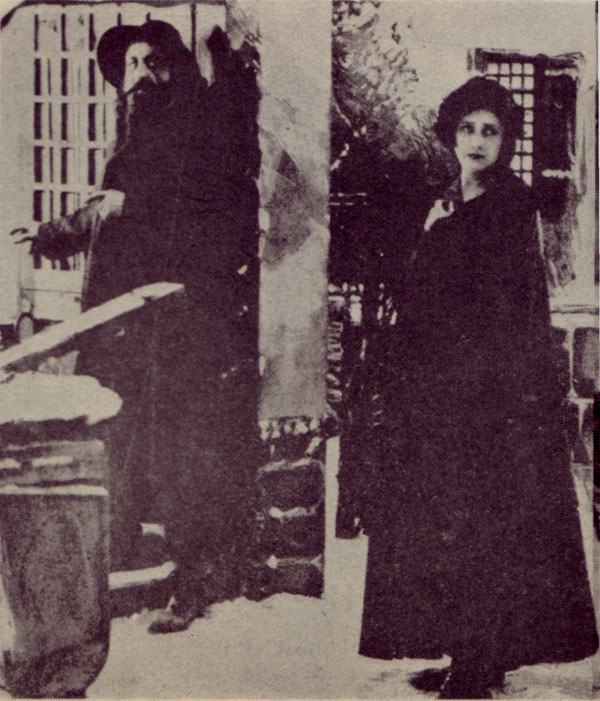
Wilton Lackaye’s Svengali arrives with the cadaverous grandeur of a El Greco saint gone necrotic. His cheekbones jut like cathedral buttresses; the eyes, rimmed kohl-black, perform ocular vivisection on anyone foolish enough to meet his gaze. Lackaye understands that villainy is not a trait but a genre of music: he conducts silence the way Toscanini conducts Verdi. In the famous close-up—an iris shot that contracts like a pupil overdosing on belladonna—his irises seem to rotate, a spiral vortex pulling the viewer toward the abyss. The intertitle reads merely “Obey,” but the subtext screams louder: cinema has found its first supervillain, decades before Hitchcock crystallized the trope of the suave psychopath.
The hypnotic séance itself unfolds as a striptease of agency. Tourneur refuses to cut away; instead the camera lingers until the celluloid appears to perspire. Svengali’s fingers hover inches from Trilby’s forehead, a secular priest offering a benediction of erasure. A double exposure blooms: translucent chords swirl across the frame like ectoplasmic eels, each quaver locking another vertebra of her spine into rigid alignment. The effect is primitive by today’s digital baroque, yet its very transparency is the horror—we see the mechanism of control laid bare, and we cannot intervene.
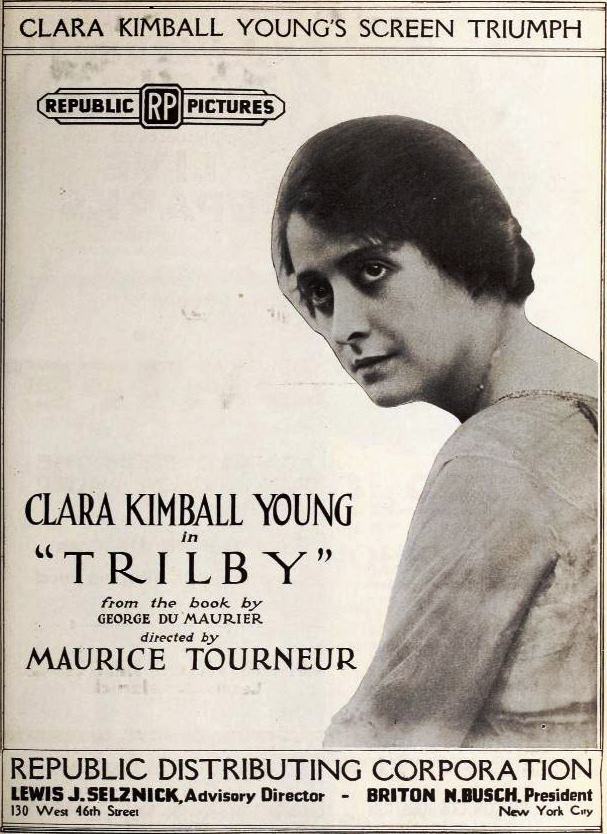
Compare this to the villainy in Brother Against Brother, where antagonism is a matter of political uniforms and cannon smoke. Svengali’s warfare is interior; he colonizes the private dominion of breath, the final frontier of sovereignty. In an era when women’s bodies were legislated more rigidly than today’s copyright claims, the metaphor lands like a brick through a stained-glass window.
Paul McAllister’s Little Billee should by rights evaporate under such titanic malevolence, yet the actor weaponizes frailty. His wooing scenes play out in negative space: hands that hover near Trilby’s waist but never quite touch, a stammer that cracks the word “marry” into phonetic rubble. McAllister has the translucent skin of a consumptive poet; every capillary seems visible, blushing Morse code messages of devotion. When he finally does kiss Trilby’s gloved fingers, the cut to Svengali’s omniscient glower turns the moment into a triangulation of power, desire, and surveillance worthy of Foucault’s darkest dreams.
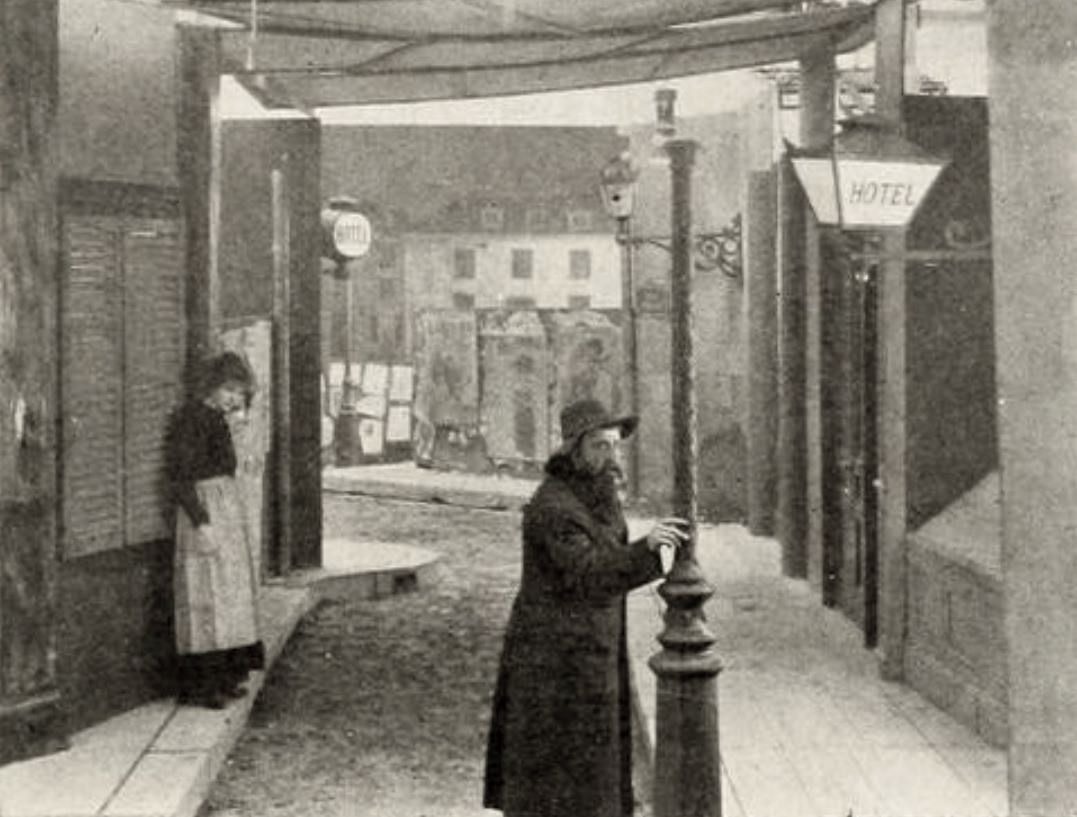
Tourneur’s montage grammar anticipates Eisenstein by a hair’s breadth. A bowl of milk quivers in close-up—an unsubtle stand-in for Trilby’s laryngeal innocence—then smash-cuts to Svengali’s hand descending like a guillotine. The milk never spills; instead the image reverses in a proto-palindrome, suggesting that violation can be rewound but never undone. Soviet intellectuals would later call such editing “dialectical,” but here it is visceral: the viewer’s stomach knots as if on a runaway elevator.
The operatic set pieces, shot in the old Gaumont glasshouse studio, exhale a sulphurous grandeur. Gas jets gutter along the wings; cardboard clouds sag on visible wires, yet the artifice only amplifies the metaphysical chill. Trilby ascends the stage in a gown of arsenic-green tulle, her pupils dilated to lunar diameter. When she opens her mouth, the audience inside the film—and outside it—experiences a ventriloquism of the soul. The voice that emerges is technically hers, but the timbre carries the metallic aftertaste of possession. Critics of the day raved about “the marvel of synchronized song”; historians now recognize the sequence as an early experiment in amplified sound design, a ghostly pre-echo of the Vitaphone revolution a decade later.
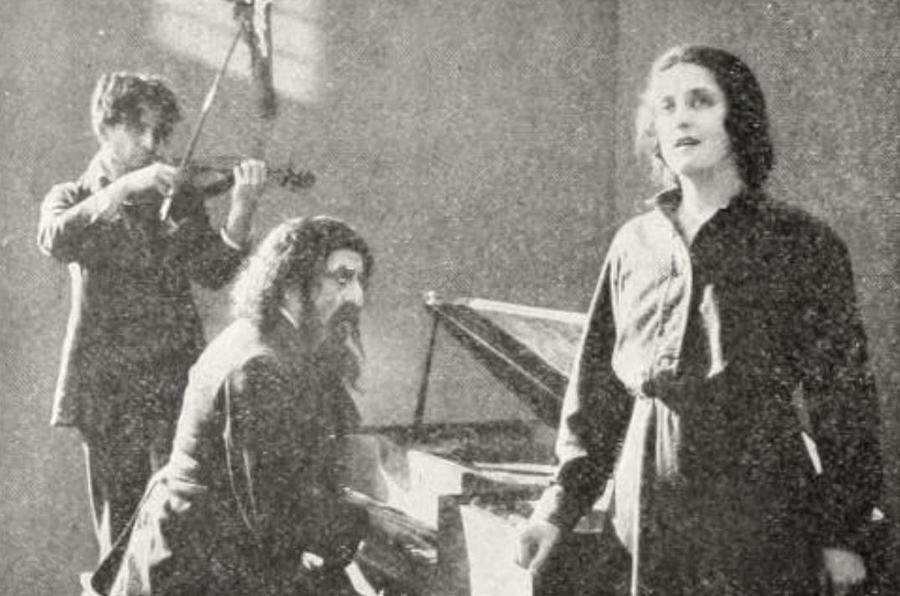
Contrast this with the comparatively bucolic disruptions in When Broadway Was a Trail, where perils remain external—runaway stagecoaches, mustache-twirling bankers. The jeopardy in Trilby is ontological: the protagonist risks becoming a stranger to her own autobiography.
As narrative races toward cardiac arrest, the film’s tinting schema mutates. Early reels bask in amber nocturnes, but once Svengali’s health declines, Tourneur bathes the frames in viridian fever. The shift occurs mid-scene: a doctor’s hand passes before the lens, and the chromatic temperature plummets as if an ice age has crept into the salle. Such proto-color grading predates The Wizard of Oz’s monochrome-to-technicolor gambit by a quarter-century, yet the intent is inverse—here color drains vitality rather than bestowing it.
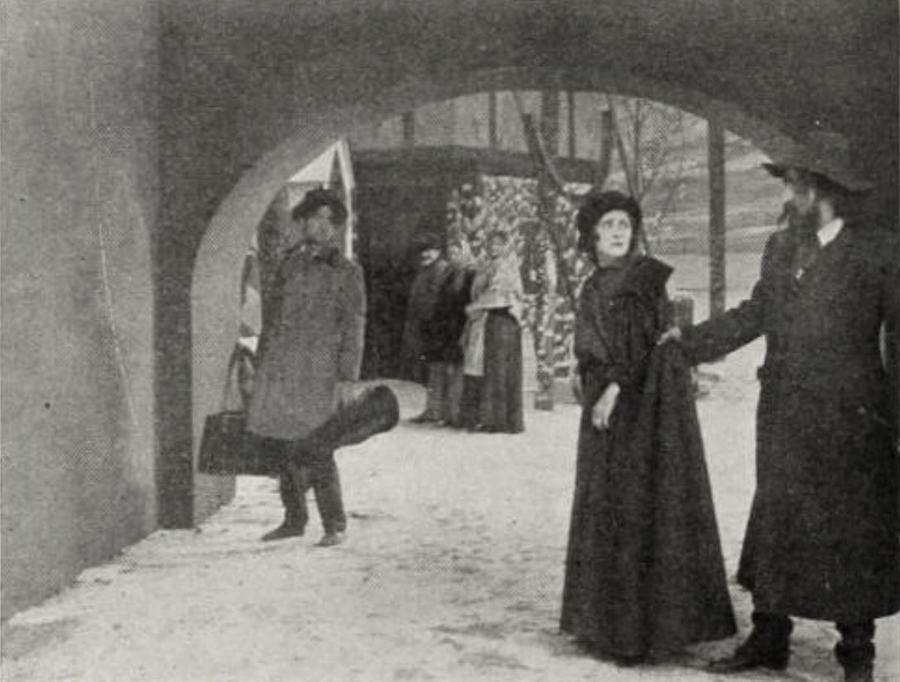
The dénouement arrives with the blunt elegance of a guillotine. Svengali collapses on the orchestra pit, his baton clattering into the kettledrum like a bone into a crematory urn. Trilby’s voice cracks mid-aria, plummeting from coloratura brilliance to a rasp that sounds like gravel poured into a crystal vase. The audience inside the film gasps; viewers in 1915 reportedly shrieked. In that crack we hear the precise sonic contour of autonomy regained—a woman reclaiming the rasp of her own breathing. Yet the cost is absolute: she can no longer sing, and the man who loved her for her laughter rather than her trills stands mute at the wings, clutching a sketchbook full of charcoal ghosts.
Restoration efforts by the Library of Congress in 2019 unearthed an alternate ending tucked into a Belgian archive: three additional seconds showing Little Billee closing Trilby’s eyes as the curtain drops. These frames, barely the length of a sneeze, tilt the film from tragedy into something more sinister—an aestheticized death that voyeuristically fuses Eros and Thanatos. Most prints still circulate without the shot, turning the contested footage into a cinephile’s Holy Grail, a testament to how even marginalia can recalibrate moral gravity.
Contemporary critics dismissed the movie as “melodramatic moonshine,” yet the DNA of every subsequent psychological thriller coils inside this print. Hitchcock’s Vertigo borrows the spiral motif; The Phantom of the Opera lifts the disfigured maestro trope whole cloth; Black Swan pirouettes on the same fusion of artistic perfection and bodily dispossession. Even the slasher genre owes a blood debt: the first-person camera that stalks Trilby through alleyways prefigures Michael Myers’s POV rampage by sixty-three years.
Still, one must reckon with the film’s gender politics without anachronistic sanctimony. Yes, Trilby is rendered a ventriloquist’s dummy, yet the camera also lingers on her subjectivity—her nightmares rendered in scratchy superimpositions, her pupils contracting in terror at the realization that memory itself has been redacted. She is both object and witness, a duality that complicates any facile reading of victimhood. Consider the moment she spits out a high C sharp that shatters the stage’s gas lamp: glass rains like crystallized scream, and for one defiant bar she rewrites the score. It is not triumph, but it is authorship.
The 2023 4K UHD release from Kino Cult offers grain so tactile you could count the silver halide freckles. Optional commentary by film historian Tag Gallagher excavates production minutiae: the fact that Wilton Lackaye performed his own piano on set, that the hypnotic spiral was hand-etched frame-by-frame onto the negative with a sewing needle, that Tourneur banned electric fans to prevent the tulle dresses from fluttering out of historical accuracy. Such fetishistic detail could devolve into trivia, yet it underscores the artisanal madness that powered early cinema—an art form still inventing its own grammar, verb by flickering verb.
Viewers seeking rip-roaring escapism may find Trilby as suffocating as its antagonist’s embrace. The pacing, glacier by modern standards, demands surrender to its tidal melancholy. Yet patience yields a time capsule of collective Victorian dread: the terror that science—mesmerism, phrenology, the fledgling psychoanalytic jargon—might colonize the last citadel of self. In an age of neural implants and algorithmic profiling, the film whispers across a century: “What is a voice if not the final passport to personhood, and what is theft if not the moment that passport is stamped by another?”
Ultimately, Trilby endures because it stages the central battle of modernity: autonomy versus artifice, love versus control, the flicker of celluloid versus the hypnotic stare. Long after Svengali’s carcass is carted offstage, his eyes still glow from the screen, unblinking, asking whether we too are complicit in the spectacle of possession. We came for melodrama; we leave with a mirror.

IMDb —
1925
Community
Log in to comment.