DbcultAccessing Vault...
6.3/10
Senior Film Conservator
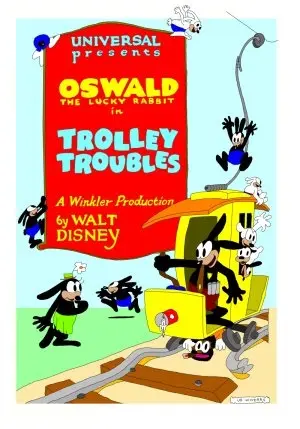
A definitive 6.3/10 rating for a film that redefined the boundaries of cult cinema. Trolley Troubles remains a cornerstone of transgressive art.
Is this 1927 silent short worth your time in the age of high-fidelity CGI? Short answer: Yes, but only if you view it as a piece of kinetic art rather than a standard movie.
This film is for animation historians, fans of classic slapstick, and those who appreciate the raw, unpolished energy of early Hollywood. It is definitively not for viewers who require a complex emotional arc or high-definition visual fidelity. It is a relic, but a vibrating, living one.
1) This film works because it embraces the impossible logic of animation to create gags that live-action films of the era, like In Society, simply couldn't replicate.
2) This film fails because its repetitive structure relies heavily on a single note of 'runaway vehicle' tension that loses its punch after the four-minute mark.
3) You should watch it if you want to see the exact moment Walt Disney and his team discovered the 'rubber hose' style that would define the industry for decades.
Trolley Troubles is not interested in the grounded realism found in contemporary dramas like The Exiles. Instead, it operates in a dreamscape where a trolley can stretch its body to avoid a collision. This isn't just a visual trick; it's a fundamental shift in how stories were told in 1927. When Oswald encounters a cow on the tracks, the solution isn't a clever dialogue exchange or a dramatic standoff. It is a series of escalating physical humiliations.
The character of Oswald himself is a revelation. Unlike the early, somewhat sanitized versions of Mickey Mouse, Oswald is a bit of a jerk. He’s frantic, he’s easily frustrated, and he has a distinctively sharp edge. This personality is conveyed entirely through movement. Watch the way his ears droop or how his body stiffens when the trolley begins its inevitable descent. It works. But it’s flawed.
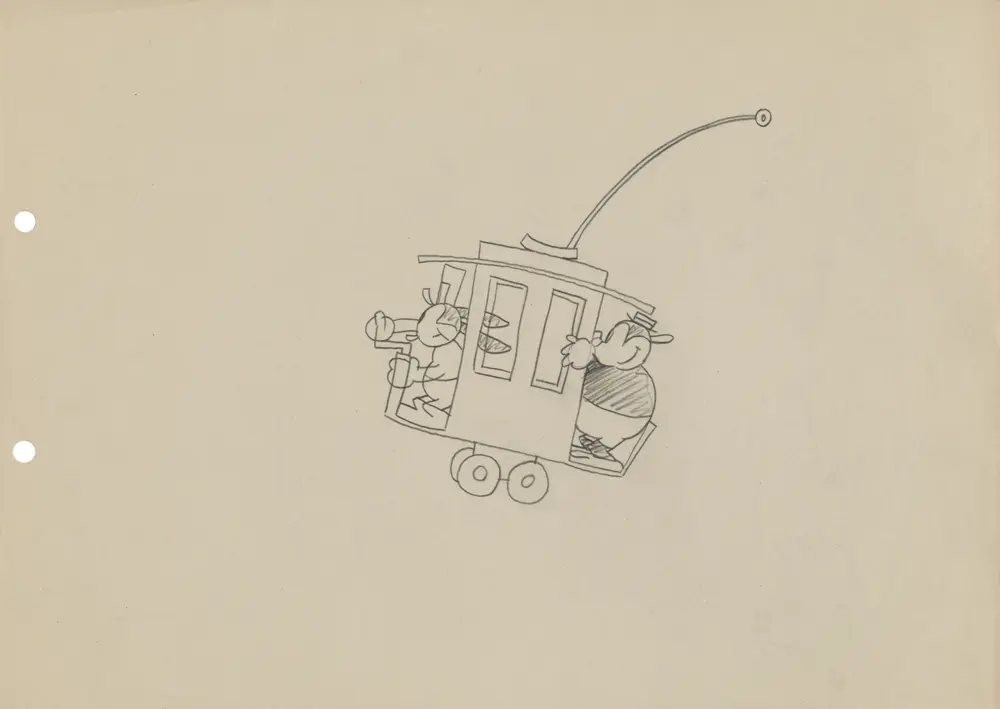
From a directing standpoint, Walt Disney (and his uncredited lead animator Ub Iwerks) utilized a 'moving background' technique that was revolutionary for the time. By looping the scenery, they created a sense of velocity that felt dizzying to 1920s audiences. This isn't the slow, methodical pacing of Les Misérables, Part 1: Jean Valjean; this is a sprint toward a cliffside.
The cinematography—if one can call it that in hand-drawn frames—focuses on the center of the screen, ensuring the eye never misses the primary gag. One specific moment stands out: when the trolley has to climb a near-vertical hill. The car literally groans and thins out, mimicking the physical exertion of a human climber. This anthropomorphism of machinery was a hallmark of the era, yet here it feels fresher than many modern attempts.
If you are looking for a deep narrative, look elsewhere. If you want to understand the DNA of modern entertainment, this is essential viewing. Trolley Troubles serves as the missing link between the stage-bound slapstick of Vaudeville and the limitless imagination of the digital age. It captures a moment of pure, unadulterated creative play.
Pros:
Cons:
Comparing this to other works like Too Many Wives, you see a clear distinction in how humor was evolving. While live-action shorts relied on situational irony, Trolley Troubles leaned into the impossible. It’s a bold stance to take: that reality is merely a suggestion. I would argue that Oswald is actually a more compelling protagonist than Mickey Mouse ever was. He feels more human because he is more flawed.
The pacing is relentless. There are no quiet moments. This can be exhausting, but in a six-minute format, it functions like a shot of espresso. The film doesn't ask for your emotional investment; it demands your attention through sheer visual noise. It is a loud film despite being silent.
Trolley Troubles is a fascinating, frantic, and occasionally frustrating piece of cinema history. It isn't a masterpiece in the traditional sense, but it is an essential building block of the medium. It’s short, it’s strange, and it’s undeniably lucky. Watch it for the history, stay for the rabbit’s attitude. It’s a wild ride that paved the way for everything we love about animation today.
IMDb 4.4
1923
Community
Log in to comment.