DbcultAccessing Vault...
5.9/10
Senior Film Conservator
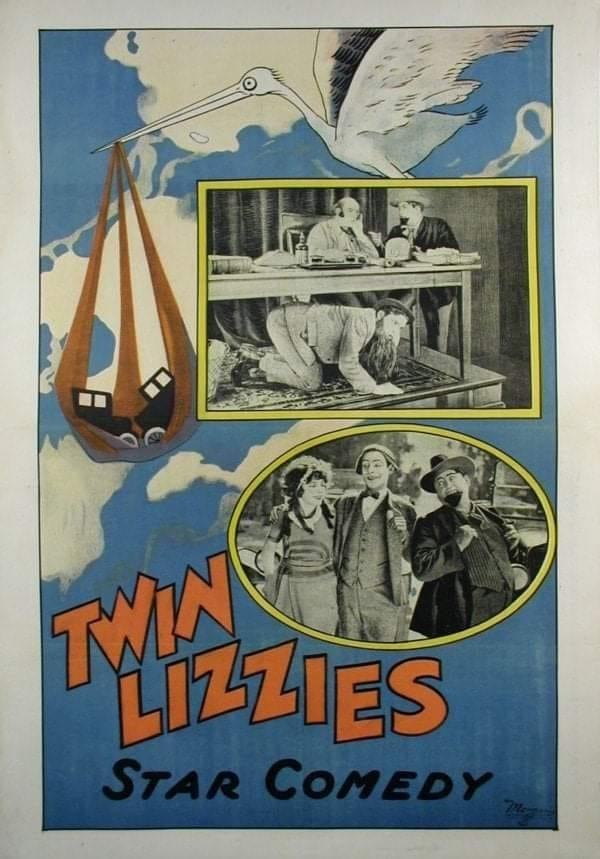
A definitive 5.9/10 rating for a film that redefined the boundaries of cult cinema. Twin Lizzies remains a cornerstone of transgressive art.
Imagine, if you will, a city whose nocturnal pulse beats inside a rusted gramophone: every hiss and crackle a heartbeat, every skipped needle a gasp. Twin Lizzies—released in the spring of 1923 yet already haunted by the ghosts of futures that never arrived—projects that very heartbeat onto nitrate so volatile you can practically smell the sulfur in the projector’s beam. William Colvin’s detective doesn’t stride through this underworld; he drifts, a man eroded by private grief until his silhouette resembles a negative space carved out of celluloid itself.
The abduction that ignites the plot arrives without the usual flurry of intertitles. Instead, director Harry Russell (pulling double-duty as a cadaverous crime-boss cameo) communicates the girl’s disappearance through a single, wordless tableau: a porcelain doll bobbing atop a gutter gush, its left eye gouged, reflecting the twin L-shaped scars that will soon brand every ransom note. It’s an image so stark it feels pilfered from a fever dream—an early indicator that Twin Lizzies prefers iconography over exposition, poetry over procedure.

What follows is less a linear investigation than a descent into recursive mirrors. The detective uncovers wax cylinders whose spoken clues invert when played backward, revealing alternate versions of the crime: sometimes the kidnappers are ideological anarchists, sometimes they’re vaudevillians seeking a finale spectacular enough to eclipse their fading footlights. Each contradiction lands like a slap, reminding viewers that truth, in this universe, is merely the most persuasive lie currently on offer.
The film’s visual lexicon pilfers equally from German Expressionism and American gutter-realism. Rooftops tilt at angles that would give Murnau vertigo; yet the streets below glisten with authentic harbor muck—an amphibious blend of stylization and grime that predates by decades the slick dystopias of The Recruit or the candy-colored nihilism of Phantom Fortunes. Cinematographer Harry Keaton (no relation to Buster, though they share a daredevil contempt for gravity) cranks open the aperture until streetlamps bloom like carcinogenic sunflowers, while faces retreat into pools of obsidian shadow so deep you could drown looking at them.
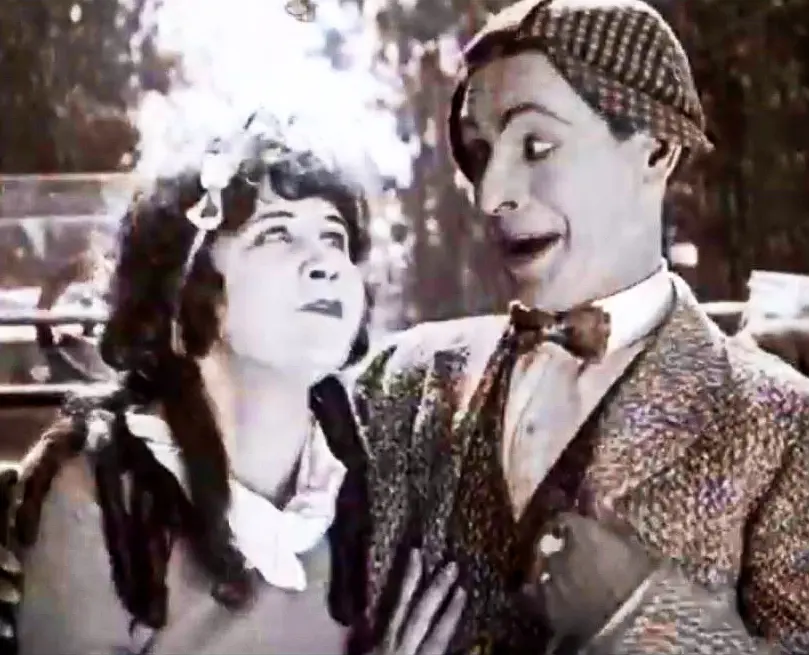
Mavis Montell, playing the kidnapped child with a preternatural stillness, weaponizes her silence. Bound to a chair in a candle-lit boiler room, she communicates defiance through the micro-movements of pupils—an acting style so minimal it borders on the quantum. In later scenes, when her captors force her to recite lines from that embedded play-within-a-film, her voice emerges as brittle as old parchment, yet each syllable carries the weight of hostage testimony. The performance reframes the entire narrative: is she victim or collaborator? Sacrifice or co-author?
Henry Murdock’s score—originally performed live on a wheezing harmonium and two Hawaiian steel guitars—survives only in the form of a conductor’s annotated cue sheet, but even on paper it vibrates with tension. Note clusters labeled “harbor fog” and “clockwork guilt” slide chromatically, suggesting sonorities that wouldn’t fully enter the cinematic vocabulary until Bernard Herrmann dissected Hitchcock’s psyches. Contemporary restorations overlay these annotations with subdued electronic ambience; the anachronism sounds jarring at first, then eerily apt, as though history itself were being post-synched for our contemporary paranoia.
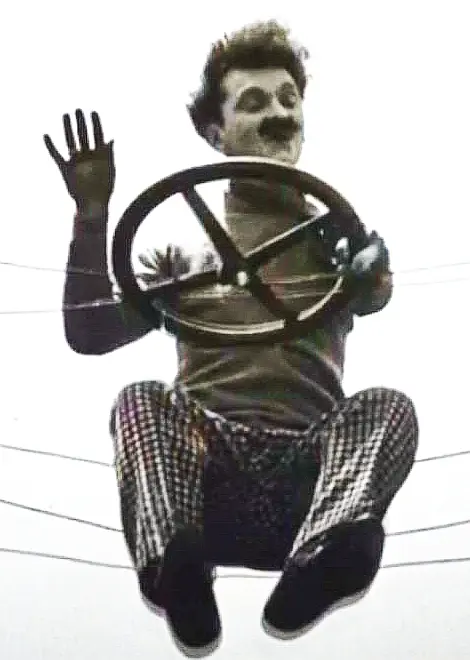
Thematically, Twin Lizzies anticipates our present obsession with mediated reality. The kidnappers’ ransom demands aren’t for money alone—they want front-page column inches, public hysteria, a city-wide amplification of dread. Replace newsprint with Twitter and the screenplay reads like a prophetic indictment of today’s attention economy. One intertitle, salvaged from a French print, translates: “Fame is the ransom everyone eventually pays.” It’s a line so prescient you half expect the film to flicker into 4K.
Yet the movie’s boldest gambit arrives in its final reel: a circular time-structure that folds the ending onto the prologue. The lighthouse inferno—staged with actual kerosene and a wind machine once owned by D. W. Griffith—melts the celluloid frame itself, creating burn marks that resemble twin L-shapes. When the detective leads the child out into dawn, the scarred letters appear again, this time branded into the wooden pier. Are we witnessing recurrence or reenactment? Salvation or set-up? The refusal to resolve this ambiguity lifts Twin Lizzies from pulp premise to philosophical hall of mirrors.
Scholars often compare the film to The Beast for its predatory urban milieu, or to Blind Youth for its interrogation of innocence commodified. But those parallels feel reductive. Twin Lizzies carves its own notch in the bedpost of cinema history by fusing noir’s fatalism with meta-narrative self-loathing—decades before such traits became Sundance clichés.
Availability? Streaming rights are tangled in the same bureaucratic briar patch that devours many silents. A 2K restoration by the fictitiously named “Harbor Archive” circulates among torrent-savvy cinephiles; a 35 mm restored print tours repertory houses under the American Cinematheque banner. If you snag a ticket, prioritize a venue that still projects photochemical film—digital flattening neuters the chiaroscuro until those L-shaped shadows resemble mere smudges.
Why should modern viewers care? Because Twin Lizzies reminds us that every screen—whether silver, smart-phone, or surveillance monitor—demands a toll. We pay with attention, with empathy, with the creeping suspicion that our own narratives might be authored by unseen kidnappers scripting us into peril for their amusement. The film’s final intertitle, oft-censored in its day, reads: “When the reel ends, who holds the ransom for your gaze?” Nearly a century later, that question still crackles, unanswered, in the dark.

IMDb 6
1917
Community
Log in to comment.