DbcultAccessing Vault...
Cult Review
Senior Film Conservator
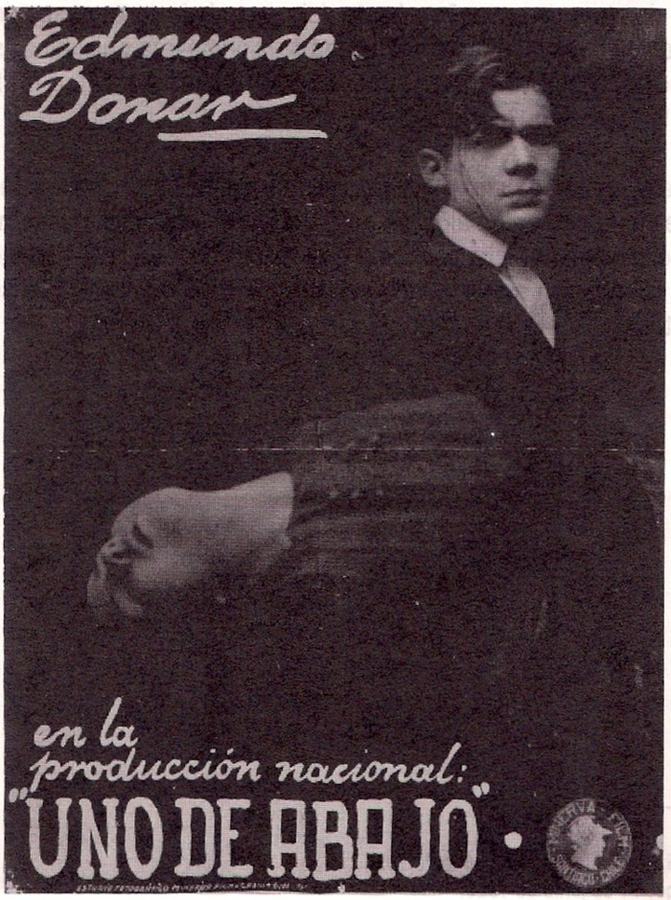
Armando Rojas Castro’s Uno de abajo arrives like a bruise you keep pressing just to remember you’re alive. Shot on grainy 16 mm stock that drinks in every scintilla of sodium streetlight, the film refuses the sentimental scaffolding that usually props up “social issue” cinema. Instead, it peels the scab off Mexico City’s underbelly and invites us to inhale the pus: the sour reek of pulque, the talcum-sweet rot of brothel roses, the metallic tang of fear. From the first frame—a close-up of Octavio’s calloused thumb tracing the cracked face of his mother’s only photograph—Castro announces his allegiance to raw flesh rather than glossy sociology.
The plot, deceptively linear, spirals inward like a conch shell whose every chamber echoes with ancestral defeat. Octavio (Hugo Beltrán, cheekbones capable of slicing papel picado) works double shifts at a brick kiln whose chimney looms like a soot-smeared monolith. His paycheck—more alchemy than math—must cover his father’s bar tab, Mariquita’s schoolbooks, and the rent for a room whose floorboards sag toward hell. Beltrán plays the role with the stoic combustion of a young Spencer Tracy, letting rage smolder behind irises the color of wet ash until the moment Goyo (Tulio Amaro, channeling a louche crocodile) drapes his arm around Mariquita’s shoulder. Then the actor’s jawline sharpens into a guillotine promise.
Carmen Ferrer’s Mariquita is no waifish lamb; her curiosity carries a feral voltage. When Goyo offers her a “modeling” card, her pupils dilate not with innocence but with the hunger of someone who has memorized every crack in the ceiling. Ferrer allows the girl’s descent to feel pre-ordained yet never pre-deserved: the first time we see her in the brothel’s crimson antechamber, she examines her newly manicured nails with the clinical detachment of an entomologist pinning a butterfly. The camera lingers on her reflection splintered by a cracked mirror—an image that rhymes later with Octavio’s fractured silhouette as he pounds on the brothel’s iron gate, howling her name like a prayer scraped raw.
Cinematographer Nena Serrano shoots chiaroscuro like a debt-collector: every shaft of light is owed to the surrounding darkness. In the sequence where Octavio stalks through the zona’s neon arteries, the lens swerves between handheld urgency and glacial tracking shots that recall Der Fall Dombronowska’s moral vertigo. A single take follows our protagonist down an alley where Christmas lights dangle like nooses, their red glow baptizing his face in infernal magenta. The color palette then flips to cadaverous blue once he steps inside Goyo’s parlor—an underworld boudoir where velvet settees sweat under infrared lamps. The visual grammar whispers: salvation will cost more than sweat; it will demand skin.
Castro’s script, co-written with Edmundo Donar, scalds every cliché it approaches. When Octavio finally confronts his booze-withered father (Armando Rojas Castro pulling double duty behind and before the lens), the dialogue swaps tearful apologies for a ledger of unpaid debts. “You drank my textbooks,” Octavio spits, “and now you’ll swallow your vomit in a cage until the pages grow back.” The line lands like a brick through stained glass, shattering any residual paternal mythology. Yet the film’s miracle lies in refusing cathartic triumph. Even after the father is checked into a rehab center whose walls sweat chlorine and penitence, Castro withholds the Kodak moment. We cut to Octavio alone on the kiln’s night shift, feeding clay into the maw of a kiln whose roar drowns out his sobs—an auditory cousin to the factory clangor in Sündige Liebe but stripped of Weimar cynicism.
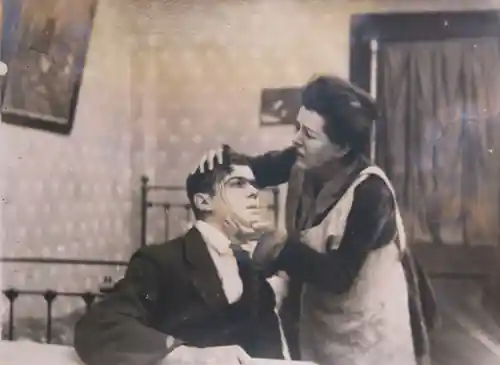
Sound designer Hugo Beltrán (doubling duty) weaponizes absence. When Mariquita is led into the brothel’s backroom, the soundtrack drops to a tinnitus hum, the girl’s own pulse supplanting score. Later, after rescue, the siblings sit on a curb at dawn; the city’s first bus screeches like a mechanical banshee, yet the film mutes it to a whisper, as if the universe itself were nursing a hangover. Compare this to the orchestral bombast of She or the nickelodeon pratfalls in Oh, You Kid; Castro’s austerity feels almost monastic.
The film’s sexual politics dodge both exploitation and puritan sermonizing. Goyo’s trafficking ring is never titillated by the camera; bodies are commodities weighed under fluorescent glare, their value calculated in centimeters of innocence left. In one harrowing montage, Castro crosscuts between a client’s Rolex ticking and Mariquita’s first menstrual stain spreading on thrift-store satin—a dialectical image worthy of Eisenstein, equating time with theft. Yet the rescue itself rejects macho fantasy: Octavio enters the brothel armed only with a rusted rebar, but victory hinges on the kiln owner’s prior phone call to a corrupt comandante whose niece once vanished into the same pipeline. The systemic critique stings precisely because it allows complicity to outrun heroism.
Where does Uno de abajo sit in the pantheon of Latin-American neo-realism? It lacks the carnival surrealism of Zatansteins Bande or the Expressionist angularity of Ein seltsames Gemälde. Instead, Castro aligns with the bruised humanism of Voices yet swaps that film’s Gothic interiors for sun-scorched alleyways. The final tableau—Octavio and Mariquita boarding a second-class bus bound for the border—echoes the open-ended exile in Arizona, but whereas that film’s pioneers chase Manifest Destiny, Castro’s siblings flee the gravitational pull of paternal failure. Their destination remains unnamed; hope, like the desert beyond the window, is both horizon and mirage.
Performance minutiae deserve raves. Watch Beltrán’s left eyebrow arch a millimeter when the rehab director quotes the 12 steps—his micro-flinch betrays a skepticism older than scripture. Or note how Ferrer lets Mariquita’s gait recalibrate post-rescue: her shoulders still sway to an inner bolero, but the rhythm now stumbles, as if her hips remember captivity even as her feet relearn freedom. Tulio Amaro imbues Goyo with the oleaginous charm of a snake-oil televangelist, yet in a late scene—counting crumpled pesos while a telenovela blares—his eyes glaze with the same abyssal boredom we saw in Octavio’s father. Evil, the film implies, is merely addiction wearing a different mask.
The screenplay’s temporal jumps—flashbacks triggered by the father’s DT hallucinations—owe a sly debt to The Thief, yet Castro keeps the editing bone-dry. A match cut from young Octavio cracking open a piñata to adult Octavio fracturing a beer bottle over a pimp’s skull yokes innocence and violence in a single breath. Production designer Nena Serrano festoons the family shack with relics of aborted dreams: a boxing trophy missing its laureate, a school certificate browned by tequila spills, a cracked radio whose dial still points to a station long silenced. These totems accrue the weight of Chekhovian props, awaiting a final act that never arrives—because in Castro’s universe, redemption is not an event but a maintenance program.
Comparisons to contemporary festival fare reveal how unfashionable Castro’s ethics have become. Where Pigs in Clover aestheticizes poverty via candy-color grading, Uno de abajo refuses beauty as alibi. Its Mexico City is a bruise, not a postcard. The score—bare-bones guitar plucks recorded in a single take—bleeds into diegetic noise: the kiln’s conveyor belt, the brothel’s plumbing, the father’s rehab ventilator. This sonic verité aligns Castro with the proletarian candor of Outwitting the Hun, yet swaps wartime jingoism for intimate class warfare.
If the film stumbles, it does so on the pebbled path of its own compassion. The subplot involving the kiln owner’s change of heart arrives late, almost like a studio note demanding a benevolent bourgeois. Yet even here Castro undercuts the trope: the boss’s charity is tax-deductible, his handshake as cold as ledger ink. Likewise, a coda showing the father’s first sober sunrise risks mawkishness, but Castro saves it by holding on the man’s trembling attempt to fold a paper airplane for his grandson—a simple act that takes four tries and ends in a crumpled sigh. Failure, the shot whispers, is a muscle memory.
Gender scholars will feast on the film’s deconstruction of machismo. Octavio’s violence is never valorized; each swing of rebar costs him cartilage and conscience. When he finally collapses outside the brothel, vomiting bile onto his own blood, the camera tilts 45 degrees—evoking the Expressionist slant of The Gates of Doom—to suggest that masculinity itself is a crooked horizon. Mariquita, meanwhile, reclaims narrative agency not through revenge but through testimony: her final voice-over, addressed to a classroom of scholarship girls, turns the brothel’s lexicon into pedagogy. The word “puta” mutates, in her mouth, into a battle-cry against silence.
Economically, the film is a masterclass in making micro-budgets look like existential frescoes. Exterior night scenes rely on available sodium vapor, turning pores into lunar craters. Interiors bloom with improvised practicals: a flashlight cupped behind a beer bottle casts jaundiced halos, while a cracked mirror fragments faces into Cubist guilt. The costuming—thrift-store shirts re-dyed in coffee grounds—achieves authenticity without the poverty-porn gloss that marred Wild Sumac. Even the end credits roll over a long take of Octavio’s boots dissolving into the kiln’s dust—an elegy for every hour sold by the working poor.
In the current cinematic landscape—where streaming algorithms feed on trauma like coyotes—Uno de abajo dares to end on a question mark. The siblings’ bus lumbers into a dawn smeared with diesel; a final close-up captures Mariquita’s palm pressed against the window, condensation forming a halo that fades before we can read her future. There is no swelling string section, no hashtag-ready uplift. Only the hum of tires against asphalt, the same frequency that lulls millions of dreamers hurtling toward borders visible only in their minds. Castro’s gamble is to trust that viewers, stripped of orchestral cues, might hear the small stubborn heartbeat of hope beneath the engine’s growl. It is a gamble that pays off, leaving us gutted yet galvanized, like survivors who owe their next breath to the simple refusal to exit the kiln of history.
Verdict: essential viewing for anyone who believes cinema still has marrow to spill. Seek it on the festival circuit, pirate it if you must, but watch it on the largest screen you can find—because every pixel of poverty, every tremor of resilience, deserves to tower over the commodified trauma that streaming platforms spoon-feed. Uno de abajo doesn’t just depict the underclass; it lets their pulse throb against your optic nerve until you stagger out blinking, ashamed of every rent check you ever complained about.
IMDb —
1925
Community
Log in to comment.