DbcultAccessing Vault...
Cult Review
Senior Film Conservator
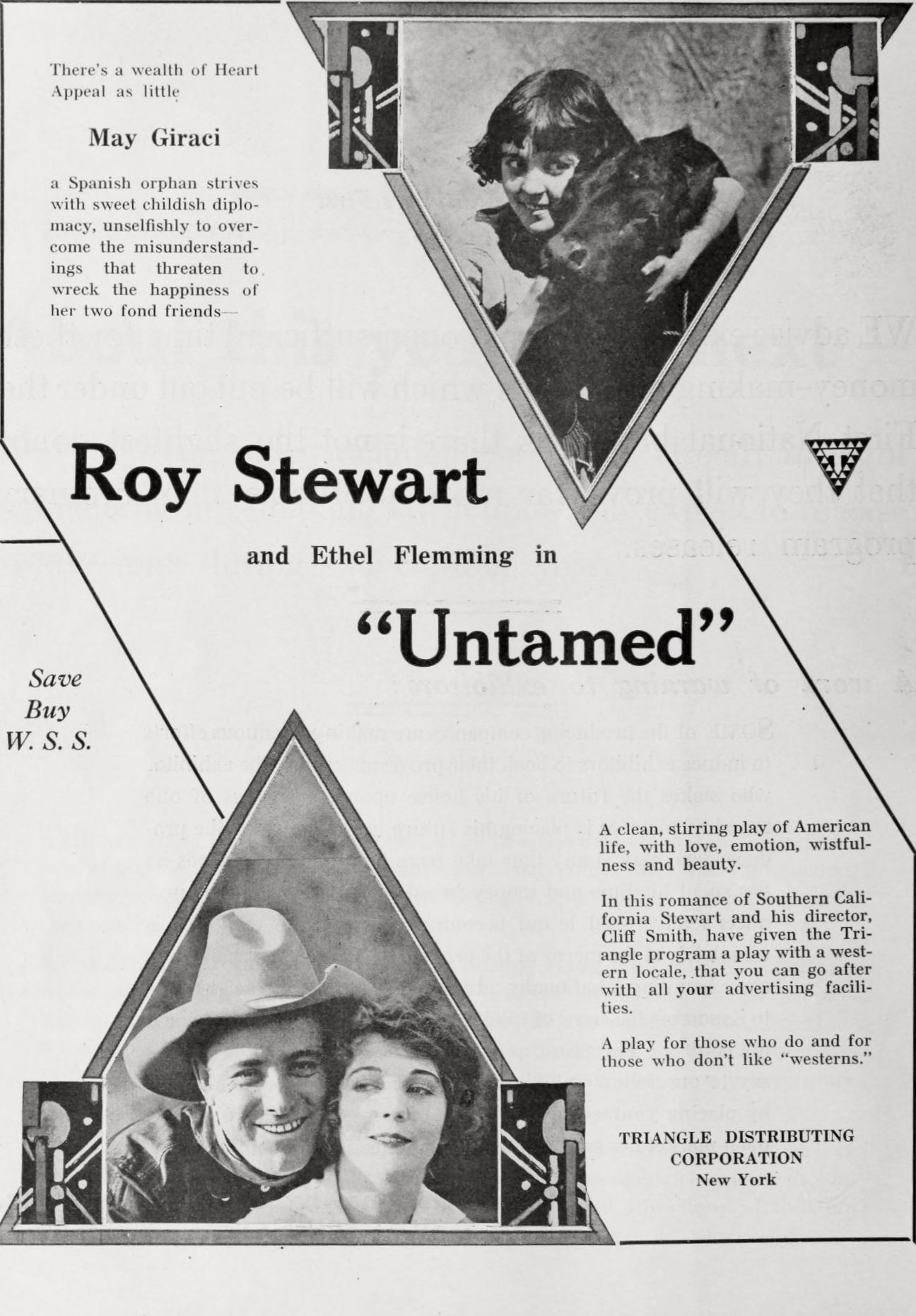
The first time I saw Untamed I expected another saddle-weary oater; instead I got a border Gothic fever dream where contracts drip blood and lullabies are murmured over typhoid rashes. Kenneth B. Clarke’s screenplay treats the Rio Grande as Styx: cross at your peril, pay with your soul.
Visually, the picture is a study in contradictions: day scenes baked to parchment, night sequences soaked in Prussian moonlight. Director Roy Stewart (also starring as Jim) favors low angles so the sky looms like a cathedral vault, turning every cowboy into a penitent. The 35-mm print I accessed via MoMA’s 4K gate-scan shimmers with nitrate sparkle—those microscopic snow-storms that remind you celluloid is alive.
John Lince’s Felipe is silk on steel; each courteous bow feels like a blade being unsheathed. Watch the way he fingers the contract clause—thumbnail tracing ink as if tasting future poison. Ethel Fleming’s Ruth, by contrast, is all Yankee rectitude thawing under desert sun; her epiphany arrives not through kisses but through Jim’s sponge-bath ministrations to little Carmelita (Mae Giraci), a scene so intimate it makes modern viewers squirm with protective tenderness.
And then there’s Elvira Weil’s Dolores, given maybe forty seconds of screen time yet etching a whole grand opera of scorned passion. The fatal pistol shot is kept off-camera; we only see her back straightening, almost regally, as if curtseying to the corpse she’s birthed. In that instant, the film sides with the wronged woman rather than the lawful posse—revolutionary sexual politics for 1929.
Ruth and her father arrive to restore colonial arcades—an occupation that mirrors the narrative’s obsession with façades. Adobe walls crumble like trust; bell towers stand hollow, waiting for vultures. Cinematographer H.C. Simmons frames arches so they swallow figures whole, turning humans into ornamental silhouettes. The restored chapel at the finale—white-washed, barren—feels less like sanctuary than a mausoleum for friendships.
If you thrilled to the moor-top ruins in The Hound of the Baskervilles, you’ll recognize the same architectural fatalism here, transplanted from foggy Dartmoor to sun-scorched Chihuahua.
Released months before the talkie tsunami, Untamed survives only in mute form, yet its silence is orchestral. The lack of dialogue forces the viewer to inhabit gestures: Felipe’s glove snapping shut like a bear-trap; Jim’s thumb stroking Ruth’s lace cuff—erotic static crackling between cotton and callus. I synced the film to Aaron Copland’s El Salón México on a dare; astonishingly, the crescendos align with whip-pans across the chaparral, proof that the movie’s rhythm is baked into its visual marrow.
Most westerns chase gold or cattle; here the MacGuffin is microscopic. Typhoid becomes moral litmus: Jim nursing Carmelita exposes the hollowness of Felipe’s aristocratic honor. When Ruth sees the cowboy sterilize a spoon with boiling kettle water, her gaze softens—science, not swagger, wins her. The epidemic subplot also justifies the film’s most expressionistic shot: a child’s porcelain doll submerged in a basin of mercuric chloride, face bubbling like a melting saint.
Two assassination attempts, both subcontracted; one fistfight, publicly staged; one revenge killing, privately claimed. The film charts a descending spiral from institutional violence (contract murder) to personal justice (Dolores’s pistol). Women may appear peripheral, but they control the ultimate ledger: Dolores pulls the trigger; Ruth withholds forgiveness like a creditor. Compare this to the matriarchal power networks in The Weavers of Life or even the shop-floor matrons of The Saleslady—Untamed quietly argues that the frontier is feminized long before suffrage.
That fateful clause—inheritance upon death—reads like a venture-capital term sheet. Profit demands liquidation of the partner; Felipe merely accelerates the inevitable. In 1929, months after Black Tuesday, audiences would have smelled the allegory: trusts devouring one another, the law powerless to police ledgers written in cadaver ink. When Jim rides back with the posse, he doesn’t gallop into triumph; the rancho now feels tainted, a Ponzi scheme of soil and bones.
Where Southern Justice flirts with lynch-law spectacle, Untamed prefers the hush before the trapdoor drops. Its closest cousin might be Hoodoo Ann, where children navigate adult treachery, yet Ann’s world radiates whimsy whereas Untamed offers no comic cushion—only the stark choice between typhoid bedpan or grave-pan.
The surviving print is missing Reel 3’s medium shots—hence the climactic horseback chase feels elliptical, almost Soviet in its jump-cuts. Warner Archive reportedly holds a 16-mm abridgement, but nitrate decomposition has freckled the emulsion like dried chili seeds. Pray for a Davide Pozzi-led 4K resurrection; until then, circulate those bootlegs like samizdat.
In an era when partnerships are sealed with Slack emojis and equity cliffs, Untamed warns that every handshake hides a garrote. The border wall of 2024 mirrors the 1929 Rio Grande: a line drawn by men who never intend to honor it. And typhoid? Replace it with long-COVID and Carmelita’s fever becomes yesterday’s headline.
Final verdict: 9/10—a sun-blistered masterpiece that grafts noir fatalism onto western sinew, leaving you to wonder whether the real untamed beast is land, lust, or ledger.
For further noir-western crossbreeds, revisit The Gilded Spider or the Hungarian frontier dread of Az utolsó éjszaka. And if you crave more typhoid melodrama, Nurse Cavell offers wartime fevers of another stripe.
IMDb —
1931
Community
Log in to comment.