DbcultAccessing Vault...
Cult Review
Senior Film Conservator
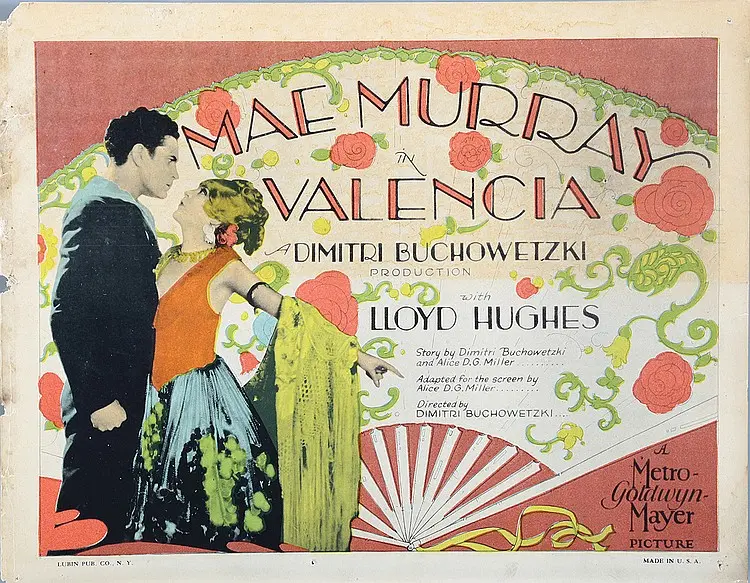
Does the silent spectacle of 1926 still hold a candle to modern romance? Short answer: yes, but only if you view it as a cultural artifact rather than a narrative powerhouse. This film is for those who worship at the altar of the silent screen's 'Golden Age' and for historians of the Hollywood star system; it is certainly not for anyone who requires psychological realism or a plot that moves faster than a tectonic plate.
Valencia is a fascinating relic. It represents the exact moment when the American film industry realized that a hit song could sell a movie just as effectively as a famous face. The song 'Valencia' was the top track in the U.S. that year, and the film feels like a 90-minute music video for a tune that audiences already knew by heart. It works. But it’s flawed.
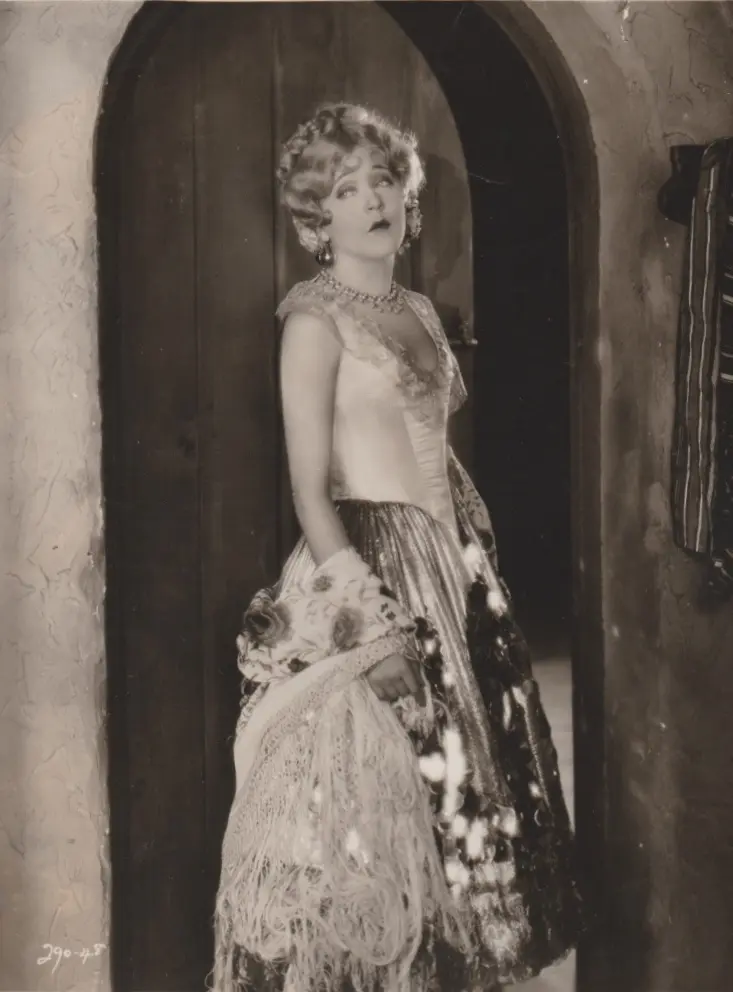
1) This film works because Mae Murray’s screen presence is so intensely stylized that it borders on the hypnotic. 2) This film fails because the script by Dmitriy Bukhovetskiy and Alice D.G. Miller is remarkably thin, serving only as a clothesline for Murray to hang her various emotional poses. 3) You should watch it if you want to witness the peak of the 1920s 'exotic' romance trend before the talkies brought everything down to earth.
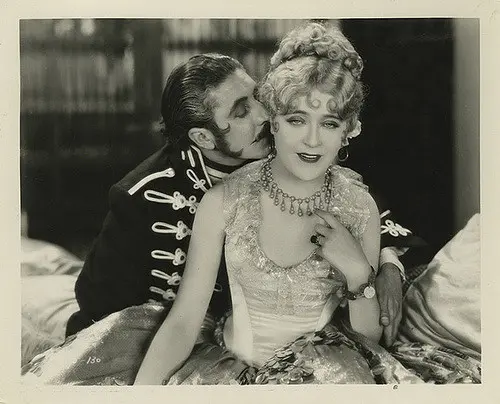
Dimitri Buchowetzki, fresh from his stint at Paramount, brought a certain European flair to the production that elevates it above standard melodrama. He understands how to frame a face, and in Mae Murray, he had the ultimate subject. Murray, known for her 'bee-stung' lips and theatrical gestures, doesn't just act in Valencia; she performs a ritual of adoration. Every tilt of her head and flick of her fan is calculated to remind the viewer why she was once the highest-paid woman in cinema.
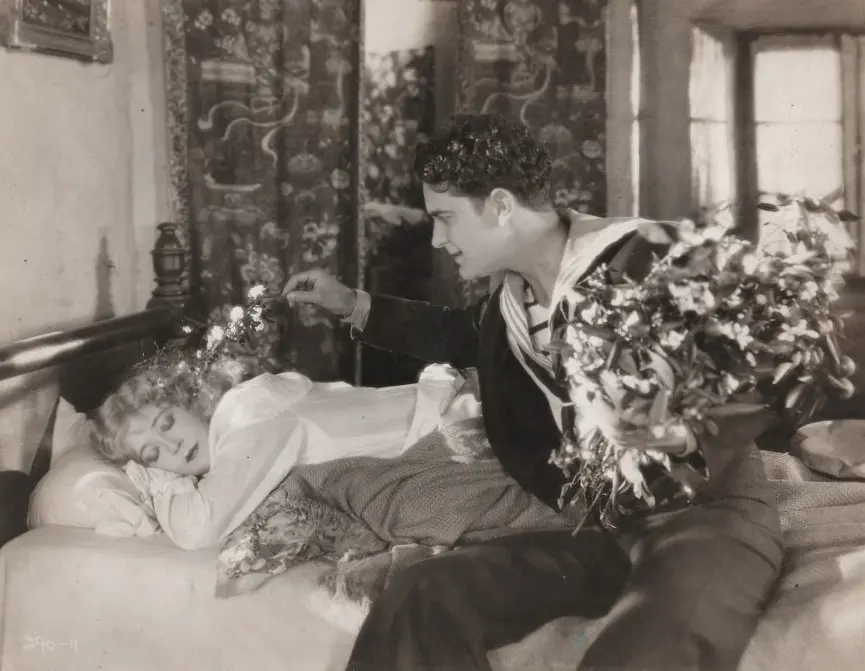
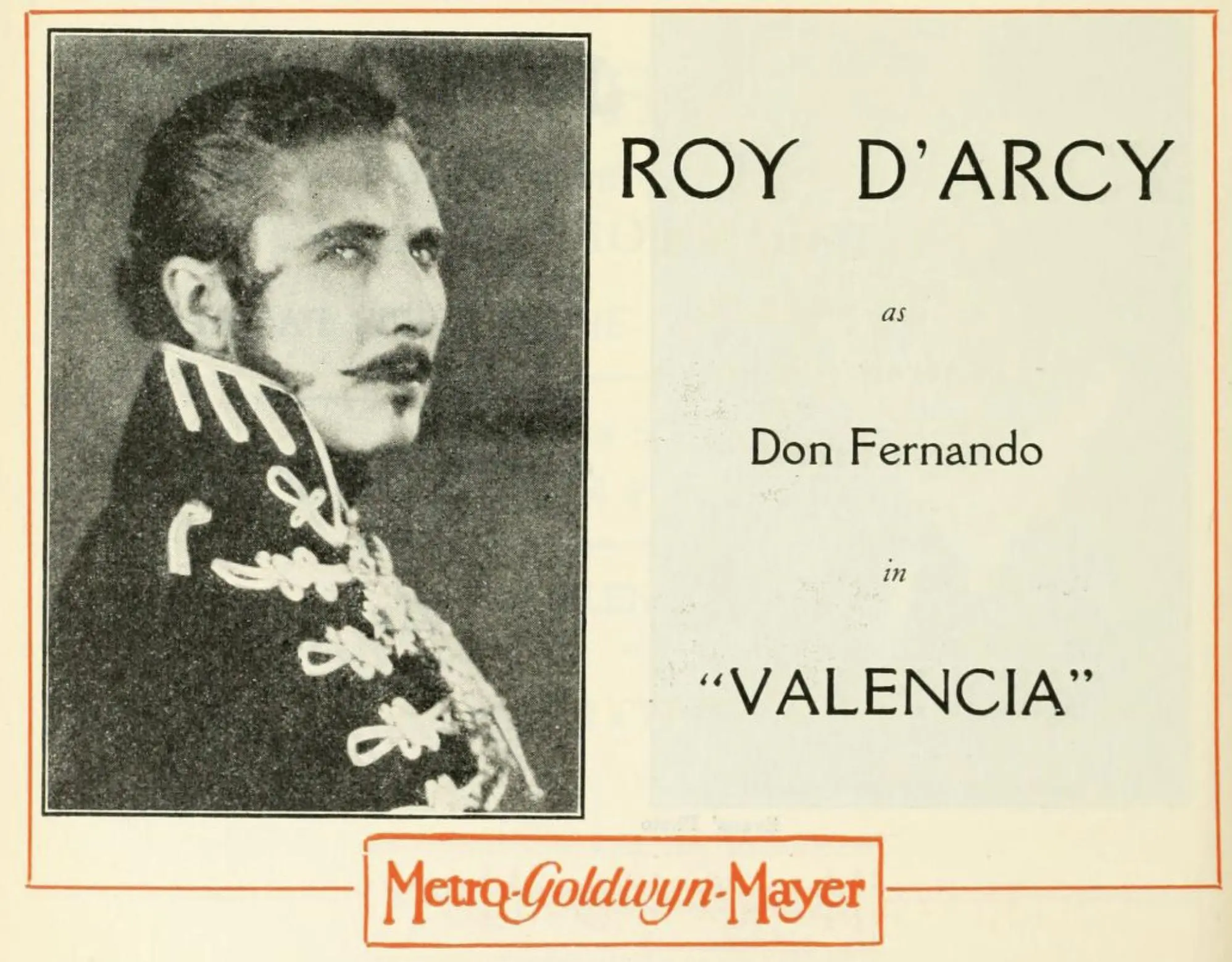
Take, for instance, the sequence where she first encounters the sailor, played by Lloyd Hughes. The lighting is soft, almost ethereal, contrasting sharply with the more grounded, maritime grit found in contemporary films like The Sea Master. While Lloyd Hughes provides a solid, if somewhat bland, heroic foil, the real sparks fly when Murray shares the screen with Roy D'Arcy. D'Arcy, playing the Governor, is the quintessential silent movie villain. His sneer is a work of art in itself, providing a sharp edge to the otherwise sugary proceedings.
The pacing of Valencia is peculiar. It lacks the frantic energy of a comedy like His Own Medicine or the slapstick rhythm of Felix Goes West. Instead, it moves with the deliberate, swaying motion of a waltz. This is intentional. The film was designed to sync with the audience's familiarity with the title song. Every major emotional beat feels like a crescendo in a musical score, even in a silent medium.
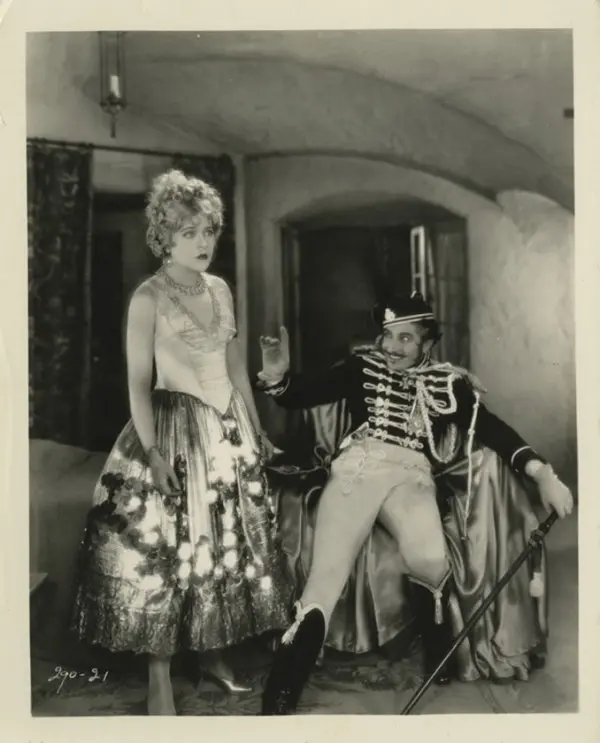
However, this reliance on mood over substance can be exhausting. There are moments where the plot simply stops to allow Murray to dance or emote. Unlike the more balanced narrative found in Pals First, Valencia is unashamedly a star vehicle. It doesn't care about logic; it cares about the curve of a shoulder and the shadow of a lace mantilla against a white wall. It is a ghost of a film, haunting the archives with its sheer aesthetic confidence.
For modern viewers, one of the primary draws of Valencia is the uncredited appearance of Boris Karloff. Years before he would become the definitive face of horror in Frankenstein, Karloff was a working extra and bit-part player. Spotting him in this film is like finding a hidden Easter egg in a classic painting. His presence adds a layer of historical irony to the film; while Murray was the sun around which the production orbited, it was the uncredited Karloff who would eventually leave the more permanent mark on cinema history.
His brief appearance serves as a reminder of the vast, interconnected world of the 1920s studio system. It’s a world where you might find future legends hiding in the background of a film that was largely a vehicle for a star whose name is now mostly forgotten by the general public. This contrast is stark when compared to the more straightforward ensemble casting of a film like Sold at Auction.
If you are looking for a deep, philosophical exploration of the human condition, look elsewhere. Valencia is a film of surfaces. It is about the beauty of the image and the charisma of the performer. However, as a study in 1920s marketing and the power of the 'theme song' tie-in, it is essential viewing. It tells us more about the tastes of 1926 audiences than a dozen more 'serious' films could.
The film is a triumph of style over substance. It doesn't try to be anything other than a beautiful, romantic diversion. In an era where we often demand our films to be 'important,' there is something refreshing about a movie that just wants to be a love song. It is a visual representation of a melody, and in that specific goal, it succeeds wildly.
Buchowetzki’s direction is surprisingly sophisticated. He uses deep focus and clever set design to make the Hollywood backlots feel like the winding alleys of Spain. The cinematography captures the high-contrast shadows that were a hallmark of the era, reminiscent of the atmospheric work seen in Mystic Faces. There is a specific scene involving a balcony and a rose that, while cliché today, is executed with such precision that it still carries a romantic charge.
The editing, handled with the typical rhythm of the mid-20s, allows the viewer to linger on Murray’s expressions. This is a film that understands the 'Kuleshov Effect'—it knows that by cutting from a close-up of Murray’s longing face to a shot of the sea, the audience will fill in the emotional blanks. It is manipulative, yes, but it is expertly done. It lacks the experimental edge of Trapped in the Air, but it makes up for it with sheer polish.
Valencia remains a significant chapter in the history of the box office. It was a massive hit, proving that the American public was hungry for escapism and 'Latin' romance. While films like Cheap Kisses explored the modern jazz-age morality of the time, Valencia looked backward to a mythical, romanticized past. It offered a world of chivalry, jealousy, and grand gestures that felt worlds away from the reality of 1920s urban life.
The rumors of surviving prints continue to tantalize film historians. To see this film in a restored, high-definition format would be a revelation, as much of its power lies in the subtle textures of the costumes and the interplay of light on the sets. Even in its current state, the film’s influence can be seen in later musical romances. It paved the way for the 'integrated' musicals of the 1930s, even if it didn't have a single word of spoken dialogue.
Valencia is not a masterpiece of storytelling, but it is a masterpiece of star-power. It is a vibrant, albeit hollow, spectacle that captures the essence of a bygone era of filmmaking. If you can surrender yourself to its slow, rhythmic pulse and Mae Murray’s overwhelming screen presence, you will find much to admire. It is a beautiful, dusty postcard from 1926—fragile, stylized, and undeniably charming. It works. But it’s flawed. Ultimately, it is a must-watch for anyone who wants to understand the DNA of the Hollywood blockbuster.
IMDb 7.3
1936
Community
Log in to comment.