DbcultAccessing Vault...
7.4/10
Senior Film Conservator
A definitive 7.4/10 rating for a film that redefined the boundaries of cult cinema. Vanity Fair remains a cornerstone of transgressive art.
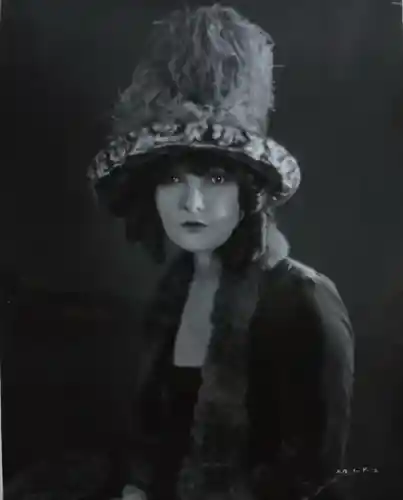
To approach Hugo Ballin’s 1923 adaptation of Vanity Fair is to step into a meticulously constructed diorama of early 19th-century mendacity. Unlike the more sanitized versions of William Makepeace Thackeray’s prose that would follow in the sound era, this silent rendition captures the raw, pantomime energy of the social climber. Mabel Ballin, the director's wife and muse, portrays Becky Sharp not as a mere villainess, but as a survivalist navigating a world that offers no safety net for the unlanded woman. The film operates as a visual symphony of gestures, where a flick of a fan or a lingering gaze carries the weight of a thousand-page novel. In an era where The Interloper explored the fringes of societal acceptance, *Vanity Fair* dives headlong into the center of the storm.
Mabel Ballin’s performance is a revelation of restraint and calculated outburst. In the 1920s, the temptation for over-the-top theatricality was omnipresent, yet Ballin chooses a path of subtle subversion. Her Becky Sharp is a woman who understands that her beauty is a depreciating asset. Every interaction with the men of the Crawley and Sedley families is a transaction. When she fails to secure Joseph Sedley, the disappointment is written not in tears, but in a hardening of the jaw—a transition from hope to pure, unadulterated strategy. This performance stands in stark contrast to the more melodramatic turns seen in The Secret Orchard, where the emotional stakes were often signaled with much less nuance.
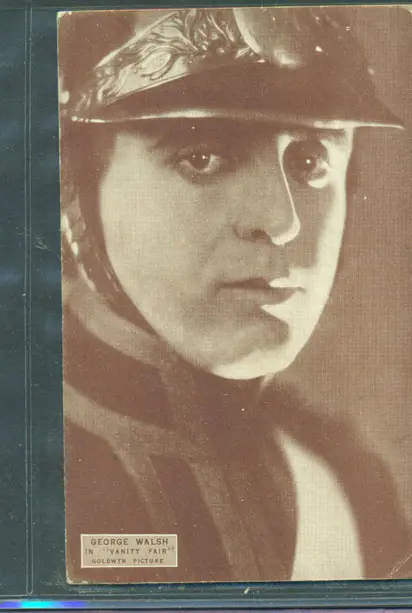
The chemistry between Mabel Ballin and George Walsh (Rawdon Crawley) provides the film's emotional, albeit fractured, core. Rawdon is a man of limited intellect but immense loyalty, making him the perfect foil for Becky’s mercurial nature. Their union, born of a mixture of genuine attraction and mutual desperation, becomes the film’s most poignant tragedy. As the Crawley family turns their backs on the couple, we see the first cracks in Becky’s armor. The opulence she craves is always just out of reach, a carrot dangled by a society that demands perfection from its parvenus while forgiving every sin of its peers.
Hugo Ballin was more than a director; he was an artist and an architect, and his background informs every frame of *Vanity Fair*. The sets are not merely backgrounds; they are psychological landscapes. The contrast between the cramped, dusty rooms of Becky’s early life and the cavernous, cold halls of the Crawley estate speaks volumes about the isolation of the upper classes. The use of shadow during the scenes involving Lord Steyne (played with a chilling, predatory grace by Hobart Bosworth) evokes the gothic undercurrents of the narrative. Steyne is the ultimate predator in this jungle, and the way Ballin frames him—often looming over Becky or appearing from the darkness—suggests a Faustian bargain that can only end in ruin.
This visual sophistication puts the film in conversation with other high-budget silent dramas of the time, such as The Undying Flame. However, where that film relied on historical grandeur for its own sake, Ballin uses it to highlight the emptiness of Becky’s triumphs. The famous Waterloo ball scene is a masterclass in tension. As the soundless thunder of Napoleon’s cannons begins to shake the foundations of Brussels, the petty jealousies and romantic intrigues of the characters feel both absurd and deeply human. It is here that Becky’s affair with George Osborne (Harrison Ford—the silent era’s quintessential leading man) reaches its peak, only to be cut short by the grim reality of the battlefield.
When placed alongside contemporaries like Circumstantial Evidence, *Vanity Fair* distinguishes itself through its cynical worldview. Most films of the early twenties felt a moral obligation to punish their protagonists with a heavy hand. While Becky is indeed cast out, her eventual return to a 'quiet life' in London is handled with a sophisticated ambiguity. Is she truly reformed, or has she simply adapted to a new, less exhausting strategy? The film avoids the easy moralizing found in Tempest and Sunshine, opting instead for a character study that acknowledges the complexity of human motivation.
Furthermore, the technical execution of the film—the pacing, the editing by Hugo Ballin himself—shows a maturity that was beginning to define the late silent period. It lacks the frantic energy of Red Hot Rivals, choosing instead a deliberate, almost literary pace. This allows the viewer to absorb the intricate social hierarchies at play. The film understands that Becky’s struggle is not just against people, but against an entire system of inheritance and reputation. In this way, it mirrors the thematic depth of Two Men of Sandy Bar, though it swaps the rugged West for the suffocating drawing rooms of Mayfair.
The crux of the film’s second half is the relationship between Becky and Lord Steyne. In the silent medium, the transactional nature of their bond is portrayed through the exchange of jewelry and the subtle invasion of physical space. When Rawdon returns to find his wife and the Lord in a compromising situation, the ensuing confrontation is a triumph of silent acting. There are no title cards needed to explain the shattered trust or the sudden, violent realization of Becky’s true position. She is not a member of the elite; she is their plaything. This sequence is as harrowing as anything found in The Desire of the Moth, highlighting the fragility of the social climber's status.
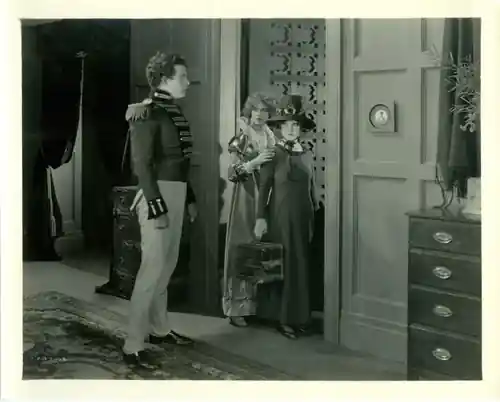
The subsequent exile of Becky Sharp is filmed with a haunting loneliness. We see her wandering the Continent, a ghost of her former self, hiding behind assumed names. The transition from the glittering balls of London to the drab boarding houses of Europe is handled with a stark, realistic lighting that strips away the glamour of the first two acts. It is during this period that the film explores the concept of the 'fallen woman' with more empathy than many of its peers. Unlike the judgmental tone of The Scoffer, Ballin’s camera remains an observer, perhaps even a sympathetic one, as Becky realizes the cost of her vanity.
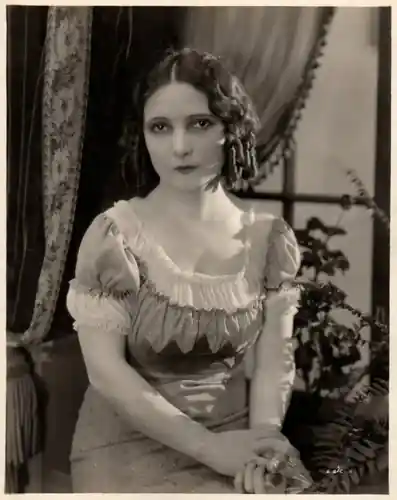
The final act, where Becky brings together Amelia Sedley (Eleanor Boardman) and Captain Dobbin, is often criticized in literary circles as being too neat, but in Ballin’s film, it feels like a final, weary performance. Becky’s intervention is her only altruistic act, yet it is performed with the same theatrical flair as her deceits. It is as if she has finally understood that the only way to win in Vanity Fair is to stop playing the game. Eleanor Boardman’s Amelia is the perfect antithesis to Becky—passive, grieving, and almost pathologically loyal. Their reconciliation is a merging of two different types of female suffering in the 19th century.
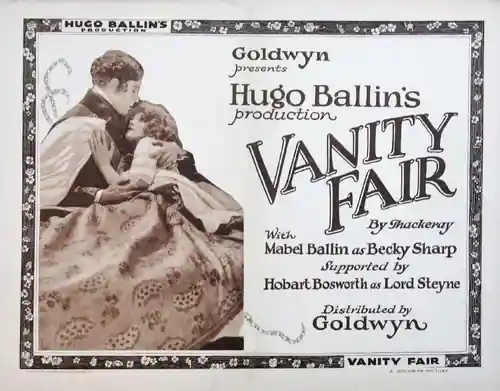
By the time Becky returns to London to live her 'quiet life,' the audience is left with a profound sense of exhaustion. The film doesn't offer a celebratory ending. Instead, it offers a reflection on the futility of the chase. The 'quiet life' is not a reward; it is a retreat. Compared to the lighthearted resolutions of Oh Mary Be Careful, *Vanity Fair* leaves a bitter, lingering aftertaste. It is a film that demands to be watched with an eye for the cynical, a heart for the ambitious, and an appreciation for the artistry of a director who understood that the greatest dramas are often the ones played out in silence behind closed doors.
In the broader context of 1923, a year that saw films like Slaying the Hippopotamus (a title that suggests far more action than the domestic warfare of Thackeray), *Vanity Fair* stands as a monument to psychological cinema. It eschews the spectacle of the era for something far more dangerous: the truth about human greed. While it may not have the exotic allure of With Our King and Queen Through India, its exploration of the internal empire of the soul is far more captivating. This is a film that rewards the patient viewer, the one who can see past the grain of the film stock to the timeless struggle for status that defines us all.
Ultimately, Vanity Fair is a triumph of the silent era’s ability to adapt complex literature. Hugo Ballin didn't just film a book; he translated a philosophy into a visual language. Whether comparing it to the delicate character work in Caleb Piper's Girl or the atmospheric dread of La disfatta dell'Erinni, this 1923 masterpiece remains a vital, if often overlooked, piece of cinematic history. It is a biting, beautiful, and thoroughly disenchanted look at the world, proving that even in silence, the cry of the social climber is deafening.
IMDb —
1919
Community
Log in to comment.