DbcultAccessing Vault...
Cult Review
Senior Film Conservator
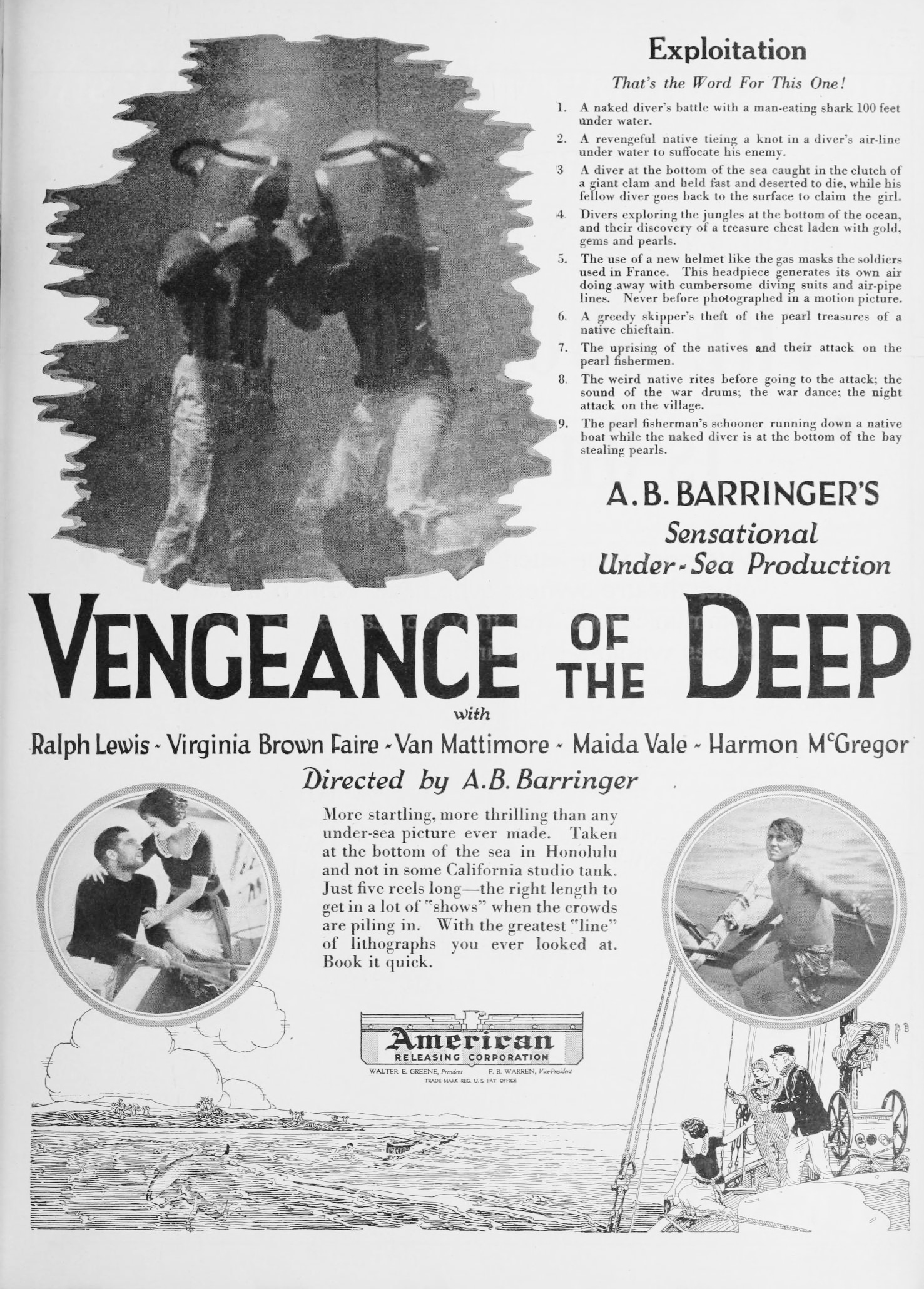
The 1923 silent opus Vengeance of the Deep stands as a monumental, if often overlooked, artifact of early twentieth-century maritime melodrama. It is a film that breathes through the brine, capturing a specific intersection of colonial anxiety and the raw, unyielding spectacle of the Pacific. Directed with a keen eye for the visceral, the film eschews the mere theatricality of its contemporaries to plunge the viewer into a world where the horizon is both a prison and a promise. Unlike the more static compositions found in Panopta I, this production utilizes the fluidity of the ocean to mirror the moral instability of its protagonists.
Captain Musgrove, portrayed with a chilling, staccato rigidity by Ralph Lewis, functions as the quintessence of the exploitative pioneer. His island is not a paradise but a corporate fiefdom. The exclusion of the native population from the pearl-diving enterprise serves as a scathing, perhaps unintentional, critique of the era's racial hierarchies. When Tagu enters the frame, we see a character fueled by a righteous indignation that transcends the simple 'villain' tropes of the 1920s. His desire to kill Frederico is not born of innate savagery but is a direct response to the systemic disenfranchisement orchestrated by Musgrove. In many ways, the tension here is more grounded than the ethereal mysteries of The Sleep of Cyma Roget, focusing on the material reality of theft and labor.
Richard Arlen’s Jean is a fascinating study in the 'beachcomber' archetype—the white man who has 'gone to seed' in the tropics, yet retains a core of chivalry. His rivalry with Frederico (Harmon MacGregor) is the engine of the film’s second act. While Frederico represents the polished, sanctioned face of Musgrove’s operation, he is hollow, driven entirely by the prospect of upward mobility through a marriage to Ethel (Virginia Brown Faire). Ethel herself is more than a mere trophy; she represents the moral compass of the island, gravitating toward Jean’s authenticity over Frederico’s manufactured competence. This romantic triangle is handled with a sophistication that rivals the interpersonal dynamics in In Walked Mary, though the stakes here are significantly more lethal.
The centerpiece of the film remains the harrowing underwater sequence. For 1923, the cinematography is nothing short of revolutionary. When Jean and Frederico discover the treasure chest, the camera captures the claustrophobic weight of the water. The moment Jean is trapped by the giant clam is a masterclass in suspense. It is a primitive, biological horror that feels more immediate than the choreographed conflicts in The Feud. Frederico’s decision to abandon Jean is the film’s moral nadir. The bubbles rising from Jean’s diving helmet as he is left to drown represent the expiration of Frederico’s humanity. It is a sequence that lingers in the mind, a precursor to the survivalist cinema of later decades.
The screenplay by Julian La Mothe and Agnes Parsons is tight, avoiding the sprawling, unfocused energy of Zudora. Every scene contributes to the eventual reckoning. The pacing builds with a tidal inevitability. Visually, the film utilizes natural light to contrast the sun-bleached shores with the murky, indigo depths of the Pacific. This duality serves the theme of hidden sins—what is buried in the deep will eventually be washed ashore. The editing during the climactic wedding disruption is particularly effective, cutting between the celebratory atmosphere of the Musgrove estate and the bedraggled, vengeful specter of Jean approaching from the surf.
When examining Vengeance of the Deep against the backdrop of its era, one cannot help but notice its preoccupation with 'Jinx' and fate. Unlike the comedic misfortunes of Jinx, the bad luck here is a byproduct of human malice. The film shares a certain thematic DNA with Life's Shadows, where the past acts as a tether that prevents characters from escaping their true natures. Frederico believes he can bury his cowardice in the ocean, but Jean’s return proves that the shadows of one’s actions are permanent. Even the smaller, more domestic dramas like El pañuelo de Clarita or the satirical Tacks and Taxes lack the sheer existential gravity present in this nautical struggle.
Jean’s survival and subsequent interruption of the wedding is the ultimate catharsis. It is a moment of pure cinematic justice. He does not merely return to claim Ethel; he returns to dismantle the entire power structure Frederico tried to inherit. By becoming the new chief diver, Jean reconciles the divide between the beachcomber and the professional, the native interests and the diving enterprise. This resolution is far more satisfying than the often-convoluted endings of silent mysteries like The Mysterious Miss Terry or the tragic overtones of O Crime de Paula Matos.
Virginia Brown Faire brings a luminous quality to Ethel, avoiding the damsel-in-distress tropes that plagued films like Two-Gun Betty. Her performance is subtle, relying on micro-expressions that the camera captures with surprising clarity for the time. Bowditch M. Turner’s Tagu is also a standout, providing a necessary counterpoint to the white-centric conflict. The direction ensures that the island feels like a lived-in space, a character in its own right. It captures the 'bohemian' spirit of the South Seas while acknowledging the rot beneath the surface, a balance also attempted in Amor e Boemia, but executed here with far more grit and realism.
Ultimately, Vengeance of the Deep is a testament to the ambition of early silent filmmakers. It tackled complex themes of class, race, and survival within the framework of a popular adventure story. While it may not have the surrealist pedigree of Dr. Schotte or the grand artifice of The Royal Imposter, it possesses a raw, salt-sprayed power that remains undiminished. It is a film that demands to be seen not just as a historical curiosity, but as a vibrant, breathing piece of storytelling that understands the dark, crushing pressure of the human heart as well as it understands the pressure of the ocean floor.
Reviewer Note: The restoration of the underwater sequences remains a priority for film historians, as they represent some of the most daring technical achievements of the 1920s.

IMDb —
1924
Community
Log in to comment.