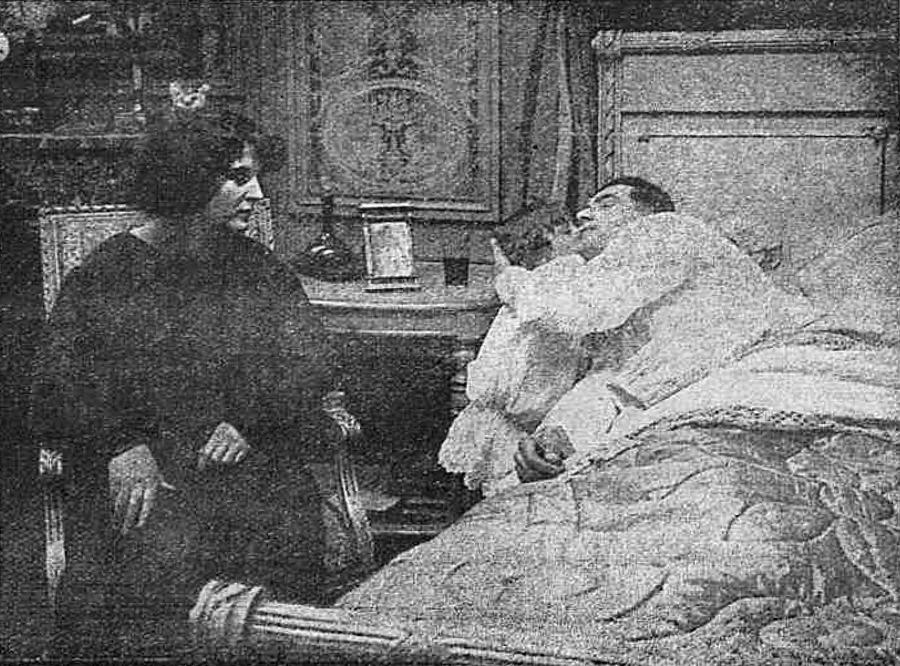
The Nocturnal Metamorphosis of the Discarded
Cinema in 1923 was a medium of profound transition, and Sa gosse stands as a towering testament to the French silent era's ability to blend social realism with high-octane melodrama. Directed by the visionary Henri Desfontaines, this film is not merely a story of abandonment; it is a jagged, beautifully rendered portrait of a woman’s resilience in a world that views her as disposable. The narrative arc, which takes our protagonist from the pastoral innocence of the countryside to the decadent, often cruel, limelight of the cabaret, mirrors the broader societal shifts of the early 20th century.
Unlike the more sanitized American narratives found in films like Miss George Washington, Sa gosse refuses to shy away from the grime and the grit of poverty. The opening sequences, bathed in a naturalistic light that evokes the paintings of Millet, establish a sense of peace that is destined to be shattered. When the father of her child vanishes, the shift in tone is palpable. The lighting grows more expressionistic, the shadows longer, and the atmosphere more suffocating.
Rolla Norman and the Weight of Maternal Pathos
The performance of Rolla Norman is a revelation of understated agony. In an era often characterized by histrionic gesticulation, Norman brings a quiet, simmering intensity to the role. Every movement is weighted with the burden of her child—the 'gosse'—who serves as both her anchor and her impetus. Her transition into a cabaret singer is handled with a sophisticated nuance; she doesn't just change her clothes, she changes her very soul. This transformation is far more complex than the character evolutions seen in The Probation Wife, where redemption often feels like a preordained conclusion.
In Sa gosse, the cabaret is portrayed with a dualistic lens. It is a site of exploitation, yes, but it is also a site of agency. Under the sea-blue hues of the stage lights, Norman’s character finds a voice—literally and figuratively. The film uses the cabaret setting not just for spectacle, but as a crucible where the protagonist's maternal instincts are tested against the allure and the danger of the Parisian demimonde. This thematic depth puts it in conversation with Tinsel, though Desfontaines’ work possesses a far more rigorous emotional core.
The Supporting Cast: A Tapestry of French Excellence
The ensemble cast reads like a 'who's who' of early French cinema. Charles Vanel, even in this early stage of his legendary career, possesses a magnetism that is impossible to ignore. His presence adds a layer of gravitas to the film, grounding the more melodramatic flourishes in a sense of lived reality. Suzanne Bianchetti and Elmire Vautier provide essential counterpoints to Norman’s journey, representing the various strata of a society that is both fascinated by and repelled by the 'fallen' woman.
The interactions between these characters are filmed with a kinetic energy that was ahead of its time. Desfontaines employs close-ups that feel invasive, forcing the audience to confront the raw emotion of the characters. This isn't the distant, theatrical staging found in The Marble Heart; this is cinema that wants to get under your skin. The chemistry between the cast members creates a world that feels inhabited and historical, much like the familial tensions explored in My Old Dutch, but with a distinctly Gallic cynicism.
Visual Language and Chiaroscuro Storytelling
Visually, Sa gosse is a feast of chiaroscuro. The cinematographer utilizes the interplay of light and dark to symbolize the protagonist's internal struggle. The dark orange flickers of the cabaret lamps contrast sharply with the cold, sea blue of the Parisian streets at night. This color palette (as envisioned in a modern restoration or through the lens of critical analysis) highlights the dichotomy between the warmth of the mother’s love and the coldness of the world she must inhabit. It reminds one of the visual starkness in Historien om en gut, yet with a more flamboyant, theatrical edge.
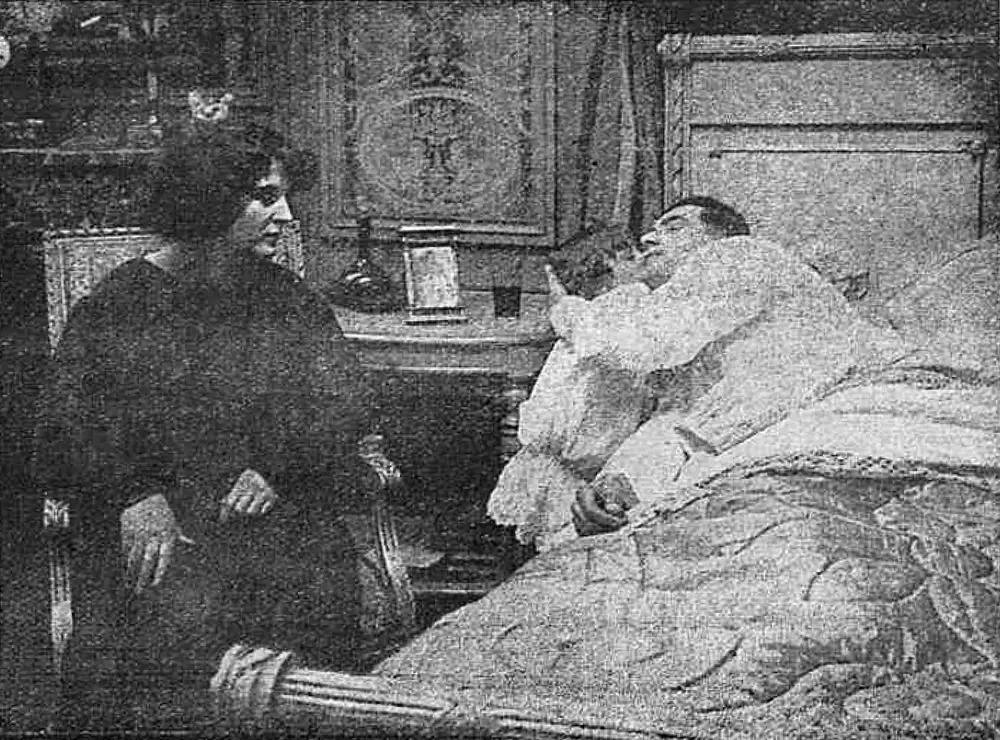
The set design is equally impressive. The cabaret is a labyrinth of mirrors and smoke, a place where identity is fluid and often deceptive. In contrast, the rural scenes are shot with a wide-angle lens that emphasizes the isolation of the countryside. This visual storytelling is far more sophisticated than the contemporary The Ranger, which relied more on external action than internal atmosphere. Desfontaines understands that the true drama lies in the flicker of a candle or the way a shadow falls across a tired face.
Comparative Analysis: The Fallen Woman Across Borders
When comparing Sa gosse to international contemporaries like It Happened to Adele or The Bondage of Barbara, a striking difference emerges in the treatment of morality. While the American and British films of the era often felt compelled to punish their protagonists or offer a hollow moral lesson, Sa gosse treats its heroine with a profound sense of dignity. She is not a victim of her own 'sin,' but a victim of a socio-economic system that offers no safety net for abandoned mothers.
This film shares a certain DNA with Oltre l'amore and L'orgoglio in its operatic emotional scale, but it remains uniquely French in its preoccupation with class and the spectacle of the stage. Even in its most tragic moments, there is a sense of 'joie de vivre'—not a happiness, but a fierce commitment to living, no matter the cost. It lacks the pastoral sentimentality of Blue Grass, opting instead for a more urban, cynical edge that feels remarkably modern.
The Legacy of the Child: A Motif of Hope
The 'gosse' of the title is more than a plot device; the child is the moral compass of the film. Every decision, every song sung in a haze of smoke, and every rejection of a wealthy suitor is done for the child. This singular focus gives the film a structural integrity that many silent melodramas lack. In The Lost Princess, the child is a McGuffin; in Sa gosse, the child is the heartbeat. The final act of the film, which I will not spoil, moves away from the expected tropes of the era to deliver something far more poignant and earned.
The film’s exploration of the mother-child bond is as visceral as that in A Daughter of Uncle Sam, but it is stripped of the nationalist fervor, focusing instead on the universal struggle of the marginalized. It is a story that resonates across decades, reminding us that the struggle for survival and the desire to protect one's own are the most fundamental of human experiences. The sea-blue melancholy that permeates the final frames leaves a lasting impression, a haunting reminder of the ghosts we carry with us.
Cinematic Craftsmanship and Technical Prowess
Technically, the film is a marvel for 1923. The editing by Desfontaines and his team shows an understanding of rhythm that was rare at the time. The cross-cutting between the mother’s performance and the child’s precarious situation creates a sense of tension that is almost unbearable. This mastery of pace is something that contemporary films like The Mate of the Sally Ann struggled to achieve. The use of tinting and toning—yellows for the stage, deep oranges for the fireside, and sea blues for the night—creates a sensory experience that transcends the limitations of silent film.
In the grand pantheon of silent cinema, Sa gosse deserves a seat alongside the works of Gance or Epstein. It is a film that understands the power of the image to convey what words cannot. It is a symphony of light and shadow, a dance of despair and hope, and ultimately, a powerful indictment of a society that fails its most vulnerable. For anyone interested in the evolution of cinematic storytelling, this film is an essential, if heartbreaking, watch. It is a work of art that refuses to be forgotten, much like the resilient woman at its center.