DbcultAccessing Vault...
Cult Review
Senior Film Conservator
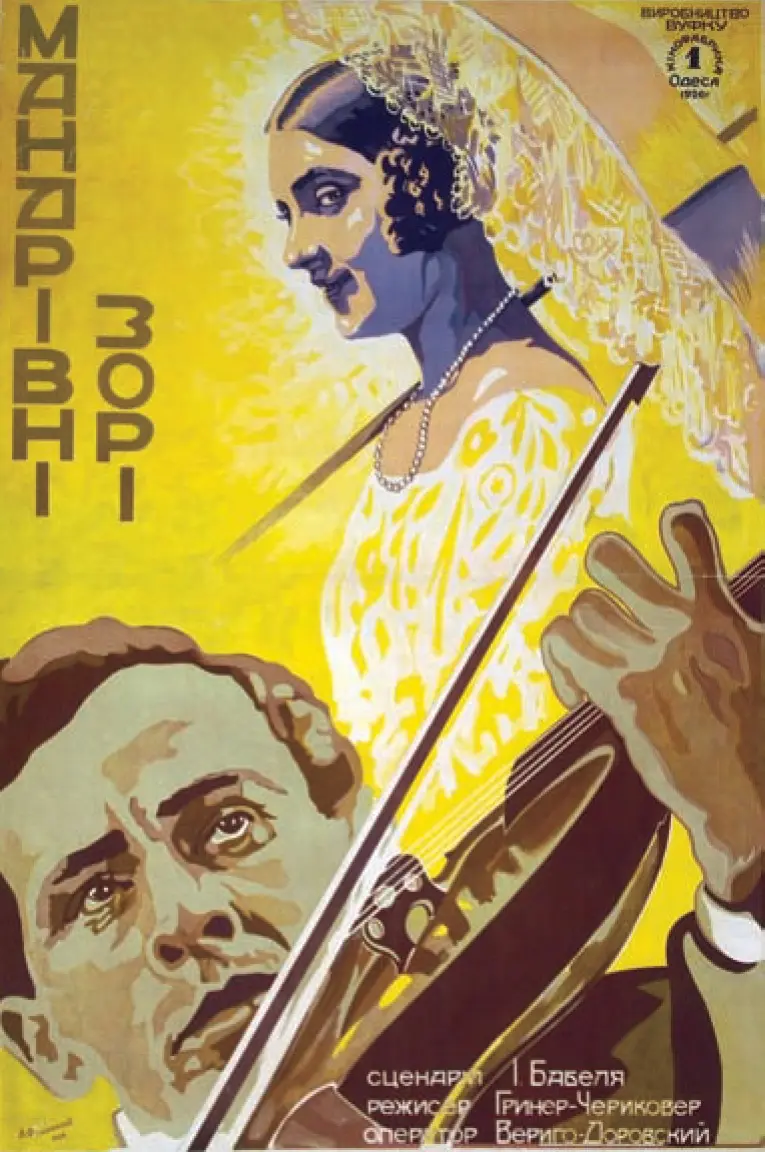
Is Wandering Stars a film that demands your attention in the 21st century? Short answer: Yes, but only if you are willing to look past the grain of the film stock to see the burning soul of a culture in transition.
This film is for the patient cinephile, the historian of the Jewish experience, and those who find beauty in the silent era's expressive shadows. It is emphatically not for those who require rapid-fire editing or a traditional happy-ever-after that ignores the scars of history.
Before we dive into the technicalities, let's establish the core of the film's impact. This is a story of survival as much as it is a story of music.
1) This film works because it captures the authentic ache of the Jewish diaspora without falling into cheap sentimentality.
2) This film fails because the middle act suffers from the episodic pacing typical of early novel-to-screen adaptations.
3) You should watch it if you want to see how the legendary Isaak Babel translated the wit of Sholom Aleichem into a visual language of longing.
The collaboration between writer Isaak Babel and the source material of Sholom Aleichem is the primary reason this film exists in a higher tier than its contemporaries. While Aleichem provided the warmth and the folk-logic, Babel brought the grit. You can feel Babel’s influence in the way the poverty of the early scenes is shot—it is not picturesque; it is claustrophobic.
Take, for instance, the scene where Leva first considers leaving. The camera doesn't focus on a grand dream of New York or Paris. Instead, it lingers on the frayed edges of his coat and the judgmental eyes of the village elders. It is a brutal, simple visual. It works. But it’s flawed in its delivery because the intertitles sometimes try to do too much heavy lifting where the acting was already sufficient.
Unlike the more genre-focused works of the era, such as Söhne der Nacht, 1. Teil: Die Verbrecher-GmbH, Wandering Stars prioritizes internal psychological states over external thrills. It is a gamble that pays off in the final act, even if the journey there is occasionally sluggish.
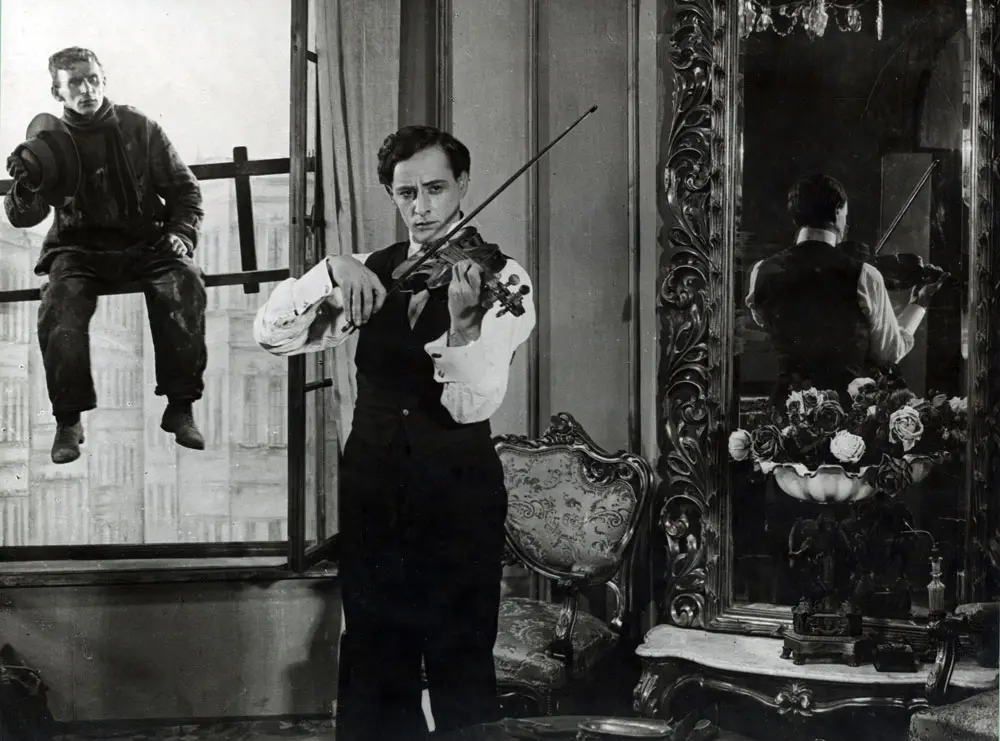
Sergey Korenyak delivers a performance that evolves from wide-eyed innocence to a weary, cynical professionalism. His transformation is most evident in his posture. In the beginning, he carries his violin like a sacred relic; by the time he is a 'celebrity,' he carries it like a heavy tool of the trade. This subtle physical acting is far more advanced than the exaggerated pantomime found in films like A Kentucky Cinderella.
However, the true scene-stealer is the impresario. He represents the predatory nature of the art world. He is the one who 'makes' Leva, but in doing so, he strips him of his identity. The film takes a hard stance here: fame is a cage. It is a surprising observation for a film from 1926, which usually celebrated the 'rags to riches' arc with more enthusiasm.
The visual language of Wandering Stars is defined by movement—or the lack thereof. When Leva and Rachel are in their home village, the camera is static, reflecting the stagnation of their lives. Once the migration begins, the film adopts a more fluid, restless style. The use of shadow in the European theater scenes creates a sense of 'the stage as a void,' where the performer is isolated despite the applause.
Compare this to the more straightforward historical framing of Bismarck. While that film uses grand sets to imply power, Wandering Stars uses empty spaces to imply loneliness. It is a sophisticated use of the medium that predates many of the 'lonely artist' tropes we see in modern cinema.
If you are looking for a masterpiece of early 20th-century Jewish cinema, the answer is a resounding yes. It manages to be both a specific cultural document and a universal story about the sacrifices we make for our passions. It is not a 'fun' movie, but it is a deeply rewarding one. It captures a world that was about to be destroyed by the tides of history, making every frame feel like a salvaged memory.
Wandering Stars is a vital piece of cinematic history. It isn't perfect—no film attempting to condense such a massive narrative into the silent format could be—but it is profoundly human. It eschews the easy sentimentality of films like The Return of Mary in favor of something much darker and more honest. It is a film about the tragedy of getting exactly what you thought you wanted, only to realize you lost yourself in the process. It is a 4-star experience for the serious student of film, and a haunting reminder that we are all, in some way, wandering stars looking for a place to land.
IMDb —
1921
Community
Log in to comment.