DbcultAccessing Vault...
4.6/10
Senior Film Conservator
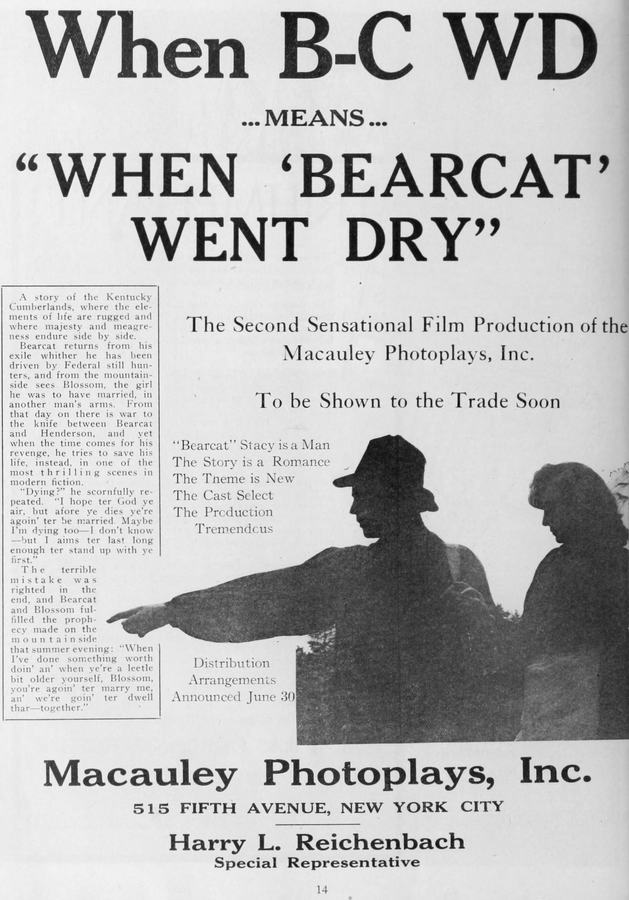
A definitive 4.6/10 rating for a film that redefined the boundaries of cult cinema. When Bearcat Went Dry remains a cornerstone of transgressive art.
Stepping back into the early annals of cinematic storytelling, 1919’s “When Bearcat Went Dry” emerges not merely as a relic of a bygone era, but as a surprisingly robust and emotionally charged melodrama. Directed with a keen eye for human frailty and the brutal poetry of frontier justice, this film, penned by the prolific Charles Neville Buck, delves into the dark undercurrents of passion, betrayal, and redemption. It’s a narrative tapestry woven with threads of fervent promises, devastating betrayals, and a relentless pursuit of a twisted form of justice, all set against a backdrop that feels both rugged and intimately personal.
At its core, the story revolves around Turner Stacy, affectionately known as ‘Bearcat,’ portrayed with a compelling blend of vulnerability and raw intensity by Walt Whitman. Turner is a man haunted by his own demons, specifically a struggle with alcohol, which he pledges to forsake for the love of Blossom Fulkerson. Vangie Valentine imbues Blossom with a delicate strength, a character caught between her own desires and the tumultuous world that constantly threatens to engulf her. This initial premise, a classic tale of redemption sought through love, quickly unravels into a complex web of misunderstandings and escalating violence, revealing the fragility of human intentions when confronted with harsh realities.
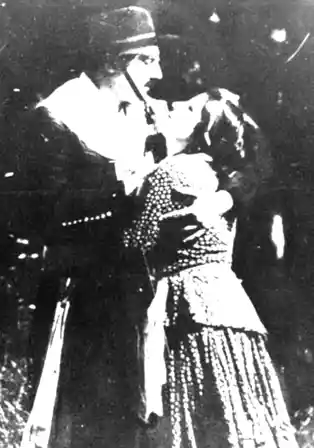
The narrative’s inciting incident—Turner’s arrest—serves as the catalyst for the entire ensuing tragedy. Stripped of his freedom and his ability to protect his beloved, Turner’s world collapses further when he discovers Blossom in the arms of Jerry Henderson. This scene, devoid of spoken dialogue, must have relied heavily on the actors’ nuanced expressions and the director’s framing to convey the crushing weight of betrayal. It’s a moment that irrevocably alters the course of their lives, transforming love into a crucible of suspicion and resentment. The film masterfully uses this emotional rupture to propel its characters into a cycle of reactive violence, a hallmark of many melodramas of the period, yet executed here with a particular bite.
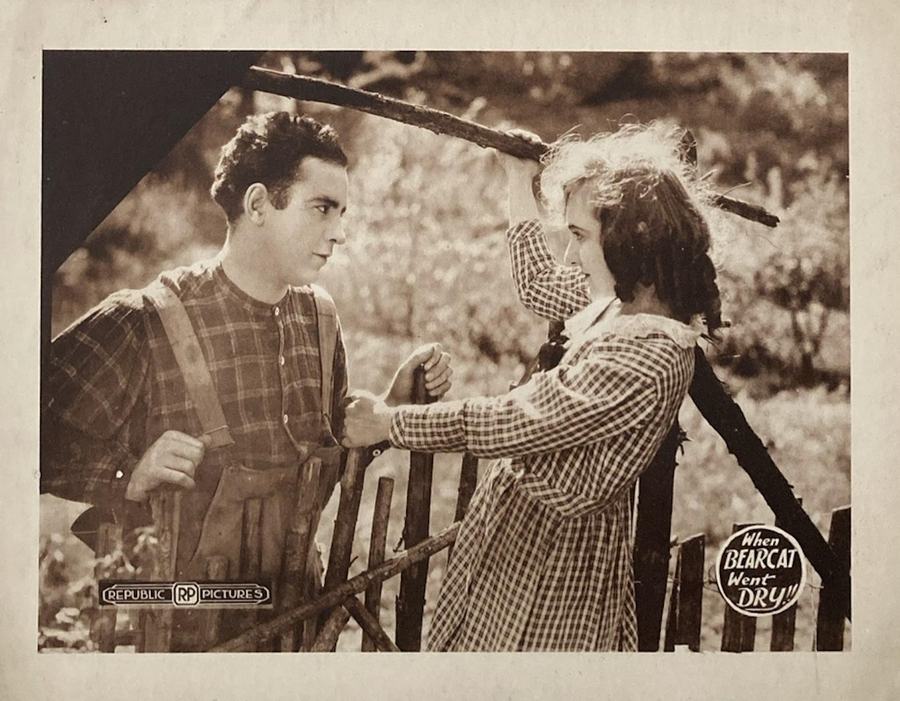
Jerry Henderson, whose presence inadvertently ignites the central conflict, becomes a tragic figure in his own right. His encounter with Kindard Powers, chillingly brought to life by Lon Chaney, is a pivotal moment. Chaney, even in what might have been a supporting role, possessed an uncanny ability to infuse his characters with a palpable sense of menace or profound pathos. Here, as Powers, he embodies a primal force of misunderstanding and aggression. The mistaken identity—Powers believing Henderson to be an officer—lends a layer of tragic irony to the unfolding events, demonstrating how easily lives can be shattered by error and suspicion in a community where law and order might be less rigidly defined.
Henderson's desperate flight to Blossom's cabin for refuge accentuates her vulnerable position, caught between multiple volatile men. This sequence likely provided opportunities for intense visual drama, emphasizing isolation and the constant threat of intrusion. The subsequent attack on Henderson, only to be rescued by Turner himself, is a stroke of narrative brilliance. It forces the two rivals into an uneasy alliance, highlighting the complex moral landscape the film navigates. Turner, despite his rage, still possesses a core sense of justice, or perhaps, a proprietary instinct over Blossom and her immediate surroundings.
The dramatic intensity escalates further with Bearcat’s deathbed pronouncement, coercing Henderson into marrying Blossom. This act, born of a dying man’s desperation to secure his love’s future, is both tragic and morally ambiguous. It’s a testament to the era’s storytelling conventions, where such grand, often manipulative, gestures were deployed to heighten emotional stakes. This plot point, though perhaps jarring to a modern sensibility, effectively binds Blossom and Henderson in a union founded on obligation rather than affection, setting the stage for more emotional turmoil. It echoes the kind of forced circumstances seen in other melodramas of the era, where fate often dictates alliances, much like the intricate familial obligations sometimes explored in films like The House of Silence, though with a far more violent undercurrent here.
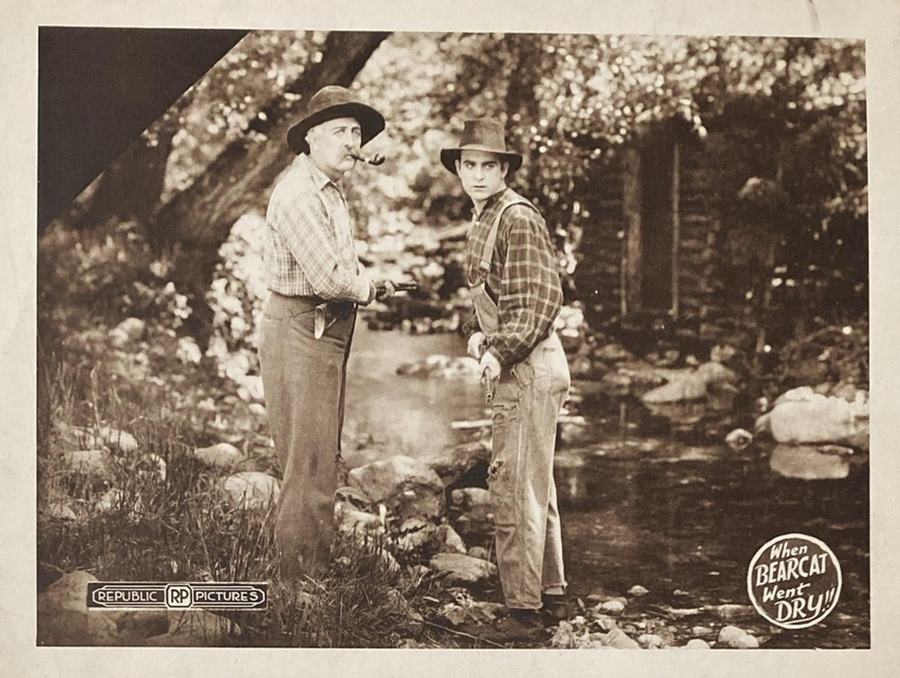
The success of silent films hinged critically on the expressive power of its actors, and “When Bearcat Went Dry” seems to have been blessed with a formidable ensemble. Walt Whitman, as Turner Stacy, carries the emotional weight of the protagonist's journey from hopeful lover to vengeful force. His portrayal must have demanded a masterful command of pantomime, conveying internal conflict and external aggression without uttering a single word. Vangie Valentine, as Blossom, navigates a difficult role, requiring her to project innocence, despair, and eventually, a quiet resilience. Her character's choices, or lack thereof, are central to the film’s exploration of female agency in a male-dominated narrative.
However, it is often the supporting players who leave an indelible mark, and Lon Chaney’s presence as Kindard Powers is undoubtedly one of the film’s most captivating elements. Chaney, known for his transformative abilities and his unparalleled capacity to embody grotesque or deeply troubled characters, would have brought a visceral intensity to Powers. Whether his role was extensive or brief, Chaney had a knack for stealing scenes, imbuing even minor characters with memorable, often disturbing, psychological depth. His performance here likely foreshadows the kind of complex villains and anti-heroes he would perfect in later works, such as The Trap, where he similarly explored characters driven by dark impulses.
The rest of the cast, including Ed Brady, Winter Hall, Millard K. Wilson, John Lynch, Bernard J. Durning, and J. Gordon Russell, would have contributed to the film’s texture, creating a believable community fraught with its own tensions and allegiances. The collective effort to convey such a dramatic story through purely visual means is a testament to the craft of early cinema. One can imagine the raw energy and physicality required to perform these roles, a stark contrast to the more nuanced, dialogue-driven performances of later eras. This physicality often lent an operatic quality to silent films, making them feel larger than life even in intimate settings.
With Bearcat's death, the narrative pivots sharply towards Turner’s relentless pursuit of Kindard Powers. This is where the film’s exploration of justice becomes particularly stark and unforgiving. Turner takes on the mantle of avenger, leading to Powers’ violent demise. This act of retributive justice, while satisfying a primal urge for balance within the narrative, also highlights the brutal realities of a world where personal vengeance often superseded formal legal processes. It’s a theme that resonates through many early American films, reflecting a society grappling with its own moral compass.
The aftermath of this violence leaves Blossom in a state of profound desolation, prompting her departure from the community. Her journey away, however brief, suggests a search for peace, an attempt to escape the shadow of the men who have dictated her fate. Yet, the film’s ultimate resolution, her return and agreement to marry Turner, is perhaps its most complex and ambiguous statement. Is it a testament to enduring love, a pragmatic acceptance of her circumstances, or a desperate clinging to the familiar in a world that has offered her little solace? This ending, rather than offering a simplistic 'happily ever after,' leaves viewers to ponder the nature of their bond, now forged in tragedy and violence, yet perhaps strengthened by shared hardship. It suggests a form of redemption, not in a grand, moralistic sense, but in the practical, often messy, reality of human connection. This mirrors the complex, sometimes bleak, resolutions found in other films exploring the darker side of human nature, such as The Witching Hour, where moral quandaries are rarely tied up neatly.
The director’s hand in “When Bearcat Went Dry” would have been crucial in guiding the audience through its intricate plot and intense emotional beats. Without dialogue, the visual storytelling had to be impeccable: precise framing, evocative close-ups, and dynamic staging were paramount. The film’s ability to convey such a detailed and emotionally rich story speaks volumes about the sophistication of filmmaking techniques even in 1919. The use of intertitles, while serving to advance the plot and provide dialogue, would have been carefully balanced with purely visual sequences, allowing the actors' performances to truly shine.
Charles Neville Buck’s screenplay provides a robust framework, demonstrating a strong understanding of dramatic pacing and character motivation. His ability to craft a narrative that escalates organically from a simple premise to a complex saga of vengeance and reluctant reconciliation is commendable. This kind of potent, character-driven storytelling was vital in an era still experimenting with the full capabilities of the cinematic medium. While not an epic in the vein of Spartacus, its intimate focus on individual struggles offers a different, yet equally compelling, form of grandeur. The film's legacy lies in its contribution to the evolving language of cinema, showcasing how powerful narratives could be constructed and conveyed without the benefit of sound.
“When Bearcat Went Dry” stands as a poignant reminder of the enduring power of early cinema. It’s a film that grapples with universal themes of love, jealousy, moral compromise, and the difficult road to atonement. The performances, particularly by Walt Whitman and the ever-magnetic Lon Chaney, would have anchored the emotional core, drawing viewers into a world where passions run high and consequences are often brutal. The film’s ability to evoke such strong emotions and tell a complex story purely through visual means is a testament to the artistry and ingenuity of its creators. While it may not be as widely remembered as some of its contemporaries, it offers a fascinating glimpse into the dramatic sensibilities of its time and the raw, unpolished beauty of silent film storytelling. It reminds us that even in the absence of spoken words, the human heart's deepest yearnings and darkest impulses can be communicated with profound clarity, leaving an echo that resonates even a century later. Much like the quiet intensity found in films like Just Sylvia, it relies on subtlety and visual cues to build its emotional landscape, proving that true drama transcends the need for dialogue to make its point. It's a journey into the heart of human struggle, raw and unvarnished, a true gem for those willing to explore the rich tapestry of early film history.
IMDb 7.1
1932
Community
Log in to comment.