DbcultAccessing Vault...
5.2/10
Senior Film Conservator
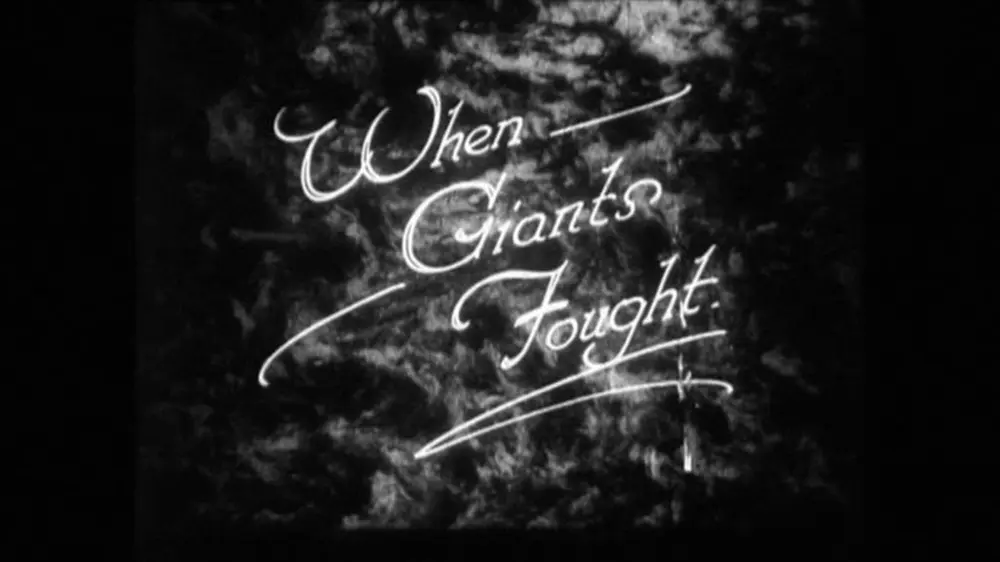
A definitive 5.2/10 rating for a film that redefined the boundaries of cult cinema. When Giants Fought remains a cornerstone of transgressive art.
Is 'When Giants Fought' a silent film worth unearthing in today's fast-paced cinematic landscape? Short answer: yes, but with significant caveats that demand a particular kind of viewer. This film is an essential, albeit challenging, watch for silent film enthusiasts, boxing historians, and those fascinated by early cinematic attempts at historical recreation. It is absolutely not for viewers seeking modern pacing, clear dialogue, or a straightforward narrative without interpretive effort.
Stepping into the ring with 'When Giants Fought' is an exercise in historical empathy, a journey back to a time when cinema was in its nascent stages and boxing was a brutal, bare-knuckle affair. B.E. Doxat-Pratt and Andrew Soutar, the minds behind this 1910 drama, attempted something audacious: to vividly revisit a contentious 1810 boxing match, not merely as a retelling, but as a living, breathing reconstruction. The film, a product of its time, serves as both a historical document and an early cinematic experiment, offering a unique window into the past.
This film works because of its unwavering commitment to period detail and the surprisingly visceral physical performances from its lead actors, particularly James Knight and George Wynn. It’s a pioneering work in historical reconstruction, daring to bring a specific, legendary event to life with the limited tools available to silent filmmakers.
This film fails because its pacing can feel glacial to a modern audience, and the narrative outside the central boxing match is, by necessity, thin. Its very nature as a silent historical piece makes it inherently less accessible for contemporary viewers accustomed to rich soundscapes and rapid-fire editing.
You should watch it if you possess a genuine appreciation for the unique storytelling language of silent cinema, if you are a history buff with a particular interest in early 19th-century sports, or if you simply want to witness an early, earnest attempt at cinematic realism and historical recreation.
'When Giants Fought' doesn't spin an elaborate yarn; its narrative focus is singularly concentrated on the recreation of a pivotal boxing match from 1810. The film, in essence, is a dramatic reenactment, a silent tableau vivante of a historical event. We are presented with the build-up, the anticipation, and the arduous, prolonged struggle between two formidable pugilists. This isn't a story driven by complex character arcs or intricate subplots; rather, it’s a visceral, almost documentary-style rendering of a specific moment in time.
The strength of Doxat-Pratt and Soutar’s approach lies in their commitment to making the audience feel present at this legendary contest. They don't just tell us about the fight; they show it, allowing the raw physicality and the sheer endurance required of the combatants to speak volumes without a single spoken word. The silent treatment, paradoxically, amplifies the intensity, forcing viewers to focus on body language, facial expressions, and the brutal rhythm of the blows exchanged. It's a testament to the power of early cinema to transcend its limitations, transforming a distant historical event into an immediate, if somewhat static, experience.
The film’s plot, sparse as it is, invites viewers to fill in the historical context themselves, making it a more interactive, albeit demanding, viewing experience. It's less about a 'plot' in the modern sense and more about an 'event' meticulously staged for the camera. This kind of historical reconstruction was groundbreaking for its time, akin to the ambition seen in other early historical dramas like The Life of Lord Byron, which also sought to bring iconic figures and moments to cinematic life.
The direction in 'When Giants Fought' is a fascinating study in early cinematic technique. B.E. Doxat-Pratt and Andrew Soutar, working within the constraints of 1910 filmmaking, chose a deliberate, almost reverent approach to their subject matter. The camera largely remains static, observing the action as if from a fixed vantage point in the crowd. This isn't the dynamic, fast-cut boxing we know today; it's a series of carefully composed shots that emphasize the spectacle and the duration of the struggle.
Cinematographically, the film relies heavily on wide and medium shots to capture the full scope of the fight and the surrounding environment. There are moments where the camera attempts to draw closer to the fighters, hinting at the potential for close-ups to convey emotion and impact, though these are often fleeting. The use of intertitles is crucial here, providing context, advancing the narrative, and, perhaps most importantly, conveying the sheer length and brutality of the rounds. Without these textual interventions, the fight might feel even more abstract and disconnected.
What's truly striking is how the directors manage to convey the 'roar' of the crowd and the 'thud' of the punches without sound. They achieve this through the careful staging of the background actors, whose reactions are exaggerated for silent film, and through the sheer physical exertion displayed by James Knight and George Wynn. The atmosphere of a raucous, expectant crowd is palpable, even in silence. It’s an early masterclass in visual storytelling, albeit one that requires a patient viewer.
The film's true genius lies not in its recreation of the fight itself, but in its audacious attempt to capture the spirit of an era through a medium barely out of its infancy. It’s a moving diorama, less a narrative, more an immersive historical exhibit.
Compare this to the more character-driven dramas of the era, like Wild Youth, and you see a distinct artistic choice. 'When Giants Fought' prioritizes the event over individual psychology, a bold move that highlights its unique place in early cinema. The challenge, and the triumph, is making the audience feel the weight of history through purely visual means.
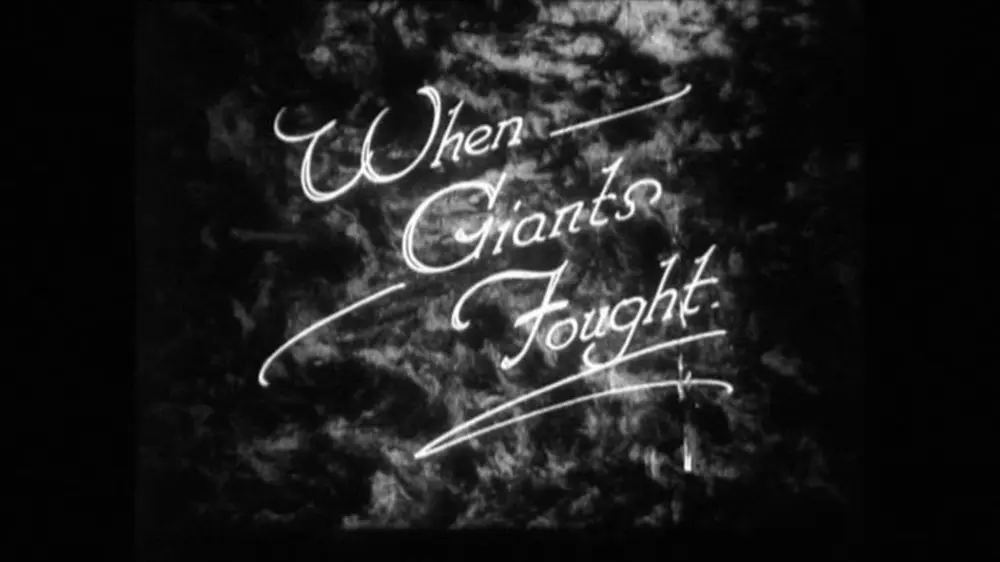
The performances in 'When Giants Fought' are, by necessity, highly physical and demonstrative. In the absence of spoken dialogue, the actors — James Knight, George Wynn, Joe Beckett, Frank Craig, and Wyndham Guise — rely on their bodies and faces to convey the drama, pain, and determination of the boxing match. James Knight and George Wynn, as the central combatants, carry the bulk of this burden, and they do so with remarkable conviction for the era.
Knight and Wynn commit fully to the strenuous demands of bare-knuckle boxing. Their movements are deliberate, their punches appear impactful, and their expressions oscillate between grim focus and visible exhaustion. There's a raw, unpolished authenticity to their portrayal that transcends mere acting; it feels like genuine physical effort. You can almost feel the strain in their muscles, the burning in their lungs, and the sheer will required to continue through round after grueling round.
The supporting cast, while less central, contributes to the overall atmosphere. Joe Beckett, Frank Craig, and Wyndham Guise, likely playing trainers, referees, or spectators, use exaggerated gestures typical of silent film acting to communicate their roles. Their reactions help to contextualize the fight, emphasizing its importance and the emotional investment of those witnessing it. This collective effort creates a convincing, albeit theatrical, portrayal of a historical sporting event.
One unconventional observation is how the film, through its silent and physically demanding performances, inadvertently highlights the inherent theatricality of early combat sports. The fighters are not just athletes; they are performers enduring a public spectacle. Their struggle is a dramatic narrative playing out in real-time, perfectly suited for the silent screen where visual spectacle was paramount. This raw, unadorned brutality, stripped of modern commentary or slow-motion replays, forces viewers to confront the stark reality of an earlier age.
The pacing of 'When Giants Fought' is perhaps its most challenging aspect for a contemporary audience. It is, by modern standards, slow. Deliberately so. The film takes its time to establish the scene, to build the anticipation, and crucially, to allow the boxing match itself to unfold in a seemingly unhurried fashion. This isn't a film designed for instant gratification; it demands patience and an adjustment to a different rhythm of storytelling.
The fight sequence, which forms the core of the film, is extended, mirroring the real-life endurance contests of bare-knuckle boxing. Rounds are not depicted as quick, decisive bursts but as drawn-out struggles. This choice in pacing contributes significantly to the film's authentic tone. It emphasizes the sheer physical and mental toll on the fighters, making their eventual victory or defeat feel earned. However, this commitment to realism can test the resolve of viewers accustomed to the rapid-fire editing and constant stimulation of modern cinema.
The tone is one of earnest historical recreation, mixed with a palpable sense of dramatic weight. There's a solemnity to the proceedings, an understanding that this isn't just a casual sporting event but a significant, almost ritualistic, contest. The film maintains a serious demeanor throughout, avoiding levity to underscore the gravity of the pugilists' struggle. It works. But it’s flawed. This unwavering commitment to a realistic, extended portrayal of the fight can, at times, tip over into tediousness for those not fully invested in the historical context or the unique aesthetic of silent film.
This deliberate pacing is a hallmark of many early films, where the novelty of moving pictures often meant simply documenting an event rather than manipulating time for dramatic effect. When contrasted with more action-oriented silent films like Play Ball, which might have employed more dynamic cuts for its baseball sequences, 'When Giants Fought' reveals a specific, almost reverent, approach to its historical subject. It’s a valuable insight into how early filmmakers conceived of and executed historical drama.
Yes, 'When Giants Fought' is absolutely worth watching today, but only for a specific audience. It's a challenging film, demanding patience and an appreciation for early cinematic techniques. If you are a devotee of silent cinema, a historian of sports, or someone deeply interested in how film evolved to tell stories, this is a compelling and historically significant piece. It offers an unparalleled glimpse into both 19th-century boxing culture and 20th-century filmmaking infancy.
However, if your primary interest lies in fast-paced action, clear dialogue, or modern narrative conventions, you will likely find it a struggle. It’s not a casual watch, nor is it designed for broad appeal in today's landscape. Its value lies in its historical significance and its unique artistic choices, not in its ability to entertain a mainstream audience.
'When Giants Fought' is not merely a film; it is a historical artifact, a testament to the ambitions of early cinema and a fascinating, if arduous, recreation of a legendary sporting event. It stands as a vital piece of film history, offering insights into both the era it depicts and the era in which it was made. Its value is undeniable, but its appeal is niche. It is a demanding watch, one that requires a conscious shift in viewing expectations and a genuine interest in its subject matter. For those willing to make that investment, it offers a surprisingly visceral and profoundly educational experience.
I argue that its historical importance far outweighs its entertainment value for anyone not predisposed to silent cinema's unique charms. It's a film that demands to be seen by those who care about the evolution of cinema and the preservation of cultural memory, but it will undoubtedly test the patience of many. It doesn't just show you a fight; it transports you to a time, a place, and a medium that are profoundly different from our own. And for that, it deserves respect, even if it doesn't always deliver a knockout punch in terms of pure entertainment.
IMDb 4.6
1928
Community
Log in to comment.