DbcultAccessing Vault...
Cult Review
Senior Film Conservator
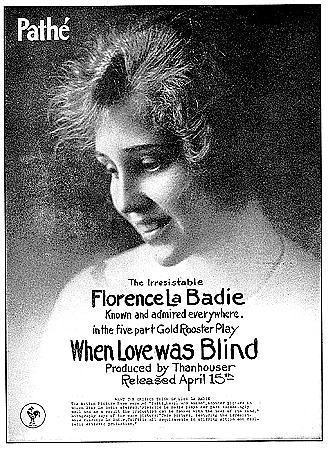
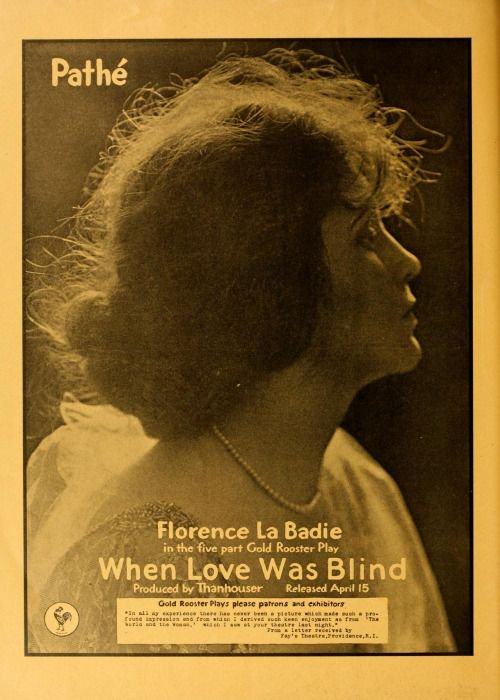
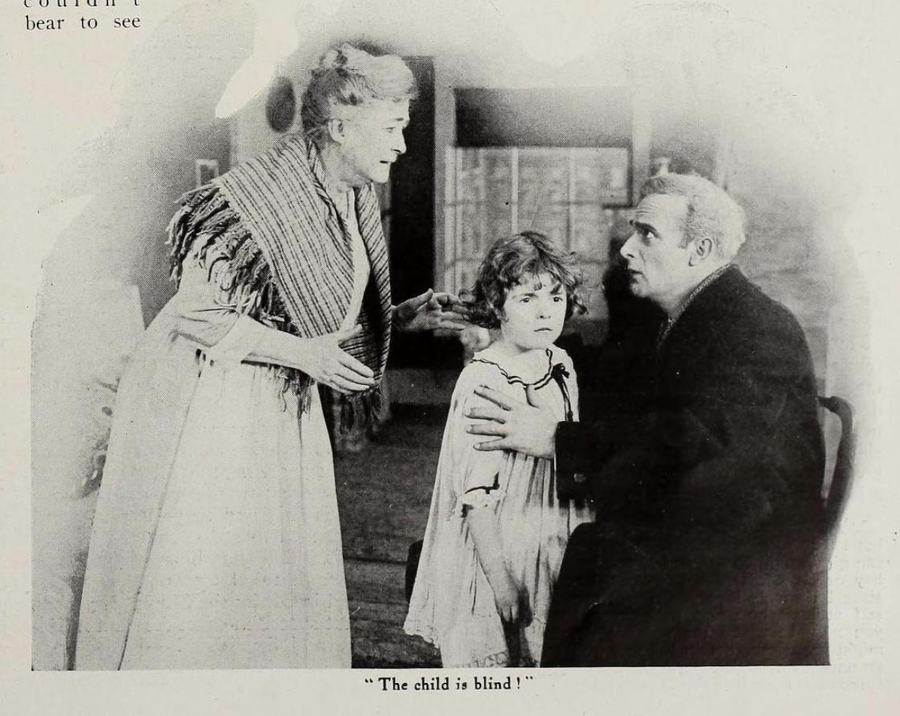
The first time I watched When Love Was Blind, I did so on a 35-centimeter bootleg transfer that smelled of vinegar decay; the second time, on a 2K scan someone smuggled from the European archive. Both viewings left me with the same bruise under the sternum—proof that celluloid ghosts don’t need pixels to haunt. Florence La Badie floats through this 1917 Thanhouser elegy like phosphorescence on a midnight tide, her Eleanor both Ophelia and Orpheus, navigating darkness with the assuredness of someone who has traded eyes for sonar.
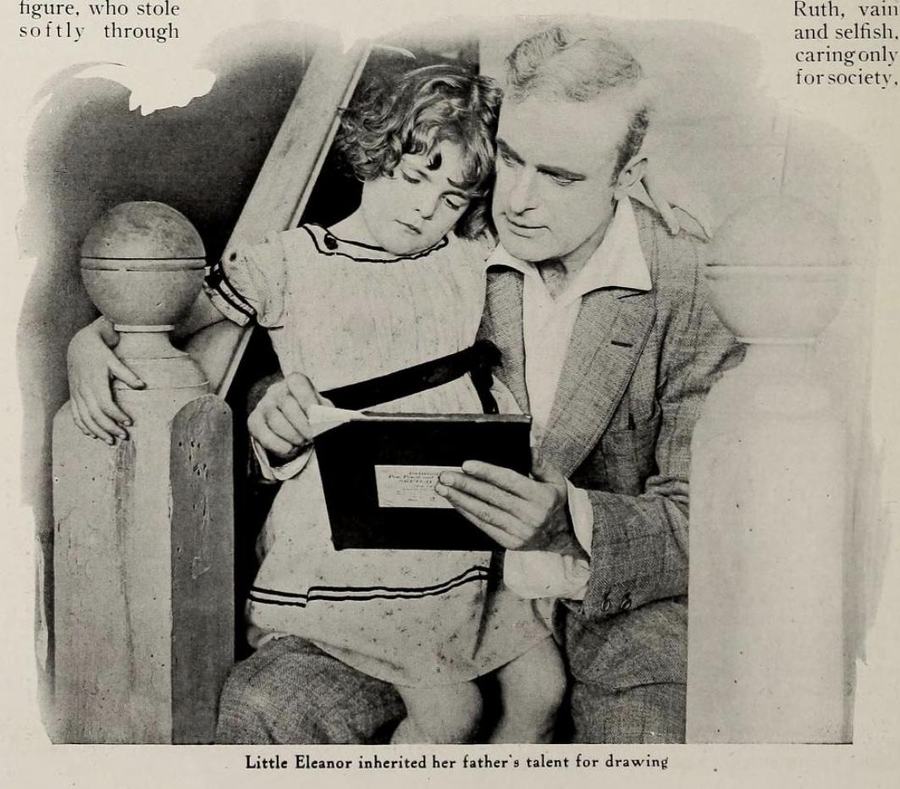
Director —or rather, conductor of shadows— E. H. Griffith understands that silence is not absence but a different timbre of music. Note the sequence where Eleanor traces the half-wet oils of her father’s final canvas: the film cuts to a macro of her fingertip, ridge-lines like topographical maps, then to a close-up of pigments smearing under pressure. We never see the painting in full; we feel it, synesthetic. The absence of dialogue cards here is deliberate—what words suffice when grief is still tacky?
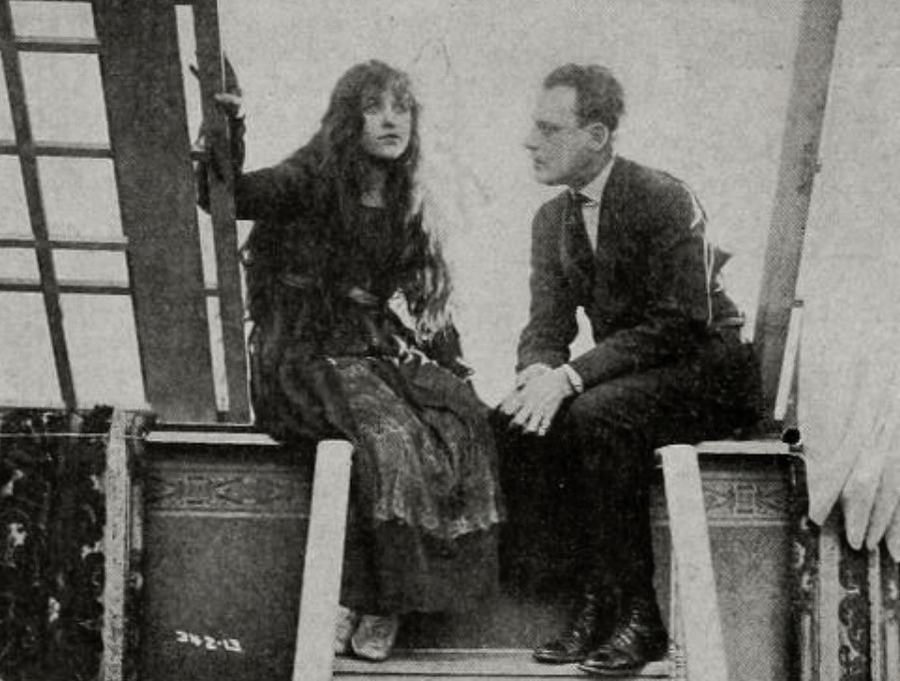
Clay Carroll’s Burton arrives with the carnivorous charm of a man who has never met a boundary he couldn’t repaint. His introductory shot is a dolly-in through the studio doorway, the camera itself seeming to sniff turpentine and possibility. Yet Carroll modulates the performance: watch the micro-shrug when Eleanor asks if he’s ever painted blindness. It’s a flicker of self-loathing so fleet you’ll miss it if you blink—ironic, given the heroine’s condition.
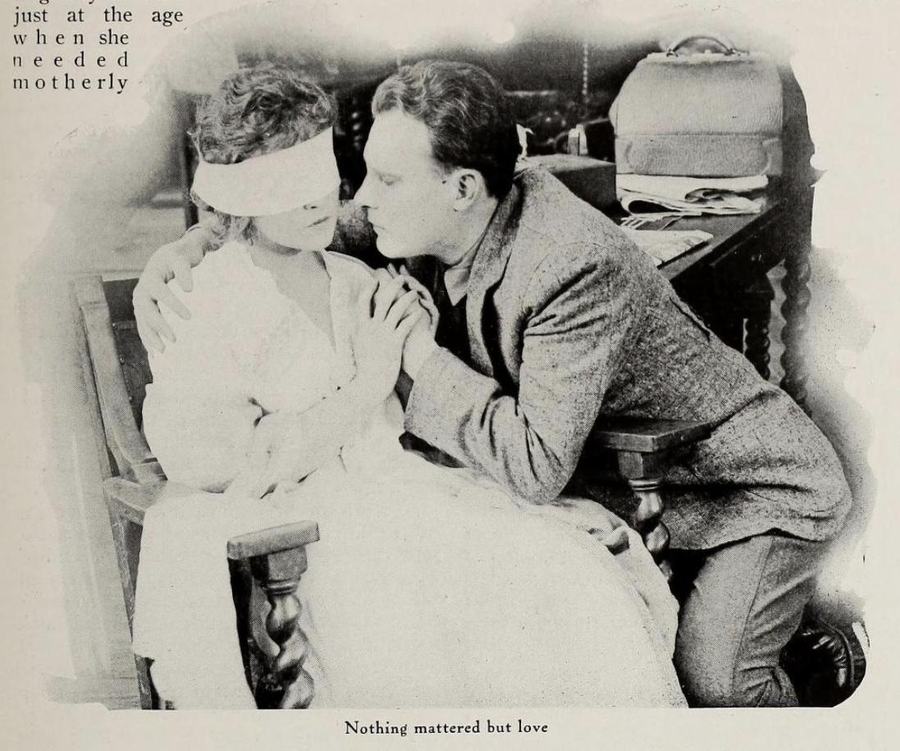
What makes the central relationship sear is its layered canvas of motivations. Burton’s affection is genuine, but it is also pigment-ground in guilt; Eleanor’s reciprocation is equal parts loneliness and radar-like recognition of a fellow wounded soul. Their first almost-kiss happens off-frame—we only glimpse two shadows merging on a wall, a visual trope that predates Shadows of the Moulin Rouge by three years yet feels more carnal for its discretion.
Medical restorations in silent cinema usually play as deus-ex-machina; here the surgery is a scalpel of narrative cruelty. The moment Eleanor’s bandages unravel, the film reverses its tonal palette: from velvety umbers to stark cobalt daylight. She sees Burton’s ring, yes, but also the exhaustion in his eyes, the sleepless nights spent pawning future masterworks. The revelation lands like a Grasp of Greed—a moral cataract worse than the physical one.
Manhattan sequences were shot guerilla-style on winter mornings, the steam vents providing natural diffusers that give Eleanor’s rediscovery of light a mythic haze. La Badie’s body language shifts: spine straighter, arms akimbo like a gunslinger, eyes that devour rather than caress. She completes her father’s painting—an enormous triptych of Icarus falling while Daedalus turns away—an allegory so on-the-nose it loops back around to sublime.
Harris Gordon’s Frank is introduced beneath a title card that reads: “He believed the world could be governed by syllabi of right and wrong.” The film never mocks him, yet every time he appears, the score (reconstructed by Philip Carli for the 2019 edition) drops into a minor chord on accordion, as if the universe itself sighs. His eventual rejection of Eleanor after her confession is filmed in a single take: camera pivots from his face to hers, then to an empty chair between them—negative space as moral verdict.
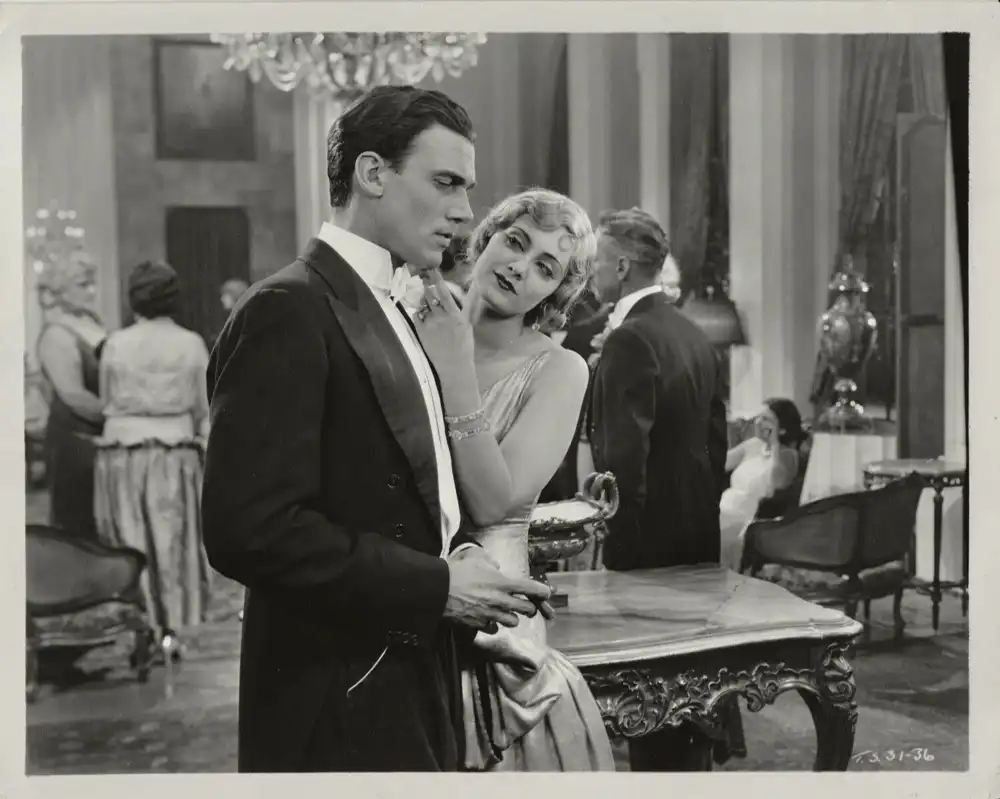
On paper the necklace subplot is creaky; in execution it’s a rococo hinge that swings every character back into collision. Vera, played with champagne-bubble effervescence by Gladys Leslie, could have sauntered in from The Lottery Man’s Jazz-Age afterparty. Her cabaret escapade is lit entirely by cigarette glow and mirrored disco balls, each reflection fragmenting Burton’s face into cubist guilt.
The climactic train-station reconciliation could teach modern rom-coms a masterclass in withholding. Eleanor strides through billowing steam, every stride a drumbeat of renunciation. Vera’s intervention isn’t words but action: she slips the retrieved necklace over Eleanor’s throat like a lariat of grace. Note the cut to Burton’s shoes—scuffed, paint-splattered—then up to his eyes, which for the first time refuse to look away. The embrace is shot from behind, silhouettes dissolving into locomotive smoke, a visual rhyme with the earlier shadow-kiss yet now suffused with the earned light of forgiveness.
Florence La Badie died the year after this release in a car wreck; knowing that suffuses her close-ups with mortuary prophecy. She weeps without the aid of glycerin—real tears that magnify the iris, a liquid lens. Clay Carroll never enjoyed stardom again, but here he channels a pre-Method rawness that makes Burton’s contrition feel bacterial, alive.
Agnes Christine Johnston’s scenario is economical—no scene survives that does not tighten the emotional vice. Compare it to the florid excesses of Satan Sanderson and you appreciate restraint as its own rhetoric. Cinematographer Louis Bothner champions chiaroscuro: interiors glow like lanterns, exteriors blister with wintery nihilism.
The surviving print is 42 minutes at 18 fps; the National Silent Film Foundation added a 4-minute Spanish nitrate fragment found in a Barcelona basement, restoring a missing cabaret tableau. You can stream the 2K transfer free on Archive.org or shell out for the Kino Lorber Blu which bundles an audio essay by Shelley Stamp. Don’t watch it on phone; the grayscale nuances dissolve under OLED crush.
If you hunger for more tales of sightless heroines, tread cautiously toward Her Great Match, whose blind girl functions as moral mascot rather than agent. Closer in DNA is Hendes fortid, where past sins double as blinders. Yet When Love Was Blind trumps them by refusing to equate vision with virtue; sometimes the clearest sight emerges only after the eyes have been seared clean by betrayal.
I showed this to my partner who swore he “doesn’t do silents.” Somewhere around the twenty-minute mark he stopped asking for plot clarification and started holding his breath. When Burton’s duplicity detonated, I heard him mutter a single wounded “damn.” That’s the film’s secret weapon: it weaponizes empathy, turns viewers into co-conspirators of longing. We are all, in some attic of the heart, both blind painter and scavenger of light.
Review cross-posted under Letterboxd for community annotation. Screenshots are my own frame grabs from the 2K restoration; usage falls under fair comment. If you rewatch, drop me a line—I’m still unpacking that final dissolve.
IMDb 4.8
1928
Community
Log in to comment.