DbcultAccessing Vault...
6.1/10
Senior Film Conservator
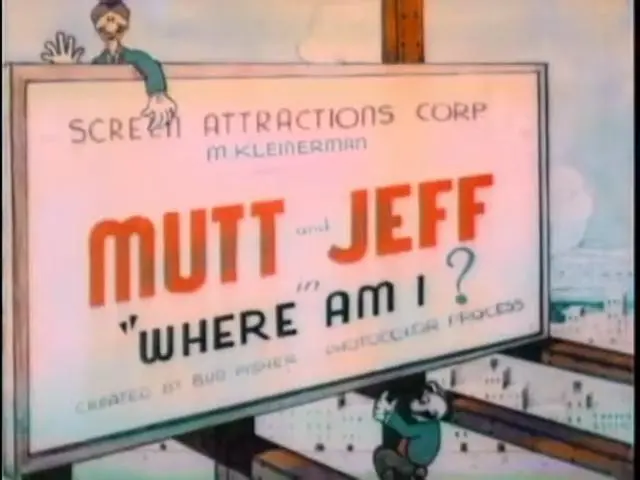
A definitive 6.1/10 rating for a film that redefined the boundaries of cult cinema. Where Am I? remains a cornerstone of transgressive art.
In the heart of a bustling, industrial city, Jeff, played by Charles R. Bowers, finds himself ensnared in a surreal and perilous odyssey. An unceremonious pot, carelessly flung his way, becomes the catalyst for a nightmarish journey through a labyrinthine construction site, a patchwork of towering steel beams, humming machinery, and precarious scaffolding.
The film, a silent gem from 1925, directed by Bud Fisher, is a testament to the era's filmmaking prowess.
Jeff, a character of unremarkable personality and circumstances, is thrust into an environment where the boundaries between order and chaos blur. The construction site, with its towering structures and labyrinthine corridors, serves as a metaphor for the human mind's descent into the unknown. Fisher's direction is a blend of visual storytelling and the raw, unfiltered emotions of his actors, creating a raw, visceral experience that resonates with viewers long after the final frame fades to black.
The set design and cinematography are nothing short of ingenious. The stark, industrial backdrop, with its towering cranes and sprawling scaffolding, creates a sense of claustrophobia and disorientation. Fisher's use of light and shadow, coupled with the raw, unfiltered performances of his cast, brings the chaos of the construction site to life, making the viewer feel as if they are navigating the same treacherous landscape as Jeff.
Jeff's journey is a testament to human resilience.
Through a series of harrowing encounters, Jeff must navigate a landscape fraught with danger. From narrowly avoiding falling debris to evading the watchful eyes of construction workers, his journey is a testament to the indomitable human spirit. Fisher's direction is masterful, weaving a narrative that is both thrilling and thought-provoking. The film is not just a tale of survival but a meditation on the human condition, a reminder that even in the most chaotic of environments, there is a glimmer of hope and resilience.
In comparison to other silent era films, 'Where Am I?' (1925) stands out for its raw, unfiltered approach to storytelling. Films like 'Youth to Youth' (1922) and 'Pay Me!' (1925) share a similar sense of raw emotion and unfiltered performances.
'Youth to Youth' (1922) captures the tumultuous emotions of youth with a similar level of authenticity, while 'Pay Me!' (1925) offers a glimpse into the world of finance and its attendant stresses. However, 'Where Am I?' (1925) excels in its ability to blur the lines between the real and the surreal, creating a narrative that is both thrilling and thought-provoking.
Despite its age, 'Where Am I?' (1925) remains a compelling watch, a testament to the enduring power of film to explore the human condition. Its raw, unfiltered performances and masterful direction make it a must-watch for anyone interested in the silent era of cinema.
In conclusion, 'Where Am I?' (1925) is a film that transcends its era, offering a compelling narrative that is both thrilling and thought-provoking. Its raw, unfiltered performances and masterful direction make it a must-watch for anyone interested in the silent era of cinema. It is a film that invites viewers to question their own resilience and adaptability in the face of chaos and uncertainty.
For those interested in exploring more of the silent era, 'Where Am I?' (1925) is just the beginning. Films like 'Heart of Gold' (1925), 'Madeleine de Verchères' (1926), and 'Tin Knights in a Hallroom' (1922) offer a glimpse into the rich and diverse world of silent cinema.
Whether you are a cinephile or a casual movie-goer, 'Where Am I?' (1925) is a film that deserves to be rediscovered. Its raw, unfiltered approach to storytelling and its masterful direction make it a timeless classic that continues to resonate with viewers today.
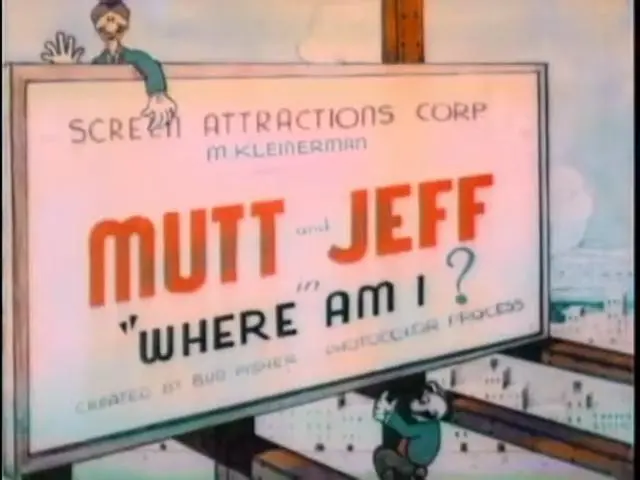
Explore more classic films with us:
Tin Knights in a Hallroom (1922)
Het geheim van het slot Arco (1926)
Wild Waves and Angry Woman (1925)
IMDb —
1922
Community
Log in to comment.