DbcultAccessing Vault...
Cult Review
Senior Film Conservator
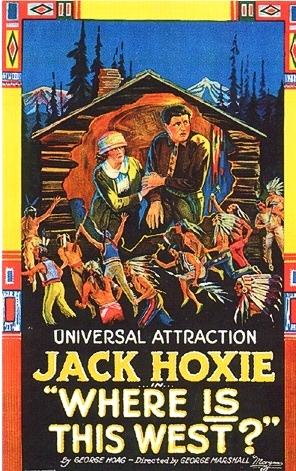
In the grand, silent tapestry of early American cinema, few genres captured the national imagination quite like the Western. It was a realm of myth-making, of vast horizons and stark morality, where destiny often rode on horseback. Amidst this vibrant era, a film emerges that, while perhaps not as widely canonized as some of its contemporaries, offers a fascinating glimpse into the genre's evolving tropes and undeniable allure: Where Is This West? This 1923 feature, a product of the prolific silent era, dares to ask a question that resonates beyond its simple title, delving into the very essence of what the West represented to a rapidly modernizing nation. It’s a narrative that blends classic heroics with a clever, almost meta-narrative twist, making it far more than just another horseback adventure. It’s a story of transformation, of finding one's true grit when thrust into an unfamiliar, hostile world.
The film pivots on an intriguing premise: the unlikely inheritance of a sprawling cattle ranch by two individuals who couldn't be further removed from the rugged frontier life. John Harley, portrayed with earnest charm by Jack Hoxie, begins his cinematic journey not as a bronco-buster, but as a humble milkman, his days defined by the rhythmic clatter of bottles and the predictable routes of urban existence. His sudden elevation to co-owner of a Western ranch is the kind of abrupt, destiny-altering event that characterized many narratives of the period, a stark contrast to the gritty realism that would later define some Westerns. This immediate departure from the mundane sets the stage for a classic 'fish out of water' scenario, yet Hoxie imbues Harley with an underlying decency and latent courage that hint at the hero he is destined to become. His transition isn't instantaneous, but a gradual awakening, each challenge chipping away at his urban veneer.
Sharing this improbable inheritance is Sallie Summers, brought to life by the spirited Mary Philbin. Sallie, a waitress, also finds her life irrevocably altered by the call of the West. Her journey is equally compelling, representing a different facet of the American dream – the independent woman seeking her fortune and agency in a land perceived as limitless in opportunity. Philbin brings a vibrant energy to Sallie, portraying her not as a damsel in distress waiting to be rescued, but as an active participant in her own destiny, a woman with a strong will and an adventurous spirit. Her initial apprehension quickly gives way to determination, making her an admirable counterpart to Harley. The dynamic between Harley and Summers forms the emotional core of the film, their shared plight forging an unexpected bond and a burgeoning romance that feels genuinely earned amidst the chaos.
No Western is complete without a formidable antagonist, and Where Is This West? delivers in the form of Buck Osborne, the ranch foreman, menacingly played by Robert McKenzie. Osborne is not merely a greedy villain; he's a theatrical impresario of malevolence, orchestrating a series of elaborate hoaxes designed to terrorize and dislodge the new owners. His methods are particularly fascinating, setting this film apart from many contemporary Westerns. Instead of straightforward banditry, Osborne and his gang stage fake holdups, feigned gunfights, and even fabricated skirmishes with Native Americans. This element injects a unique layer of psychological warfare into the narrative, blurring the lines between reality and performance within the film's diegesis. The audience is privy to Osborne's deception, creating a tension rooted in the protagonists' ignorance, and their eventual realization of the charade.
This subversion of traditional Western conflict is truly inventive. While other films like The Betrayer might focus on internal deception or hidden motives, Osborne’s plot is overtly theatrical. The fake skirmishes with Native Americans, while problematic through a modern lens, reflect the prevailing anxieties and stereotypes of the era, and their staged nature within the film's plot serves to highlight Osborne's manipulative prowess rather than endorse the authenticity of such conflicts. It forces Harley and Summers to confront not just physical danger, but a pervasive sense of unreality, a world where nothing is quite what it seems. This unique narrative device allows the film to explore themes of perception and reality, and how easily fear can be manufactured and exploited, a concept that remains relevant even today.
As a product of the silent era, Where Is This West? relies heavily on visual storytelling, exaggerated gestures, and evocative intertitles to convey its narrative and emotional depth. The performances, particularly by Hoxie and Philbin, are a masterclass in silent acting, their expressions and body language communicating volumes without a single spoken word. Hoxie, known for his physicality and genuine cowboy persona, transitions convincingly from bewildered urbanite to resolute hero. His actions speak louder than any dialogue could, whether it's his clumsy attempts at ranch work or his determined pursuit of Osborne’s gang. Philbin, with her expressive eyes and dynamic movement, perfectly captures Sallie's blend of vulnerability and resilience. The silent film medium often necessitated a heightened sense of drama and visual flair, and this film certainly delivers.
The cinematography of the period, while perhaps lacking the technical sophistication of later eras, nonetheless captures the expansive beauty and ruggedness of the Western landscape. The wide shots of riders against vast backdrops, the dusty trails, and the rustic charm of the ranch all contribute to the film’s authentic atmosphere. The action sequences, despite being staged within the narrative, are executed with a kinetic energy typical of silent Westerns, relying on thrilling chases and physical stunts. The clever use of intertitles not only advances the plot but also injects humor and tension, guiding the audience through the intricate deceptions of Osborne. Compare this to the more character-driven drama of a film like Where the Pavement Ends, where much of the emotional weight rests on close-ups and subtle shifts in expression. Here, the grand gestures and sweeping vistas are paramount, perfectly suited to the epic scale the Western genre so often demands.
At its heart, Where Is This West? is a story about personal transformation. John Harley's journey from milkman to rancher is not merely a change of profession but a profound evolution of character. He sheds the comforts and predictability of his former life, embracing the challenges of the frontier. This metamorphosis is not handed to him; it is forged through adversity, through confronting the manufactured dangers orchestrated by Osborne. He learns to ride, to shoot, and to think strategically, beating the villain at his own game. This arc resonates deeply with the enduring myth of the American West, where individuals could reinvent themselves, shed past identities, and forge new destinies through sheer determination.
Sallie Summers' journey mirrors Harley's in its spirit of self-discovery. She too leaves behind a conventional life to claim her stake, demonstrating courage and resilience in the face of intimidation. Their partnership, initially born of shared inheritance, deepens into a bond of mutual respect and affection, culminating in a romantic union that symbolizes the successful integration of their new lives. The film suggests that the 'West' isn't just a geographical location, but a state of mind, a crucible where true character is revealed. It's a place where the artificiality of urban life is stripped away, leaving only the essential struggle for survival and self-definition. This theme of finding one's true self in a challenging environment is a recurring motif in cinema, seen in various forms from the adventure of A Motorcycle Adventure to the more dramatic self-reckoning of Straight Is the Way, but it finds a particularly potent expression in the Western genre.
The narrative builds to a thrilling crescendo with Sallie's kidnapping, a desperate final act by Osborne to seize complete control. This moment serves as the ultimate test for John Harley, pushing him beyond his calculated responses to Osborne's earlier deceptions and into a realm of genuine heroism. His rescue of Sallie is not merely an act of bravery but a declaration of his full embrace of his new identity as a man of the West, a protector, and a lover. The sequence is likely packed with the kind of fast-paced action and suspense that audiences of the era craved, culminating in the satisfying defeat of the villain and the triumph of justice.
The resolution, with John and Sallie marrying, provides a quintessential happy ending, sealing their partnership in both love and land. It's a symbolic union, representing the taming of the wild, the establishment of order, and the promise of a prosperous future. This romantic conclusion, while conventional for the genre, feels earned through the trials and tribulations they've endured together. It speaks to the idea that the West, despite its dangers, was also a place of new beginnings, where fortunes could be made and lives could be built from the ground up. In many ways, this echoes the optimistic spirit often found in films like Why America Will Win, albeit on a more personal, rather than national, scale.
Where Is This West? stands as a fascinating artifact of early Western cinema, penned by writers George Hively and George C. Hull, who crafted a story that, while adhering to many genre conventions, also dared to play with them. It showcases the foundational elements that would define the Western for decades to come: the rugged hero, the spirited heroine, the villainous schemer, the vast, unforgiving landscape, and the ultimate triumph of good over evil. The film's unique approach to conflict, with its staged events, offers a fresh perspective on the typical 'bad guy' plot, demonstrating a creative ingenuity within the constraints of silent storytelling.
The casting, featuring figures like Jack Hoxie, a genuine rodeo rider turned film star, lent an air of authenticity to the action sequences, even the fake ones. His natural horsemanship and physical prowess were a significant draw for audiences. Mary Philbin, an actress with a considerable career in the silent era, brought a necessary grace and strength to her role. The supporting cast, including Joseph W. Girard, Slim Cole, and Sid Jordan, rounded out the ensemble, contributing to the film's gritty atmosphere. While perhaps not as overtly dramatic as Honor's Altar or as purely comedic as What a Whopper!, Where Is This West? carves its own niche as an entertaining and surprisingly thoughtful entry in the silent Western canon.
For modern viewers, Where Is This West? offers more than just historical curiosity. It provides a window into the narrative techniques and cultural values of a bygone era. It reminds us that even in silent films, complex ideas could be explored, and compelling characters could be developed. The film's central question, implicit in its title, isn't just about geographical location but about the moral and spiritual landscape of the American West, and the journey one undertakes to truly belong there. It's a West defined not by its untamed wilderness alone, but by the courage and integrity of those who seek to build a life within it.
The film’s legacy lies in its contribution to the vast and varied tapestry of the Western genre, demonstrating its flexibility and capacity for imaginative storytelling. It stands as a testament to the enduring power of silent cinema to captivate and entertain, proving that a compelling story, well-told through visual means, transcends the need for dialogue. It's a narrative that, despite its age, still speaks to the universal themes of overcoming adversity, finding love, and defining one's place in the world. It invites us to consider not just where this West is, but what it truly represents in the collective human imagination, a potent blend of danger, opportunity, and the relentless pursuit of destiny.
IMDb —
1926
Community
Log in to comment.